Aerial view of Pokhara and Phewa Lake with Machhapuchhre and the Himalaya behind
Nepal · Gandaki Province

Pokhara

A lake, a city and a wall of ice. Pokhara is where the Himalaya comes closest to everyday life, and where almost every great trail in the Annapurnas begins.

Photo: Nishess Shakya via Pexels
Overview

The gentlest doorway to the Himalaya

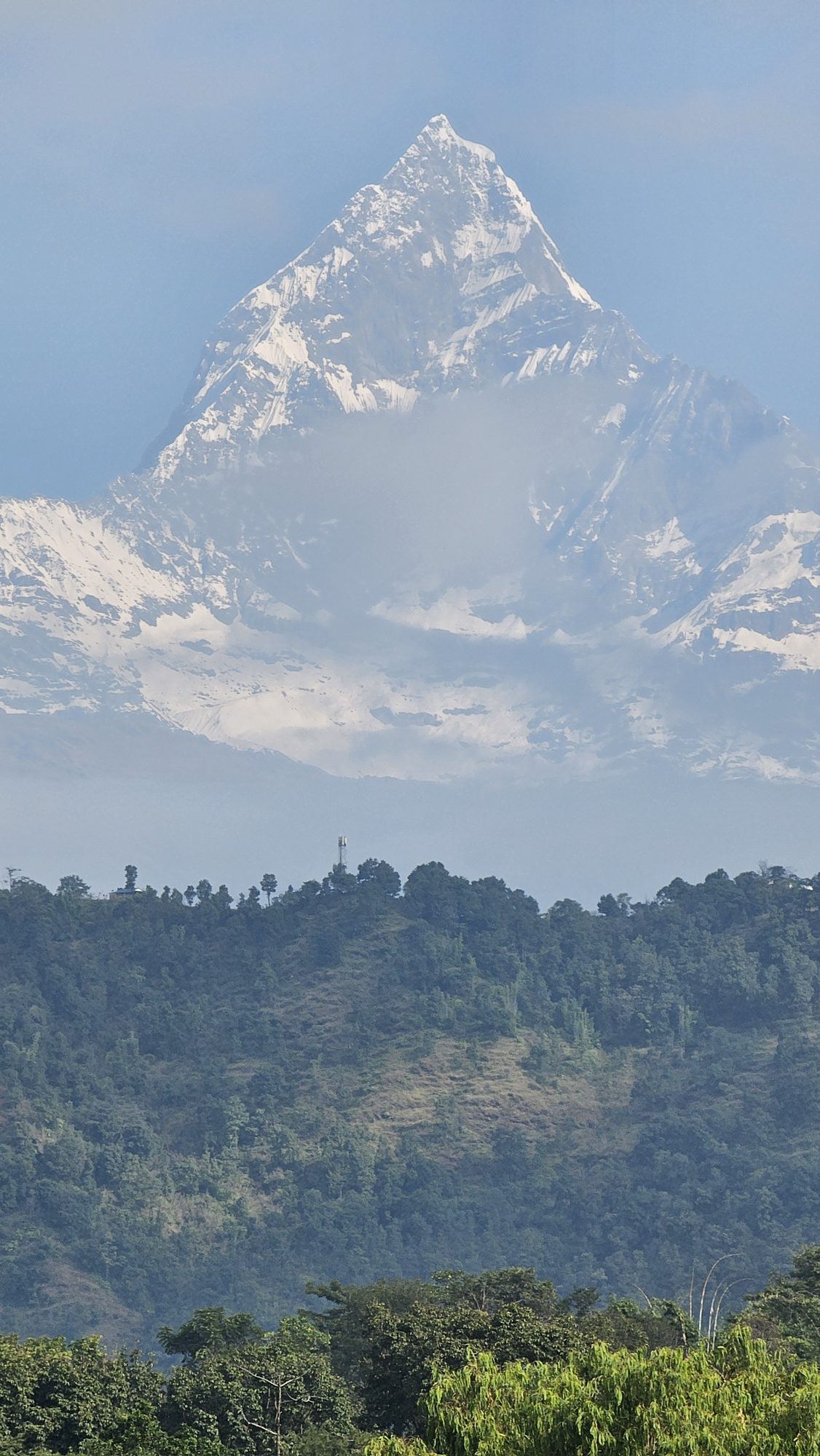
Pokhara lies in a broad, subtropical valley at about 820 metres, which is why bananas and bougainvillea grow in gardens that look straight up at Machapuchare, the 6,993-metre “Fishtail” peak only 28 kilometres away. Nowhere else in Nepal does the vertical drama arrive so suddenly.

Most visitors base themselves in Lakeside, the long strip of cafés, bakeries, gear shops and guesthouses along the eastern shore of Phewa Lake. It is relaxed rather than rowdy, and the rhythm of the place is set by the mountains: clear skies and sharp peaks at dawn, cloud building by late morning, a golden flush at sunset.

Come for two days and you will see the famous views. Come for a week and you can add a trek. Many people do both and then quietly extend their stay.

The Annapurna massif and Machapuchare reflected in Phewa Lake
Highlights

What to see in and around town

Everything below can be reached in a day from Lakeside by foot, boat, taxi or a short bus ride.

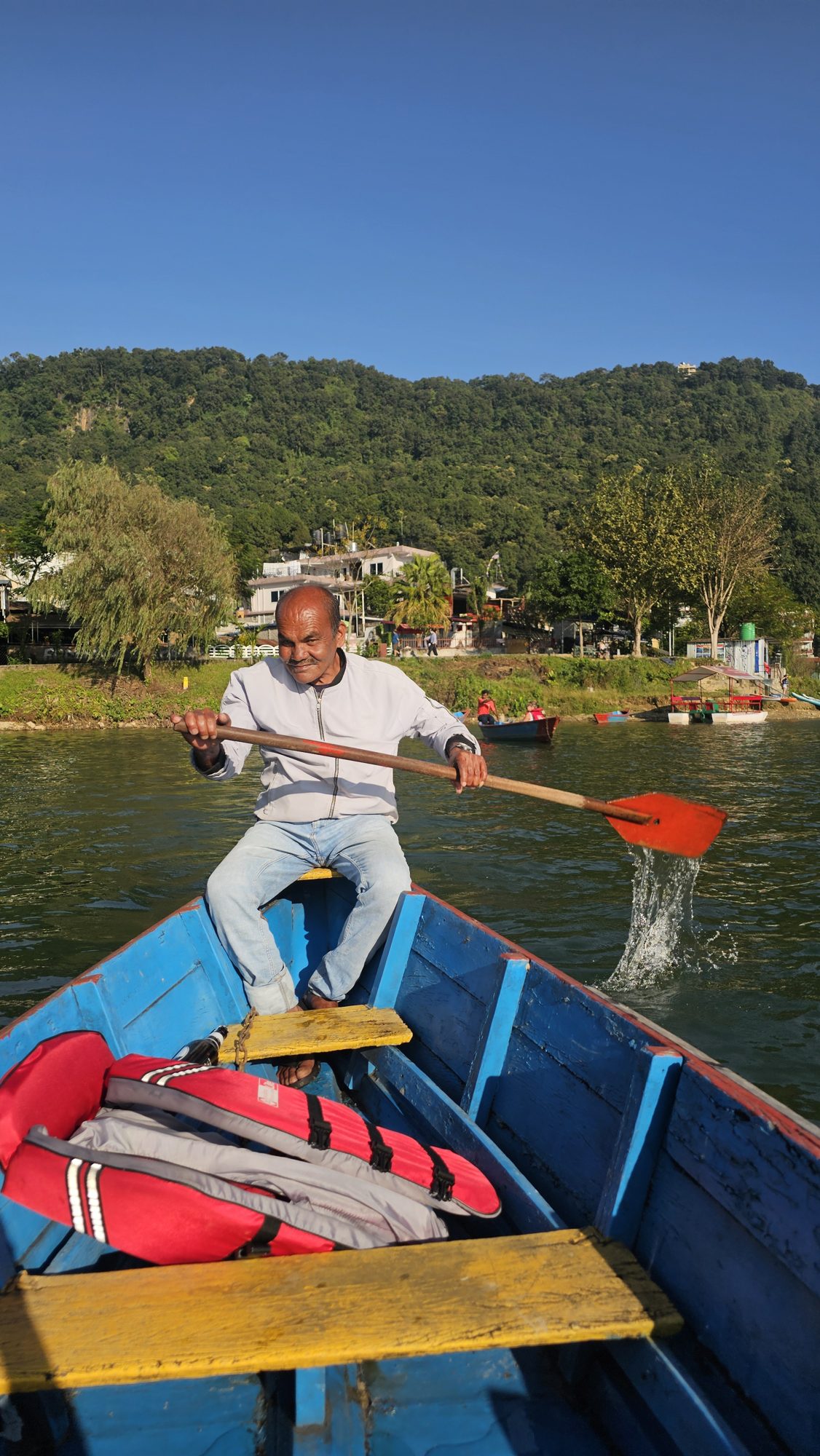
A boatman rowing a blue wooden boat across Phewa Lake below the forested ridge
Lake

Phewa Lake

Rent a painted wooden boat and row out to the Tal Barahi temple on its island. Go at first light for mirror reflections, or at sunset when the hills glow copper.

Phewa Lake in detail →
Machapuchare lit by golden sunrise light
Viewpoint

Sarangkot

The ridge at 1,600 metres above the lake is Pokhara's classic sunrise spot. The whole Annapurna range, from Dhaulagiri to Manaslu, lights up pink and gold.

Sarangkot in detail →
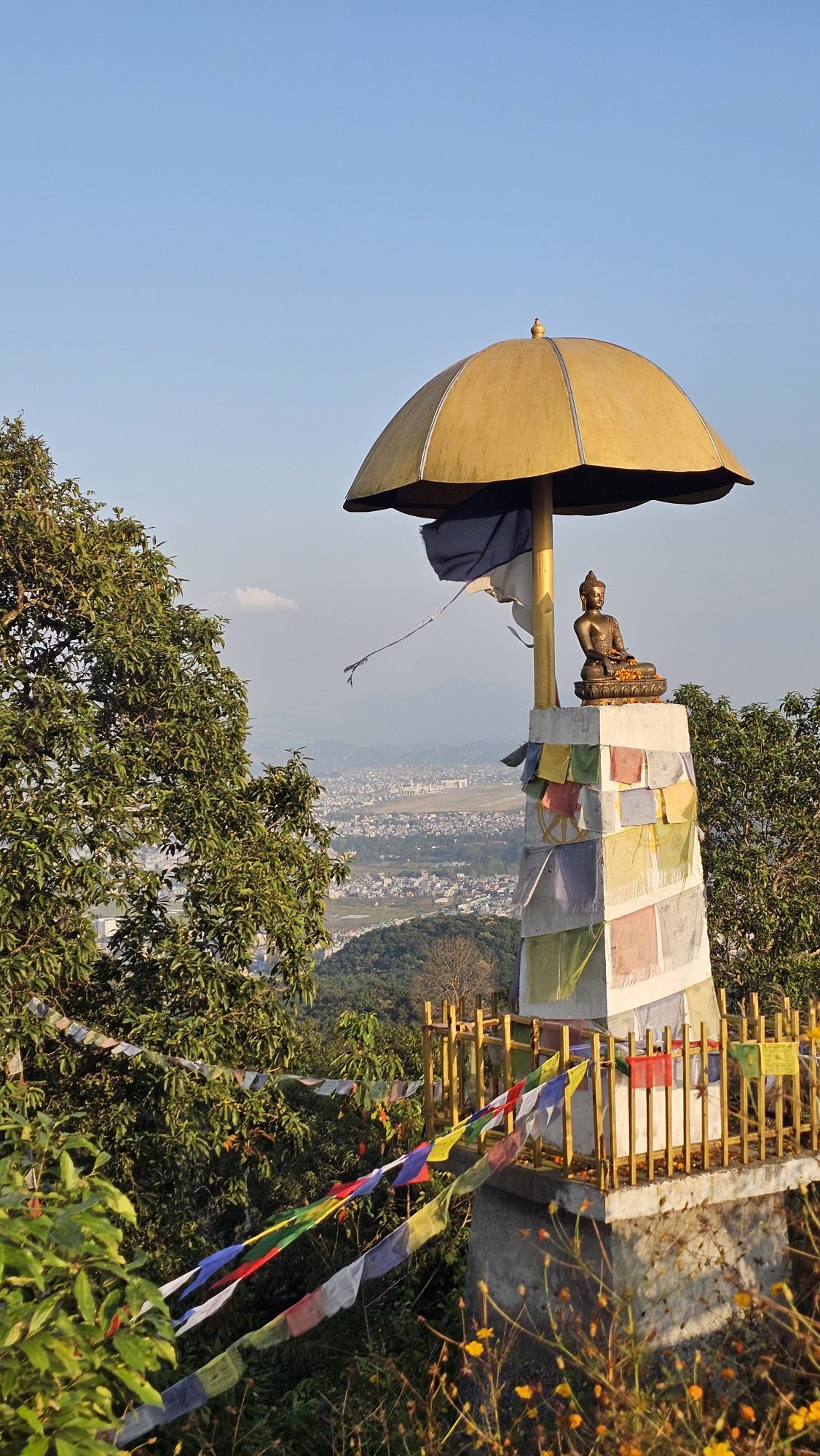
A small Buddha beneath a gilded umbrella and prayer flags, with Pokhara in the haze below
Temple

World Peace Pagoda

A gleaming white Buddhist stupa on the ridge across the lake. Walk up from the shore in about an hour, then look back over the water to the peaks.

Peace Pagoda walk in detail →
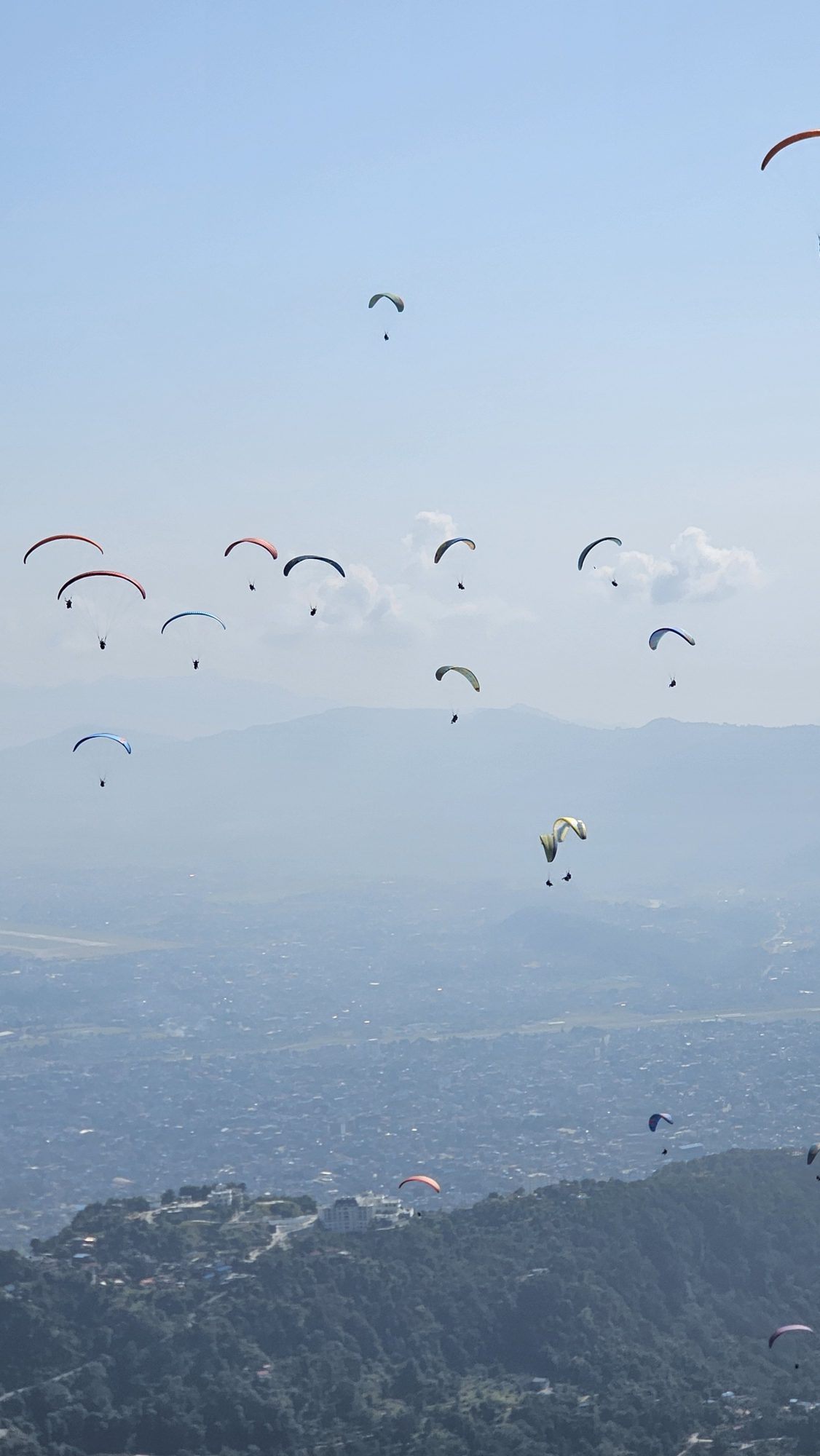
Dozens of paragliders filling the sky above the Pokhara valley
Adventure

Paragliding

Pokhara is one of the world's great paragliding sites. Tandem flights launch from Sarangkot and ride the thermals with eagles, landing on the lakeshore.

Paragliding in detail →
A waterfall plunging into a rocky gorge
Nature

Davis Falls & Gupteshwor Cave

The Pardi river vanishes into a sinkhole here, roaring in the monsoon. Across the road, a cave descends to a shrine where you can watch the same water from below.

Davis Falls in detail →
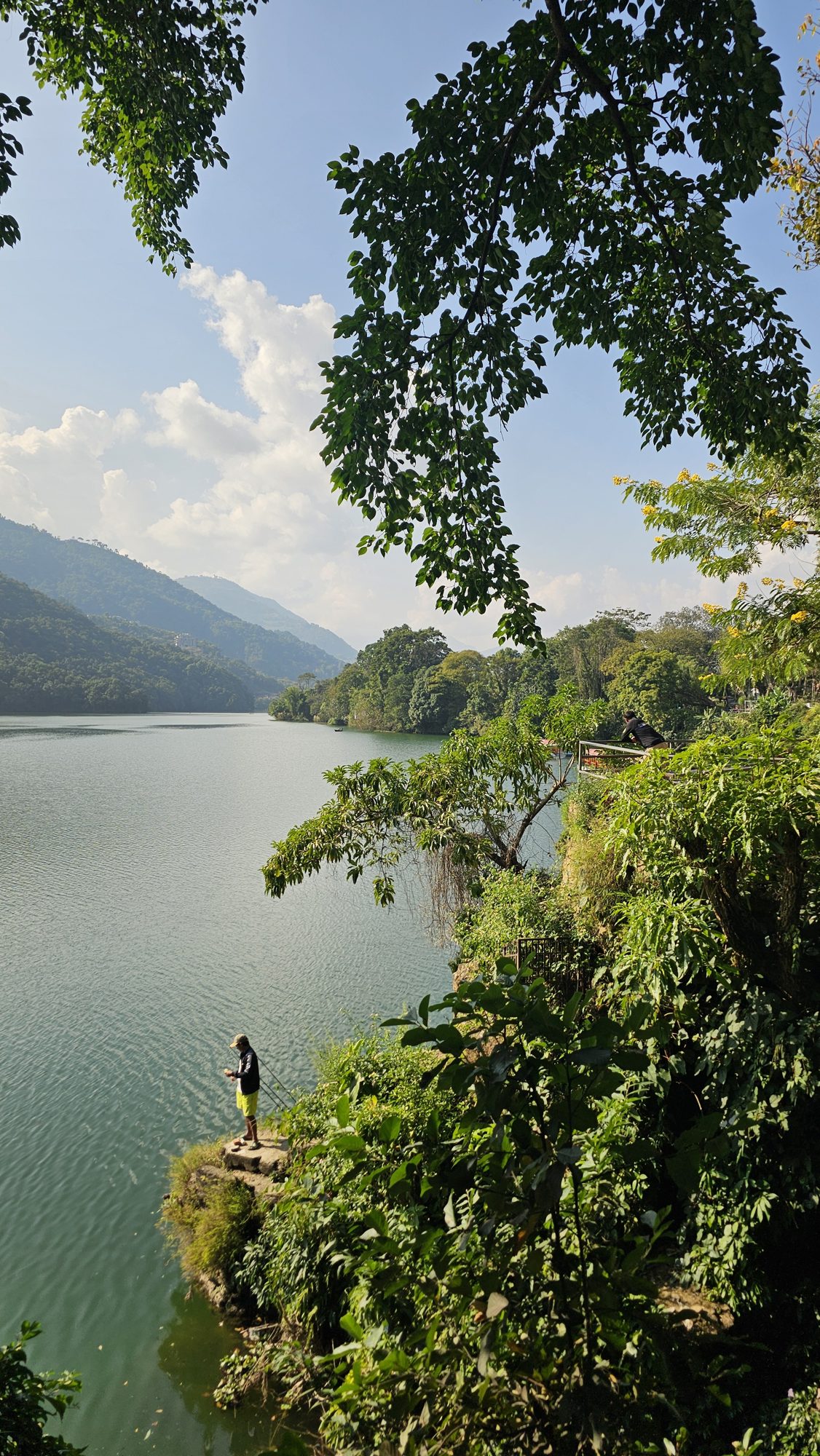
A calm lake below forested hills, with an angler standing on the bank
Lake

Begnas Lake

Forty minutes east of town, Begnas is the quiet alternative: fish farms, paddy terraces, a handful of lodges and very few other visitors.

Begnas Lake in detail →

Also worth your time

Museum

International Mountain Museum

Ratopairo, south of the airport · 9am–5pm

The best single hour of context for everything above you: the geology of the Himalaya, the cultures of the mountain peoples, and the history of the great climbs, told with relics from the first ascents. The model peaks in the garden make sense of what you see from Sarangkot.

Mountain Museum in detail →
Old town

Bindhyabasini temple & the Old Bazaar

Bagar, north of Lakeside · morning

Pokhara's oldest quarter, where Newari traders built the brick-and-timber houses along the old Tibet trade route. The white-domed Bindhyabasini temple on its hill is the city's main shrine, busy with wedding parties and saffron on Saturdays. Walk the bazaar before 10am for the market.

The Old Bazaar in detail →
Caves

Mahendra Cave & the Bat Cave

Batulechaur, 6 km north · 7am–7pm

Two limestone caves ten minutes apart. Mahendra is lit and easy, with stalactites and a small shrine; Chamero Gufa, the Bat Cave, is dark and unlit, home to thousands of horseshoe bats, and the exit is a squeeze through a narrow chimney that most visitors talk about for days. Bring a torch.

The caves in detail →
Gorge

Seti River gorge & Pumdikot

K.I. Singh bridge, Mahendra Pul · any time

The milky Seti has cut a slot through the city that is only a few metres wide and up to 45 metres deep; peer down from the bridges near Mahendra Pul. Above the lake, the 51-foot Shiva at Pumdikot, finished in 2021, now rivals the Peace Pagoda as a viewpoint and is a two-hour walk from the pagoda along the ridge.

Seti gorge & Pumdikot in detail →
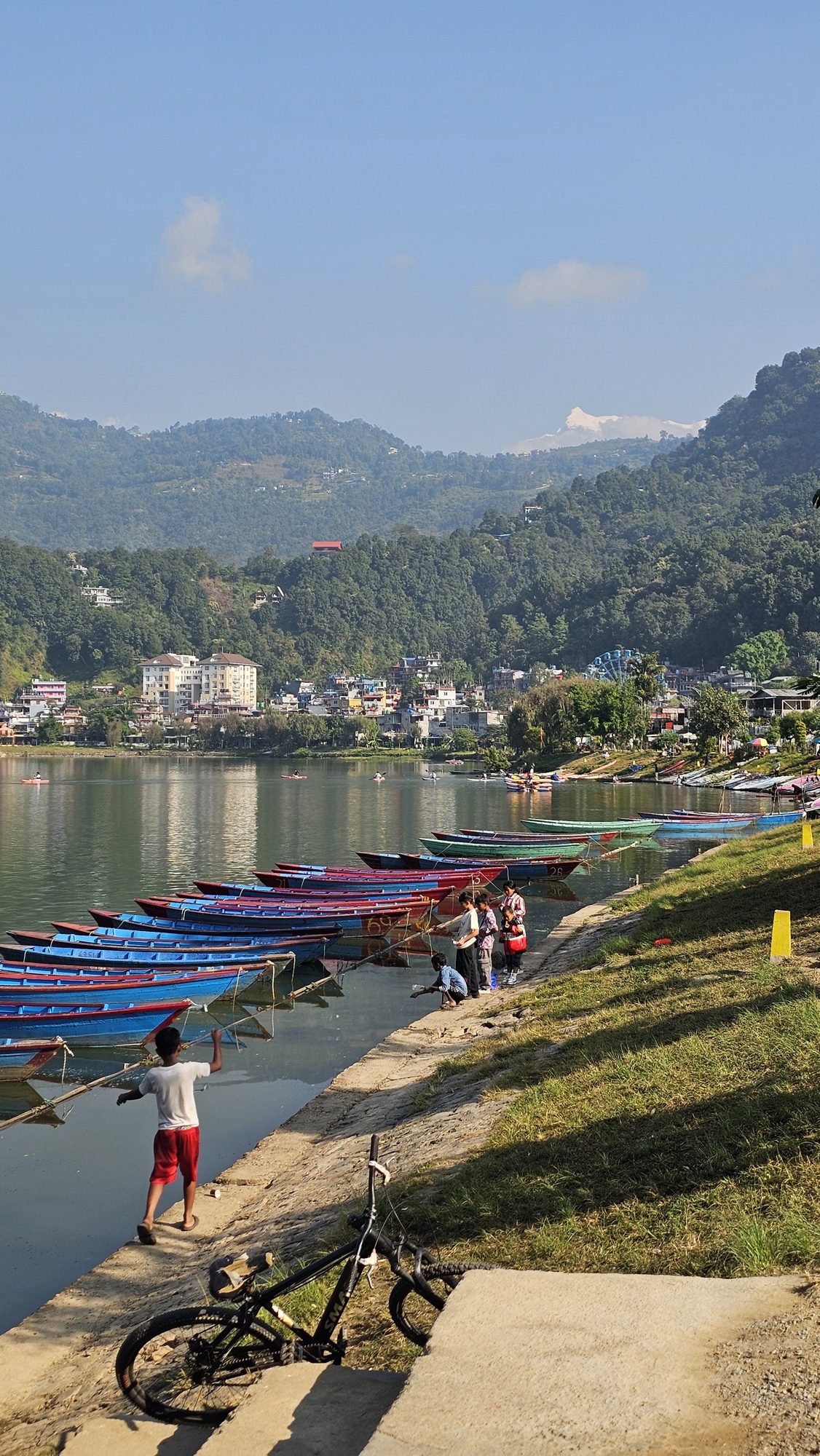
Rows of blue and red rowing boats on the shore of Phewa Lake, with a snow peak showing above the hills
Lakes of the valley

Phewa, Begnas and Rupa

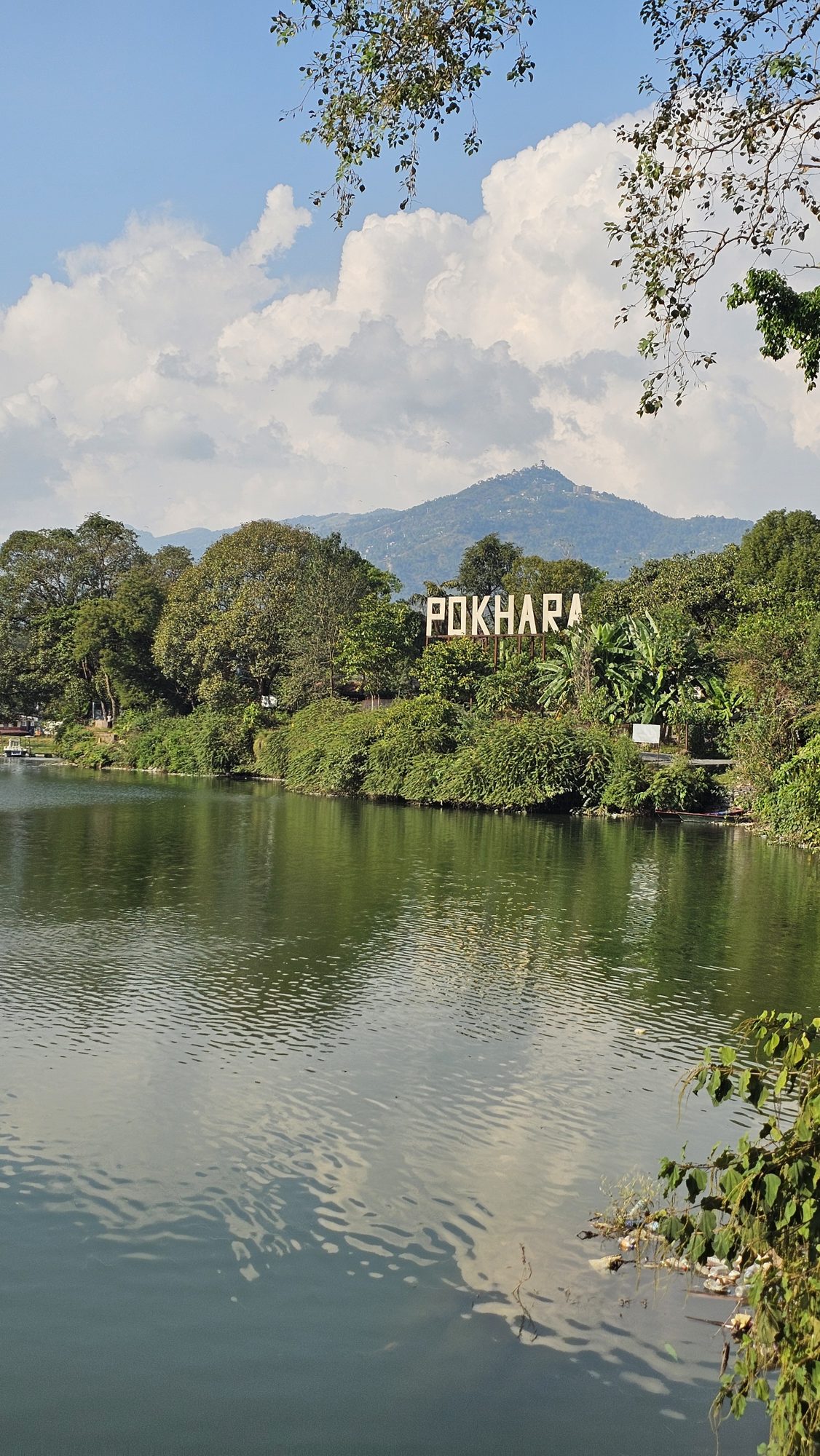
Phewa is Nepal's second-largest lake and the heart of Pokhara. Its northern shore is lively; the western and southern shores are forest and farmland, best explored by boat or on the lakeshore path that leads to the Peace Pagoda trail.

Begnas and its smaller sister Rupa sit in their own valley to the east. The ridge between them, Sundari Danda, makes an easy half-day walk with views of both lakes and, on a clear day, the whole Annapurna wall.

Try a local fish curry at one of the lakeside restaurants at Begnas. Much of the fish is farmed in the lake itself.

The valley lakes in detail →
Hiking around Pokhara

Trails for every kind of walker

Pokhara is the gateway to the Annapurna Conservation Area, Nepal's largest protected area. Below are the walks we recommend, from a few hours to ten days, ordered by effort. Distances and times are for a typical walker with a daypack.

Easy · 2–6 hours

Day hikes

No permit, no guide needed. Walk straight from Lakeside or take a short taxi to the trailhead. See the six day hikes.

Moderate · 3–5 days

Short treks

Teahouse trails with hot meals and beds every night. Poon Hill and Mardi Himal are the classics. See the treks.

Demanding · 7–12 days

Big treks

Annapurna Base Camp and the Khopra Ridge take you above 4,000 metres into the heart of the range. Read the practical notes first.

Day hikes

Out in the morning, back for dinner

Prayer flags fluttering on a mountain ridge
Easy

World Peace Pagoda loop

Row or take the ferry across Phewa Lake to the far shore, then climb a shaded stone path through forest for about an hour to the white stupa on the ridge. Return along the ridge to Davis Falls and catch a taxi back, or retrace your steps for another lake crossing.

3–4 hround trip
350 mascent
1,100 mhigh point

Best in the morning before the haze builds. Bring water; there are only a couple of tea shops on the way.

Full route guide →
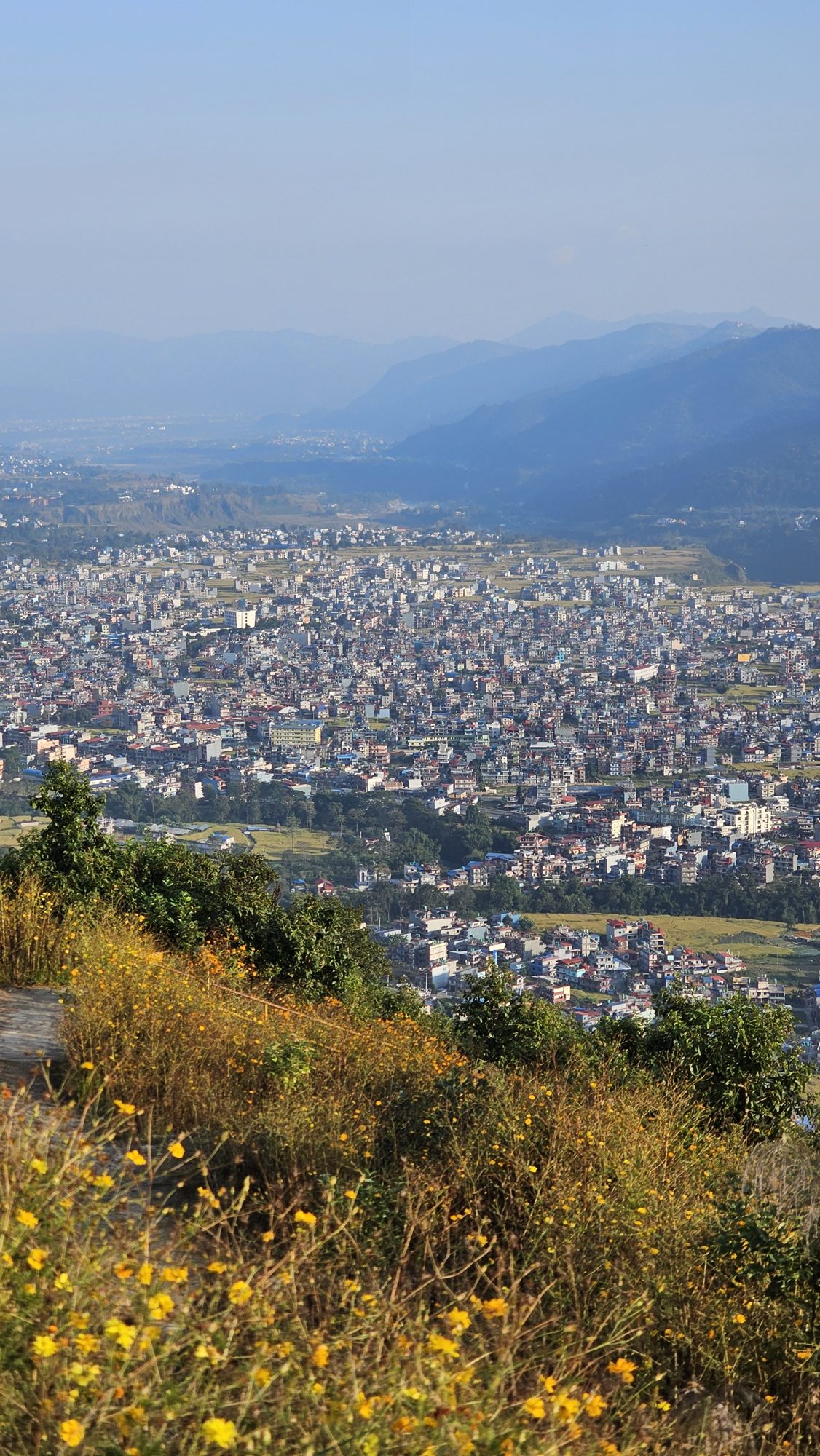
Pokhara spread across the valley, seen from a hillside of yellow flowers
Moderate

Sarangkot ridge walk

Most people drive up to Sarangkot for sunrise. Walkers can climb from the north end of the lake instead: a steady 800-metre ascent on stone steps through villages and terraced fields, reaching the viewing tower in two to three hours. Continue west along the ridge to Naudanda for a quieter, longer day with the whole range in view.

4–6 hone way to Naudanda
800 mascent
1,600 mhigh point

Start before dawn and you'll catch the sunrise from the ridge. Buses run back to Pokhara from Naudanda.

Full route guide →
A wooden lodge perched on a ridge in the Annapurna foothills
Easy

Australian Camp & Dhampus

A taxi to Kande (about 45 minutes) puts you at the foot of a 90-minute climb to Australian Camp, a grassy clearing with lodges and a front-row view of Annapurna South, Hiunchuli and Machapuchare. Carry on along a gentle ridge to the Gurung village of Dhampus, then descend to the road at Phedi.

4–5 hKande to Phedi
500 mascent
2,060 mhigh point

Stay a night at Australian Camp for a spectacular sunrise without any altitude worries. This is also the start of the Mardi Himal trek.

Full route guide →
Hiker with a backpack on a hill path
Easy

Begnas Lake & Sundari Danda

From the Begnas bus stop, follow the lakeshore and climb the ridge separating Begnas from Rupa Lake. The path runs through paddy fields and small farms with both lakes below you and the mountains ahead. Drop down to the Rupa side and loop back.

3–4 hloop
300 mascent
950 mhigh point

Combine with lunch at a lakeside fish restaurant. Almost no tourists, even in high season.

Full route guide →
A traditional stone-and-timber house in a Nepali hill village
Moderate

Panchase forest trek (1–3 days)

West of Phewa Lake, Panchase hill (2,500 m) rises through one of the last big rhododendron and oak forests near Pokhara. It can be done as a long day from Bhumdi, but it is better as a two- or three-day loop with nights in community lodges, finishing by boat across the lake.

1–3 daysflexible
1,700 mtotal ascent
2,500 mhigh point

Rhododendrons bloom in March and April. The summit view stretches from Dhaulagiri to Manaslu.

Full route guide →
A waterfall pouring down a high rocky wall
Easy

Lakeshore to Davis Falls & Gupteshwor

A flat, low-effort walk for rest days: follow the lake south from Lakeside through Damside, cross the dam, and continue to Davis Falls and the Gupteshwor cave. Return by local bus or taxi.

2 hone way
50 mascent
830 mhigh point

Best in or just after the monsoon, when the falls are at full roar.

Full route guide →
Multi-day treks

Into the Annapurnas

All of these are teahouse treks: you sleep in simple lodges and eat dal bhat by the stove. All require the ACAP permit, and most start within two hours' drive of Pokhara.

Alpenglow on a panorama of Himalayan peaks
Moderate

Ghorepani – Poon Hill

The most popular short trek in Nepal, and for good reason. From Nayapul or Ulleri you climb through rhododendron forest to the ridge village of Ghorepani, then rise before dawn for the 45-minute walk up Poon Hill (3,210 m). The sunrise reveals Dhaulagiri, Annapurna I, Annapurna South and Machapuchare in one sweep.

3–5 daysloop
2,100 mtotal ascent
3,210 mhigh point

Extend via Tadapani and Ghandruk for a satisfying five-day circuit. The 3,000-plus stone steps between Tikhedhunga and Ulleri are the only truly hard part.

Full trek guide →
Cloud and snow on a Himalayan peak above the Mardi ridge
Moderate

Mardi Himal

A newer trail that follows a forested ridge straight toward the Fishtail. From Australian Camp or Kande you climb through moss-hung rhododendron to Low Camp, then break out above the trees at High Camp (3,580 m). The final morning walk to the Mardi Himal viewpoint puts you face to face with Machapuchare's west wall.

4–6 daysout and back
3,000 mtotal ascent
4,250 mviewpoint

Quieter than Poon Hill and more dramatic. Lodges are basic above Low Camp; book ahead in October and November.

Full trek guide →
A snow-covered Himalayan peak against a blue sky
Demanding

Annapurna Base Camp (the Sanctuary)

The great classic. You walk up the Modi Khola gorge past Ghandruk and Chhomrong, through bamboo and rhododendron, to Machapuchare Base Camp and finally Annapurna Base Camp at 4,130 metres. There the valley opens into a ring of peaks: Annapurna I (8,091 m), Annapurna South, Hiunchuli, Gangapurna and the Fishtail.

7–11 daysround trip
4,500 mtotal ascent
4,130 mhigh point

Dawn at base camp, with alpenglow on the whole amphitheatre, is one of the finest sights in the Himalaya. Build in a spare day for altitude.

Full trek guide →
Prayer flags strung across a Himalayan ridge
Demanding

Khopra Ridge & Khayer Lake

A community-run alternative to the main trails, branching off the Poon Hill route at Ghorepani or Tadapani. The ridge lodge at Khopra Danda (3,660 m) looks straight across the Kali Gandaki at Dhaulagiri's south face. A long day trip climbs to the sacred Khayer Lake at 4,660 metres beneath Annapurna South.

6–9 daysloop
4,000 mtotal ascent
4,660 mKhayer Lake

Far fewer walkers than the Sanctuary, and lodge profits support local schools. Carry warm layers; the ridge is exposed.

Full trek guide →
Aerial view of the stone houses of Ghandruk village
Where the treks meet

Ghandruk

Almost every trek on this page passes through or near Ghandruk, one of the largest Gurung villages in Nepal. Slate-roofed stone houses step down the hillside beneath Annapurna South and Hiunchuli, and the village museum and tea shops make it a natural rest day.

If you only have two nights, Ghandruk alone is worth it: drive to Kimche, walk 90 minutes up, and watch the sunset turn the mountains rose and then violet.

Good food

Dal bhat power, and what else to eat

Pokhara eats like a trekking town: enormous Thakali thalis, momos by the dozen, and a Lakeside strip that learned to bake bread and pull espresso for people coming down from the hills.

A bowl of lentil dal with rice
Eat this

Thakali dal bhat

The Thakali people of the Kali Gandaki run the best kitchens in Nepal. Their thali is dal, rice, a seasonal vegetable, a mustard-green saag, pickles, a fried papad and a curry of chicken, mutton or local fish, with refills of everything but the meat. Lunch and dinner; the sets run NPR 450–900.

A plate of momo dumplings with dipping sauces
Eat this

Momos

Steamed, fried, or jhol, swimming in a tomato-sesame broth that is the Nepali answer to a winter evening. Buff is the classic filling; chicken and vegetable are everywhere. A plate of ten is NPR 150–350 and a legitimate meal.

Two cups of coffee and a pastry on a tray
Eat this

Trekker breakfasts

Lakeside's bakeries grew up feeding people before the dawn bus to Nayapul. Apple pie, cinnamon rolls, proper sourdough and Himalayan coffee from the Gulmi and Syangja hills. Sel roti, the sweet rice-flour ring, is the Nepali breakfast worth asking for.

Where to eat

The benchmarkThakali

Pokhara Thakali Kitchen

Lakeside, near Hallan Chowk · lunch and dinner

Rows of brass thalis, sukuti dried meat, and the city's most reliable dal bhat. Go hungry; the refills keep coming.

NPR 500–1,000 · $
Thakali

Cheli Thakali

Lakeside, Barahi Path · lunch and dinner

Smaller, quieter and a touch more careful than its neighbours: the mustard greens are properly bitter, the mutton curry slow.

NPR 500–900 · $
Momos

Mo2's Delights

Lakeside, Centre Point · all day

A momo specialist with a dozen variations, from classic steamed buff to kothey (pan-fried) and the spicy jhol momo. Cheap, fast, always busy with locals.

NPR 200–500 · $
Vegetarian

OR2K

Lakeside, Centre Point · lunch to late

Cushions on the floor, lanterns, and Middle Eastern plates for sharing: mezze platters, falafel, shakshuka and the best hummus between Kathmandu and Tel Aviv.

NPR 600–1,200 · $$
Lake table

Moondance

Lakeside, Hallan Chowk · dinner

A Pokhara institution in a garden by the water: steaks, pastas, Nepali sets and a wood-fired oven. Book a lakeside table for sunset.

NPR 800–1,800 · $$
Italian

Caffe Concerto

Lakeside, Camping Chowk · lunch and dinner

Thin-crust pizzas from a wood oven, fresh pasta and espresso, with jazz on the stereo and the lake across the road. The dependable night off from dal bhat.

NPR 800–1,600 · $$
Breakfast

French Creperie

Lakeside, Barahi Path · morning to afternoon

Galettes and sweet crêpes made to order, good coffee and a courtyard. The place for the morning after a trek.

NPR 400–900 · $
Nepali modern

Rosemary Kitchen

Lakeside, Fewa Marg · dinner

A quiet garden restaurant doing Nepali and Himalayan dishes with care: thukpa, sekuwa grills, Thakali sets and a surprising dessert list.

NPR 700–1,500 · $$
Lake fish

Begnas lakeside restaurants

Begnas Lake · lunch

Fish curry and fried lake fish, caught or farmed in the water you are looking at. Simple, cheap and the best reason to linger at Begnas.

NPR 400–800 · $
Nightlife

Short nights, early starts

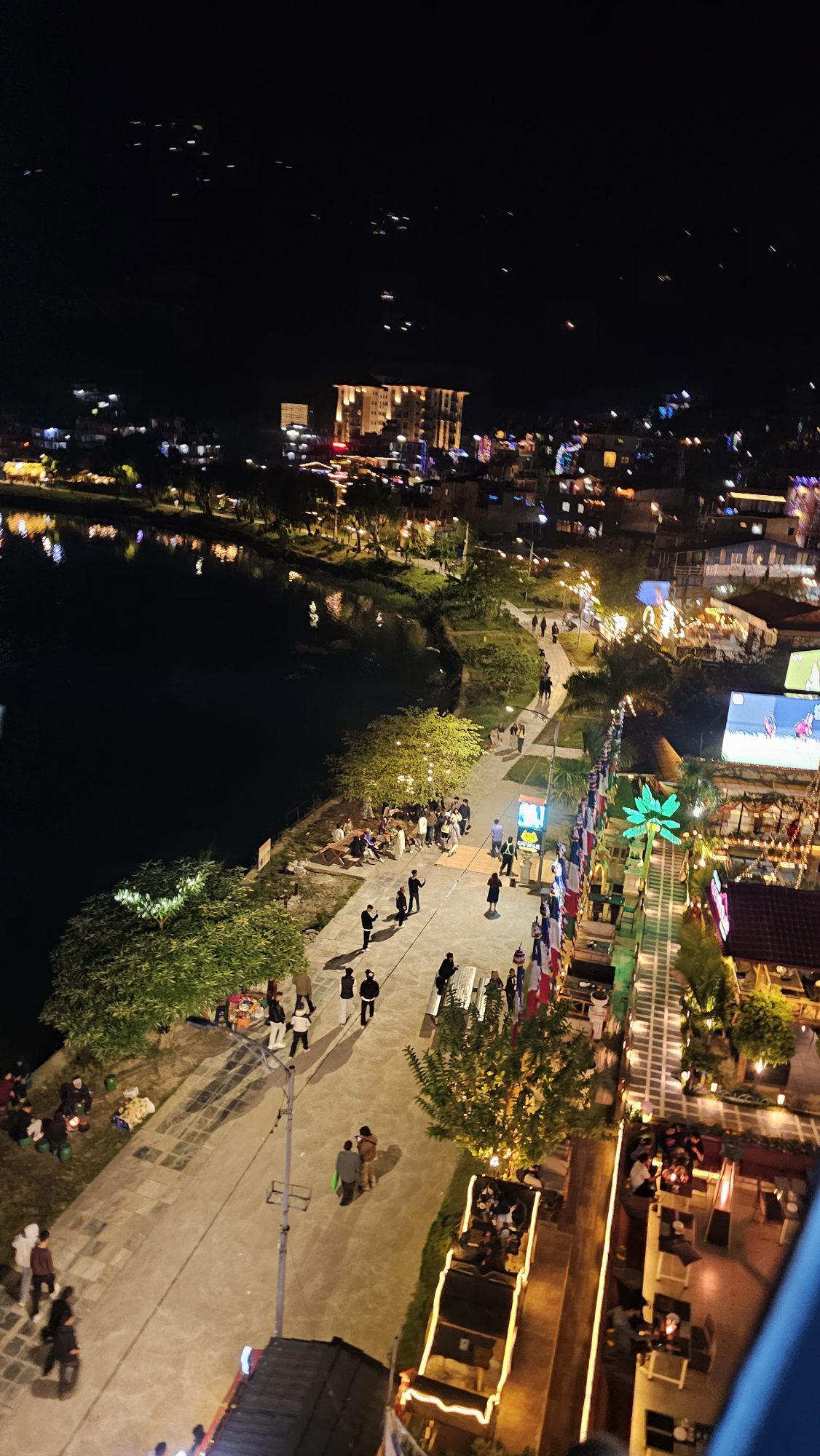
Lakeside's bars close around midnight by local rule, which suits a town where everyone is up at five for sunrise. What there is runs on live bands, rooftop happy hours and a couple of dance floors.

Live music

Busy Bee Café

Lakeside, Centre Point · nightly

The loudest room on the strip: cover bands most nights, a dance floor that fills by ten, and a garden out the back when it gets too much. Nepali rock, trekkers and locals in equal measure.

Institution

Old Blues Bar

Lakeside, Hallan Chowk · evenings

Guitars on the walls, blues and classic rock from the house band, cheap beer and a crowd that has been coming for decades. The least changed place in Pokhara.

Jazz

All That Jazz

Lakeside, Barahi Path · evenings

A small upstairs bar with live jazz and acoustic sets, cocktails and a quieter crowd. The right place when you want to talk.

Dance floor

Paradiso & Club Amsterdam

Lakeside, Centre Point · late

The two proper clubs, side by side, with DJs on weekends and the last people standing on the strip. Rooftop sundowners first: most Lakeside hotels with a top floor run a happy hour as the light goes off the peaks.

Practical notes

Before you lace up

Permits

Treks inside the Annapurna Conservation Area need the ACAP entry permit, bought at the Nepal Tourism Board office in Pokhara or at checkpoints. A TIMS trekker registration card is also required on most routes. Day hikes close to town need nothing.

Guides

Nepal now requires most foreign trekkers in the conservation area to walk with a licensed guide. Day hikes around Pokhara are exempt. Rules change, so check with the Nepal Tourism Board before you go.

Seasons

  • Oct–Nov: clearest skies, busiest trails.
  • Mar–Apr: warm, rhododendrons in bloom, some haze.
  • Dec–Feb: cold and crisp, snow above 3,000 m.
  • Jun–Sep: monsoon; leeches, clouds, few views.

Altitude

Anything over 3,000 metres deserves respect. Ascend slowly, sleep no more than 500 m higher each night above 3,000 m, drink plenty, and descend if you develop a headache that doesn't ease.

Getting there

Pokhara is a 25-minute flight or a 6–8 hour drive from Kathmandu. Trailheads at Nayapul, Kande, Phedi and Kimche are 1–2 hours by taxi or local bus.

What to pack

Broken-in boots, a warm layer and a shell even in autumn, a headtorch for sunrise walks, water purification, cash in small notes, and a sleeping bag for the high lodges in winter.

Photography

Photo credits

Several photographs on this page are our own. The remaining photographs are by independent photographers published on Pexels under the free Pexels licence; click any title to open the original photo and photographer.

Powered by Webloyt | Report abuse