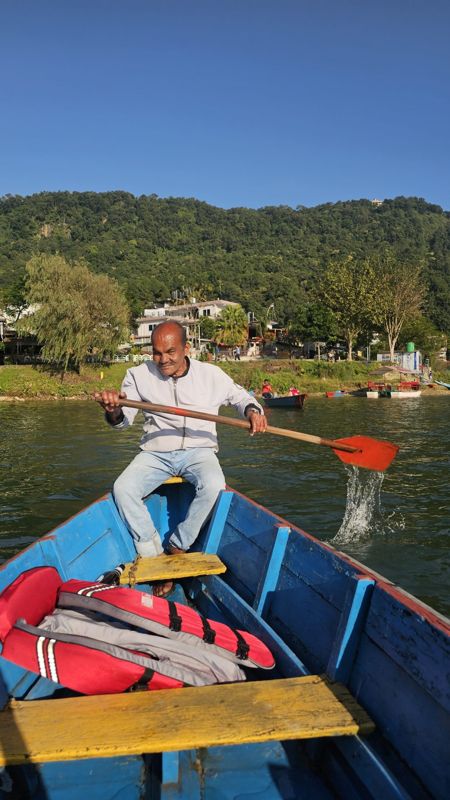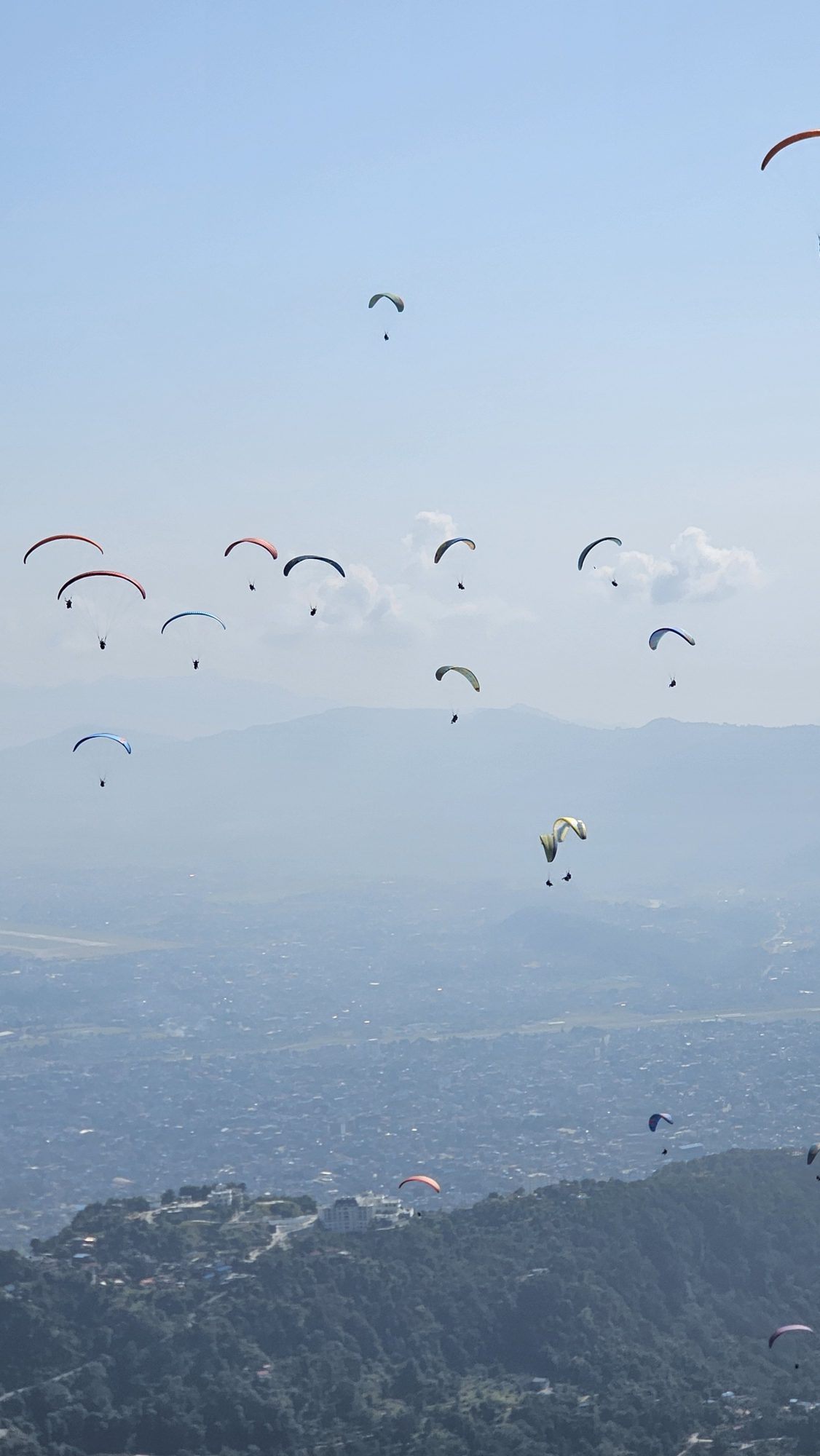
Run off a hillside at 1,600 metres, circle on warm air with the kites and eagles, and land on the edge of the lake with the Annapurnas behind you.
Pokhara is counted among the world's great paragliding sites. Most days of the dry season, warm air rises steadily off the slopes above Phewa Lake, and the big white peaks fill the horizon to the north.
Almost everyone flies tandem: you're clipped in front of a licensed pilot who does the flying. All you have to do is run a few steps when told, then sit back in the harness.
Flights launch from the grassy slopes below Sarangkot, about 1,600 metres up, and land on a field by the lakeshore at Lakeside. A standard flight lasts 20 to 30 minutes; longer cross-country flights stay up for an hour or more.
You'll rarely be alone in the sky. Black kites, steppe eagles and vultures use the same thermals, and pilots often follow them to find lift.
How a tandem morning usually runs.
The operator collects you in Lakeside and drives you up the winding road to the launch site, about 30 minutes.
Your pilot clips you in, explains the take-off run and checks the wind.
Lean forward, run when told, and the wing lifts you off the slope.
Climb in the thermals for views of the lake, the town and the Annapurna range. Ask for a gentle flight, or for spirals if you're feeling brave.
Glide out over Phewa and touch down on the landing field by the shore, a short walk from the cafés.

.jpeg?width=960)

Book with an established, registered company in Lakeside and ask about the pilot's licence and the age of the equipment. The cheapest offer is rarely the best.
Late morning and early afternoon usually have the best thermals. Book a day ahead in peak season and keep a spare day in case of weather.
Operators set weight limits and may not fly young children. Photos and videos usually cost extra; tell your pilot if you get motion sick.
Pokhara practical notes →Photographs by Wanderlines and from Wikimedia Commons and Pexels under their licences.