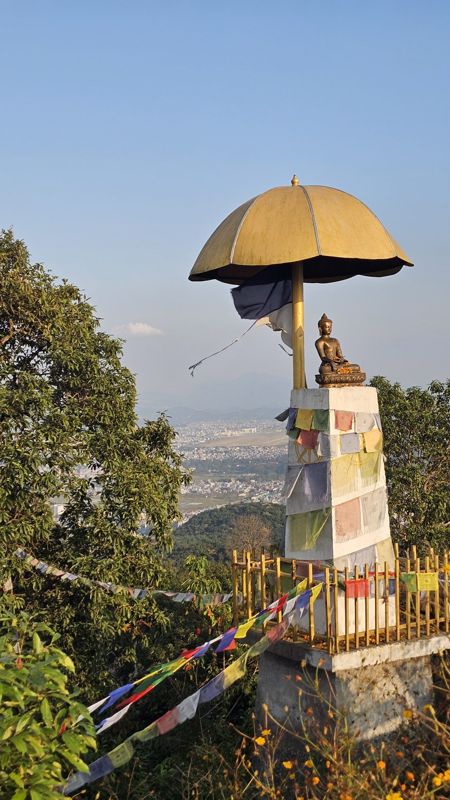
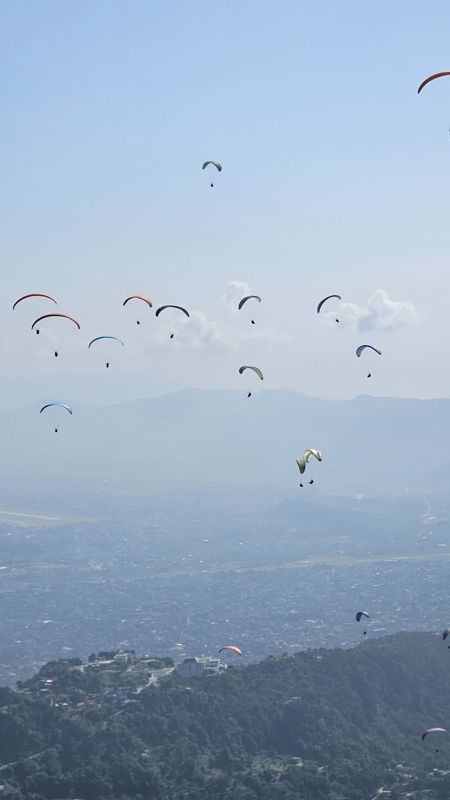
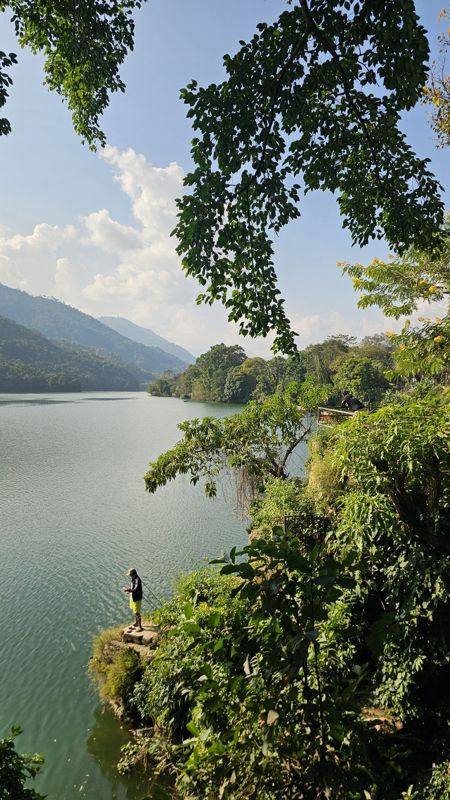
Painted boats on Phewa Lake
Pokhara · Lakeside · On the water

Phewa Lake

Pokhara's mirror: painted wooden boats, a pagoda temple on a tiny island, and on a clear morning the Fishtail peak floating upside down in the water.

Nepal's 2nd-largest lakeIsland templeBoats by the hourDawn or dusk
Photo: Wanderlines
Home›Pokhara›Sights›Phewa Lake
Overview

The lake that made the town

Phewa is Nepal's second-largest lake and the reason Pokhara's Lakeside district exists. Its eastern shore is a strip of cafés and guesthouses; the rest is forest, farmland and the steep ridge of the Peace Pagoda.

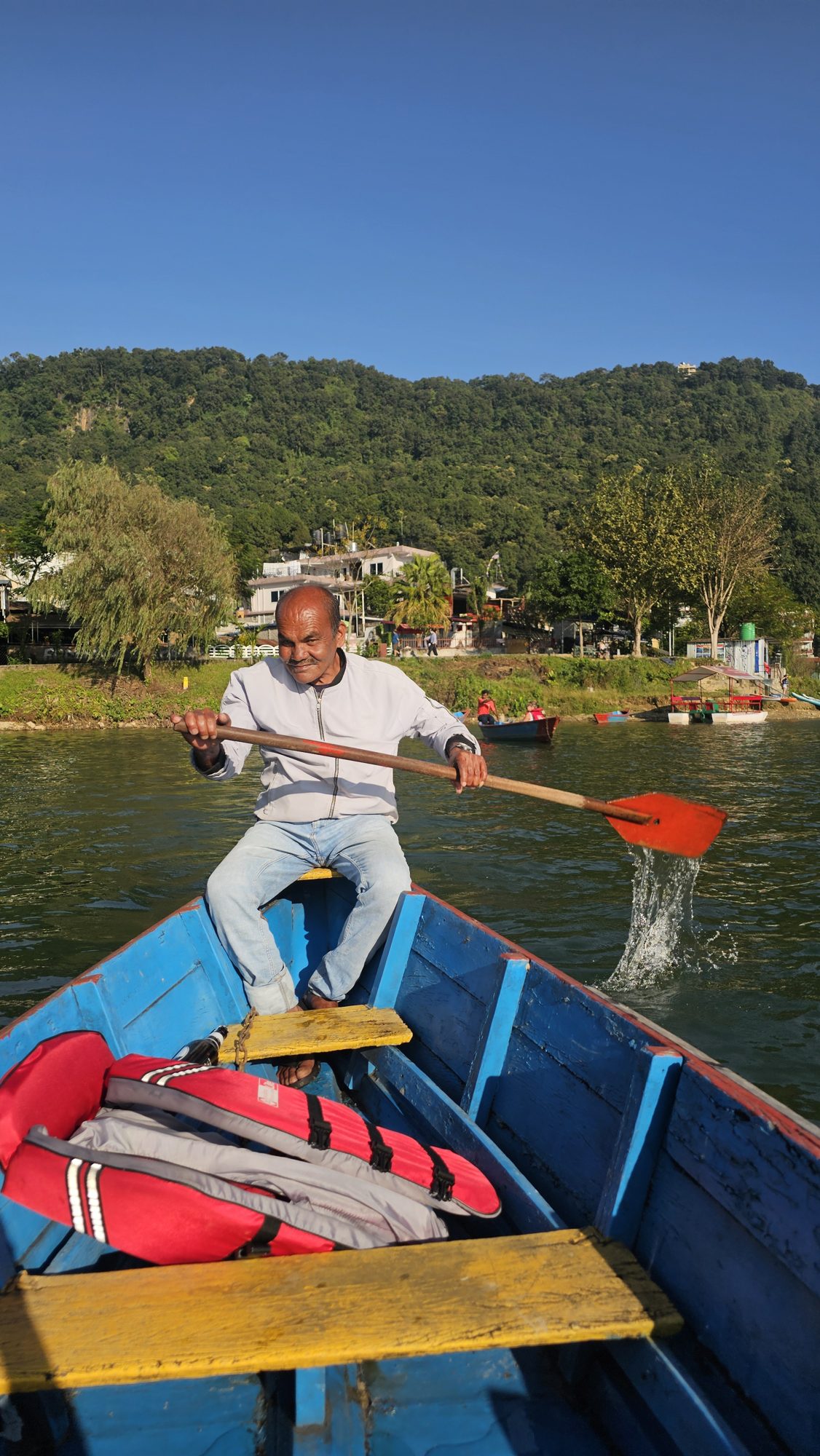
The classic outing is to hire one of the painted wooden doonga boats and row out to Tal Barahi, a small two-tiered pagoda temple on an island near the shore, dedicated to the goddess Barahi. On Saturdays it is busy with families bringing offerings.

The lake is best at the edges of the day. At dawn the water is often flat calm and, when the clouds stay away, Machhapuchhre and the Annapurnas appear reflected in it. In the evening the hills turn copper and the boats drift home.

Paddle away from Lakeside and it changes completely: the far shores are fishing villages, jungle and the odd lakeside teahouse.
The visit

A day around the water

Out at dawn, back at sunset.

  1. 6am

    Dawn on the shore

    Walk down to the boat stands before breakfast, when the lake is flattest and the peaks are most likely to be out.

  2. 30 min

    Row to Tal Barahi

    Take a boat to the island, ring the temple bell and walk the little circuit around the shrine.

  3. Far shore

    Under the Peace Pagoda

    Row across to the southern shore and climb to the stupa, or leave the boat and walk up through the forest.

  4. Afternoon

    Lakeside walk

    Follow the shore path north from Lakeside towards Khahare and Pame, where the town thins out into paddy fields.

  5. Sunset

    Copper hour

    Find a lakeside café, or take a boat out again, and watch the light go off the hills.

Swimming isn't recommended near the town. Kayaks and paddleboards can be rented if you'd rather paddle than row.
Practical notes

Before you go

Boats

Boat stands line the Lakeside shore with posted hourly rates. You can row yourself or pay a little more for a boatman.

Timing

Mornings are calmest and clearest; afternoon winds can make rowing hard work, especially in spring.

What to bring

  • Sun hat and sunscreen
  • Cash for the boat
  • A dry bag for your phone
  • Small notes for the temple

Etiquette

Remove your shoes at Tal Barahi and walk clockwise around the shrine. Wear the life jacket you're given.

Pokhara practical notes →
More of Pokhara

Where to go next

Photography

Photo credits

Photographs by Wanderlines and from Wikimedia Commons under their licences.

Powered by Webloyt | Report abuse