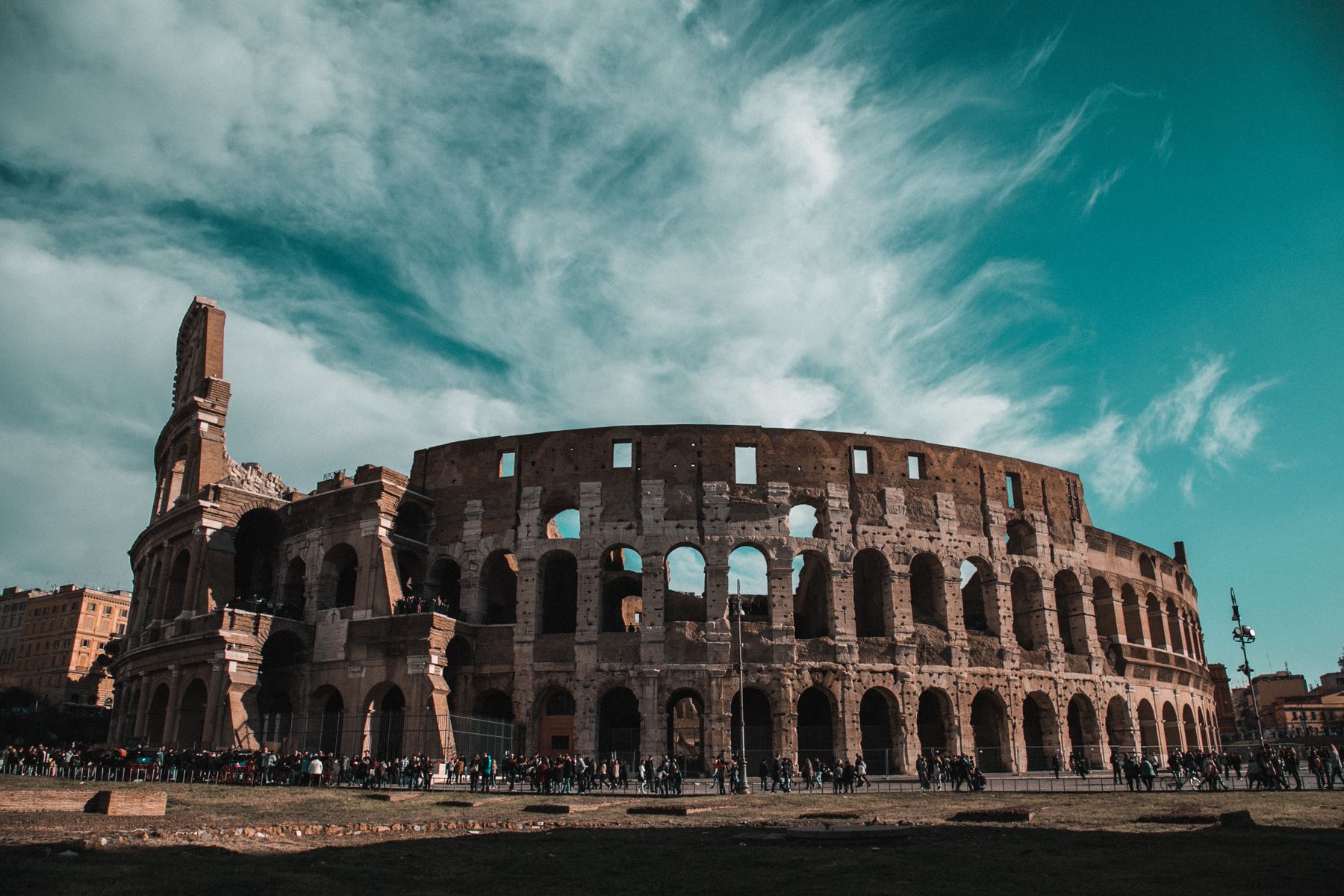
The Colosseum in Rome on a clear day with visitors below its arches
Italy · Lazio

Rome

Two and a half thousand years stacked on seven hills, with a trattoria at the bottom of every one of them. The Jubilee crowds have gone home, the Colosseum has its own metro station at last, and the carbonara is as good as it ever was.

Photo via Pexels
Overview

The city after the Jubilee

Rome spent 2025 hosting the Catholic Church's Holy Year, 33 million pilgrims and a building programme that repaved its piazzas, dug an underpass beside Castel Sant'Angelo and finally opened the Metro C station at the Colosseum. The Holy Door was sealed again in January 2026 and the city it left behind is busier than ever but better organised: timed tickets for every big site, a two-euro fee to stand at the lip of the Trevi Fountain, a seven-euro ticket for the Pantheon, and museums that kept their longer hours.

None of that changes what Rome is. The ancient city, from the Colosseum through the Forum to the Pantheon, can be walked in a morning. The Vatican is a separate country across the river. Trastevere, Monti and Testaccio are the neighbourhoods where Romans eat and drink, and the Appian Way runs out of the southern gate into the countryside exactly as it did under the emperors, basalt paving and umbrella pines intact.

Four days covers the ancient sites, the Vatican, the centre on foot and one long evening in Trastevere. Five adds the Appia by bike or the villas at Tivoli; a week lets you take a train to the Castelli Romani for Frascati, porchetta and a walk round a crater lake.

Rome's domes and rooftops at sunset
Ancient RomeColosseum, Forum, Palatine, Capitoline, Circus Maximus, Caracalla and the Appia beyond the walls.
The Centro StoricoPantheon, Navona, Campo de' Fiori, the Ghetto, Trevi and the Spanish Steps: the baroque city on foot.
The Vatican and PratiSt Peter's, the Museums and the Sistine Chapel, Castel Sant'Angelo, and Prati's quieter grid for pizza and sleep.
Where Romans liveTrastevere, Monti, Testaccio, Pigneto and San Lorenzo: trattorias, enoteche, aperitivo and the clubs.
Highlights

What to see first

Nine places and how the tickets work in 2026. The Colosseum underground, the Borghese and the Vatican's early slots are the three to book before you fly.

The columns of the Roman Forum against the sky
Ancient Rome · Named tickets

Colosseum, Forum and Palatine

One archaeological park, one ticket: €18 for 24 hours covering the Colosseum's timed entry plus the Forum and Palatine, or €24 for the Full Experience with the arena floor and the Palatine's painted houses over two days. The underground is the hard one: released 30 days ahead, gone in minutes from March to October. Tickets carry your name and an ID check. Enter the Forum from Via dei Fori Imperiali at opening, climb the Palatine for the view and leave the Colosseum for the last two hours of light. Metro B and C both stop at the door now.

Colosseum and Forum in detail →
St Peter's Basilica in Vatican City
Vatican · €25 online

The Vatican Museums and the Sistine Chapel

Seven kilometres of galleries ending in Michelangelo's ceiling. Book the 8am slot on the museums' own site, €20 plus a €5 reservation fee, walk straight to the Raphael Rooms and the Sistine before the groups arrive, then come back for the Pinacoteca and the Bramante staircase. Open Monday to Saturday until 8pm, with free entry on the last Sunday of the month and a queue to match. Shoulders and knees covered, hats off, silence in the chapel.

The Vatican Museums in detail →
The dome of St Peter's Basilica at sunset
Vatican · Free basilica

St Peter's and the dome

The largest church in Christendom is free; the security queue is shortest at the 7am opening or after five. Michelangelo's Pietà, Bernini's bronze canopy and the Holy Door, bricked up again in January 2026 until the next Jubilee, are the stops. The dome climb is 551 steps, €10 on foot or €15 with a lift that skips the first 231, booked online for a little more; the last 320 steps lean with the curve of the cupola and the view is the whole city laid out along the river.

St Peter's in detail →
The coffered dome and oculus of the Pantheon
Centro Storico · €7 timed ticket

The Pantheon

Hadrian's temple of 125 AD, the best-preserved building of antiquity and still the largest unreinforced concrete dome ever built, 43 metres across with a nine-metre hole in the top that lets in the rain. Entry is €7 since July 2026 with a timed slot, booked for weekends; free on the first Sunday of the month. Stand under the oculus at noon when the sun strikes the doorway, then take an espresso at Sant'Eustachio or Tazza d'Oro round the corner. Raphael is buried on the left.

The Pantheon in detail →
A high view over Rome's rooftops towards the horizon at sunset
Villa Borghese · Two-hour slots

Galleria Borghese

The finest small museum in Italy: Bernini's Apollo and Daphne and his Rape of Proserpina, six Caravaggios, Canova's reclining Paolina and Titian's Sacred and Profane Love, in a cardinal's villa in the park. Entry is €18 in five strict two-hour slots a day, closed Mondays, no walk-up tickets and sold out weeks ahead in season; book the 9am slot the day the calendar opens. Afterwards the Pincio terrace above Piazza del Popolo is the sunset.

Galleria Borghese in detail →
The central sculpture of the Trevi Fountain
Centro Storico · Before 9am

Trevi, Navona and the Spanish Steps

The baroque triangle everyone walks. Since February 2026 the platform at the lip of the Trevi Fountain costs €2 from nine in the morning to ten at night with a capacity limit; the piazza above it is free and the fountain is empty at seven. Piazza Navona has Bernini's Four Rivers on the footprint of Domitian's stadium; the Spanish Steps are for sitting on, which is now forbidden, so stand. Join them by way of the Column of Marcus Aurelius and the Temple of Hadrian's columns on Piazza di Pietra.

Trevi, Navona and the Steps in detail →
A narrow cobbled alley in Rome's historic centre
Across the river · Evening

Trastevere and the Janiculum

The old working quarter across the Tiber, ivy on ochre walls, washing over the lanes, and the city's densest concentration of trattorias and bars. Santa Maria in Trastevere's 12th-century mosaics are free; Villa Farnesina has Raphael's frescoes for a few euros. Climb the Janiculum behind it for the noon cannon, Bramante's Tempietto and the Fontanone, the best terrace view of the domes, and come down for dinner at Da Enzo and a Campari on Piazza San Calisto.

Trastevere and the Janiculum in detail →
Ancient Roman ruins among umbrella pines in Lazio
Beyond the walls · Sunday by bike

The Appian Way

The queen of roads, laid in 312 BC, runs 16 kilometres from Porta San Sebastiano to Frattocchie through a regional park of tombs, catacombs, aqueducts and pines, a World Heritage site since 2024. On Sundays and holidays it is officially closed to cars. Hire a bike at the park office by the San Sebastiano gate, ride out past the Catacombs of San Callisto, Cecilia Metella's drum tomb and the Villa dei Quintili, and picnic under the arches of the Parco degli Acquedotti. Details in the walks section.

The Appian Way in detail →Route guide →
A person slicing a pizza in a Roman restaurant
Testaccio · Eat

Testaccio

The quarter built around the old slaughterhouse and a hill made of 53 million broken Roman amphorae, where the city's offal cooking was born and its best trattorias still are. The covered market's lunch counters, Felice's cacio e pepe tossed at the table, Flavio al Velavevodetto dug into the amphora hill, Da Remo's thin pizzas at night, Trapizzino's stuffed pizza triangles. The Pyramid of Cestius and the Non-Catholic Cemetery, with Keats and Shelley, are the sights between courses.

Testaccio in detail →

Also worth your time

Day trip · 30 km

Tivoli: Villa d'Este and Hadrian's Villa

Train from Tiburtina 40–60 min, or Cotral bus from Ponte Mammolo · allow the whole day

Two World Heritage sites a bus ride apart: the Renaissance water gardens of Villa d'Este, five hundred fountains including one that plays the organ on the hour, and the sprawling ruin of Hadrian's country palace with its Canopus pool and Maritime Theatre. Villa d'Este is €15, Hadrian's Villa from €12; a combined Villae pass covers both.

Campidoglio

The Capitoline Museums

Piazza del Campidoglio · daily 9.30–19.30 · €15

Michelangelo's square and the oldest public museums in the world: the bronze She-wolf, the original Marcus Aurelius on horseback, the Dying Gaul, and the Tabularium gallery whose windows frame the whole Forum. Go late in the afternoon for the view and the empty rooms.

Tiber · Closed Monday

Castel Sant'Angelo

Lungotevere Castello · €15 · Tue–Sun 9–19.30

Hadrian's mausoleum turned papal fortress, with the escape corridor from the Vatican, the papal apartments and Tosca's parapet on the roof: the best close view of St Peter's dome in the city. Sunset from the terrace, then the angel bridge below.

30 min by train · Closed Monday

Ostia Antica

Metro B to Piramide, then the Roma–Lido train · €18

Rome's port, abandoned to the silt and now a whole Roman town of apartment blocks, baths with mosaics, a theatre and a bar with its menu painted on the wall, for a fraction of Pompeii's crowds. Allow three or four hours and carry on to the beach at Lido Centro.

Walks & nature

The Appia on two wheels, a pilgrim road and the crater lakes

Rome's countryside starts inside its walls. The Appia and the aqueduct park are a bus ride from the Colosseum, the last stage of the Via Francigena walks into St Peter's Square, and the volcanic lakes of the Alban Hills are half an hour by train.

JFMAMJJASOND

Walking season: teal = the ideal months, green = fine with an early start or a short day, grey = July and August, when the Campagna is 35°C and shadeless and even the Romans leave.

A sunlit street in Rome lined with umbrella pines
Easy · Bike or foot

The Via Appia Antica and the aqueduct park

From Porta San Sebastiano the ancient road runs dead straight to the south-east: the Domine Quo Vadis chapel at under a kilometre, the catacombs of San Callisto and San Sebastiano at two, Cecilia Metella's tomb and the Circus of Maxentius at three, and then the best of it, kilometres three to eight of original basalt paving between tombs, farms and pines, to the Villa dei Quintili. Bikes and e-bikes are hired at the park information point by the gate and at the café near Cecilia Metella; on Sundays, when the road is closed to traffic, half of Rome is out here.

Full route guide →
16 kmone way to Frattocchie; 12 km return to the Quintili
3–5 hby bike with stops
Flatwith rough paving

Bus 118 from Circo Massimo runs along the first stretch and brings you back. Add the Parco degli Acquedotti, 240 hectares of meadow under the arches of the Claudian aqueduct at Metro Giulio Agricola, for the golden hour. San Sebastiano's catacombs close on Sundays, San Callisto's on Wednesdays.

The dome of St Peter's Basilica under a cloudy sky
Moderate

The last stage of the Via Francigena

The medieval pilgrim road from Canterbury ends in St Peter's Square, and its final stage is a real walk through Rome's hidden north: from La Storta station along the Via Cassia cycle path into the Insugherata nature reserve, 740 hectares of oak wood and sheep pasture inside the city limits, up to Monte Mario, the Mons Gaudii from which pilgrims first saw the dome, and down through Prati to the basilica. Pilgrims with a credential collect their certificate at the sacristy.

Full route guide →
19 kmLa Storta to St Peter's
5 hwalking
465 mof ascent

Train FL3 from Ostiense, Trastevere or San Pietro to La Storta in 30 minutes. Follow the marked route, not the blue variant, to keep the reserve and the Monte Mario viewpoint. Water fountains are frequent once inside the city; carry some for the reserve.

A lake seen across trees and hills
Moderate

Lake Albano and the Castelli Romani

Half an hour south by train, the Alban Hills are an extinct volcano whose craters hold two lakes and whose slopes grow Frascati. The shoreline circuit of Lake Albano from Castel Gandolfo, the papal summer town whose palace and gardens now open as museums, is a flat ten kilometres under cliffs and chestnut woods; the fuller rim loop is 16 kilometres with 350 metres of climbing. From Rocca di Papa the Roman basalt Via Sacra climbs to Monte Cavo, 949 metres, the hills' highest point, in three hours return. Nemi, above the smaller lake, has Caligula's ships and wild strawberries.

Full route guide →
10 kmshoreline loop; 16 km rim
3–4.5 hwalking
FL4Termini to Castel Gandolfo, 45 min

Parts of the lakeside path have been closed by landslips; check locally and reverse the loop if needed. Finish in a fraschetta in Ariccia, a bridge away, with porchetta and a half-litre of the house white. Most of the Castelli shuts around 15 August.

In town · 1–2 h

Villa Borghese and the Pincio

Metro Spagna or Flaminio

Eighty hectares of pines, a boating lake with a temple on it, the zoo, bikes and rickshaws for hire at Porta Pinciana, and the Pincio terrace over Piazza del Popolo for sunset. The Galleria Borghese sits in the middle.

Train · Summer

Lake Bracciano

FL3 to Anguillara or Bracciano, 45–65 min

A clean volcanic lake with motorboats banned, black-sand beaches at Anguillara and Trevignano and the Odescalchi castle above Bracciano town. The Roman swim when the Ostia beaches are full.

Demanding · Day

Monte Gennaro

Monti Lucretili, 35 km north-east · car or Cotral bus to Palombara

The mountain you see from every Roman rooftop, 1,271 metres, climbed from Palombara Sabina in a 10-kilometre loop with 700 to 800 metres of ascent and the whole Campagna and the sea below. The real hike within an hour of the city.

Route guide →
From November to February, at dusk, the starlings come in to roost over Termini, the Lungotevere and EUR in murmurations of several hundred thousand birds; watch from a distance and not from under a tree. The ruins of Largo di Torre Argentina, where Caesar was stabbed, double as the city's cat sanctuary, and ring-necked parakeets now fill the pines of Villa Borghese.
Good food

Four pastas, fried artichokes and a hill of amphorae to eat under

Roman cooking is poor people's cooking perfected: guanciale, pecorino, offal, chicory and artichokes, in trattorias where the menu has not changed since the war. The city also has one restaurant holding Michelin's highest rating and a handful of serious tables beneath it; we list the best of both, and Michelin's own Bib Gourmand value picks.

A menu, glasses and cutlery on a Roman restaurant table
Eat this

The four pastas

Cacio e pepe, pecorino and black pepper beaten into an emulsion on tonnarelli; gricia, the same with guanciale; amatriciana, gricia with tomato, on bucatini or rigatoni; and carbonara, guanciale, egg yolk, pecorino and pepper, never cream. Every trattoria serves all four; the test of a kitchen is whether the cacio e pepe is creamy or clumped. Gnocchi on Thursdays, tripe on Saturdays, baccalà on Fridays.

A person slicing a pizza with a cutter
Eat this

Pizza, supplì and the Ghetto's artichokes

Roman pizza is thin and crisp, eaten at night in a pizzeria like Da Remo, or sold by weight by day as pizza al taglio, which Gabriele Bonci's Pizzarium by the Vatican turned into an art. Supplì, fried rice balls with a mozzarella heart that stretches like a telephone wire, come first. In the Ghetto, carciofi alla giudia, whole artichokes fried twice until the leaves crisp like petals, are the dish of February to April.

Italian delicacies on display in a Roman deli
Eat this

Quinto quarto, porchetta and maritozzi

The fifth quarter, the offal the slaughtermen of Testaccio were paid in, is still the heart of the kitchen: coda alla vaccinara, oxtail stewed with celery and a little cocoa; trippa alla romana; pajata. Abbacchio, suckling lamb, comes at Easter; porchetta, herb-stuffed roast pig from Ariccia, by the slice at market stalls. Breakfast is a maritozzo, a brioche split and filled with whipped cream, at Regoli since 1916.

Fine dining

Rome holds twenty starred restaurants in the 2026 Michelin guide and one at the top rating; the guide is renewed every November. These are the five tables worth the money.

Michelin ★★★

La Pergola

Rome Cavalieri, Monte Mario · Heinz Beck · dinner Tue–Sat, jacket required

The only three-star in Rome and Lazio for two decades: Beck's precise, light Mediterranean tasting menus of seven or ten courses, a cellar of 60,000 bottles, a water list, and a terrace with the whole city at your feet. Book about two months ahead.

€290–350 · $$$$
Centro Storico

Il Pagliaccio

Via dei Banchi Vecchi · Anthony Genovese · lunch and dinner

Genovese's Asian-inflected tasting menus in a small, serious room between Campo de' Fiori and the river; the lunch menu is the sane introduction to the most consistently excellent kitchen in the centre.

€150 lunch, €200–250 dinner · $$$$
On the Tiber

Enoteca La Torre

Villa Laetitia, Lungotevere delle Armi · Domenico Stile · dinner

A Liberty-style villa on the river north of the Vatican, Domenico Stile's Campanian cooking in tasting menus of real generosity, and one of the city's best wine lists. The romantic one.

€130–200 · $$$$
Seafood

Acquolina

The First Roma Arte, Via del Vantaggio · Daniele Lippi · dinner

Lippi's fish-led menus near Piazza del Popolo, crudo to pasta to a brilliant bread service, in a hotel dining room with a terrace. The Roman fine-dining table for anyone who wants the sea.

€140–180 · $$$$
The view

Imàgo

Hotel Hassler, top of the Spanish Steps · Andrea Antonini · dinner

The sixth-floor room above the Spanish Steps with every dome in the window; Antonini's playful Italian tasting menu earns the setting rather than coasting on it.

€180–220 · $$$$

Bib Gourmand: Michelin's value picks

Bib Gourmand

Trattoria Pennestri

Ostiense · lunch and dinner, book

The modern Roman trattoria: the classics lightened, offal done beautifully, a short natural wine list and prices from another decade. Near the Pyramid.

Bib Gourmand

Domenico dal 1968

Appio-Latino, near San Giovanni

Thursday gnocchi, Friday fried fish and the full Roman repertoire in a family room out past the walls that Romans drive across town for.

Bib Gourmand

Hosteria Grappolo d'Oro

Campo de' Fiori

The honest trattoria in the one neighbourhood full of dishonest ones: cacio e pepe, polpette and a proper tiramisù two streets from the market.

Bib Gourmand

Osteria della Trippa

Nomentano

The name says it: tripe, oxtail, sweetbreads and the rest of the fifth quarter, cooked by people who love it, in a plain room far from the tourist map.

Bib Gourmand

Romanè

Prati

Stefano Callegari, the inventor of the trapizzino, cooking Roman home food, amatriciana to coda, in a trattoria near the Vatican. The Bib to book after the Museums.

Where locals eat

Trastevere · No bookings

Da Enzo al 29

Via dei Vascellari 29 · closed Sunday

Twelve tables, a queue at a quarter past noon and a quarter past seven, and the carbonara, cacio e pepe and burrata the whole city argues about. Go early or go hungry.

€25–40 · $$
Campo de' Fiori · Book

Roscioli

Via dei Giubbonari 21; bakery on Via dei Chiavari

A deli with tables and the benchmark carbonara and amatriciana; book weeks ahead or eat at the counter at eleven. The Antico Forno round the corner does the pizza bianca and the Roscioli Caffè the maritozzi.

€40–70 · $$$
Testaccio

Felice, Flavio al Velavevodetto and Da Remo

Via Mastro Giorgio; Via di Monte Testaccio; Piazza Santa Maria Liberatrice

Felice since 1936 for the cacio e pepe mixed at the table, Flavio for gricia and meatballs in a room carved into the amphora hill, Remo for thin pizza, supplì and a bench in the piazza while you wait. Book the first two.

€15–45 · $$
Pantheon · Book a month ahead

Armando al Pantheon

Salita de' Crescenzi 31 · closed Sunday

Thirty metres from the Pantheon and run by the same family since 1961: coda alla vaccinara, saltimbocca, a Roman wine list and no concession to the location. The one centre-of-town trattoria that is as good as its reputation.

€40–60 · $$$
Street food

Pizzarium, Trapizzino, Supplizio and Mordi e Vai

Via della Meloria; Testaccio and others; Via dei Banchi Vecchi; Testaccio market box 15

Bonci's pizza by the slice beside Metro Cipro, the pizza-pocket of oxtail or chicken cacciatora that Rome exported, Dandini's gourmet supplì, and Sergio's boiled-beef sandwiches at the market counter. Lunch for under €10, four ways.

€5–12 · $
Sunday lunch · Tram 8

Da Cesare al Casaletto

Via del Casaletto 45, Monteverde · book

At the end of the tram line, Leonardo Vignoli's trattoria is where Roman chefs eat on their day off: fritti, gnocchi, porchetta from the wood oven and a garden in summer. The ride is part of it.

€30–45 · $$
Nightlife

Aperitivo at seven, dinner at nine, the clubs after midnight

Rome goes out late and slowly: a spritz and a buffet from half past six, a long dinner, then Trastevere's lanes, Monti's wine bars or the cocktail rooms that have put the city on the world lists. The metro stops at half past eleven in the week and half past one on Friday and Saturday.

World's 50 Best Bars 2025 · No. 58 and No. 98

Freni e Frizioni and the Jerry Thomas Speakeasy

Via del Politeama, Trastevere; Vicolo Cellini, near Campo de' Fiori

Freni e Frizioni, a mechanic's garage by the river, invented Rome's aperitivo buffet and still does it best from seven to ten, a drink and the spread for about €12. Jerry Thomas, Italy's first speakeasy in 2010, needs the password from its website and a reservation, and makes the most serious classic cocktails in the city. Both placed in the world's top hundred this year.

Cocktails

Drink Kong, The Court, Chorus Café and Salotto 42

Monti; Via Labicana; Via della Conciliazione; Piazza di Pietra

Patrick Pistolesi's Drink Kong is a neon, Blade Runner room in Monti and a fixture of the world lists; The Court at Palazzo Manfredi mixes with the Colosseum in the window; Chorus Café is Massimo D'Addezio's elegant bar on the Vatican side; Salotto 42 faces Hadrian's temple columns. Expect €15 to €20 a drink and to want a second.

The neighbourhoods

Trastevere, Monti, Pigneto and San Lorenzo

Evenings to 2am

Trastevere for bar-hopping from Piazza Trilussa's steps to Bar San Calisto, where a Campari costs what it did in 1990; Monti for wine bars round Piazza della Madonna dei Monti and Ai Tre Scalini under its ivy; Pigneto, on Metro C, for the cheapest cocktails and Necci's garden; San Lorenzo, behind Termini, for student bars and small clubs until late.

Clubs and summer

Testaccio, Ostiense and the river

Via di Monte Testaccio; Ostiense warehouses; Lungotevere, June to September

The clubs dug into Monte Testaccio are hit and miss these days; the real nights are in Ostiense's warehouses and at Monk and Lanificio out east. In summer the whole Tiber embankment between Ponte Sublicio and Ponte Sisto becomes Lungo il Tevere, a kilometre of pop-up bars, stages and food stalls open until two, free to walk and the easiest night out in the city.

An Aperol spritz on a table at sunset in Italy
6.30pm

Aperitivo

The buffet is included.

A narrow alley in Rome's historic centre
Trastevere

The lanes

Pick a direction and follow the noise.

A cobblestone alley between apartment buildings in an Italian city
Monti

The wine bar street

Via Panisperna and the piazza steps.

Wine

Frascati from the hills, Cesanese from the mountains, 800 labels in a bishop's palace

Lazio is not Tuscany and does not pretend to be, but its volcanic whites and one serious red are cheap, local and poured everywhere, and Rome's enoteche are among the best places in Italy to taste the whole country standing up.

Wine bottles lined up on shelves

What to drink here

Frascati Superiore, from Malvasia grown on the volcanic soils of the Castelli, is the white in every carafe, better than its reputation when it says Riserva on the label; Cannellino is its sweet late-harvest cousin. Cesanese del Piglio, from the hills 70 kilometres south-east, is Lazio's only red of standing, spicy and worth seeking out from Damiano Ciolli or Coletti Conti. Est! Est!! Est!!! from Lake Bolsena comes with the best name in wine and a story about a bishop's servant. Then the rest of Italy, by the glass, at €5 to €8 in a good enoteca.

Il Goccetto on Via dei Banchi Vecchi is the benchmark, 800 labels in a 16th-century bishop's palace with a crowd on the pavement; Enoteca Ferrara on Piazza Trilussa has a thousand more and a kitchen; Trimani by Termini has sold wine since 1821; Il Vinaietto near Campo de' Fiori pours €4 glasses to a street party; Litro in Monteverde and Les Vignerons in Trastevere are the natural-wine addresses. Rimessa Roscioli runs structured tastings with food every evening for those who want the lesson with the wine.

Frascati · 30 min by train

The Castelli Romani wineries

FL4 from Termini · book tastings, April to October

Tenuta Merumalia for tastings on a terrace over the vines, De Sanctis for organic Frascati, Casale Vallechiesa above Monte Porzio Catone, and Rossi di Medelana's five-century-old cellar in Frascati town, with bread, pecorino and porchetta beside the glasses. Frascati itself is a lunch town with a view back to Rome.

Ariccia · The fraschette

Porchetta and house wine on paper tablecloths

Over the bridge from Albano · €15–25 a head

The fraschette began as cellars where Castelli growers sold new wine and let you bring food; now they serve it: porchetta, coppiette, pecorino, olives and pizza with half-litres of the house white at long tables. Da Nando and L'Aricciarola are the names; the porchetta festival is the first weekend of September and Marino's grape festival, with wine running from the fountain, the first Sunday of October.

Further out

Cesanese country and Lake Bolsena

90 minutes by car

Piglio and Olevano Romano for the Cesanese estates, by appointment, in hill country of olives and vines; Montefiascone above Lake Bolsena for Est! Est!! Est!!! and a swim. Day trips for a second visit, or for anyone with a car and a designated driver.

Practical notes

Before you go

Getting there

From Fiumicino the Leonardo Express reaches Termini in 32 minutes for €14, every 15 to 30 minutes; the regional FL1 is €8 to Trastevere, Ostiense and Tiburtina, and buses to Termini €7. The fixed taxi fare into the centre is €55. From Ciampino the buses to Termini are €6 to €7 and the fixed taxi €40. High-speed trains from Florence take 90 minutes and from Naples 70.

Getting around

A single ticket is €1.50 for 100 minutes on metro, bus and tram; 24, 48 and 72-hour passes are €7, €12.50 and €18, and a contactless card tapped at the gates caps itself at the day rate. Metro A serves the Vatican, Spagna and Termini, B the Colosseum and Piramide, and C now runs from Pigneto and San Giovanni to the Colosseum. The Roma Pass is €38 for 48 hours or €62.90 for 72 with one or two museums included; it pays only if you combine the Colosseum with the Borghese or Capitoline and ride a lot. Walk the centre; it is smaller than it looks.

Bookings and fees

  • Colosseum: named tickets, underground released 30 days ahead; Borghese: two-hour slots, weeks ahead; Vatican: online €25, book the 8am.
  • Pantheon €7 timed; Trevi basin €2 from 9am to 10pm, free from the piazza.
  • Tourist tax €4 to €10 per person per night by hotel class, €6 in rentals, paid at check-out.
  • Churches: shoulders and knees covered, everywhere, enforced at St Peter's and Santa Maria Maggiore.

Seasons

  • Apr–May, late Sep–Oct: 18–25°C and the best light; Easter and the late-April holidays are peak.
  • Jun–Aug: 33–38°C with heat alerts; ruins at 8am, museums at midday, trattorias closed around 15 August.
  • Nov: the wettest month; Dec–Feb: mild, quiet, starlings at dusk, the cheapest rooms.
  • Carry a bottle: the nasoni street fountains run cold all year.

Money and safety

Euros; cards accepted nearly everywhere, though some trattorias and Da Remo still prefer cash. Service is usually included as coperto; round up or leave a few euros. Pickpockets work Termini, Metro A at rush hour, the 64 and 40 buses and the crowds at Trevi and the Colosseum queue; use only white licensed taxis or the FreeNow and itTaxi apps and insist on the meter or the fixed airport fare.

Where to stay

Monti for first-timers: a walk to the Forum and the best density of bars and trattorias. The Centro Storico around the Pantheon and Navona for atmosphere at a price; Trastevere for nights out, noisy at weekends; Prati for quiet streets, good value and Metro A to everything; Testaccio for eating; the Aventine or Celio for calm and gardens. Around Termini is cheapest and best connected but short on charm.

Photography

Photo credits

Photographs on this page are by independent photographers published on Pexels under the free Pexels licence. Click a title to open the original.

Powered by Webloyt | Report abuse