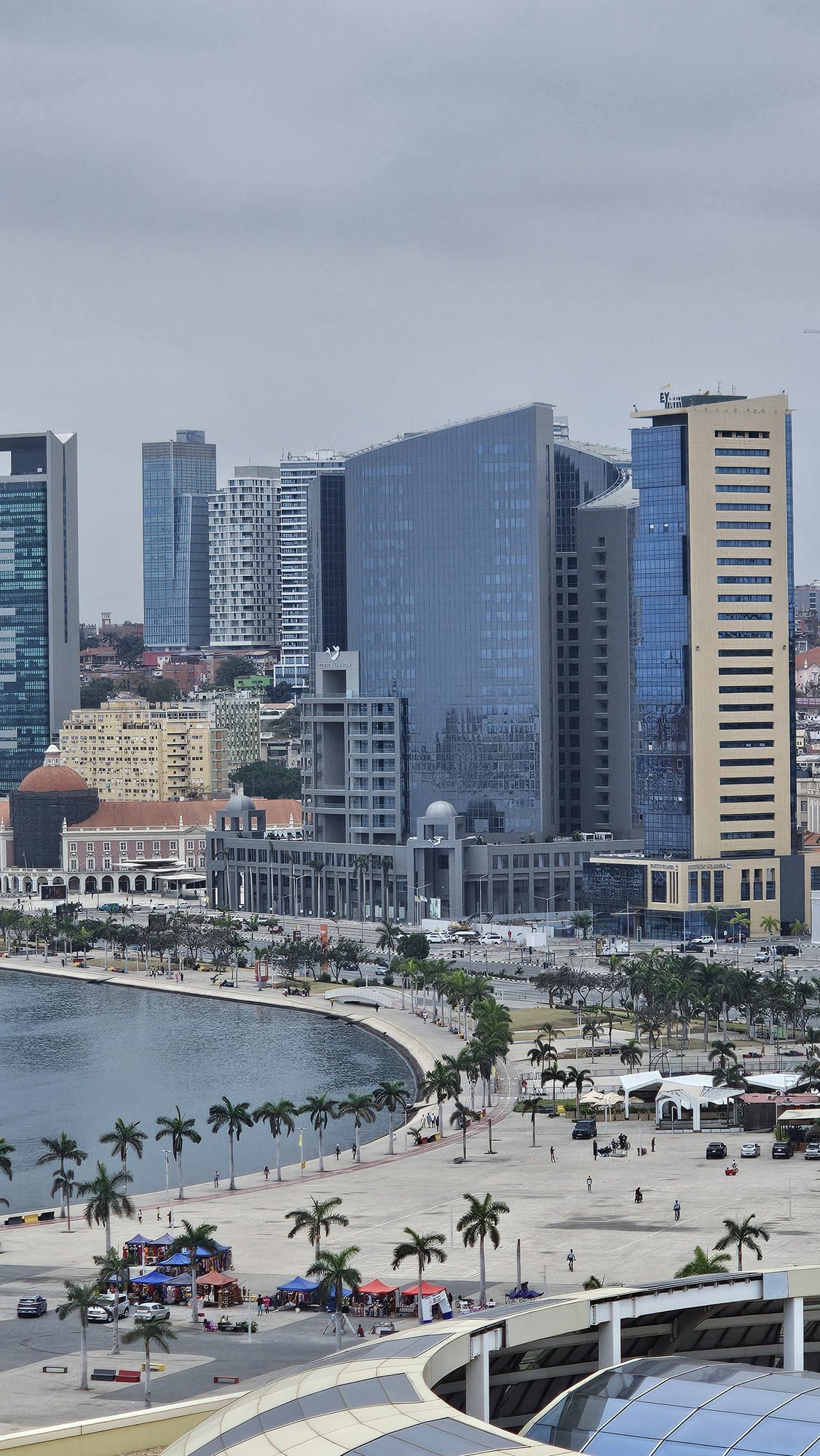
Aerial view of Luanda's buildings along the coast
Angola · Atlantic coast

Luanda

A city of nine million on a bay closed by a sand spit: a Portuguese fortress above glass towers, a palm-lined seafront, beach lunches that last until dark on the Ilha, and an hour south, red cliffs, a river of tarpon and a savanna park brought back from nothing. Few capitals are visited so little, and few reward a long weekend so well.

Photo: Carlos César via Pexels
Overview

The capital that tourism forgot, and is now inviting back

Luanda was founded by the Portuguese in 1576 and for three centuries was one of the largest slave ports in the Atlantic world; it became the capital of an independent Angola in 1975, lived through twenty-seven years of civil war that ended only in 2002, and then through an oil boom that for a time made it the most expensive city on earth for a foreigner to live in. What that history has left is a place of sharp contrasts: a seventeenth-century fort and pink colonial palaces on the hill, a wall of new towers along the bay, a rocket-shaped mausoleum on the shore, and beyond them the musseques, the informal neighbourhoods where most of the city lives and where kuduro was born.

For decades almost nobody came for pleasure, because a visa took weeks and a hotel room cost more than in London. Both have changed. Since late 2023 citizens of 98 countries, including most of Europe, the United States, Britain and Brazil, enter without a tourist visa; the kwanza has lost most of its value against the dollar, so prices have fallen to merely high; and a vast new international airport has replaced the old one in the city. Luanda is still not an easy destination. It is hot, congested and needs care after dark, and little is signposted or priced for visitors. It is also warm, musical, sure of itself and unlike anywhere else on the continent.

Give the city two days: the fortress and the old town, the Marginal at sunset, a museum, and an afternoon that turns into a night on the Ilha. Give the coast to the south one or two more: the slavery museum, the cliffs of Miradouro da Lua, the Kwanza river and the Kissama park fit into one long day with a driver, and Cabo Ledo's beach is the place to stay the night. The waterfalls at Kalandula need two days more.

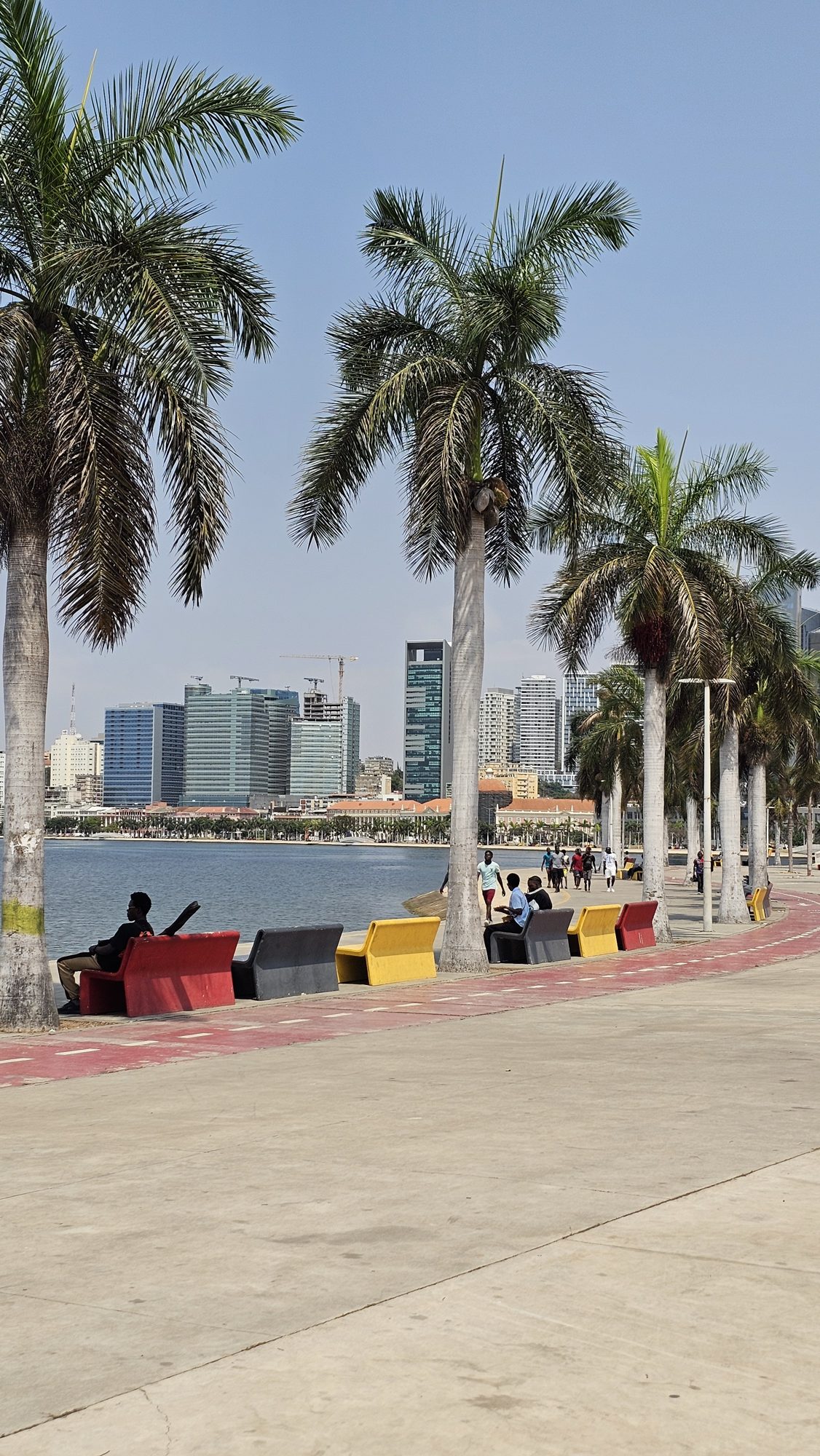
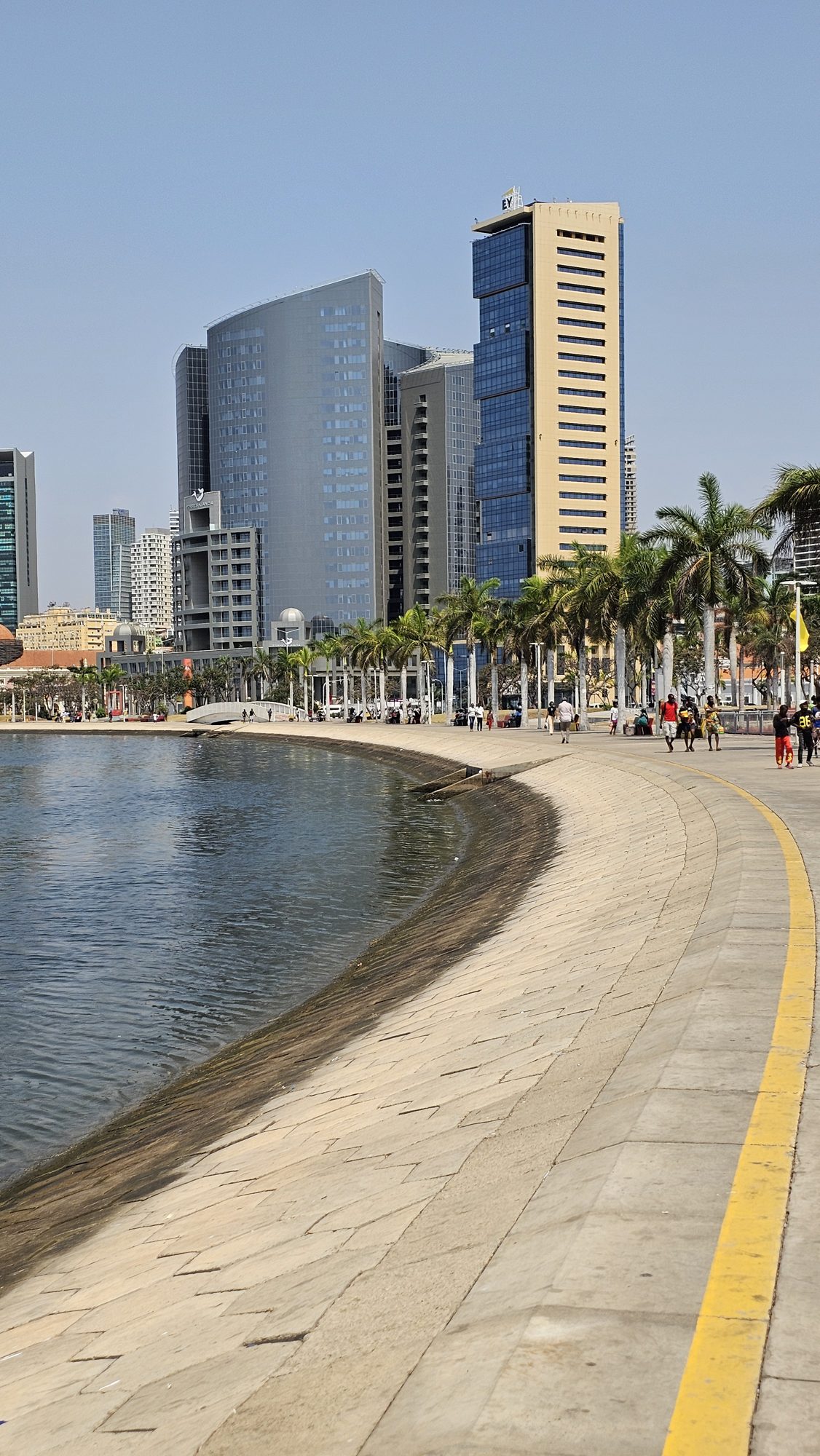
Royal palms and painted benches on Luanda's Marginal, with the towers of the city across the bay
Baixa and Cidade AltaThe fortress, the seventeenth-century churches, the iron palace, the museums and the government quarter on the hill, above the Marginal.
The IlhaSeven kilometres of sand spit across the bay: beach restaurants, clubs, fishing boats and the city's weekend.
The road southBenfica's craft market, the slavery museum at Morro da Cruz, the boats to Mussulo and the cliffs of Miradouro da Lua.
Beyond the KwanzaThe river mouth and its tarpon, Kissama's giraffes and elephants, Sangano's turtles and the surf at Cabo Ledo.
Highlights

What to see first

Nine places, four in the city and five along the coast road south. Opening hours in Luanda are rarely published and change without notice; ask your hotel to phone ahead, and carry your passport.

The bay, the Marginal and the towers of Luanda seen from the fortress hill
Founded 1576 · Tue–Sun, about 8am–4pm

Fortaleza de São Miguel

The star-shaped fort on the hill above the bay was begun by Paulo Dias de Novais in the year he founded the city, and for centuries it was the seat of the colony and a holding place for people about to be shipped to Brazil. It now houses the Museum of the Armed Forces: tanks, aircraft and artillery from the liberation and civil wars in the courtyard, blue-and-white tile panels of colonial history on the walls, and the statues of Portuguese navigators that were taken down from the city's squares after independence. The ramparts give the best view in Luanda, over the Marginal, the bay and the Ilha. It is a military site, so ask before photographing the exhibits.

The Fortaleza in detail →
The curving seafront promenade of the Marginal with palms and office towers
Free · Sunset and early morning

The Marginal and the bay

Avenida 4 de Fevereiro, the Marginal to everyone, curves for three kilometres round the bay from the port to the causeway of the Ilha: a promenade of royal palms, joggers, cyclists and kiosks rebuilt in the 2010s, with the pink colonial dome of the national bank and the glass of the new skyline behind it. The extension west, the Nova Marginal, is now the city's stage, where the Carnival parades and the fiftieth-anniversary celebrations of November 2025 were held. Walk it in the last hour of light, when half of Luanda does the same. It is among the safest places in the city by day; do not linger on the empty stretches after dark.

The Marginal in detail →
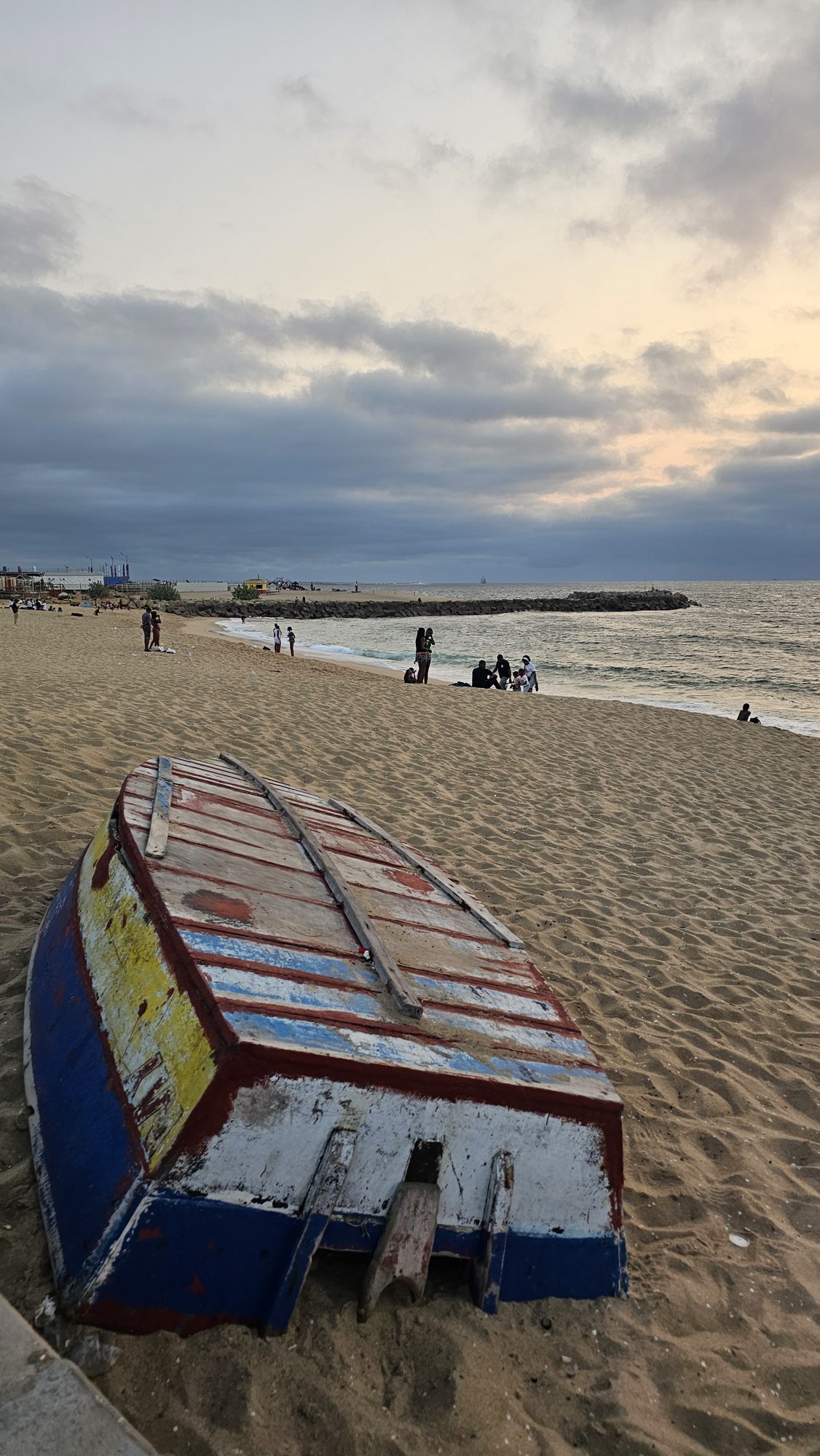
A painted wooden fishing boat upturned on the sand of the Ilha under an evening sky
Across the causeway · Lunch to late

Ilha do Cabo

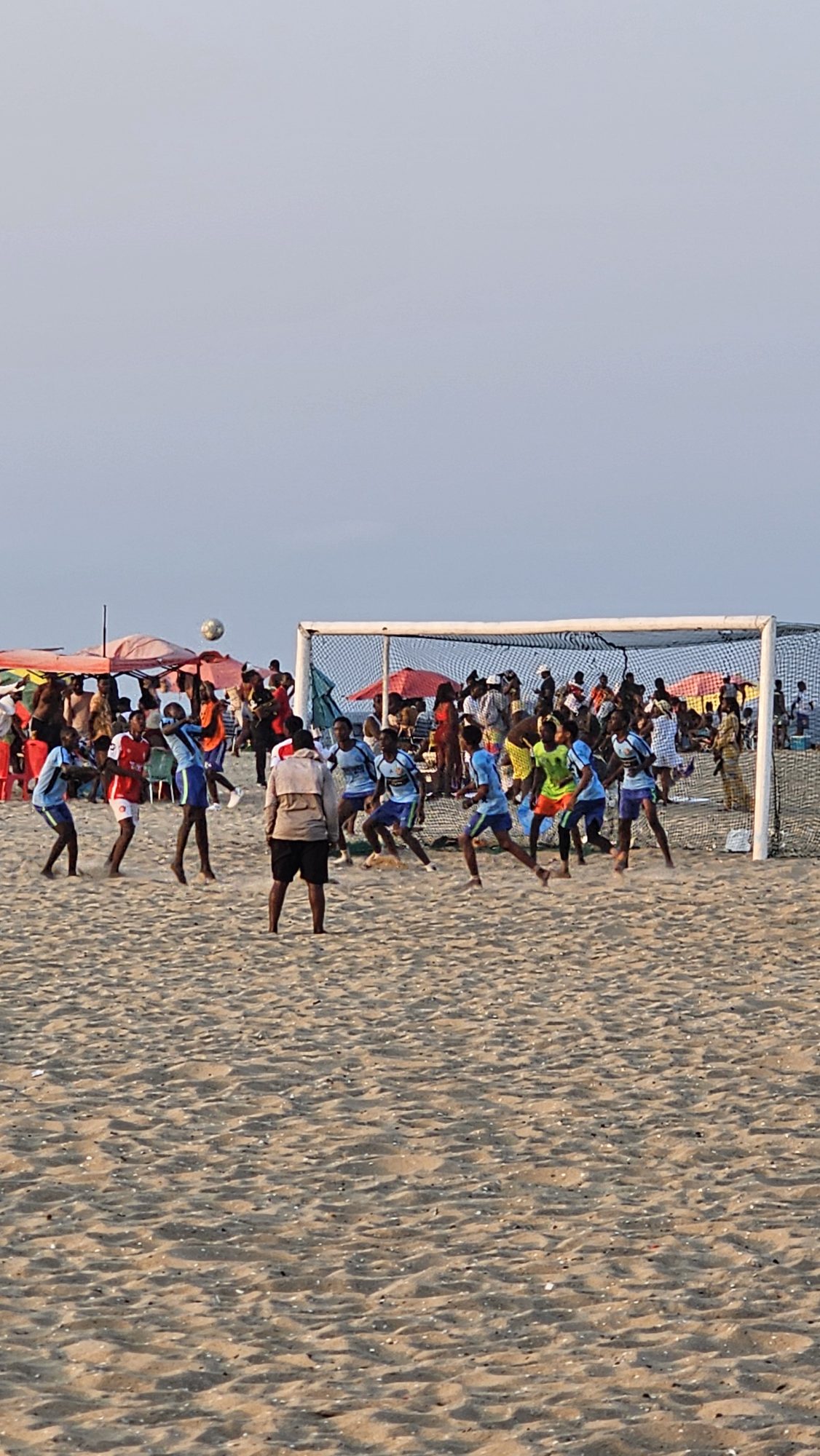
The Ilha is a sand spit seven kilometres long that closes the bay, joined to the city by a causeway and home for centuries to the Axiluanda fishing people, whose sea spirit Kianda is still honoured here. The bay side keeps its fishing boats and its grilled-fish yards; the ocean side is a line of beach restaurants, loungers and clubs. This is where Luanda eats on Saturday, dances on Sunday afternoon and goes at night, and it is covered in the food and nightlife sections. Swim on the ocean side, not in the bay, and not after heavy rain.

Ilha do Cabo in detail →
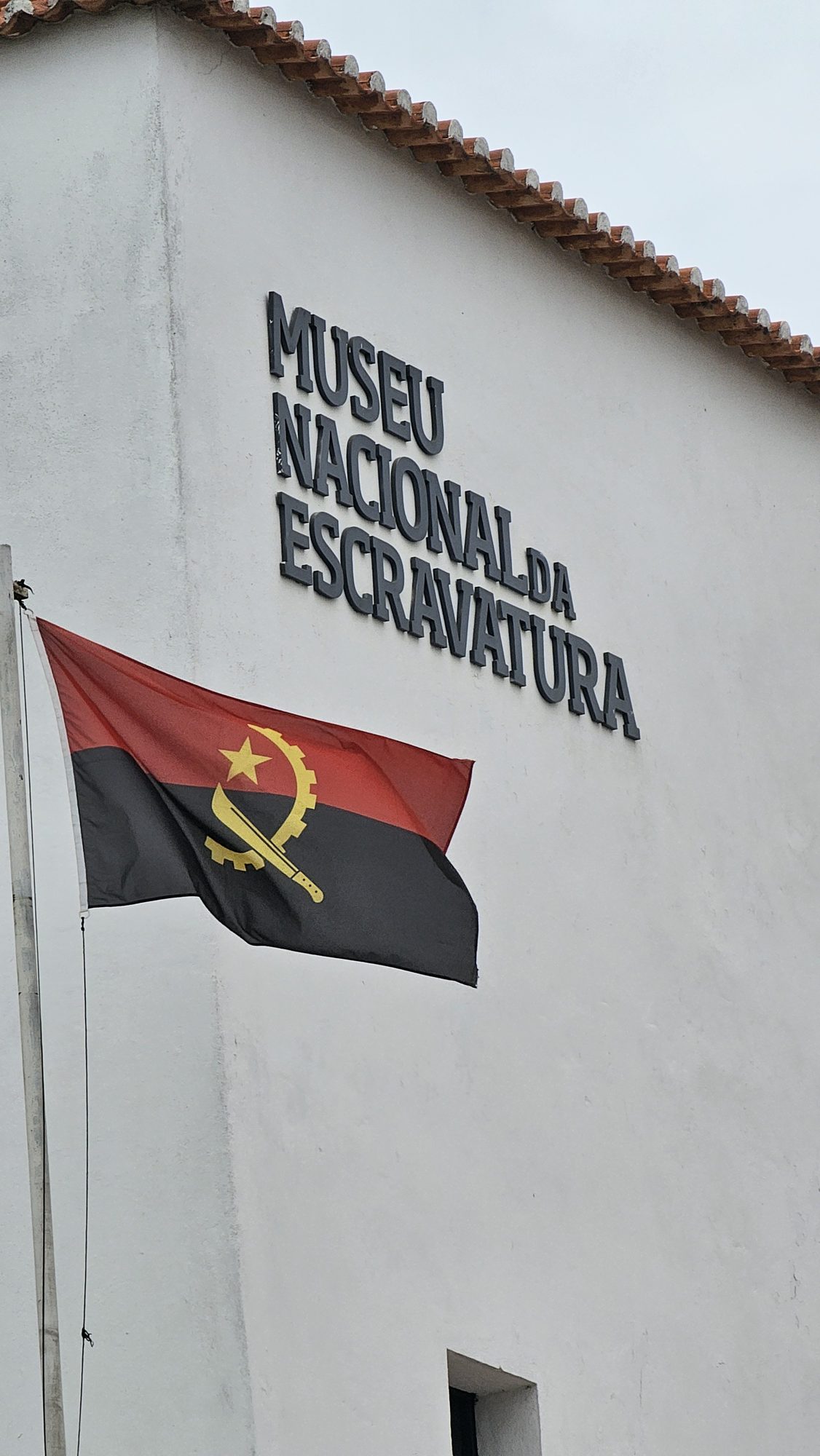
The white wall of the Museu Nacional da Escravatura with the Angolan flag flying beside it
Morro da Cruz · 25 km south

National Museum of Slavery

A small white chapel and house on a bluff over the Atlantic, on the estate of the eighteenth-century slave trader Álvaro de Carvalho Matoso. In the Capela da Casa Grande captives were baptised before they were put on the ships; the museum, founded in 1977, shows shackles, documents and maps of a trade that carried several million people from this coast. The collection is modest and the setting does the work. Restoration of the building was funded in late 2024, so check that it is open, and combine it with the boat to Mussulo, which leaves from just below, or with Miradouro da Lua further on.

The Museum of Slavery in detail →
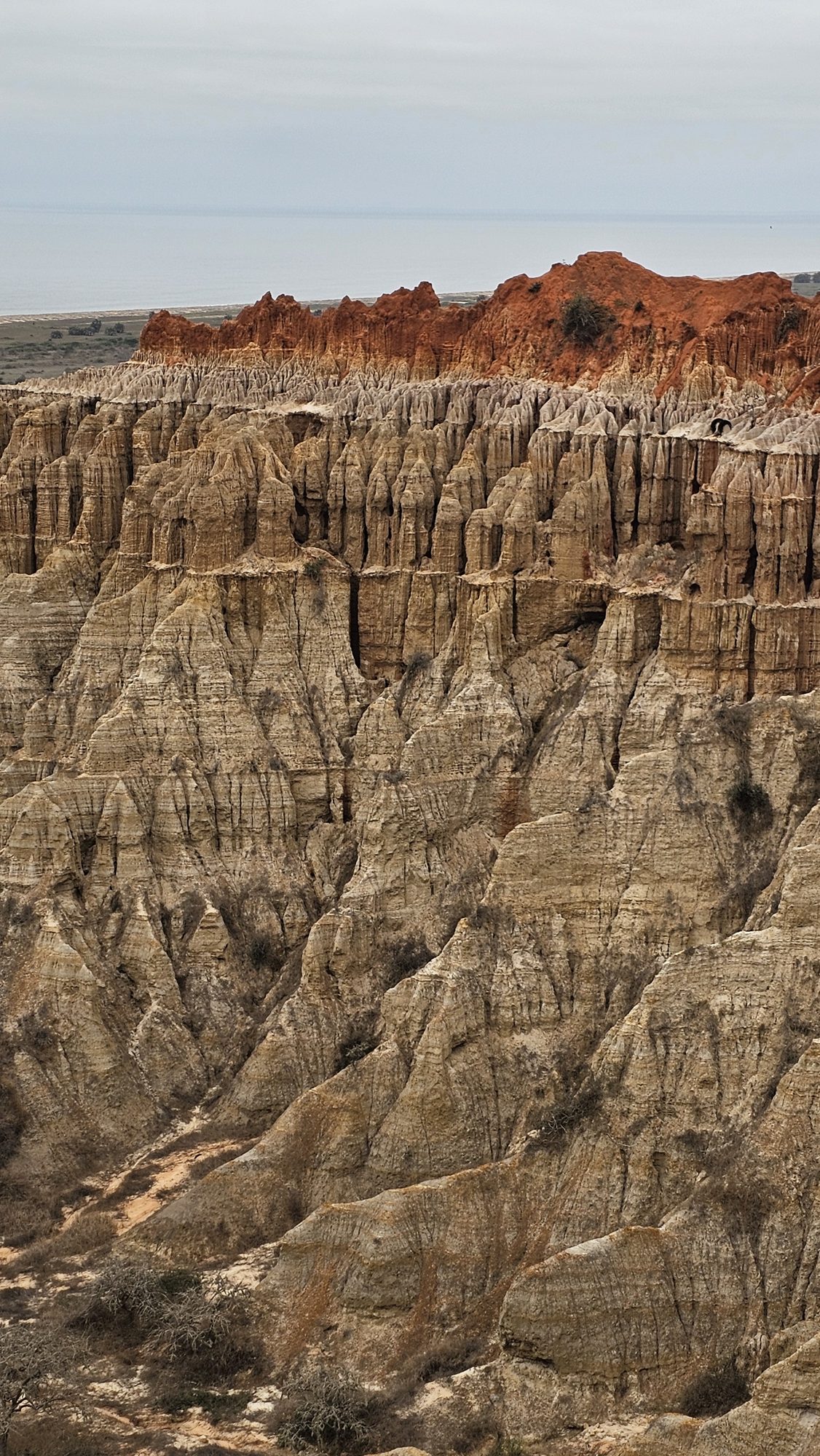
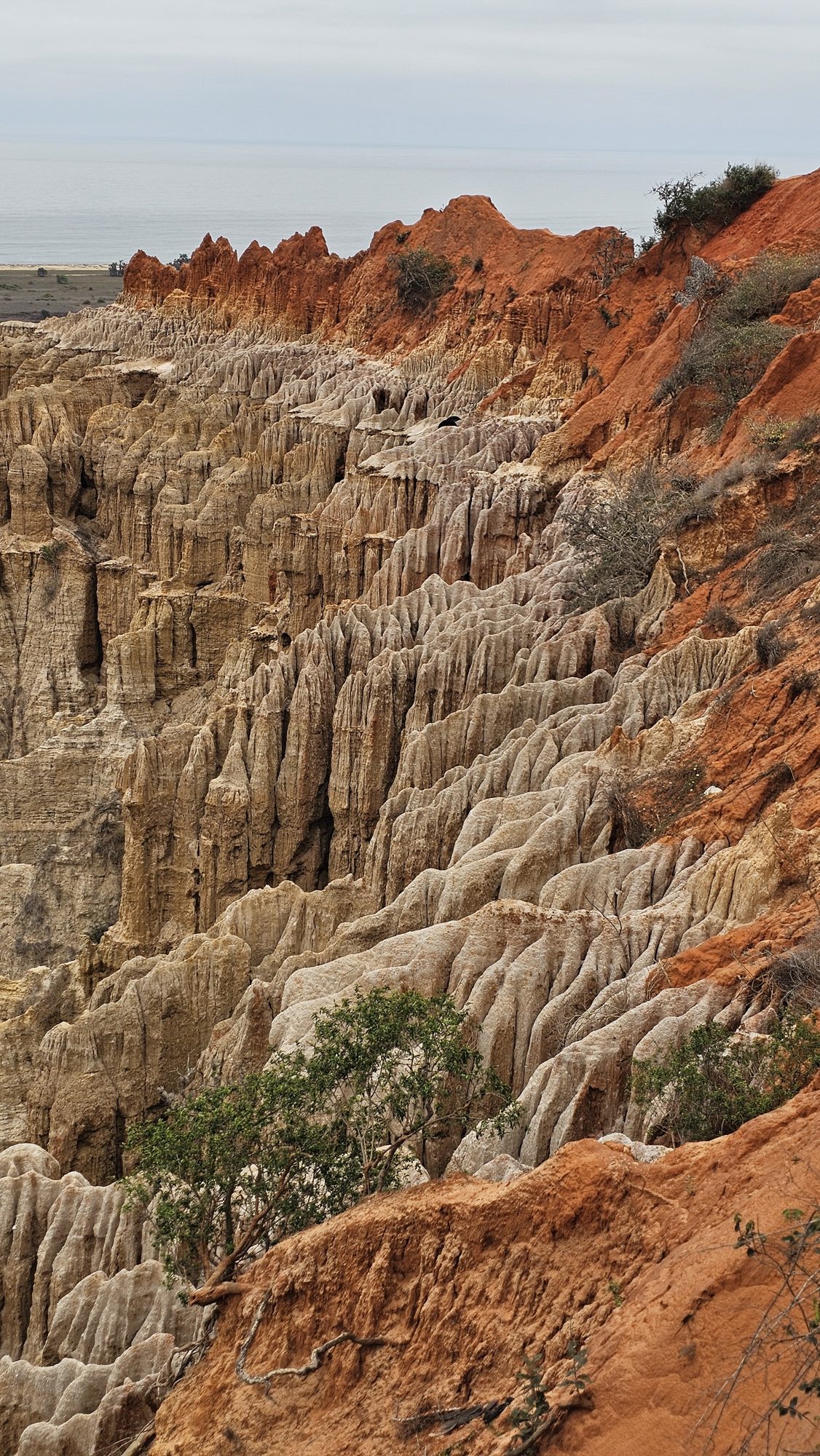
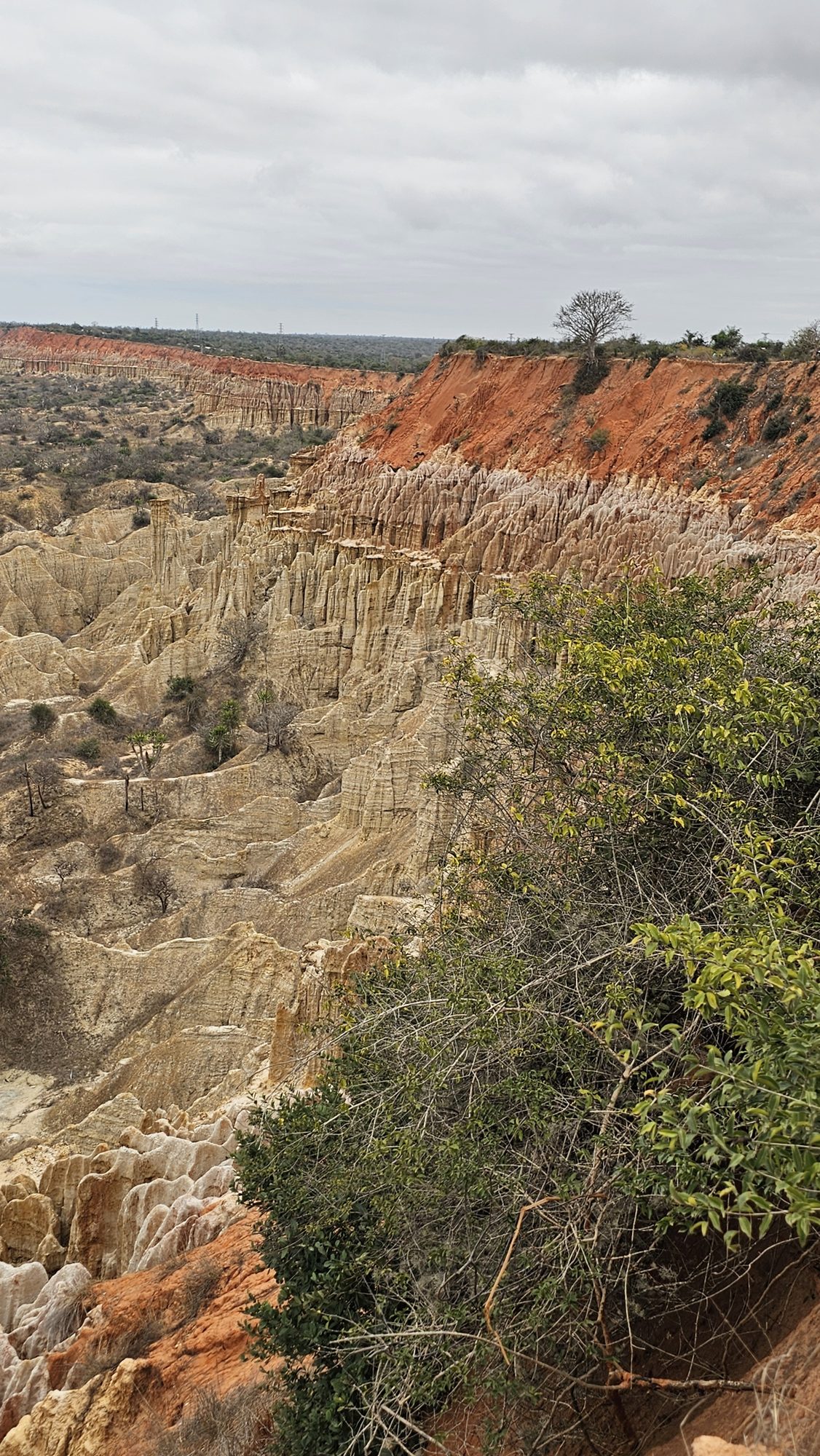
Fluted ochre cliffs capped with red earth at Miradouro da Lua, with the sea beyond
About 40 km south · Works in 2026, check access

Miradouro da Lua

The Viewpoint of the Moon is a bite taken out of the coastal plateau by rain and wind: a wide amphitheatre of fluted pinnacles in red, ochre and bone white, falling away to the Atlantic beside the main road south. It is the most photographed place in Angola and at its best in the low light of early morning or late afternoon. The tourism ministry closed the site in April 2026 for about six months of work to stabilise the rim, so confirm that it has reopened; the cliffs can also be seen from the edge of the road. There are no proper barriers, the edges crumble, and nobody should stand on an overhang.

Miradouro da Lua in detail →
An elephant on a grassy rise among savanna bushes
75 km south · Day safari from about US$110

Kissama National Park

Nearly ten thousand square kilometres of coastal savanna, baobabs and floodplain between the Kwanza and Longa rivers, emptied of animals by the war and restocked in 2000 and 2001 by Operation Noah's Ark, which flew in elephants, giraffes, zebras, wildebeest and ostriches from South Africa and Botswana. It joined UNESCO's network of biosphere reserves in 2025. A game drive finds giraffe, zebra and antelope reliably and elephants with luck, in an African park an hour and a half from a capital with almost nobody else in it. Details below.

Kissama in detail →
Fishermen with a boat on the shore beside an Angolan flag
South of the city · Boat 10–15 min

Mussulo

A barrier spit thirty kilometres long that shelters a lagoon of calm, warm, shallow water south of the city. Luanda's families have their weekend houses here, and a handful of resorts and beach restaurants serve everyone else under the coconut palms. Small boats cross from the jetties on the mainland side near Morro da Cruz in ten to fifteen minutes; agree the fare and the return time before you board. The lagoon side is for swimming and long lunches, the ocean side is wild and empty. Quiet in the week, full on Sundays.

Mussulo in detail →
A colonial-era building with arched windows among palm trees
Walk it by day · No photos of government buildings

The Baixa and Cidade Alta

The old lower town behind the Marginal holds what survives of colonial Luanda: the church of Nossa Senhora dos Remédios, the cathedral, from 1679; the Igreja da Nazaré of 1664 with its tile panel of a battle; the Palácio de Ferro, a prefabricated iron pavilion of about 1890 long credited to Eiffel's workshop and now a diamond museum; and the underground Museu da Moeda beside the national bank, which tells the story of Angolan money from nzimbu shells onwards. On the ridge above, Cidade Alta is the presidential quarter, pink, guarded and not to be photographed. The restored Cine-Teatro Nacional reopened in October 2026.

The Baixa in detail →
A surfer riding along the face of a wave
70 and 120 km south · A night away

Barra do Kwanza and Cabo Ledo

The Kwanza, the river that gave the currency its name, meets the sea seventy kilometres south of the city in a wide brown mouth lined with mangrove, where a lodge runs boat trips upriver and some of the best tarpon fishing in the world. Fifty kilometres further on, past the turtle beach of Sangano, Cabo Ledo is a horseshoe bay under cliffs with a long left-hand wave that has made it the home of Angolan surfing, a simple lodge and a beach bar. Together they make the best overnight trip from Luanda. See the sea section.

Barra do Kwanza and Cabo Ledo in detail →

Also worth your time

Praia do Bispo · Tue–Fri 9am–3pm, Sat 9am–1pm

Agostinho Neto Memorial

Seafront south of the fortress · closed Sunday and Monday, and for state visits

A concrete obelisk shaped like a rocket, begun with Soviet help in 1982 and finished thirty years later, holding the embalmed body of Angola's first president, with a museum and gardens at its foot. Dress soberly and expect rules; foreign leaders lay wreaths here, and it shuts when they do.

Baixa · Check hours

National Museum of Anthropology

A colonial mansion in the lower town

Masks, Chokwe carving including the famous Thinker figure, musical instruments and the material culture of every region of the country. The best museum in the city when it is open, and the right preparation for the craft market.

Road south · Mornings

Benfica craft market

On the way to Morro da Cruz · busiest at weekends

The country's main craft market: masks, Thinker statues, paintings, baskets, malachite and batik. Bargain firmly and with good humour, and do not buy ivory or anything claimed to be antique, which cannot legally leave the country.

Malanje · 2–3 days

Kalandula falls and the black rocks of Pungo Andongo

About 360 km east · 6–9 h by road · with a driver or operator

One of the great waterfalls of Africa, a hundred metres high and several hundred wide, at its fullest from March to May, and two hours from it a field of giant black monoliths tied to the legend of Queen Nzinga. Operators in Luanda sell three-day loops. Never drive the road at night.

Nature & day trips

Red cliffs, a great river and a park an hour and a half away

Nature here means the coast road: a day by car with a driver or an operator, out through the baobabs to the cliffs, the river and the park, with a short walk at each stop. Start at six to beat the traffic and be back before dark.

JFMAMJJASOND

Touring season: teal = cacimbo, the cool dry months, 20 to 25°C under grey skies, with the best roads and the easiest game viewing; green = shoulder months, warm with little rain; grey = the hot wet season, 30°C and humid, with downpours that flood roads, heaviest in March and April, though the sun is at its best for the beach.

Sandstone pinnacles and red earth at Miradouro da Lua with a baobab on the skyline
Easy · A short walk on the rim

Miradouro da Lua

Forty kilometres south of the centre the road runs along the top of the plateau and the ground simply opens on the seaward side. The viewpoint is a few minutes' walk along the lip of the amphitheatre, looking down into gullies and spires cut from soft sandstone and clay, white at the bottom, yellow in the middle and rust red on top, with the ocean a pale line beyond. There are no paths into the formations and you should not make one; the rock is as soft as it looks. Come before nine or after four, when the shadows give the ridges their depth.

Full route guide →
40 kmfrom the centre
1–1.5 hby car each way
30 minat the rim

The site was closed in April 2026 for stabilisation works planned to last about six months; ask your driver or hotel whether the viewpoint itself is open. It is always combined with something else: the slavery museum on the way, or the Kwanza and Kissama beyond.

Elephants grazing on open grassland
Easy · Open vehicle · With an operator

A day in Kissama

Cross the bridge over the Kwanza, seventy kilometres from the city, and the park gate is on the left. The game drives run through a landscape of euphorbia, grass and enormous baobabs to the floodplain of the river, in the section where the animals brought in by Operation Noah's Ark were released and have bred: giraffe, zebra, blue wildebeest, ostrich, kudu, bushbuck and a herd of elephants that may or may not show itself. A full day usually adds a boat trip on the Kwanza through the mangroves and a stop at Miradouro da Lua on the way home.

Full route guide →
75 kmto the gate
Full day6am to dusk
US$110–600half day to private full day

Operators quote in dollars: about US$110 a head for a shared half-day, US$300 for a full day with the boat, and US$500 or more privately. An overnight stay costs from about US$950 for two days. June to September is best, when the grass is low and the animals come to water. Go with an operator rather than alone; there is little signage and less help.

River · 1–2 h

Boat on the Kwanza

Barra do Kwanza, 70 km south · from the lodge at the mouth or within a Kissama tour

A slow run upriver between walls of mangrove: herons, kingfishers and fish eagles, monkeys in the trees, sometimes a crocodile on the bank. Manatees live in the lower river and are a rare, lucky sighting.

Full route guide →
Beach · 90 km south

Sangano

Between the Kwanza and Cabo Ledo

A long, clean beach below low cliffs, and one of the stations where Angola's turtle project counts nests from October to March. Simple facilities at best; bring what you need.

Full route guide →
Lagoon · Half a day

Mussulo by boat

Jetties near Morro da Cruz · 10–15 min crossing

The easy nature day: cross the lagoon, walk the sand to the ocean side, swim in water as calm as a pool and eat grilled fish under the palms before the last boat back.

Full route guide →
Do not drive yourself. Luanda's traffic is fierce, police stops are frequent and roads beyond the city are unlit, with animals, potholes and broken-down trucks. A car with a driver for the day or a seat on an operator's tour costs little more and removes most of the difficulty.
Sea & surf

One very good wave, the biggest tarpon in Africa and a lagoon as flat as a pool

The coast south of the city has three things for people who like the water: a long left-hand point break at Cabo Ledo, sport fishing at the mouth of the Kwanza and the calm, warm lagoon of Mussulo. The cacimbo months bring the swell; the hot season brings the fish.

A surfer crouching on a clean ocean wave
Left point break · All levelsBest April to October

Cabo Ledo

Two hours south of Luanda, inside the southern edge of Kissama, a headland bends the southern-winter swells into a long, slow left that peels across a sandy bay for several hundred metres on a good day. It is one of the longest waves on this side of the Atlantic and, most days, one of the emptiest. The scene is small: a lodge of cabins on the hillside, a beach bar, boards to rent and lessons for beginners on the gentle inside section, with stronger surfers walking up to the point. Weekends bring Luanda's surfers and families; midweek it belongs to the fishermen.

120 kmfrom Luanda
Apr–Octswell season
20–24°Cwater in season
From US$430packaged surf weekend

Operators in Luanda sell surf weekends with transport and a cabin; otherwise hire a driver and book the lodge ahead. Bring a spring suit for the cacimbo months, when the water is cool, and cash, since there is no bank for a hundred kilometres.

Sport fishing · Nov–Apr

Tarpon at Barra do Kwanza

The lodge at the river mouth · catch and release · best Feb–Apr

The Kwanza mouth is one of the few places in the world where giant Atlantic tarpon of a hundred kilos are caught regularly, along with jack crevalle and, offshore, sailfish. Expect to pay US$200 to US$500 a day for a boat and guide; book through the lodge or a fishing-travel agent.

Lagoon

Mussulo's flat water

South of the city · afternoons for wind

Shallow, warm and sheltered, with a sea breeze most afternoons: good for swimming, paddleboards and small boats, and used by local kitesurfers. Bring your own kit if you plan to ride.

Swimming

Where to swim

The Ilha's ocean side, Mussulo, Sangano and Cabo Ledo

The ocean side of the Ilha for a swim in town, Mussulo's lagoon for children and lazy afternoons, Sangano's long beach for space and Cabo Ledo's bay for a weekend. The water is coolest in the cacimbo and warmest from December to April.

Wildlife

A restocked park, turtle beaches and the birds of the lagoon

The war emptied Angola's parks and they are refilling slowly. Near Luanda that means Kissama's reintroduced herds, olive ridley turtles on the beaches south of the Kwanza, and the birds of the lagoons.

Kissama's herds

75 km south · best June to September

Giraffe, zebra, wildebeest and ostrich, all descended from the animals flown in at the turn of the century, are seen on most drives; elephants on some; native bushbuck, duiker and forest buffalo occasionally, and crocodiles in the rivers. A further group of elephants was promised from Britain in 2025, and there are no crowds.

JFMAMJJASOND

Sea turtles

Sangano, Palmeirinhas and the Kwanza coast · nesting October to March

Olive ridleys nest in large numbers on the beaches south of Luanda, with leatherbacks and green turtles beside them, watched over by Projecto Kitabanga, the university conservation programme that has returned millions of hatchlings to the sea. If you are on a beach at night in season, use no lights and keep well back.

JFMAMJJASOND

Birds of the lagoon and the river

Mussulo bay and the Kwanza estuary · most migrants November to March

The lagoon, the river mouth and the coast to Cabo Ledo form one of the important wetlands of the south-east Atlantic; a census in January 2026 counted more than forty thousand migratory waterbirds on the Angolan shore. Look for flamingos on Mussulo's flats, terns and pelicans at the Kwanza mouth and fish eagles upriver.

JFMAMJJASOND

Whales, manatees and the giant sable

Offshore June to October; the lower Kwanza; Malanje province

Humpbacks pass along the coast in the southern winter and are sometimes seen from the cliffs at Cabo Ledo. West African manatees live in the lower Kwanza and are a stroke of luck. The giant sable antelope, the palanca negra on the national football shirt, survives only in Cangandala and Luando, four hundred kilometres east, and is visited only by special arrangement.

JFMAMJJASOND
An elephant standing in an open field
Kissama

Elephant

Possible, never promised.

Three giraffes in an African savanna landscape
Kissama

Giraffe

Four arrived in 2001. Count them now.

A sea turtle swimming underwater in blue light
Oct–Mar

Olive ridley

No torches on the nesting beaches.

Food & drink

Mufete on the Ilha on Saturday, muamba with funge, and a cold Cuca

Luanda has one of the great home cuisines of Africa, built on palm oil, cassava, okra and Atlantic fish, a Portuguese taste for seafood and wine, and a set of polished restaurants where the city's business is done. Eating out is expensive by African standards and roughly European at the top.

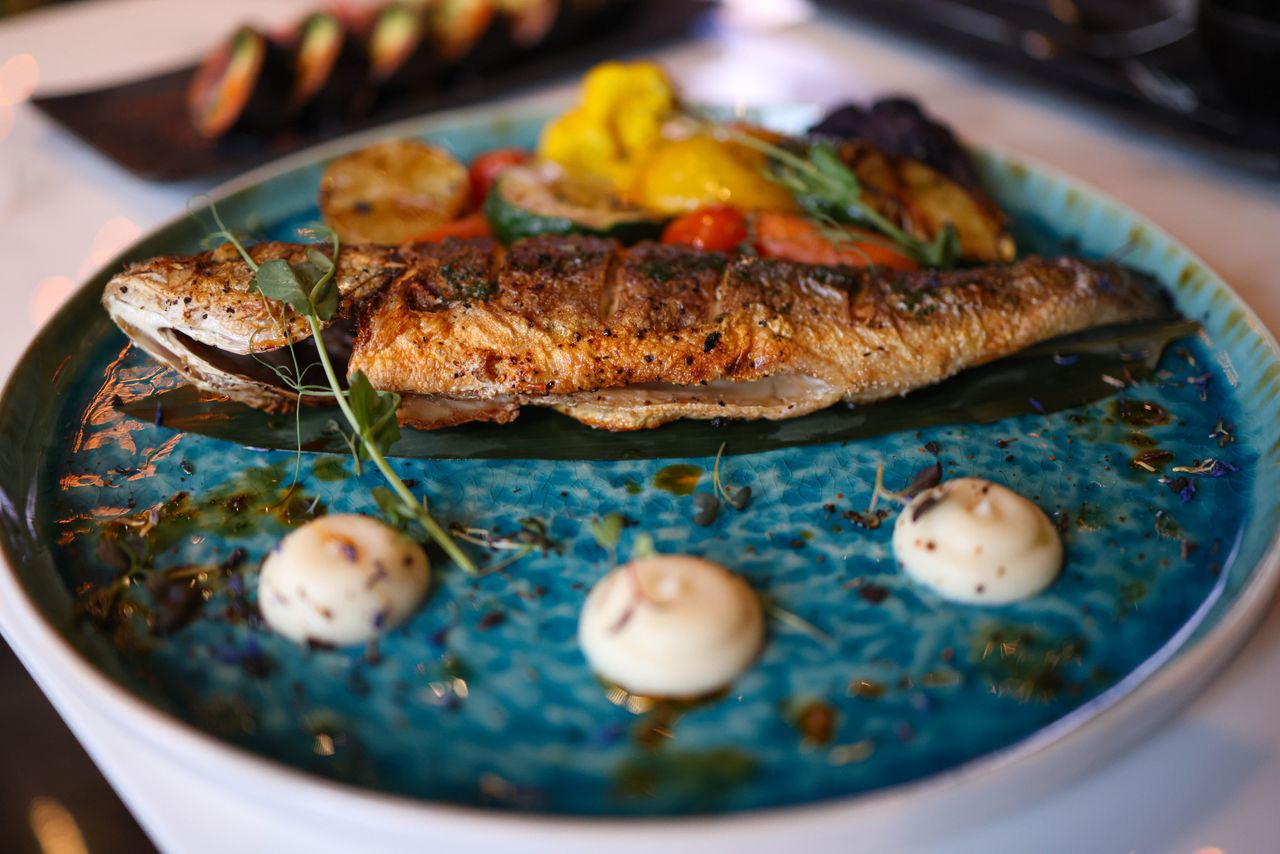
A plate of grilled fish and vegetables served in a restaurant
Eat this

Mufete

The dish of the Ilha and of Saturday lunch: a whole grilled fish, usually cacusso, a tilapia, or a sea fish from the morning's boats, served with beans stewed in palm oil, boiled sweet potato, plantain and cassava, toasted cassava flour and a sharp sauce of raw onion, vinegar and chilli. It arrives on one large platter for the table and takes the afternoon to finish.

A chicken dish in sauce on a table, seen from above
Eat this

Muamba de galinha, calulu and funge

Muamba is the national dish: chicken simmered in red palm oil with okra, squash and garlic until the sauce is thick and orange. Calulu is its cousin from the coast, dried and fresh fish stewed with tomato, okra and sweet-potato leaves. Both come with funge, a smooth, stretchy porridge of cassava or maize flour that you pull off in pieces and dip. Kizaca, pounded cassava leaves with ground peanut, is the side to order.

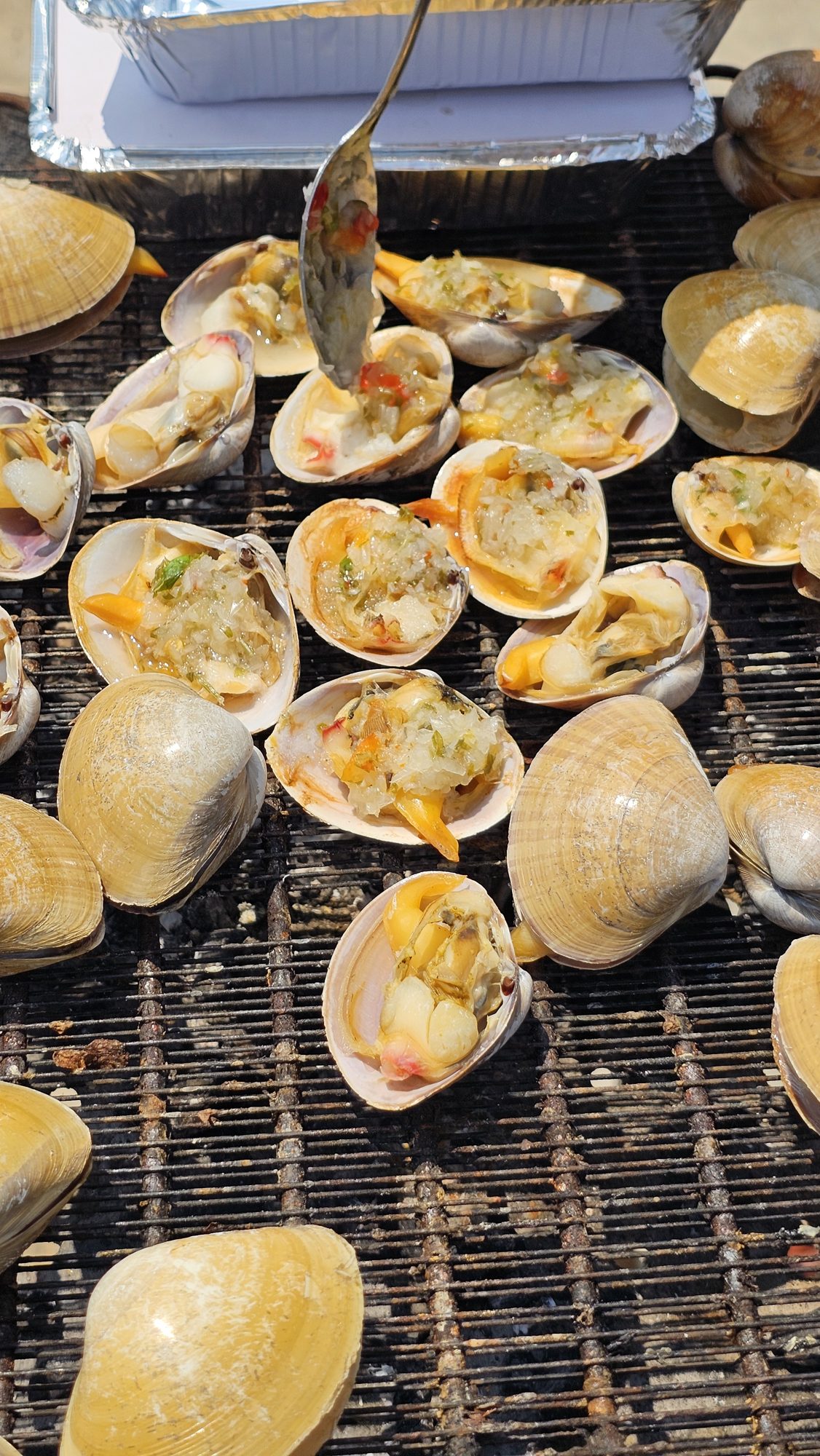
Clams topped with onion and peppers grilling on a charcoal rack
Eat and drink this

Shellfish on the grill, ginguba and Cuca

Clams opened over charcoal and dressed with onion, peppers and lime, prawns and lobster from the cold Benguela current, and roasted peanuts, ginguba, sold in paper cones on every corner. The beer is Cuca, the national lager since 1947, with N'gola and Eka behind it. Kissangua, a lightly fermented maize drink, is the traditional refreshment. Avoid caporroto, the home-distilled spirit, which can contain methanol.

The best tables

Five grand tables, all priced for the oil economy; book, dress up a little, and arrive by taxi.

The Ilha · Seafood

Lookal Mar

Ilha do Cabo, ocean side · lunch and dinner

For a decade the restaurant most often named the best in Luanda: Mediterranean cooking and impeccable fish on a terrace over the Atlantic, with a beach club of pool, daybeds and DJs next door for afterwards. The Saturday lunch table of the city.

$$$$
Classic

Pimm's

City centre · dinner, book

The long-standing grand table: Portuguese and European cooking, a serious cellar, white tablecloths and the highest and steadiest ratings in town. Where deals are closed and anniversaries kept.

$$$$
Fusion

Nikki's House

Maianga · lunch and dinner

International cooking with Angolan ingredients in a stylish house in a residential quarter; inventive plates, good cocktails and a younger crowd than the grand rooms.

$$$
Contemporary

Oon.dah

Maculusso · dinner

A spare, modern dining room serving contemporary plates that move between Angola, Portugal and Asia. The most design-minded of the city's kitchens.

$$$
On the bay

Cais de Quatro

The waterfront · lunch and sunset

Mediterranean cooking with Angolan touches at a table on the water, facing the towers of the Marginal across the bay. Come for a late lunch and stay for the lights.

$$$

Where locals eat

Ilha · Saturday lunch

The mufete yards of the Ilha

Bay side and the far end of the spit · from noon at weekends

Open-air yards with plastic chairs, charcoal grills and fish chosen from a cool box. Ask your driver or hotel which one is good this year; they change, and everyone has a favourite.

$–$$
Ilha · Beachfront

Café del Mar and Tamariz

Ilha do Cabo, ocean side · lunch to late

Two of the long-running beach houses: tables on the sand, grilled fish, prawns and caipirinhas, families at lunch and a louder crowd as the sun goes down.

$$–$$$
Ilha · Steak

Bifeologia

Ilha do Cabo · dinner

A steakhouse for when the fish has run its course, with proper cuts, a Portuguese wine list and a terrace.

$$$
Ilha · Sundowner

Missanga Beach Bar

Ilha do Cabo · afternoon to night

A feet-in-the-sand bar for snacks, cocktails and the sunset, easier on the wallet than the beach clubs.

$$
Grill

Nandinho's

City · lunch and dinner

The churrasqueira of record: charcoal chicken with piri-piri, chips and rice, cold beer and no ceremony. The cheapest good meal you will have.

$–$$
Angolan dishes

Viva Luanda Privé

Ingombota · reopened late 2024

A restaurant of Angolan classics, muamba, calulu and funge done carefully, with a room dedicated to Agostinho Neto. The place to try the canon in comfort.

$$–$$$
On wine: Angola is one of Portugal's largest wine customers, and every good list is Douro, Alentejo and Vinho Verde with some South African bottles, at prices swollen by import duty. Two Angolan wines exist, Serras da Xixila from the highlands of Cuanza Sul and Vale do Bero from the desert near Namibe; neither has a cellar near the capital, but ask for them, as a bottle is a good story to take home.
Nightlife

The city that invented kizomba and kuduro goes out late and dances properly

Luanda gave the world three kinds of music: semba, the root, sung by Bonga and Paulo Flores; kizomba, the slow partner dance now taught on every continent; and kuduro, the frantic electronic sound of the musseques. All three are alive here. Bars fill after ten, clubs after midnight and run until four or five; Saturday is the big night and Sunday afternoon on the Ilha is the best one. Go door to door by app taxi and never walk after dark.

Sunday, from 4pm

The Ilha beach clubs

Ilha do Cabo, ocean side · Lookal Beach Club, Miami Beach Club and their neighbours

The Luanda institution: a long lunch that becomes a sunset session with a DJ or a live band, then a dance floor on the sand. Pools, daybeds and bottle service at the smart end, plastic chairs and a speaker at the other. Dress well; Luandans do.

Midweek and weekends

Kizomba nights

Ilha bars and city clubs · ask which night is on this week

Couples of every age dancing close and slow to a live band or a DJ, with a standard that will make a visitor sit down and watch. Wednesday sessions on the Ilha are a tradition. Dancers are generous with beginners who ask politely.

Live music

Semba, jazz and the arts spaces

Baixa and Miramar · hotel bars on the Marginal, the Cine-Teatro Nacional, cultural centres

Live semba and jazz move between hotel bars, cultural centres and a few historic rooms in the lower town, and the Cine-Teatro Nacional has had a programme again since October 2026. Listings live on Instagram; your hotel will know what is on.

After midnight

Clubs in Miramar and Talatona

Thursday to Saturday · cover from a few thousand kwanzas with a drink

Afro-house, amapiano, kuduro and kizomba in clubs and lounges across the hill of Miramar and the southern suburb of Talatona. Doors are selective about dress, and tables are how locals do it.

February

Carnival

Nova Marginal · expected 6–9 February 2027, programme to be confirmed

Neighbourhood groups in feathers and sequins parade to semba and rebita along the seafront, judged in classes like football leagues; União Recreativo do Kilamba has won four years running. Shrove Tuesday falls on 9 February in 2027.

11 November

Independence Day and the jazz calendar

Citywide · jazz around 30 April and in October

Concerts and ceremonies mark independence each 11 November, with closures and roadblocks to match. Jazz has an International Jazz Day festival at the end of April and a smaller AngoJazz in October in most years; confirm before planning around either.

A couple dancing close together
Kizomba

Slow and close

Born here in the 1980s.

A musician playing guitar at night under city lights
Semba

The root

The grandfather of samba and kizomba.

A man and a woman dancing in traditional dress
Carnival

February

Rebita on the Nova Marginal.

Practical notes

Before you go

The new airport

Since early 2026 scheduled flights use Dr. António Agostinho Neto International Airport, code NBJ, at Bom Jesus, about 40 kilometres south-east of the centre; the old Quatro de Fevereiro airport in the city no longer handles regular passenger services. TAAG, the national carrier, has its hub here, with Emirates, Turkish Airlines, Royal Air Maroc, Airlink, ASKY and the European airlines. Allow an hour to the centre off-peak and two at rush hour. An app taxi costs roughly 8,000 to 18,000 kwanzas, a taxi from the rank up to 25,000, and a pre-booked hotel transfer more; public buses run for 1,000. The rail link was suspended in late 2025.

Visa and health

  • Visa-free: citizens of 98 countries, including the EU, UK, US, Canada and Brazil, enter without a tourist visa for up to 30 days a visit and 90 days a year. Carry a return ticket and a hotel booking.
  • Yellow fever: official advice differs by country on whether the certificate is checked. Be vaccinated and carry the card.
  • Malaria: present all year, in the city too. Take prophylaxis and use repellent.
  • Drink bottled water. Cholera outbreaks were reported in 2025.

Money

The kwanza has been held at about 912 to the US dollar since 2025. Bring clean, recent dollar or euro notes and change them at a bank or exchange bureau, never on the street. Cards work in the main hotels, the better restaurants and supermarkets; cash machines often refuse foreign cards or are empty, so do not depend on them. Taxis, markets, boats and beach bars are cash. Budget travel is hard: a decent hotel costs US$120 to US$250 a night and tours are priced in dollars.

Getting around

Use ride-hailing apps. Yango is the largest, Heetch the second, and T'Leva runs its own cars; fares are low and the car comes to the door. The blue-and-white shared minibuses, candongueiros, are cheap, crowded and not for a first visit. Do not self-drive. For the coast south or Malanje, hire a car with a driver or go with an operator, and be off the road by dark.

Safety

  • Crime: street robbery, phone snatching and smash-and-grab at traffic lights are the risks. Keep phones and bags out of sight, windows up and doors locked.
  • After dark: do not walk anywhere. Take a car door to door, even for short distances.
  • Where: the Baixa, the Marginal, the Ilha and Talatona are fine by day. Stay out of the musseques without a local host.
  • Photography: it is illegal to photograph government buildings, the presidential quarter, police, military sites, the port and airports. Carry your passport, or a copy and the original nearby, for police checks.
  • Fuel-price protests turned violent in July 2025. Avoid demonstrations, and expect tension around the general election due in 2027.

Seasons

  • Jun–Sep: cacimbo. Cool, dry and grey, 20 to 25°C. Best for the city, Kissama and the road; surf season at Cabo Ledo.
  • Oct–Dec: warming up, first rains, turtles nesting. A good compromise.
  • Jan–Apr: hot, humid and wet, with floods in March and April. Best beach sun, Carnival in February, tarpon at the Kwanza, Kalandula at its fullest.

Where to stay

The Marginal and the Baixa for a first visit: central, close to the sights and the best views, with the business hotels on the seafront. The Ilha for the beach, the restaurants and the night. Miramar and Alvalade on the hill for leafy streets, embassies and the large international hotel. Talatona in the south for malls and gated calm, nearer the road to the coast but far from everything else.

Language and phones

Portuguese is the language of everything; Kimbundu is widely heard and English is rare outside the top hotels, so learn bom dia, obrigado and quanto custa. Local SIM cards from Unitel, the largest network, or Africell, the cheaper one, are sold at their shops with a passport. Public holidays close most things: 4 February, Carnival Tuesday, 4 April, 17 September and 11 November among them.

Photography

Photo credits

Several photographs on this page are our own. The remaining photographs are by independent photographers published on Pexels under the free Pexels licence; click a title to open the original.

Powered by Webloyt | Report abuse