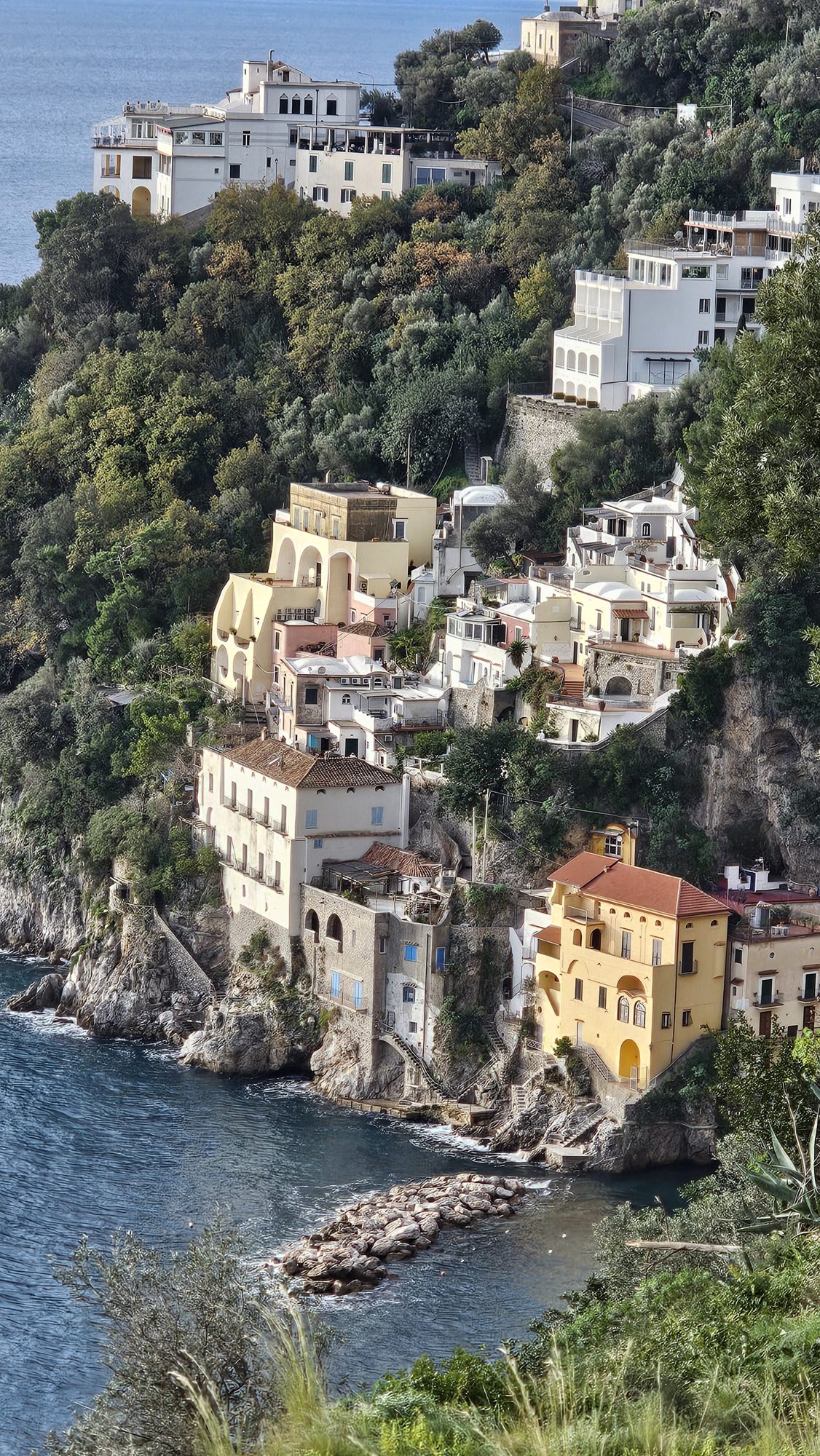
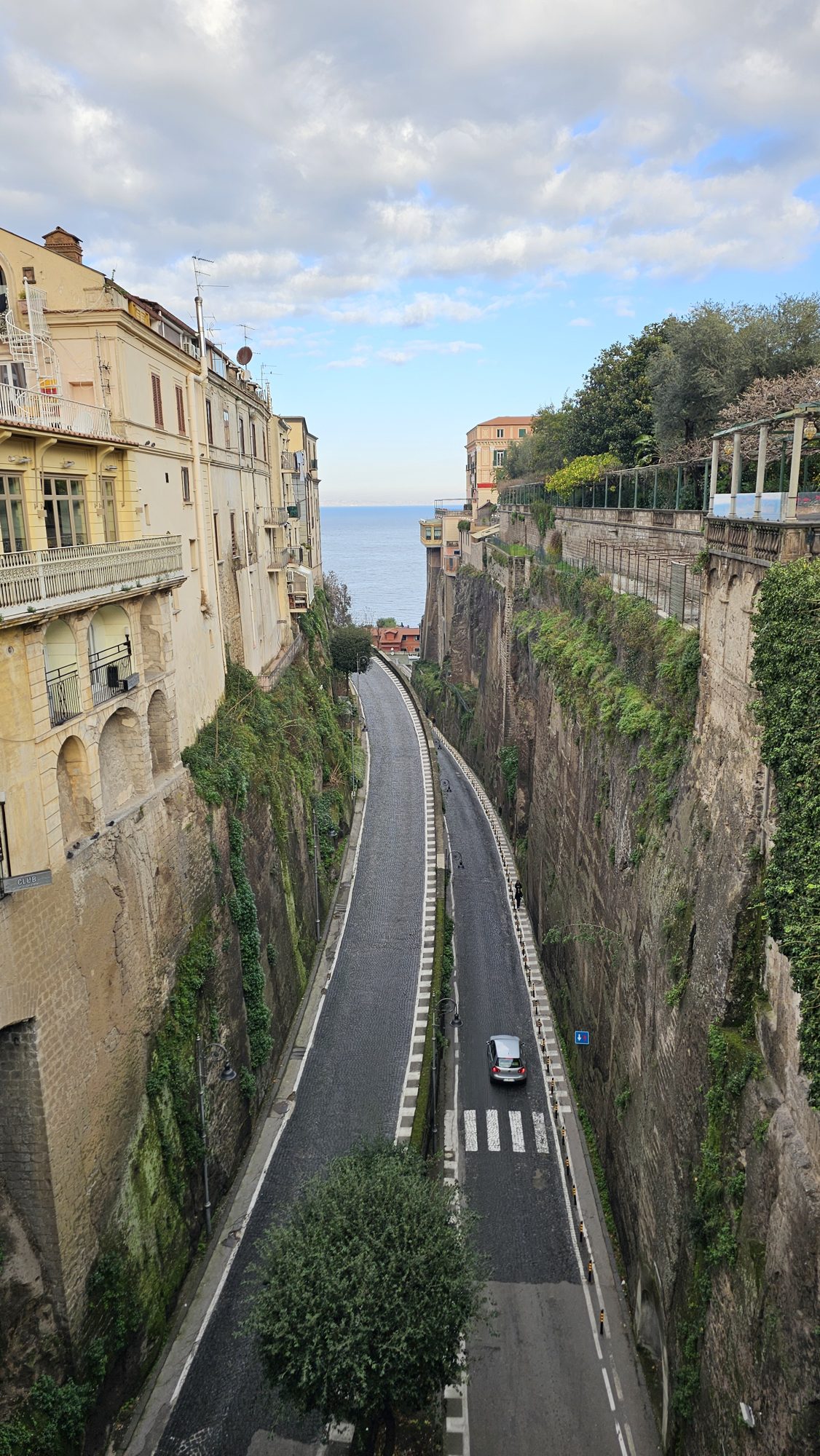
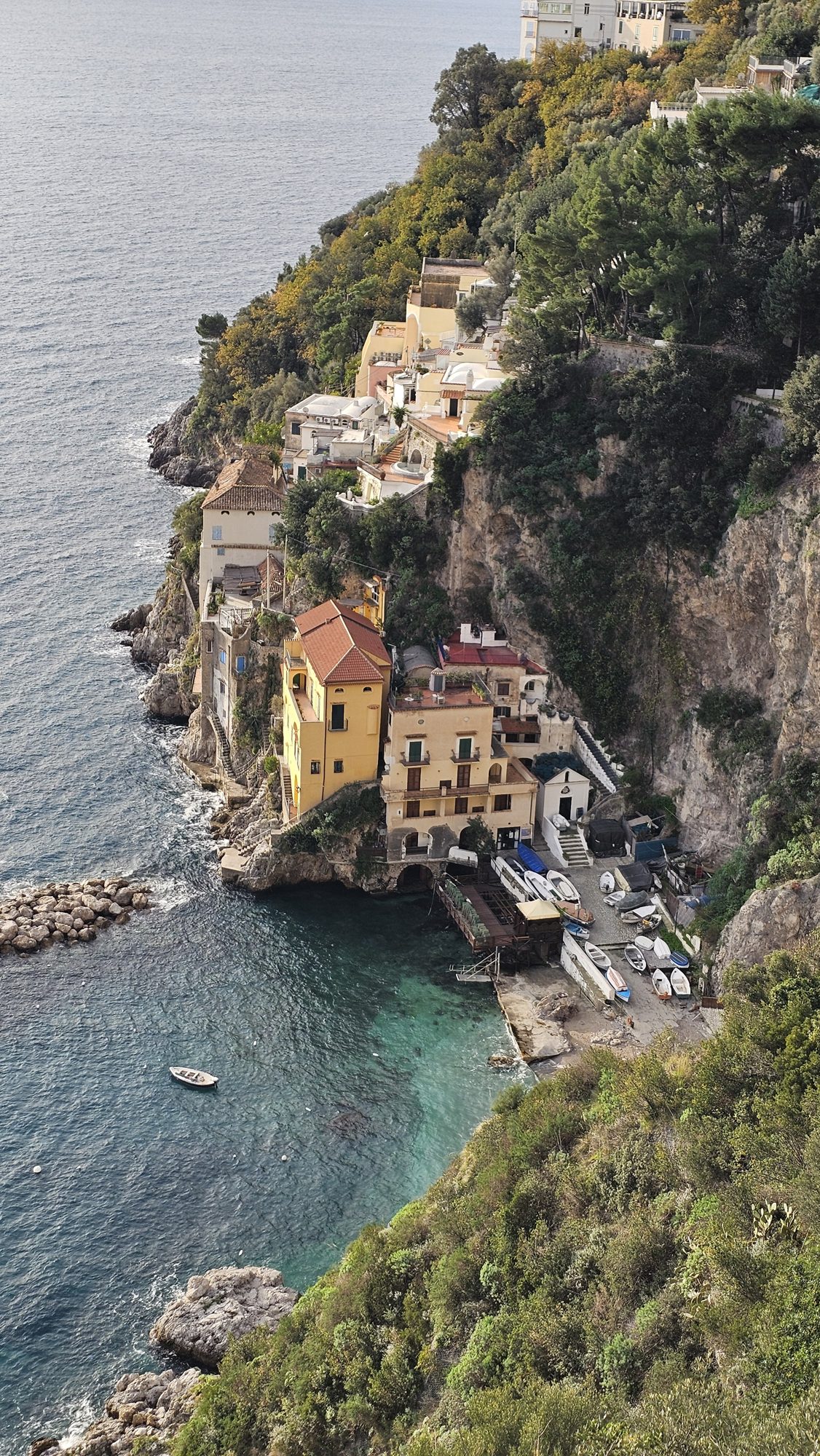
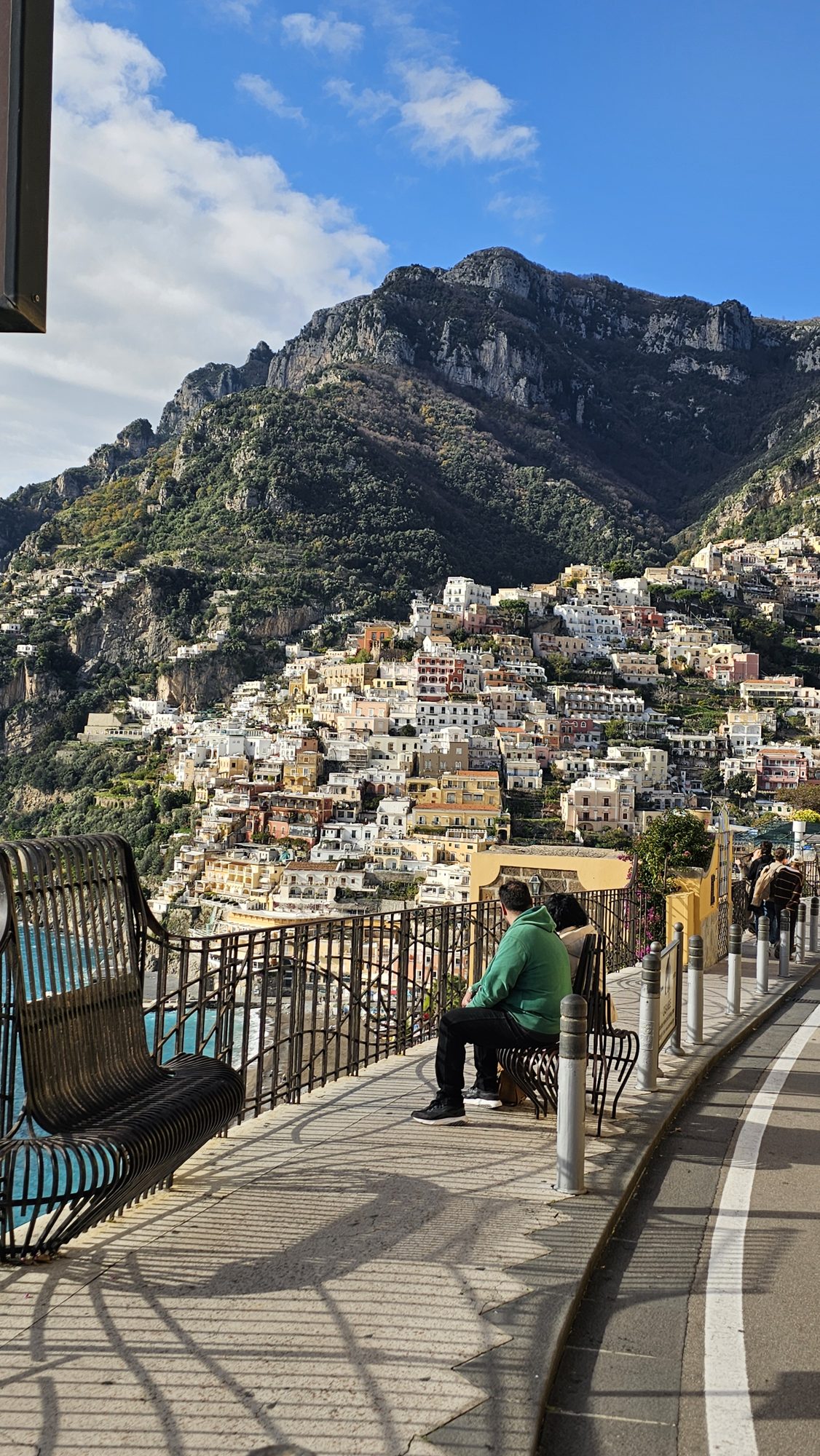
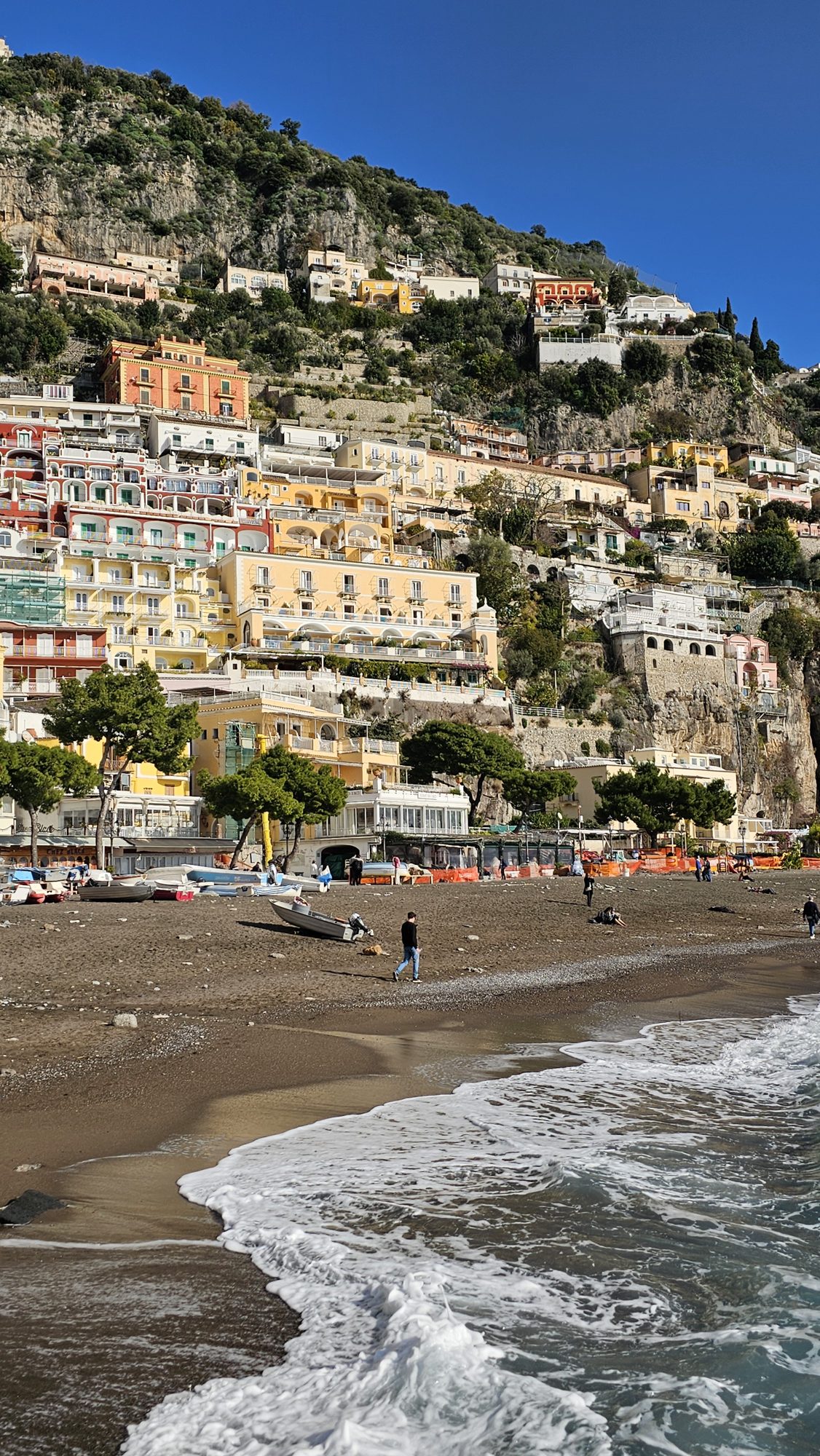
Positano's colourful houses stacked above the sea on the Amalfi Coast
Italy · Campania

Amalfi Coast

Fifty kilometres of cliff between Sorrento and Salerno, with thirteen towns wedged into its ravines, lemons on every terrace, a road that should not exist and a path along the top that the Romans called the way of the gods. The most beautiful coast in Italy and, in summer, the most crowded.

Photo: Ahmet Yüksek via Pexels
Overview

A maritime republic, a cliff road and thirteen towns in the cracks

Amalfi was a trading republic a thousand years ago, rich enough to give the Mediterranean its maritime law and its first paper mills, and the coast that carries its name has been living on its looks ever since: Positano stacked in pastel up a ravine, Amalfi round its striped cathedral, Ravello on a terrace 350 metres above the water with the best gardens in the south, and the quieter places between and beyond them, Praiano's sunsets, the fjord at Furore, Atrani's single square, Cetara's anchovy boats and Vietri's ceramics. The SS163, the Amalfi Drive, threads them together on a ledge above the sea; the buses, the ferries and the mule paths do the rest.

It is also a place with rules, because the road is one lane each way and the world wants to drive it. From Easter to autumn an alternate-plate system bans half of all cars from the coast road by day, coaches need permits, parking in Positano costs more than lunch and the ferries, which run from April to early November, are the sane way to move. The cable car to Monte Faito has been shut since a fatal accident in April 2025, landslides closed stretches of the road three times in 2026, and the great hotels and their restaurants close from November to Easter.

Three days covers Positano, Amalfi and Ravello with a boat between them. Five adds the Path of the Gods, Cetara and a long lunch at Nerano. A week lets you base in Praiano or Ravello, swim every afternoon and discover that October is the month everyone should have come.

Aerial view of Amalfi with its cathedral in the middle of the town
The westPositano and its beaches, Montepertuso and Nocelle above it, Praiano's sunsets, the Furore fjord and the Emerald Grotto at Conca dei Marini.
The middleAmalfi's cathedral and paper mills, Atrani next door, and Ravello's villas and festival on the terrace above.
The eastMinori's Roman villa and pastries, Maiori's long beach, Cetara's anchovies and colatura, Vietri's majolica and Salerno's ferries.
Over the ridge and across the waterAgerola and the Path of the Gods, Nerano and Marina del Cantone, Sorrento's trains and Capri's boats.
The towns

What to see first

Nine places from west to east. Move between them by ferry when it runs and by bus when it does not; a car is a liability here, and in 2026 half of them are banned from the road on any given day.

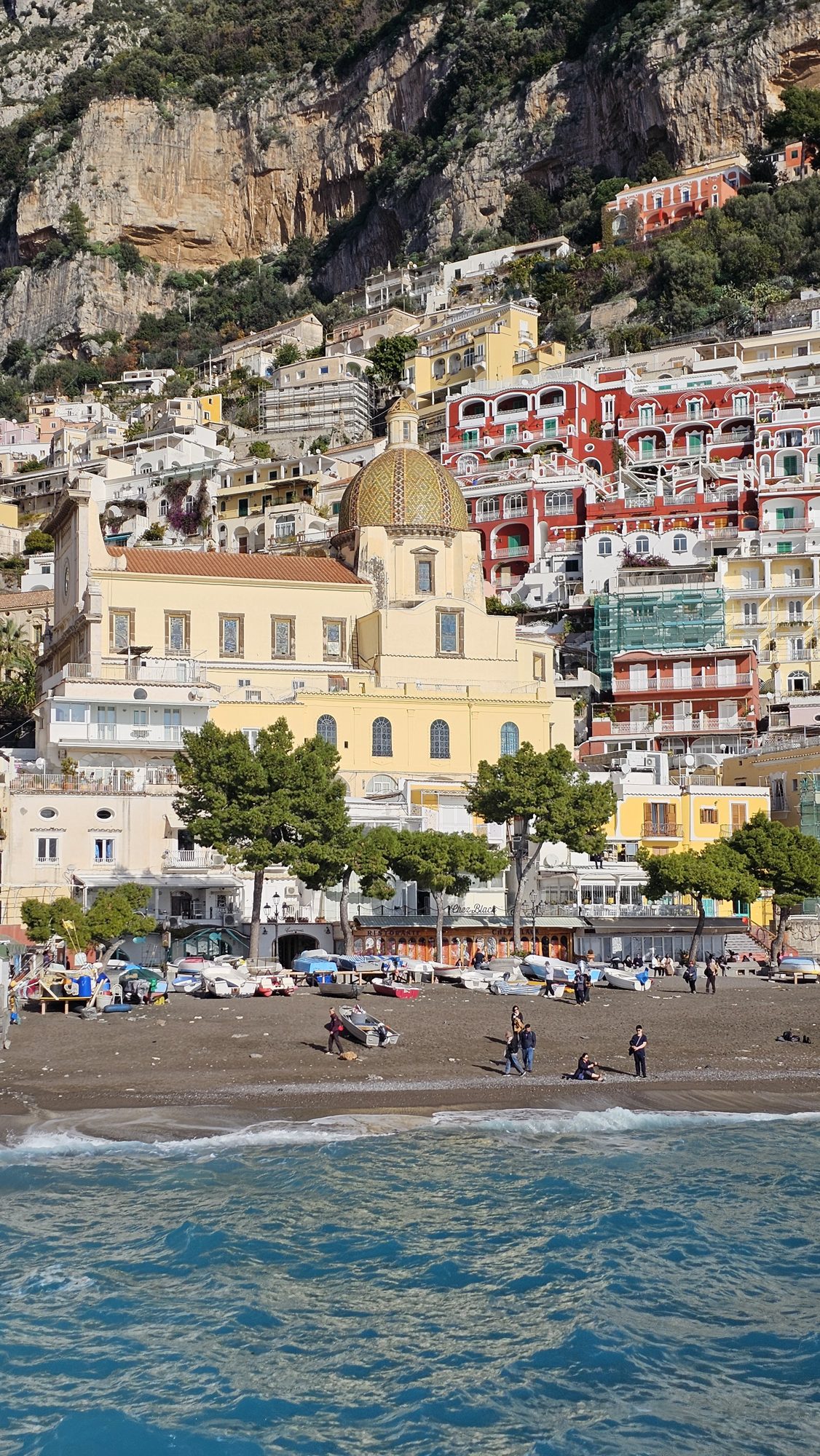
Positano's beach and the majolica dome of Santa Maria Assunta seen from the water
The icon · Boats and steps

Positano

The vertical town, a staircase of pink, white and ochre houses from the road down to the grey pebbles of the Spiaggia Grande, with the majolica dome of Santa Maria Assunta and its Byzantine Black Madonna at the bottom and Franco's Bar on the terrace above. Fornillo, the second beach along the cliff path past the Trasita tower, is quieter and cheaper; a lido lounger on the main beach runs €30 to €50 in high season. The restaurant boat with the red fish on its mast leaves the pier for lunch at Da Adolfo on Laurito beach. Come early or sleep here; between ten and five the day boats own it.

Positano in detail →
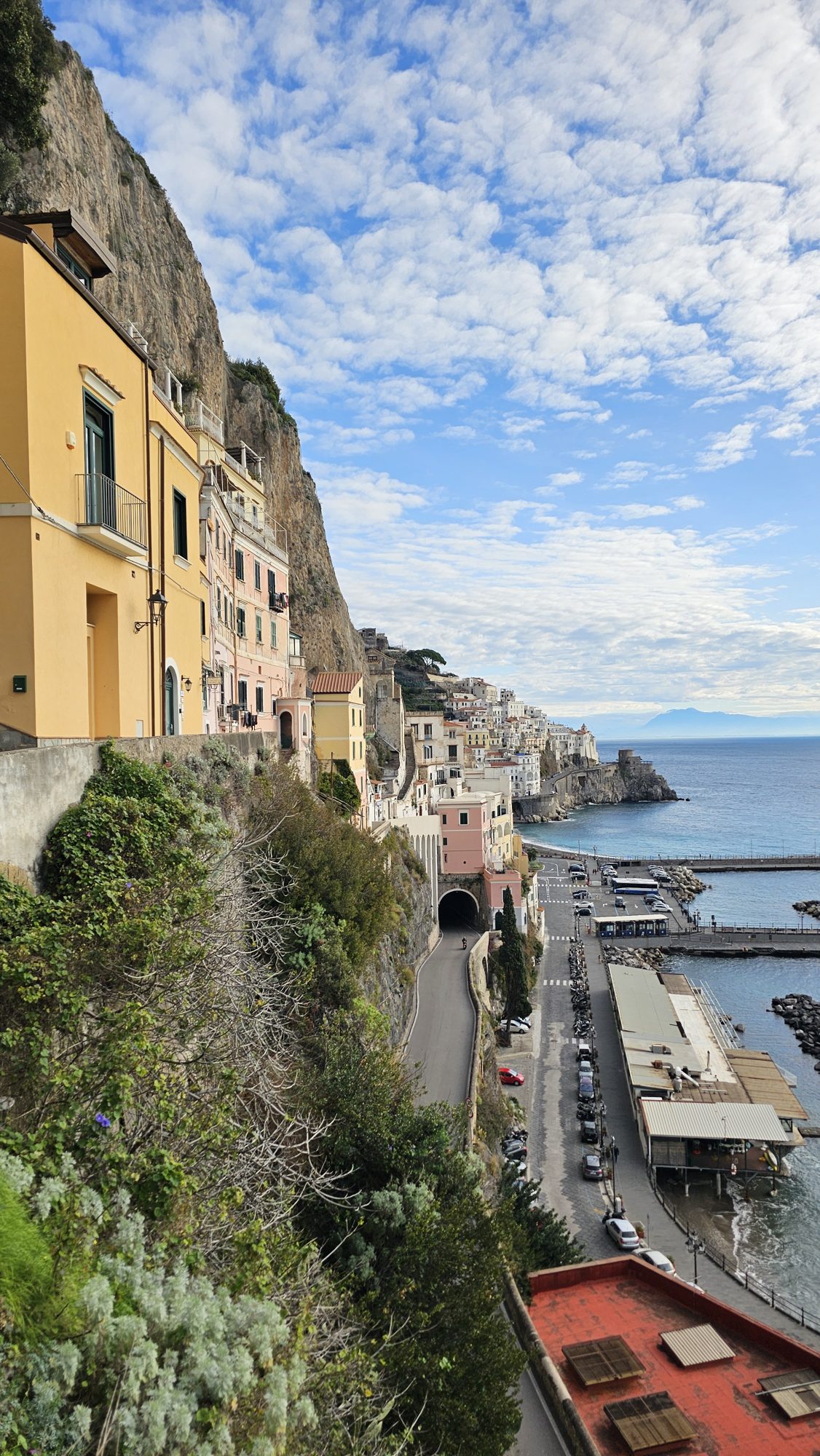
The coast road curving down into Amalfi, with the harbour and its pier below
The hub · Cathedral and paper

Amalfi

The republic's capital is a town of 5,000 round a piazza and a staircase: sixty steps up to the Duomo of Sant'Andrea, Arab-Norman stripes and a bronze door from Constantinople, with the Cloister of Paradise of 1268, the old basilica's museum and the apostle's crypt on one ticket of a few euros. Up the Valle dei Mulini the 13th-century mill that is now the Paper Museum still makes bambagina paper by hand, and the path continues into the Valle delle Ferriere. Every bus and every ferry on the coast stops here, which makes it the practical base and a crush at midday.

Amalfi in detail →
The entrance to Villa Cimbrone in Ravello
350 m up · Villas €8 and €10 · Festival Jul–Sep

Ravello

The town on the terrace above Amalfi, where Wagner found his magic garden and Gore Vidal spent thirty years: Villa Rufolo's 13th-century towers and the belvedere where the festival orchestra plays on a stage cantilevered over the sea, €8, and Villa Cimbrone's long garden walk to the Terrace of Infinity, a row of marble busts above a 300-metre drop, €10. The Duomo's bronze doors are from 1179; the Niemeyer auditorium is the white wave below the town. The Ravello Festival ran from 4 July to 5 September in 2026 and the chamber concerts continue most of the year. Cool, quiet and the right place to sleep.

Ravello in detail →
A couple sitting by the sea with the coast of Praiano behind them
Between the two · Sunsets

Praiano and Marina di Praia

The village that faces west, strung along the road between Positano and Amalfi with the majolica dome of San Gennaro and the only sunsets on the coast that fall into the sea rather than behind a headland; Positano glows pink across the bay. Marina di Praia is the fishing cove in a cleft below, with a few boats, a beach the size of a tennis court, Il Pirata on the rocks and the path to the Africana club in its cave. Gavitella beach, west-facing, keeps the sun until evening. The best-value base on the coast, and the start of the steep steps up to the Path of the Gods.

Praiano in detail →
The arched bridge over the Fiordo di Furore with the cove below
Furore and Conca · Grotto €7–10

The Furore fjord and the Emerald Grotto

Between Praiano and Amalfi the road leaps a gorge on a 30-metre arch, and beneath it a slot of green water ends in a pebble beach with the fishermen's houses and old mill of a village that has no centre, painted with murals and growing the coast's best wine. Steps lead down from the road; the beach closes when rocks fall, which is often. Two kilometres on at Conca dei Marini, the Emerald Grotto is a sea cave reached by lift or boat, €7 to €10, lit green at midday with a nativity scene on the bottom; the Monastero Santa Rosa above it is where the sfogliatella was invented by nuns in the 1600s.

Furore and the grotto in detail →
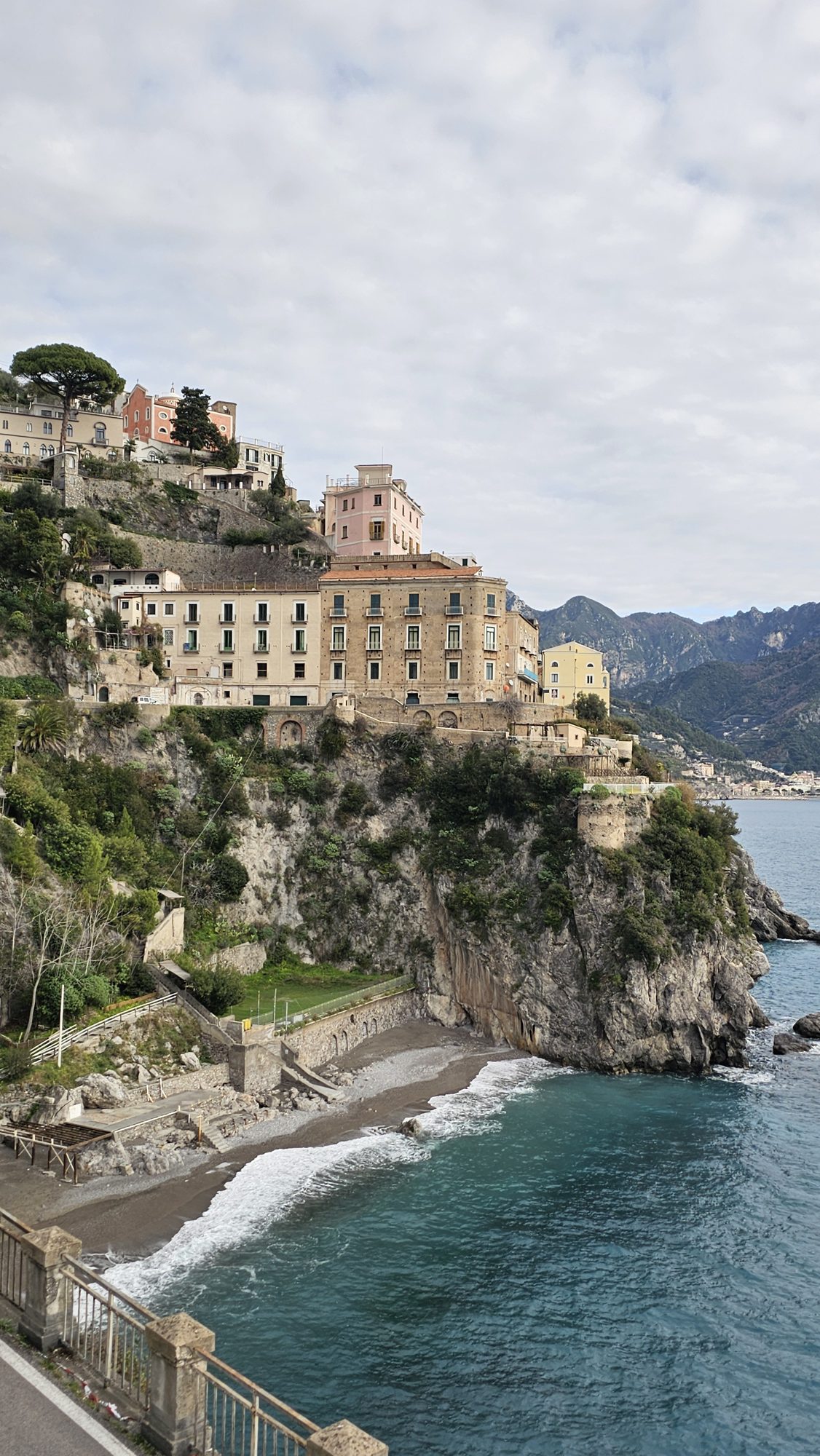
Houses on a rocky headland above a small beach on the Amalfi coast
Ten minutes from Amalfi · Free

Atrani

The smallest town in the south of Italy, a tenth of a square kilometre of houses, arches and stairways round a single piazza under the road, five minutes from Amalfi through a tunnel or along the cliff path and a world away from its crowds. The doges of the republic were invested in San Salvatore de' Birecto; Escher drew the stacked houses in the 1930s; the beach under the viaduct is the local swim. Dinner in the square when Amalfi's day-trippers have gone home is the best evening on this stretch of coast.

Atrani in detail →
Colourful hand-painted Italian ceramic plates on display in Amalfi
The east · Anchovies and majolica

Cetara and Vietri sul Mare

Cetara is the fishing village that never became a resort, with a tuna and anchovy fleet in its harbour, a Spanish watchtower on the point and colatura di alici, the amber anchovy essence descended from Roman garum and protected since 2020, dripping from barrels in its shops; the Notte della Colatura in December tastes it on spaghetti. Vietri, at the Salerno end, has made majolica since the Renaissance: the cathedral's tiled dome, the Solimene factory in its 1950s building, the ceramics museum at Raito and a main street of plates, tiles and lemons painted on everything.

Cetara and Vietri in detail →
Houses on the hill above a beach in a town on the Amalfi coast
Beach towns · Pastry

Minori and Maiori

The two towns on the flat bits. Minori has a Roman seaside villa of the first century with its frescoes and pool, Salvatore De Riso's pastry shop on the seafront, where the delizia al limone was perfected, and the ricotta gnocchi called 'ndunderi that Slow Food protects. Maiori has the longest beach on the coast, a kilometre of sand and lidos, a lungomare and the Norman tower at its end. The Path of the Lemons joins them over the headland in an hour through the terraces, and both are cheaper and calmer than anything west of Amalfi.

Minori and Maiori in detail →
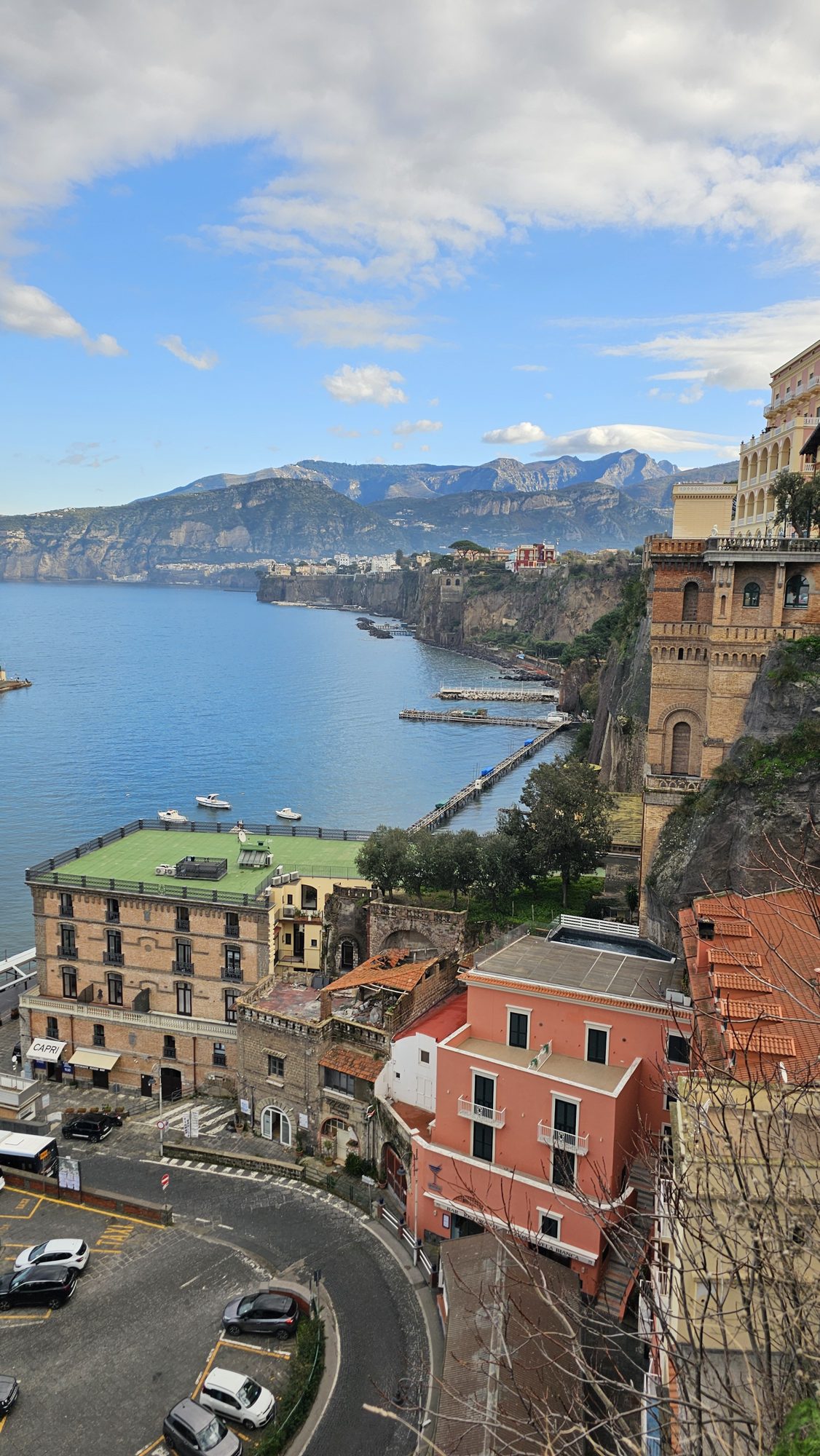
Sorrento's Marina Piccola and the cliffs of the peninsula seen from the Villa Comunale
By boat · April to early November

Capri and Sorrento

From Positano and Amalfi the summer boats cross to Capri in 50 minutes for about €24, for the Faraglioni, the Gardens of Augustus, the chairlift to Monte Solaro and, when the sea allows, the Blue Grotto by rowing boat; the day-trip crowds thin after four. Sorrento, over the ridge at the start of the peninsula, is the coast's transport town, with the train to Pompeii and Naples, year-round ferries to Capri and the SITA buses that begin the coast road; the Sorrento peninsula's own treasures, Nerano's tables and the Ieranto bay, are in the food and hikes sections.

Capri and Sorrento in detail →

Also worth your time

Above Positano · Bus or steps

Montepertuso and Nocelle

Positano local bus; 1,700 steps from Arienzo

Two hamlets on the cliff above Positano: Montepertuso under the hole in its mountain, with La Tagliata's family farm dinners and a free shuttle, and Nocelle, the end of the Path of the Gods, 440 metres up with a terrace bar for lemon granita and the view the whole coast is built on.

Walk there on the Path of the Gods →
Agerola · 630 m

Agerola and the fiordilatte

SITA from Amalfi, 40–50 min

The dairy plateau above the coast where the Path of the Gods begins at Bomerano: fiordilatte and provolone del Monaco, cool air, the Punta San Lazzaro belvedere over Positano and a loop up Monte Tre Calli for both gulfs. The coast's larder and its cheapest beds.

Climb Monte Tre Calli →
Nerano · Over the peninsula

Marina del Cantone and the Ieranto bay

Massa Lubrense · boats from Positano or a long bus

The pebble cove at the end of the Sorrento peninsula where spaghetti alla Nerano was invented and Italy's grandest restaurants sit on the beach, with the FAI-protected Baia di Ieranto a 45-minute walk beyond for snorkelling under the marine reserve's cliffs. Details in the food and hikes sections.

The walk to Ieranto →
Salerno · The other gate

Salerno

High-speed trains from Rome in 2 h; ferries along the coast April to October

The city at the eastern end has a Norman cathedral with the tomb of St Matthew, a medieval garden of the first medical school in Europe, a lungomare and a port from which the Travelmar boats run to Cetara, Maiori, Minori, Amalfi and Positano for €12 to €17. Cheaper to sleep in than anywhere on the coast.

Salerno in detail →
Hikes & nature

The Path of the Gods, a valley of ruined mills and a mule track through the lemons

The coast was walked before it was driven, and the old mule paths between the towns and their mountain hamlets are still the best way to see it: the high traverse above Positano, the cool valley behind Amalfi, the lemon terraces between Minori and Maiori, and the long way out to the tip of the peninsula.

JFMAMJJASOND

Walking season: teal = the ideal months, wildflowers in spring and warm sea in October; green = fine between the rains, with rockfall closures after storms from November to March; grey = July and August, when the Path of the Gods has no shade and the fire risk closes slopes.

A town clinging to the cliffs of the Amalfi coast with mountains behind
Moderate · Free

The Path of the Gods

From Bomerano, the Agerola hamlet at 630 metres, the Sentiero degli Dei runs west along the cliffs to Nocelle above Positano: eight kilometres of mule track past abandoned farms, grottoes, goats and terraces of vines, with the sea 500 metres below, Capri floating off the point and Positano appearing round the last headland. Walk it westwards to keep the view ahead and the climbing behind; the high variant over the Colle Serra adds a little and loses the crowd. There is no fee, no booking and no shade, and after Bomerano no water.

8 kmBomerano to Nocelle
3–4 hwalking
+150 / –350 mnet descent

Reach Bomerano by SITA bus from Amalfi in 40 to 50 minutes, or climb to the path from Praiano up a thousand steps from the San Domenico convent. From Nocelle take the local bus down to Positano or the 1,700 steps to Arienzo on the coast road. Start by eight from April to June and in autumn, and not at all at midday in summer; check the trail status after the September 2026 wildfire on the slopes below Nocelle.

Full route guide: the Path of the Gods →
Water and green woodland in the Valle delle Ferriere above Amalfi
Moderate · Shade and water

The Valle delle Ferriere

The one cool walk on the coast. From Amalfi's piazza the Valle dei Mulini climbs past the Paper Museum and the ruins of a dozen medieval paper mills and the ironworks that gave the upper valley its name, into a gorge of chestnut woods, streams and waterfalls where the Woodwardia fern, a survivor from a warmer age, grows nowhere else in Europe. The lower trail is three to four hours return and easy on the knees; the integral reserve at the top is entered only with the forest rangers' permission, and the waterfall section closes after rockfalls.

7–8 kmreturn from Amalfi
3–4 hwalking
300 mof ascent

Or take the bus up to Pontone above Scala and walk down through the valley to Amalfi, which puts the climbing in the bus. Good in July and August when nothing else is; muddy and closed in parts after winter storms.

Full route guide: the Valle delle Ferriere →
Ripe lemons growing on a tree in a sunlit garden
Easy

The Path of the Lemons, and the tip of the peninsula

The Sentiero dei Limoni climbs from Minori's seafront on the old mule track the women carried the harvest on, over the headland through terraces of sfusato lemons under their chestnut pergolas, past the church and the viewpoint at Torre, and down into Maiori: two kilometres, an hour and a bit, and a pastry at Sal De Riso at the start or the end. At the far end of the coast, from the village of Termini above Massa Lubrense, an hour's walk reaches the Punta Campanella lighthouse where the temple of Athena stood, with Capri across the strait; from Nerano the path to the Baia di Ieranto drops in 45 minutes to a bay of the marine reserve that the FAI keeps as a sanctuary, with guided snorkelling and kayaks on summer days.

2 kmlemons; 4–6 km Campanella or Ieranto return
1–3 h
Stepson the lemon path

Monte Faito's cable car from Castellammare has been closed since the fatal accident of 17 April 2025 with no date for reopening, so the Lattari summits, the Molare at 1,444 metres and the Tre Calli loop from Agerola are reached by road or on foot from the plateau.

The Path of the Lemons →Punta Campanella →Baia di Ieranto →

Agerola · Half day

Monte Tre Calli

From Bomerano or San Lazzaro · 3 h loop

The 1,122-metre top of the Agerola rim, a loop from the plateau through beech and pasture to a summit with the Gulf of Salerno on one side and the Gulf of Naples and Vesuvius on the other. Cool when the coast is baking.

Route guide →
Positano · Steep

The Nocelle steps and Capri's Fortini path

1,700 steps to Arienzo; Blue Grotto to Punta Carena on Capri, 5 km

The staircase from Nocelle to the coast road is a knee test downhill and a punishment up. On Capri, the Sentiero dei Fortini follows the wild west coast past Bourbon forts for three hours with nobody on it; the Via Krupp's switchbacks have reopened.

The Fortini path, step by step →
Nature notes

Whales off the Bocca, falcons on the cliffs

Punta Campanella marine reserve; Li Galli

Fin whales and sperm whales feed in the canyons off Punta Campanella and dolphins ride the bows of the Capri boats; peregrines nest on the cliffs and on the Li Galli islets where the sirens were said to sing. Capri's Faraglioni keep a blue wall lizard found nowhere else.

Fire is the summer hazard here: a wildfire above Laurito in September 2026 sent a landslide onto the coast road and closed it between Positano and Praiano, and the slopes around Nocelle and Montepertuso burn in most dry years. Winter storms bring rockfalls, which closed the road at Maiori in January and Vietri in February 2026. Check the trail and road status before you set out, and carry two litres of water on any path above the road.
Scuba

Red gorgonians under the Vervece rock and a bronze Madonna at twelve metres

The Punta Campanella marine reserve, forty kilometres of coast from Sorrento round to Positano, gives the best Mediterranean diving in Campania: walls of red sea fans, groupers in the no-take zone, octopus and morays, and a statue the fishermen sank for their drowned. Good, not world-class, and the water is clearest in autumn.

Aerial view of the sea beside coastal buildings
Open Water to Advanced · 10–40 mMay to October

The Vervece rock, Li Galli and Isca

Off Massa Lubrense the Scoglio del Vervece drops from a rock awash at the surface down a wall of red and yellow gorgonians past 40 metres, with a bronze Madonna placed by local fishermen at twelve metres and a procession of boats to it every September; dives here go only with the reserve's authorised centres. Li Galli, the three islets off Positano where Nureyev lived, have gorgonian walls and groupers in the protected zone around them; Isca, off Marina del Cantone, is the easier islet dive. Visibility runs ten to twenty-five metres and the water from 14°C in winter to 26°C in August.

10–40 mdepth
Open Waterand up
10–25 mvisibility
14–26°Cwater

Centres at Marina del Cantone, Massa Lubrense and Sorrento, with smaller operations at Positano's Fornillo beach and Marina di Praia, run guided dives from about €75, try-dives for €140 to €200 and Open Water courses for €450 to €650. Capri's dive shops add the Faraglioni, the Grotta del Corallo and the Secca del Faro. The Furore fjord is a snorkel from a boat, not a dive.

Snorkel · FAI

Baia di Ieranto

From Nerano on foot, 45 min · guided snorkel and kayak days in summer

The bay at the tip of the peninsula, in the reserve's strictest zone, where the FAI runs snorkelling with marine biologists over seagrass and rock full of bream, wrasse and octopus, and the swim is the reward for the walk.

The walk to Ieranto →
Capri

The Faraglioni and the Grotta del Corallo

Capri dive centres, boats from Marina Grande

Walls to 40 metres under the famous stacks, a cave lined with coral and the shoals off the Punta Carena lighthouse, in the clearest water of the gulf. Pair with the Fortini path.

The honest line

What to expect

September and October for the water

Posidonia meadows, gorgonians, nudibranchs, octopus and the odd barracuda school: fine Mediterranean diving for a day or two of a coast holiday, thinner on fish outside the no-take zones, and no reason to fly in for it.

Good food

Spaghetti alla Nerano, anchovy essence, lemon everything and a beach you reach by boat

The coast eats what the cliffs and the sea give it: sfusato lemons, anchovies from Cetara, courgettes fried for a pasta that two restaurants claim, ricotta gnocchi from Minori and fiordilatte from the plateau. It also has Campania's one three-star kitchen, a dozen serious hotel tables that close for the winter, Michelin's Bib Gourmand value picks and the beach trattorias everyone argues about.

Deep-fried shrimps and squid on a red plate
Eat this

Scialatielli, spaghetti alla Nerano and the fritto

Scialatielli, the short, thick fresh pasta invented in Amalfi in the 1970s, comes with clams, mussels and prawns in every trattoria for €16 to €22. Spaghetti alla Nerano, fried courgettes melted with provolone del Monaco and basil, was born at Marina del Cantone, where Lo Scoglio and Maria Grazia still dispute the credit. Then totani e patate, squid stewed with potatoes, a fritto of paranza fish, and 'ndunderi, Minori's ricotta gnocchi, a Slow Food presidium.

Fresh lemons piled on a market stall on the Amalfi coast
Eat this

The sfusato lemon

The Amalfi lemon is long, pale, thick-skinned and sweet enough to eat in slices with salt, grown on terraces under chestnut pergolas and protected by name. It becomes granita for €3 to €5 on every corner, limoncello at €10 to €20 a bottle, the delizia al limone, a dome of sponge and lemon cream perfected at Sal De Riso in Minori, and the lemon leaves that Da Adolfo wraps round grilled mozzarella. Farm tours in Amalfi's valley show the terraces and finish with a tasting.

Pastries displayed in a bakery
Eat this

Colatura, the Santa Rosa and the pastry counters

Colatura di alici is Cetara's amber anchovy liquor, aged for months in chestnut barrels and spooned over spaghetti with garlic, oil and parsley, €15 to €30 a bottle to take home. The sfogliatella Santa Rosa, a shell of pastry filled with ricotta and topped with cream and a cherry, was invented by the nuns of Conca dei Marini in the 1600s and is celebrated there every August; Pansa on Amalfi's cathedral square has candied the coast's citrus since 1830.

The best tables

One three-star kitchen, labelled, and four more that are the coast's finest without the label; most close from November to Easter, and Michelin's 2027 guide is announced on 12 November 2026.

Michelin ★★★50 Best Discovery

Quattro Passi

Nerano, Marina del Cantone · the Mellino family · closed Tuesday · about March to early January

The only three-star restaurant in Campania: the Mellinos' Mediterranean cooking of the peninsula's fish, vegetables and herbs in a villa above the cove, polished over forty years by Antonio and now led by his son Fabrizio, with a cellar to match and rooms upstairs. The tasting menu is about €300 before wine, and worth the boat from Positano.

€300 · $$$$
Vico Equense

Torre del Saracino

Marina di Seiano, Vico Equense · Gennaro Esposito · lunch and dinner

Esposito's kitchen in a Saracen tower on the Sorrento side of the peninsula, the most influential in Campania for a generation: fish from the gulf, pasta from Gragnano up the hill and a lightness that has taught half the chefs on this coast. His Festa a Vico fills the town with cooks every June.

€200–250 · $$$$
Sant'Agata · Farm to table50 Best Discovery

Don Alfonso 1890

Sant'Agata sui Due Golfi · the Iaccarino family · closed in winter

The Iaccarinos put the Sorrento peninsula on the gastronomic map in the 1980s with vegetables from their own farm at Punta Campanella, and three generations later the dining room, the cellar in an Etruscan cave and the garden are still the grand old address of the coast.

€140–225 · $$$$
Positano · The terrace

Zass

Il San Pietro di Positano · Alois Vanlangenaeker · April to October

Twenty years of Belgian precision applied to Positano: the hotel's own terraced garden on the plate, the coast lit up across the bay at dinner and a lunch menu that is the sane way into one of the most beautiful dining rooms in Italy.

€180–250 · $$$$
Ravello · The view

Rossellinis

Palazzo Avino, Ravello · Giovanni Vanacore · dinner, April to October

The pink palazzo's terrace 350 metres over the sea and Vanacore's modern Campanian tasting menus; Ravello's special-occasion dinner, with Il Flauto di Pan at Villa Cimbrone and Glicine at Amalfi's Santa Caterina as the alternatives when the view is the point.

€200+ · $$$$

Bib Gourmand: Michelin's value picks

Four on the coast and the peninsula, two of them in the anchovy village.

Bib Gourmand

Al Convento

Cetara · lunch and dinner

Spaghetti with colatura and the day's anchovies in a former convent with frescoed vaults; the dish the village is famous for, at the table that does it best.

€35–50 · $$
Bib Gourmand

La Dispensa di Armatore

Cetara

The trattoria of the Armatore family, whose boats and tins are the colatura's modern standard-bearers: tuna, anchovies, the fried catch and the sauce from the barrel, a few steps from the harbour.

€30–45 · $$
Bib Gourmand

La Torre and Lo Stuzzichino

Massa Lubrense, piazza of the Annunziata; Sant'Agata sui Due Golfi

The peninsula's two: La Torre's Sorrentine cooking on a village square above the sea, and the De Gregorio family's Lo Stuzzichino in Sant'Agata, cheese and vegetables from the hills and fish from both gulfs at country prices.

€30–45 · $$

Where locals eat

Positano · By boat · Lunch only

Da Adolfo

Laurito beach · the boat with the red fish, from Positano pier · May to early October

A shack on a pebble beach reached only by the restaurant's boat: mozzarella grilled on lemon leaves, totani e patate, the day's fish and white wine with peaches, then a sunbed. The coast's most famous lunch and still its most relaxed.

€40–60 · $$$
Nerano · Feet in the water

Lo Scoglio and Maria Grazia

Marina del Cantone · lunch and dinner, book

The De Simones' Lo Scoglio on its jetty, where the yachts tie up for spaghetti alla Nerano, raw seafood and vegetables from the family farm, and Maria Grazia next door, which says it invented the dish first. Settle the argument with one of each.

€80–120; €50–70 · $$$
Amalfi

Da Gemma, Marina Grande and Le Tre Sorelle

Via Fra Gerardo Sasso; the beach; the seafront

Da Gemma since 1872 for the fish soup and the scialatielli up the lane from the cathedral, Marina Grande's lido terrace for sustainable seafood on the beach, and the Tre Sorelle on the front for the classic coast menu with the boats coming in.

€45–80 · $$$
Ravello and Montepertuso

Cumpà Cosimo and La Tagliata

Via Roma, Ravello; Montepertuso, free shuttle from Positano

Netta Bottone's trattoria in Ravello, where the tasting plate of seven pastas is the order and the owner is the show; La Tagliata's farmhouse above Positano, a fixed family menu of antipasti, pastas, grilled meats and the house wine for about €50 to €60, with the whole coast below.

€35–60 · $$
Cetara

Acquapazza

Harbour, Cetara · lunch and dinner

Gennaro Castiello's anchovy cooking, raw, marinated, fried and in the colatura, with tuna from the village boats; the serious table in the fishing port and the reason to take the ferry east.

€50–70 · $$$
Pastry

Sal De Riso, Pansa and Positano's gelato

Minori seafront; Piazza Duomo, Amalfi; Via dei Mulini

De Riso's delizia al limone and ricotta e pera, Pansa's candied oranges and sfogliatelle under the cathedral steps since 1830, and lemon granita from the kiosks of Positano's lanes. €4 to €7 a pastry and the best cheap pleasures on the coast.

€3–7 · $
Nightlife

A cave disco since 1962, cocktails on a famous terrace and an orchestra over the sea

The coast does not do nightlife so much as late dinners and one drink with a view. Positano has a cave club and the most photographed bar terrace in Italy, Praiano has a disco carved into the cliff, Ravello has the festival, and everything closes from November until Easter.

Positano · Sunset

Franco's Bar and the Spiaggia Grande

Le Sirenuse, Via Cristoforo Colombo · no bookings, queue from 6pm · April to October

The terrace bar of the Sirenuse hotel, red and white and looking straight down the town to the sea, with cocktails at about €25 and a queue for the sunset slots; the one expensive drink everyone should have once. Below it the beach bars and the Chez Black terrace, Positano's institution since 1949, run until the small hours in August.

The clubs · Summer

Music on the Rocks and the Africana

Spiaggia Grande, Positano; Marina di Praia, Praiano · June to September

Music on the Rocks is a club in a cave at the end of Positano's main beach, DJs and international guests at the height of summer; the Africana Famous Club at Praiano has been a disco inside the sea caves of Marina di Praia since 1962, with a dance floor over the water and a boat shuttle from the towns in high season. Both are strictly seasonal and strictly Italian in their hours: nothing happens before midnight.

Ravello · July to September

The Ravello Festival and the Annunziata concerts

Villa Rufolo belvedere; the Annunziata church · the 2026 festival ran 4 July to 5 September

Orchestras on a stage built out over the void at Villa Rufolo, a dawn concert as the sun comes up over Salerno, Wagner for his garden and jazz on the terrace: the grandest night out on the coast and the reason to be in Ravello in summer. The Concert Society's chamber recitals in the Annunziata run through much of the year.

Amalfi and Atrani

The cathedral steps and the piazza next door

Piazza Duomo; Atrani's Piazza Umberto · evenings

Amalfi's evening is a spritz on the steps of the cathedral and a walk along the front; Atrani's is dinner in a square the size of a living room with the locals. Sorrento, over the ridge, has the bars that stay open all year.

The colours of Amalfi: painted houses and the sea
7pm

Aperitivo

A spritz on the steps, then the long dinner.

Positano's houses and the sea at the end of the day
Positano

The terrace

One famous cocktail, then the cave.

A white building perched on a cliff above the sea
Ravello

Music over the sea

Dawn concerts and Wagner on the belvedere.

Wine

Vertical vineyards, a cellar cut into the cliff at Furore and vines older than Italy

Costa d'Amalfi is a tiny appellation of terraced pergolas on the cliffs, with three villages as its crus, white grapes that grow nowhere else and, in the hills of Tramonti, ungrafted vines of the Tintore grape that have stood for three centuries. Limoncello is the other bottle, and every family makes its own.

Wine bottles lined up on shelves

What to drink here

Costa d'Amalfi DOC, granted in 1995, has three subzones. Furore makes the whites that put the coast on the wine map, from Fenile, Ginestra and Ripoli grapes grown on terraces over the sea: Marisa Cuomo's Fiorduva, late-harvested and oak-aged, is the famous bottle, and the Furore Rosso of Piedirosso and Aglianico the serious red. Ravello's Ettore Sammarco has bottled the terrace wines of the town since 1962, with the local Pepella grape in his whites. Tramonti, in the hills behind Maiori, is the surprise: Tenuta San Francesco, Giuseppe Apicella, Reale and Monte di Grazia make deep reds from Tintore, a dark-fleshed grape on pre-phylloxera vines up to 300 years old, and whites from Falanghina and Biancolella. Ask for the local white with the anchovies and the Tintore with the lamb; a glass is €5 to €8 almost everywhere.

Marisa Cuomo's cellar is cut into the rock below Furore, with tours and tastings by booking from Monday to Saturday through the winery and the terraces hanging over the fjord; Tenuta San Francesco at Tramonti shows its ancient vines and a 17th-century cellar with tastings from about €50; Apicella, the pioneer who bottled Tramonti wine in the 1970s, does tours with lunch. Limoncello is made with the sfusato by Antichi Sapori d'Amalfi in Amalfi, Villa Massa and I Giardini di Cataldo in Sorrento, and by lemon farms in Amalfi's valley that walk you through the terraces first.

Furore · Book

Marisa Cuomo

Via Lama, Furore · Mon–Sat by reservation

The coast's great estate: a cellar in the cliff, vines on terraces above the fjord, Fiorduva and the Gran Furore wines tasted with the sea below. Combine with the fjord steps and lunch in Praiano.

Tramonti · The hills

Tenuta San Francesco, Apicella and Reale

Behind Maiori, 30 min by road · tastings from €50

The valley of chestnuts and 300-year-old Tintore vines: San Francesco's È Iss red and its old cellar, Apicella's tours with lunch, and the Reale family's farm restaurant for the Borgo di Gete Tintore with a plate of their own pork. Cool air and no crowds.

Ravello and the lemon farms

Ettore Sammarco and the limoncello makers

Ravello; Amalfi's Valle dei Mulini; Sorrento

Sammarco's Ravello Bianco from the Grotta Piana vineyard, poured in the town's enoteche, and the lemon farms of Amalfi that explain the pergolas, the harvest and the recipe before the tasting, about €25 to €40 a visit.

Practical notes

Before you go

Getting there

Naples airport is an hour and a half from Positano or Amalfi by road, two or more in summer; a private car costs about €156 to Positano for up to three people and €180 for a van, and drivers are exempt from the plate rule. By public transport, the Curreri bus or the Circumvesuviana train to Sorrento, then the SITA bus along the coast; or a train to Salerno, two hours from Rome on the fast line, and a Travelmar ferry west from April to October, €12 to Amalfi and €17 to Positano. Summer hydrofoils from Naples reach Positano and Amalfi directly for €25 to €30. Salerno's own airport has had scheduled flights since 2024.

Getting around

Ferries from about 1 April to 3 November, Travelmar between Salerno, Cetara, Maiori, Minori, Amalfi and Positano and NLG to Capri, €10 for Positano to Amalfi and €24 to Capri, suspended in rough seas. SITA buses all year, €10 for a 24-hour pass, €12 with the Positano local buses to Montepertuso and Nocelle, €15 with a boat, bought at tobacconists and bars with the SITA sign, not on board; in summer they are full and skip stops in Positano. Water taxis between the towns cost €150 and up. Scooters are the local answer and exempt from the plate rule.

The road rules

  • Alternate plates: on odd dates cars with odd-ending plates are banned from the SS163 by day, on even dates even-ending plates, roughly 10am to 6pm; reported in 2026 for Easter week, late April to early May and the summer months, with residents, taxis, hire cars with driver and scooters exempt. Check the ANAS ordinance for the dates.
  • Coaches and camper vans over 10.36 metres are banned all year without a permit.
  • Parking: €8 to €10 an hour in Positano, €5 to €6 an hour in Amalfi's rock garage, almost nothing on the street.
  • Closures: landslides shut the road at Maiori in January, Vietri in February and between Positano and Praiano after the September 2026 fire; check before you drive.

Seasons

  • Apr–May, late Sep–Oct: 18–26°C, the paths, the ferries and the sea at their best; the great months.
  • Jun–Sep: hot, full and expensive, August above all; day-trippers and cruise groups own Positano and Amalfi from ten to five.
  • Nov–Mar: ferries stopped, the grand hotels and their restaurants shut from early November to Easter, rockfall closures after storms; Amalfi, Maiori and Sorrento stay open and Christmas is lovely.
  • The tourist tax is €1.50 to €5 a night by category, paid at the hotel, and the season for it in Amalfi runs from April to early November.

Money and bookings

Euros; cards everywhere except some beach shacks and Da Adolfo, which has historically wanted cash. Book the hotel-restaurant dinners and Quattro Passi weeks ahead, the Ravello Festival as soon as the programme appears in spring, and Da Adolfo's boat the day before. Lidos on the main beaches charge €20 to €50 a person; Fornillo, Atrani and Maiori are the cheaper swims. The Path of the Gods is free and needs no permit.

Where to base

Positano for the icon, the restaurants and the boats, at the highest prices, on the steepest steps; Amalfi for every bus and ferry and the midday crush; Ravello for quiet, cool air, the festival and no beach; Praiano for sunsets, value and the Path of the Gods above it; Minori and Maiori for sand, families and pastry at lower prices; Sorrento for trains, year-round life and Capri boats, forty to sixty minutes from the Amalfi side; Conca dei Marini and Furore for hotel hideaways with a car. Salerno is the cheapest bed with a ferry outside the door.

Photography

Photo credits

Several photographs on this page are our own. The remaining photographs are by independent photographers published on Pexels under the free Pexels licence, and on Wikimedia Commons under Creative Commons licences. Click a title to open the original.

Powered by Webloyt | Report abuse