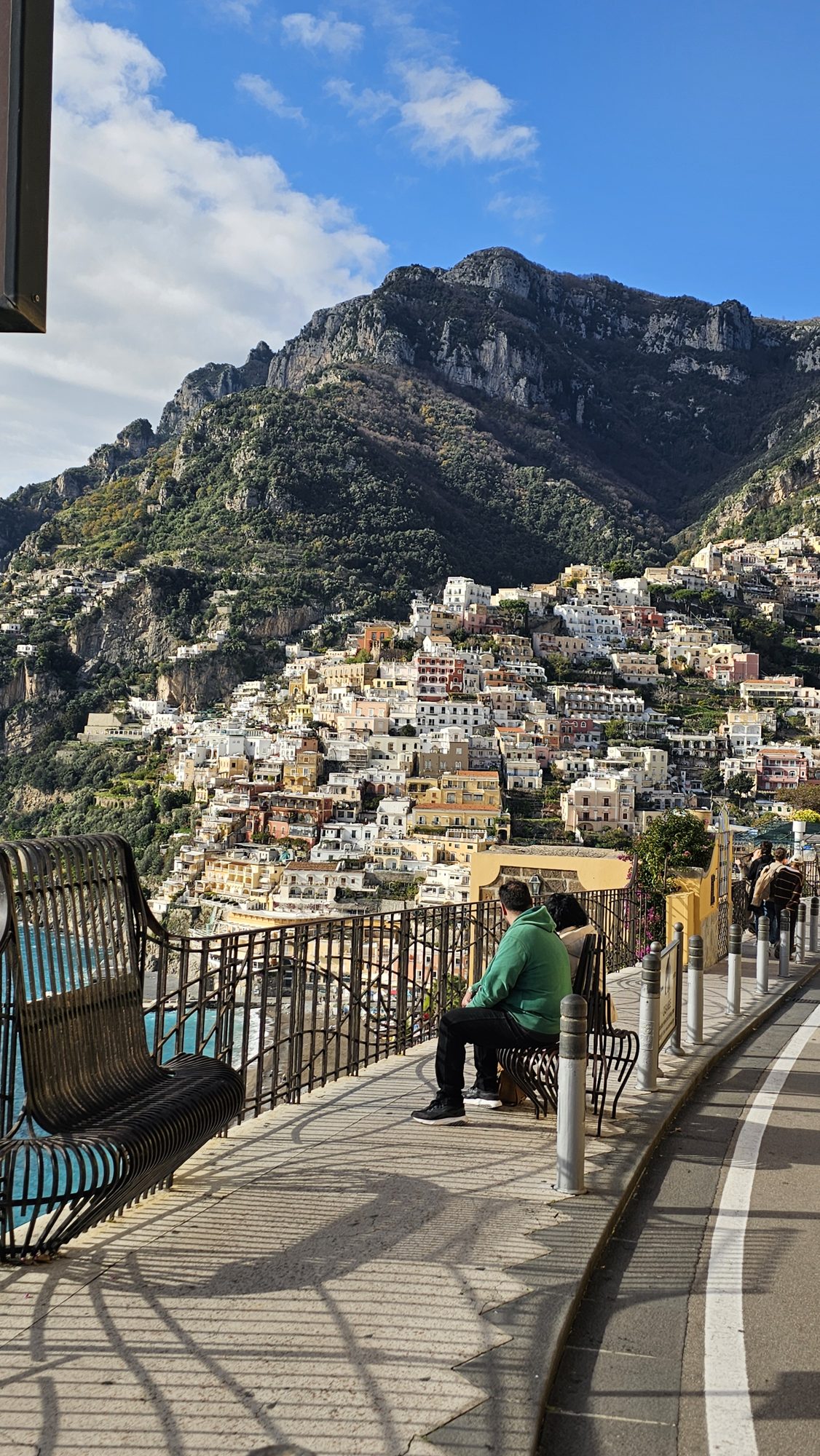
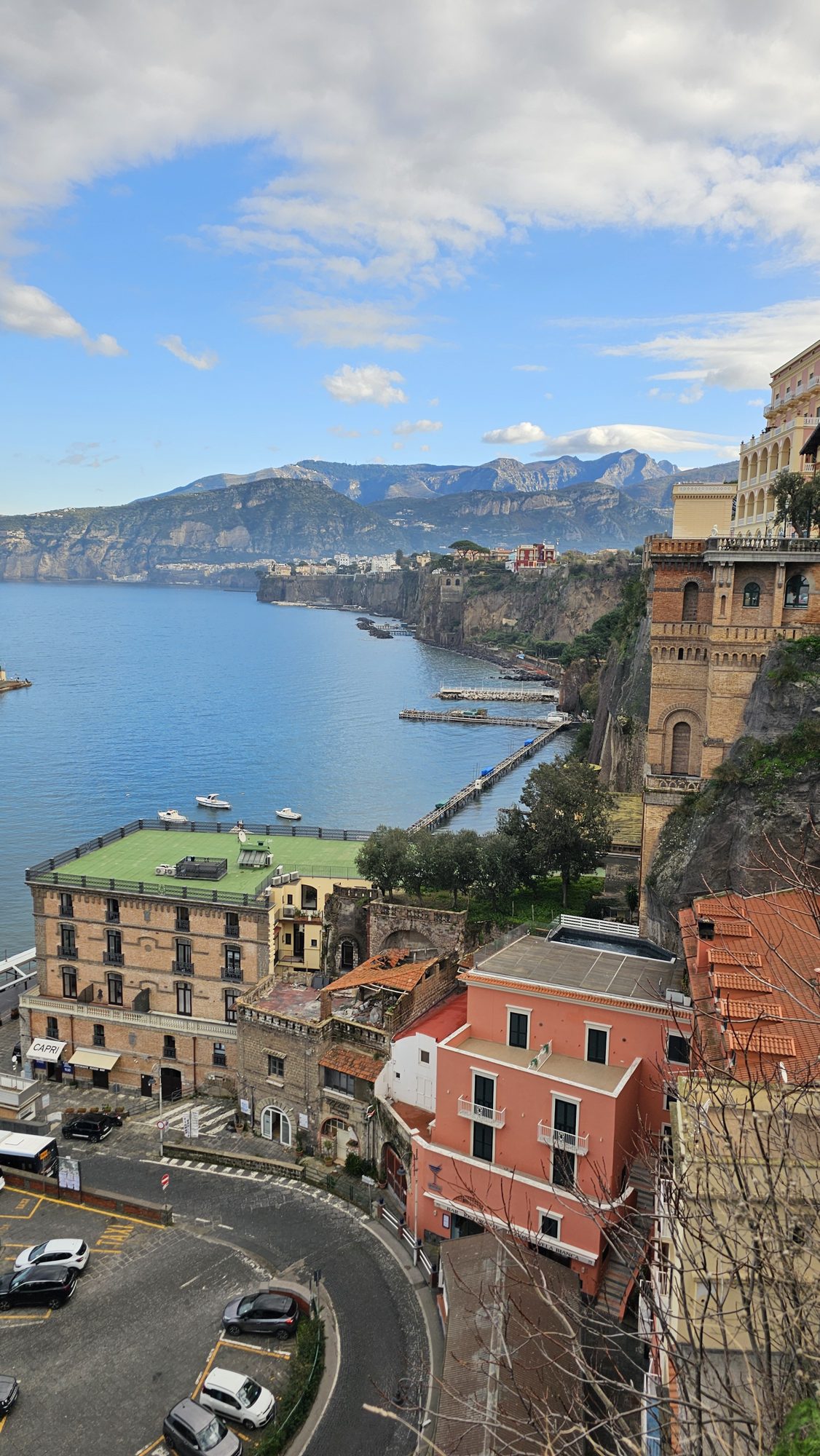
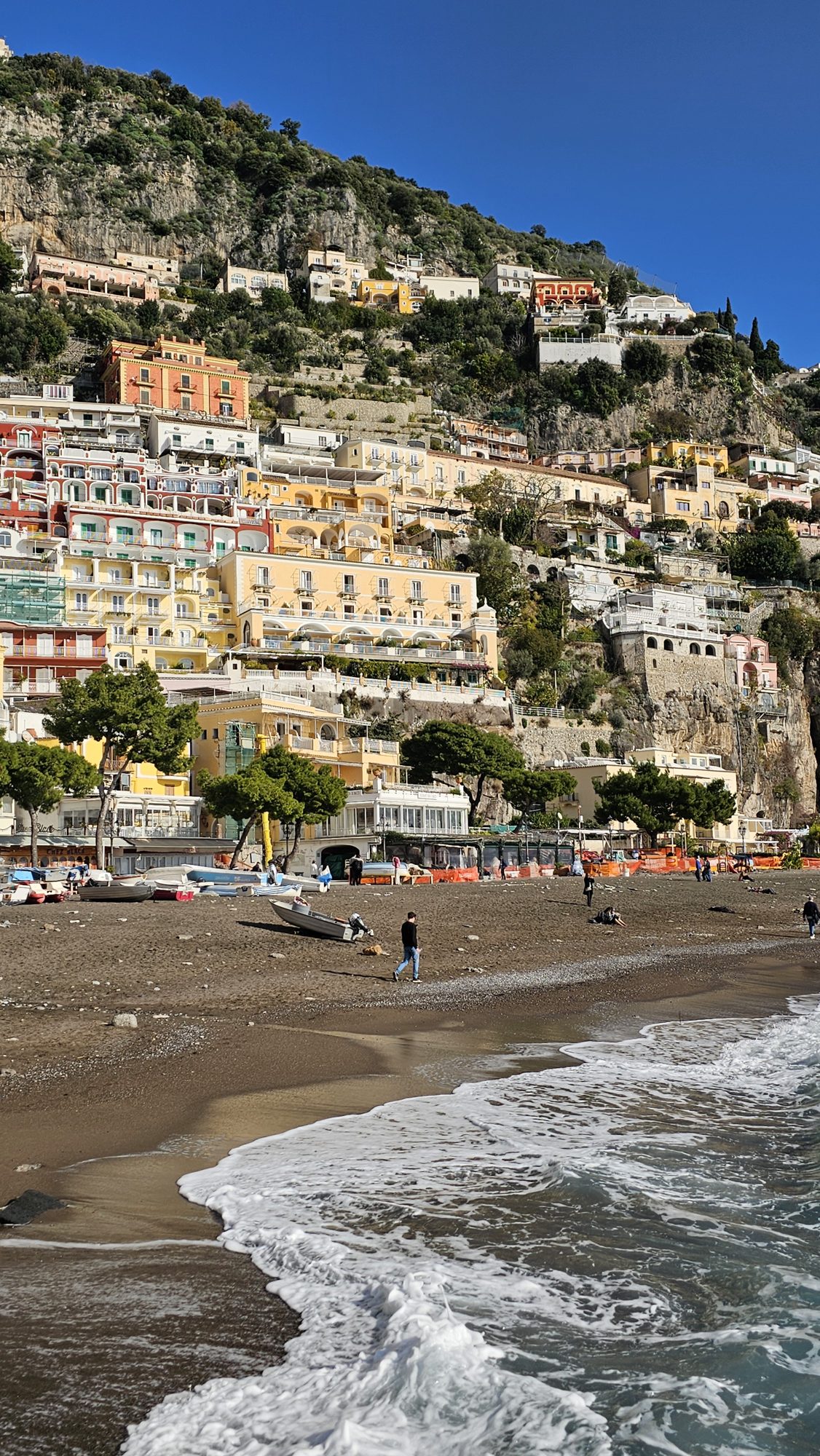
A staircase of pink, white and ochre houses poured down a ravine to a grey pebble beach, with a majolica dome at the bottom and a famous terrace bar at the top. Beautiful and very busy: come early, or stay the night.
Positano was a poor fishing village until painters, writers and later the fashion world discovered it in the 1950s. Today it is the picture everyone has in mind when they think of the Amalfi Coast.
The town is built on one slope, so every visit is a descent and a climb. From the coast road at the top, lanes of boutiques, lemon stalls and bougainvillea zigzag down to the Spiaggia Grande, the main beach of grey pebbles, where the ferries land. Above the beach the green and yellow majolica dome of Santa Maria Assunta shelters a Byzantine icon of the Black Madonna, and up the hill Franco's Bar serves the town's most famous sunset drink.
West of the pier, a cliff path past the Trasita tower leads to Fornillo, the second beach: quieter, cheaper and more local. On the main beach a lido lounger costs €30 to €50 in high season. For lunch, the boat with a red fish on its mast leaves the pier for Da Adolfo on Laurito beach, a shack you can only reach by sea.
Between ten and five the day boats and coaches fill the lanes. Arrive early, stay late, or better still sleep here and have the town to yourself in the morning.
A gravity-assisted day: walk down in the morning, take a boat at lunch, and save your legs for the climb back.
Get off the bus at the top and walk down Viale Pasitea for the classic view of the town tumbling into the sea.
Shops of linen and sandals, lemon granita kiosks and bougainvillea arches on the way down.
Step inside to see the Byzantine Black Madonna above the altar.
Take the red-fish boat to Laurito, or stay on the Spiaggia Grande for a swim.
Follow the cliff path past the Trasita tower to the quieter beach, then come back for sunset at Franco's Bar.


Ferries from Amalfi, Salerno and Capri land at the beach from April to early November. SITA buses stop at Chiesa Nuova and Sponda on the coast road; in summer they are often full.
On foot, or the local orange bus that loops the town and runs up to Montepertuso and Nocelle.
Parking costs €8–10 an hour and the alternate-plate rule bans half of all cars on many days. Come without a car.
Amalfi Coast practical notes →Some photographs are our own; others are from Wikimedia Commons and Pexels under their licences.