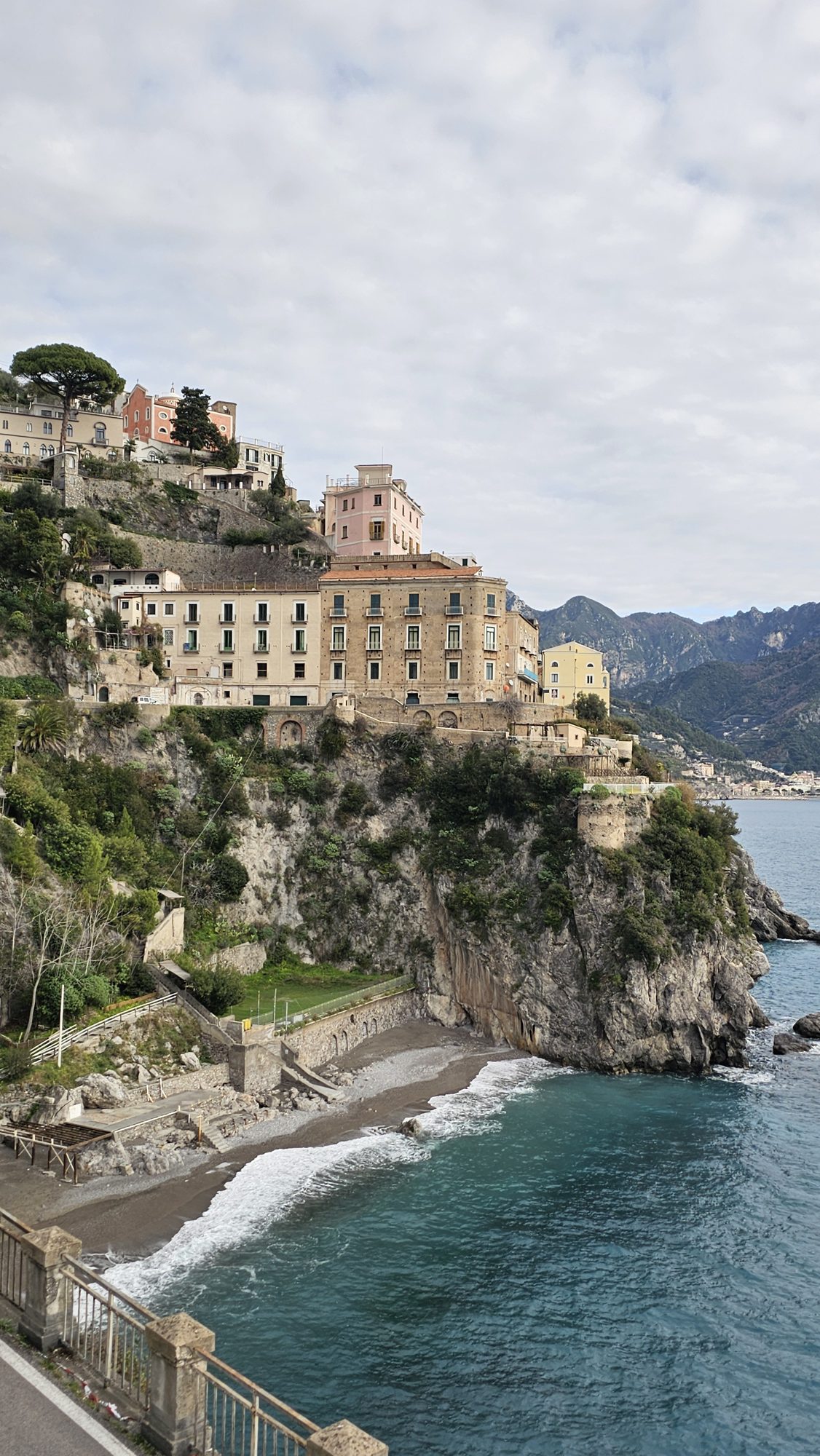
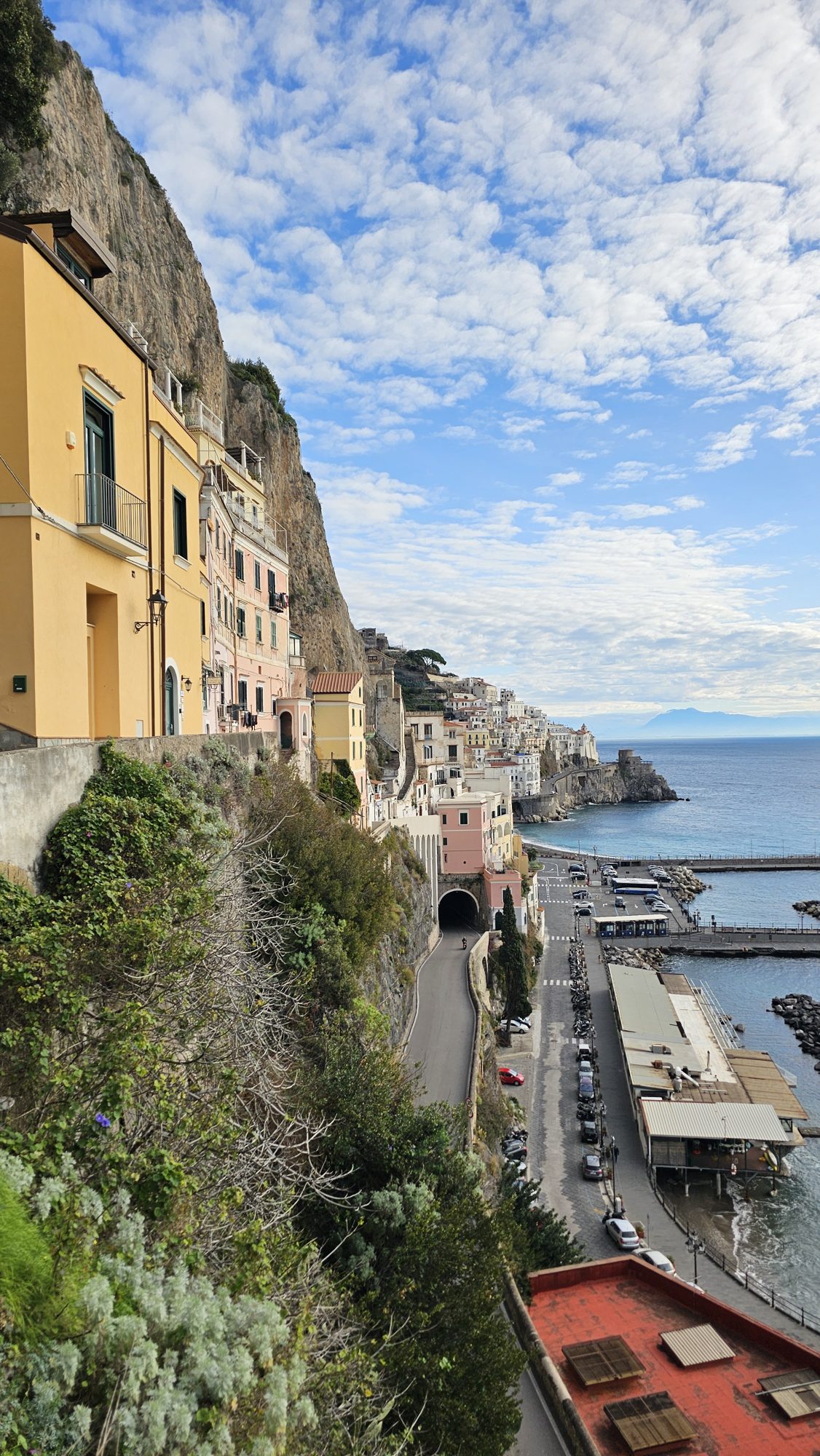
The town on the terrace above Amalfi, where Wagner found his magic garden and Gore Vidal stayed for thirty years: two villas with the finest gardens in the south, a cathedral with bronze doors, and an orchestra playing on a stage built out over the void.
Ravello is cooler, quieter and more refined than the towns on the water. It has no beach, and nobody minds.
Villa Rufolo, just off the cathedral square, is a 13th-century palace of towers and Moorish courtyards whose terraced garden inspired the magic garden of Klingsor in Wagner's Parsifal. Its belvedere is where the Ravello Festival orchestra plays on a stage cantilevered over the sea; entry is €8.
A fifteen-minute walk away, Villa Cimbrone has a long avenue through its gardens ending at the Terrace of Infinity, a balustrade of marble busts above a 300-metre drop; entry is €10. The Duomo's bronze doors date from 1179, and below the town the white curve of Oscar Niemeyer's auditorium is the modern landmark.
The 2026 festival ran from 4 July to 5 September, and chamber concerts continue for much of the year. Stay the night if you can: when the day visitors leave, Ravello is the most peaceful place on the coast.
A full morning in town, then the old stepped path down to the sea.
Walk through the short tunnel from the bus stop into Piazza Duomo.
See the bronze doors and the mosaic pulpit of 1272 inside.
Towers, cloister and the terraced garden above the festival stage.
Walk up the lanes to the villa, then down its avenue to the famous balustrade.
Take the old stepped path down through the terraces to Atrani and Amalfi.


SITA bus from Amalfi, about 25 minutes up the hairpins, or walk up from Atrani on the old steps if you are fit.
Book as soon as the programme appears in spring; the dawn concert sells out first.
Ravello is the best place to sleep on the coast if you want quiet. There is no beach; take the bus down.
Amalfi Coast practical notes →Photographs from Wikimedia Commons and Pexels under their licences; some are our own.