The beach and turquoise sea at Playa del Carmen
Mexico · Riviera Maya

Playa del Carmen

A fishing village that became the Riviera Maya's hub: a pedestrian street a kilometre long, a Caribbean beach at the end of it, the world's biggest reef offshore and a limestone shelf behind it riddled with the clearest water on earth.

Photo via Pexels
Overview

The middle of the coast

Playa sits halfway down the Riviera Maya, an hour south of Cancún's airport and an hour north of Tulum, which is the whole argument for it: everything on the coast is a day trip, and the ferry to Cozumel leaves from the end of the main street. The town itself is Quinta Avenida, Fifth Avenue, a car-free strip of restaurants, bars and shops running parallel to the beach, with the quieter grid of Playacar to the south and the local town to the west of the highway.

Underneath all of it is the Yucatán's limestone, a honeycomb of flooded caves that open to the surface as cenotes. Within 40 minutes of town are the most famous cavern dives in the world. Offshore is the Mesoamerican Reef and, from November to March, the bull sharks that make Playa a dive town rather than just a beach one.

Three days covers the beach, a cenote, Cozumel and a night on Quinta. A week adds Tulum, Chichén Itzá, Bacalar or Holbox and a second cenote morning.

Aerial view of a white-sand beach with palms and clear water
Quinta AvenidaThe strip, from the ferry pier to Calle 40: restaurants, bars, the beach clubs at the north end.
The cenotesDos Ojos, The Pit, Angelita, Chac Mool and dozens more along the highway south.
CozumelForty minutes by ferry: drift dives on Palancar and Santa Rosa, the island's own pace.
Day tripsTulum and Cobá, Chichén Itzá, Akumal, Sian Ka'an, Bacalar and Holbox.
Highlights

What to see first

Nine places. The colectivo vans along the highway and the Cozumel ferry reach most of them without a car.

Strings of lights hanging over a lane at night
The strip

Quinta Avenida

Twenty blocks of pedestrian street from the ferry to Calle 40 and beyond, dead at nine in the morning and a river of people by nine at night. The north end around Calle 38 is the quieter, better-eating stretch; Calle 12 is the party corner; the Portal Maya sculpture on the beach at the south end is where the town meets the sea.

Quinta Avenida in detail →
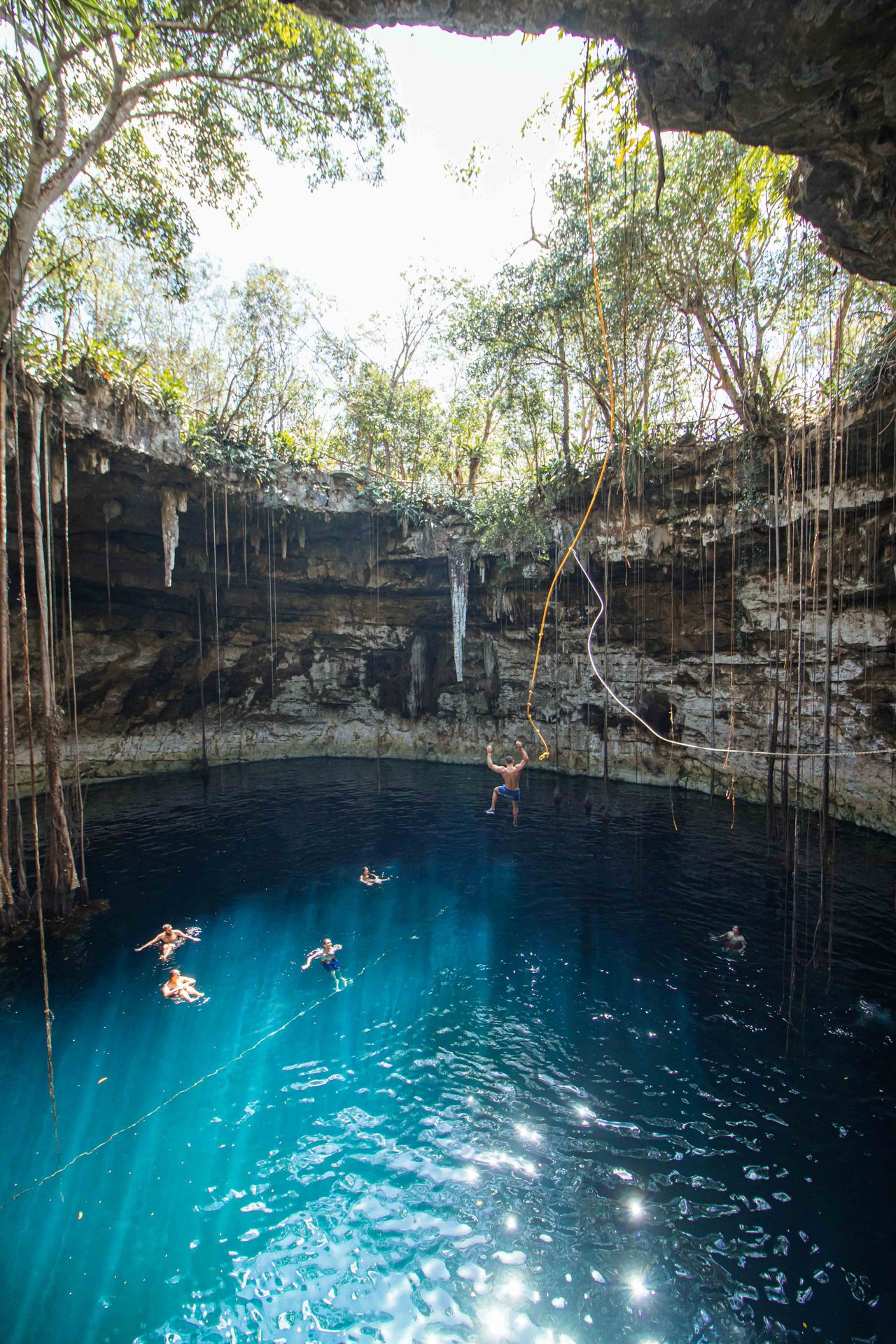
Inside a cenote in Mexico with turquoise water
Water

The cenotes

Sinkholes into the aquifer, from open swimming holes to cathedral caverns with stalactites. Dos Ojos, Gran Cenote and Azul for swimming and snorkelling; Chaak Tun and Cristalino for a morning; the deep ones for divers. Go at opening time, before the tour buses, and wear no sunscreen in the water.

The cenotes in detail →
A scuba diver swimming with fish over a reef
Island

Cozumel

Forty minutes by ferry from the pier. The west coast of the island is a wall of coral protected as a marine park since 1996, and the drift diving along Palancar, Santa Rosa and Columbia is the best in Mexico. Snorkellers go to Palancar's shallows and the Colombia lagoon; non-divers rent a scooter and circle the wild east coast.

Cozumel in detail →
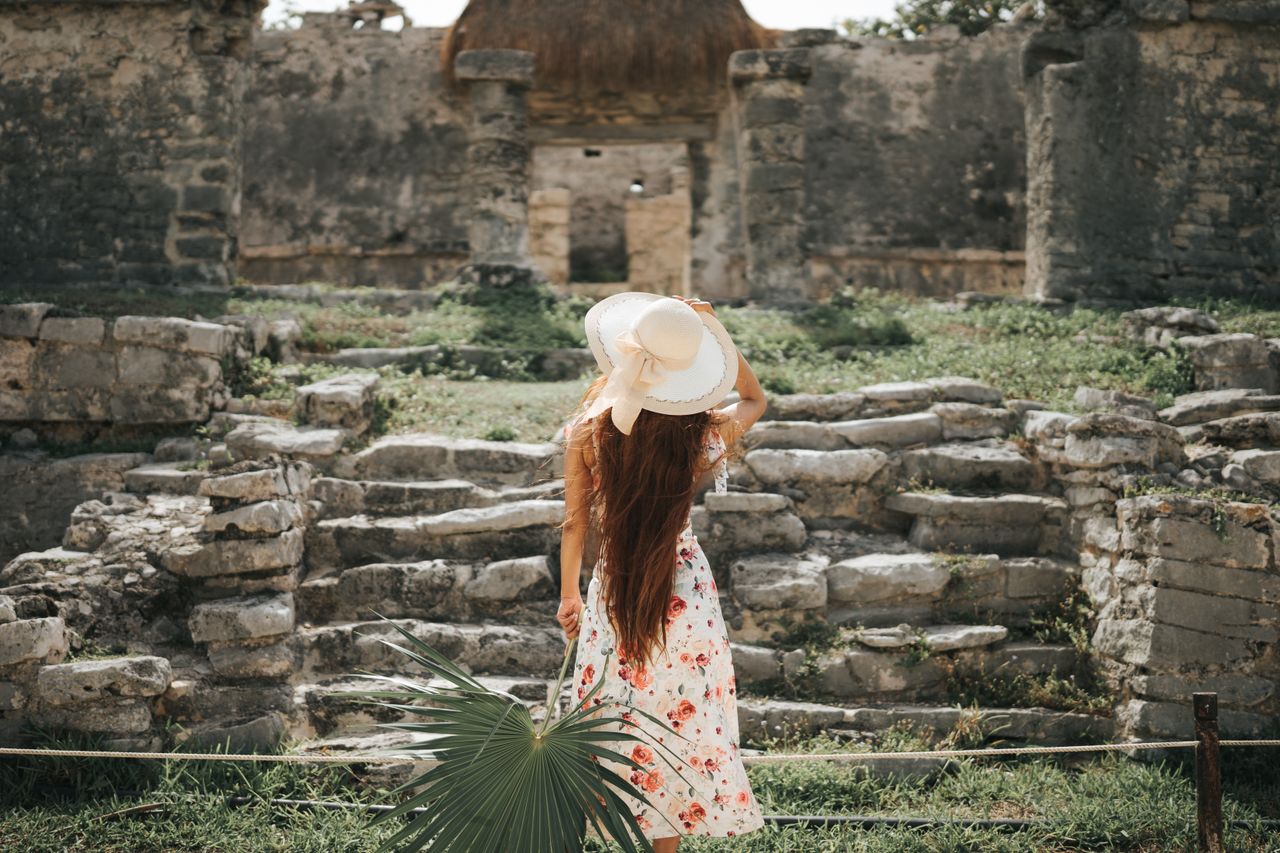
A visitor looking at the Maya ruins at Tulum
Maya · Coast

Tulum and Cobá

Tulum's walled city sits on a cliff above a beach an hour south, the only Maya site on the sea and the most photographed. Cobá, inland, is bigger, older and in the jungle, with the 42-metre Nohoch Mul pyramid and bicycles to ride between the ruins. Do both in a day; Tulum at opening, Cobá after.

Tulum & Cobá in detail →
The El Castillo pyramid at Chichén Itzá
Maya · Wonder

Chichén Itzá

Two and a half hours west, the great city of the northern Maya: the Kukulcán pyramid, the ball court, the observatory, the sacred cenote. Arrive for the eight o'clock opening or go in the late afternoon; the middle of the day belongs to the coaches from Cancún. Cenote Ik Kil and the colonial town of Valladolid are on the way back.

Chichén Itzá in detail →
A sea turtle swimming near coral
Turtles

Akumal

Thirty minutes south, a bay of seagrass where green turtles graze a few metres from the beach. The bay is now a protected area with guided snorkel groups, life jackets and no touching, which is why there are still turtles in it. Early morning, before the groups, is calmest; Yal-Kú lagoon next door has the fish.

Akumal in detail →
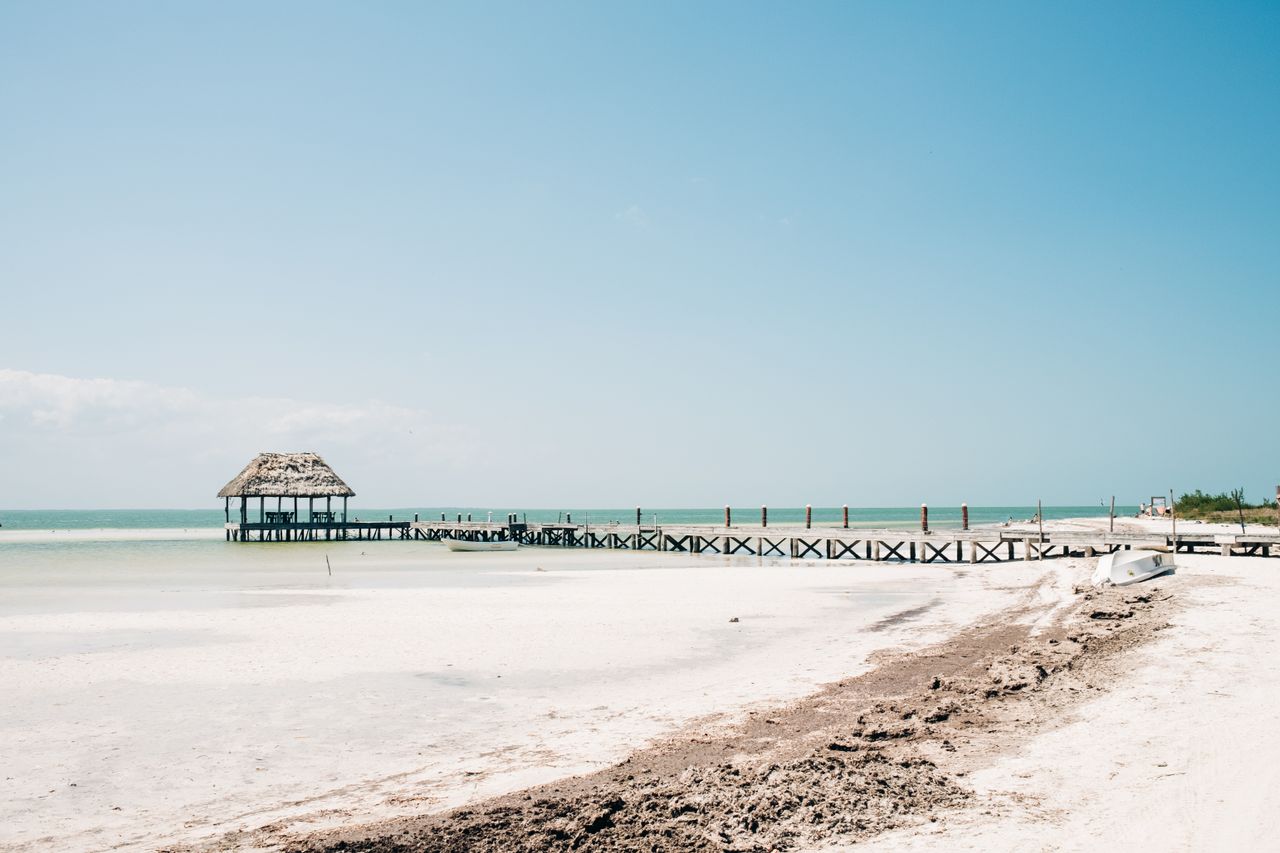
A sunny beach at Holbox with calm shallow water
Island · Overnight

Isla Holbox

Three hours north by road and ferry, a car-free island of sand streets, hammocks in the water and flamingos on the lagoon. Whale sharks gather offshore from June to September, bioluminescence lights the shallows on dark summer nights. Two nights minimum; it is too far for a day.

Holbox in detail →
The turquoise water of the Bacalar lagoon
Lagoon · Overnight

Bacalar

Three hours south, the Lagoon of Seven Colours: 42 kilometres of freshwater over white limestone, graded from pale green to navy, with docks and swings over the water, a 1729 fort and the living stromatolites at Los Rápidos. Sail it, kayak it, sleep beside it. No sunscreen in the water, which is fragile.

Bacalar in detail →
Palm trees on a white sand beach
UNESCO · Wild

Sian Ka'an

South of Tulum, a 5,000-square-kilometre biosphere reserve of mangrove, lagoon, reef and jungle, entered by boat from Muyil along a Maya canal, floating down the current in a life jacket, or from Punta Allen for the reef and the dolphins. Crocodiles, manatees, 300 bird species and almost no people.

Sian Ka'an in detail →
Scuba & snorkel

Caverns, walls and the winter sharks

Three kinds of diving from one town: the cenotes, where you follow a guideline through sunlit caverns in water with 100-metre visibility; the Cozumel drift walls; and, in winter, the bull sharks that come to a sand patch off Playa's own beach.

Cenote dives are cavern dives, within sight of daylight, with a certified cave guide and a maximum of four divers per guide; Open Water is enough for most, Advanced for The Pit and Angelita. The haloclines, where fresh water sits on salt, blur like oil in water. Bring a 5 mm suit for the cenotes (25°C) and a 3 mm for the sea.
JFMAMJJASOND

Dive season: teal = bull sharks and calm seas, green = good all round, grey = hurricane months (cenotes still dive).

Swimmers in a cavern lake
The classic cavernOpen Water

Dos Ojos

Two sinkholes joined by a cavern, 40 minutes south, with two guided lines: the Barbie line through sunlit chambers of stalactites and blue light, and the Bat Cave line into a dark dome with bats on the ceiling and an air pocket to surface in. Shallow, slow and the right first cenote. Gran Cenote and Chac Mool, with its halocline and sun-shaft chamber, are the other beginners' caverns.

5–10 mdepth
Open Waterlevel
60–100 mvisibility
All yearseason

Two cavern dives make a morning; add the snorkel loop if you have a non-diver with you.

The silhouette of a person in a cave
Advanced

The Pit and Angelita

The two deep ones. The Pit, in the Dos Ojos system, is a shaft of blue light down to a halocline at 12 metres and a hydrogen-sulphide cloud at 30, with ancient tree trunks on the ledges below. Angelita, near Tulum, is a single round hole where the sulphide layer at 30 metres looks like a river in fog, with a dead tree standing in it; you descend through the cloud into the dark salt water below. Nowhere else looks like either.

30–40 mdepth
Advancedlevel
30–100 mvisibility
All yearseason

Usually paired, Angelita first for the depth. Good buoyancy matters; the silt below the cloud is forever.

Divers in blue water with sharks
Winter onlyAdvanced

The bull sharks of Playa

From November to March, pregnant female bull sharks gather over a sand patch at 25 metres a few minutes off Playa's beach. The dive is a kneel on the sand with a guide while ten to twenty sharks circle at arm's length; the unbaited version is the one to choose. January and February are peak. One of the few reliable big-shark dives in the Caribbean, and the reason the town's dive shops fill up in winter.

22–26 mdepth
Advancedlevel
10–25 mvisibility
Nov–Marseason

Book ahead; the shops run it as a single morning dive with a briefing.

A school of fish over a coral reef
Open Water to Advanced

Cozumel: Palancar, Santa Rosa and Columbia

The island's west coast is a 30-kilometre drift along coral walls in a steady north-flowing current: Palancar Gardens for coral pinnacles and swim-throughs at 15 to 25 metres, Santa Rosa Wall for the sheer drop and the eagle rays, Columbia Deep for the big pillars, Punta Sur's Devil's Throat for an advanced tunnel to 40 metres. Turtles, eagle rays, nurse sharks and the endemic splendid toadfish.

Cozumel in detail →
10–40 mdepth
OW / Advancedlevel
20–40 mvisibility
Mar–Junbest

Day trip by ferry with a Cozumel shop, or two nights on the island for the dawn boats. The ferry is 40 minutes; book a shop that picks up at the pier.

Snorkel

Akumal and Yal-Kú

30 minutes south · mornings

Turtles over seagrass in two metres of water, then the fish-filled lagoon next door where fresh and salt water mix.

Akumal in detail →
Snorkel · June–Sep

Whale sharks off Holbox and Isla Mujeres

Day boats, 3 hours each way

Snorkelling beside the largest fish in the sea as it feeds on tuna spawn. Official season mid-May to mid-September, peak July and August; two swimmers per guide, no touching.

Holbox in detail →
Cave

Full cave training

Playa and Tulum

The Yucatán is where the world learns to cave dive. The town's technical shops run the week-long Cavern-to-Full-Cave courses that open the real systems behind the daylight.

Nature & walks

Flat country, deep water

The Yucatán has no hills, so the walking is through jungle to ruins and water, and the best of the outdoors is wet: floating down a Maya canal, paddling a lagoon, swimming a cave.

An ancient stone pyramid on a green lawn
Easy

Cobá by bicycle and the Punta Laguna monkeys

Cobá's ruins are spread through jungle along white sacbé causeways; rent a bicycle at the gate and ride between the pyramid, the ball courts and the stelae with motmots in the trees. Twenty minutes north, the Punta Laguna reserve, run by the Maya community of Najil Tucha, has a troop of spider monkeys that come to the canopy over the lake in the early morning and late afternoon, and a cenote to end in.

Full trail guide →Full route guide →
6 kmby bike plus 3 km walking
Half daytime
Flateffort

Go to Punta Laguna first, at opening, when the monkeys are active, then Cobá before the heat.

Aerial view of forest beside a lagoon
Easy

Sian Ka'an from Muyil

From the Muyil ruins south of Tulum a boardwalk crosses the jungle to a lagoon, where a boat crosses to a Maya canal cut through the mangroves a thousand years ago. You put on a life jacket and float the canal for 40 minutes, feet first, with herons and the odd crocodile on the banks, to a second lagoon and the boat back. The gentlest adventure on the coast.

Full trail guide →Full route guide →
2 kmwalking plus the float
3–4 htime
Flateffort

Community boats at the lagoon; take cash, bug repellent, and nothing that cannot get wet.

Half day

Río Secreto

10 minutes south of Playa

A guided walk and swim through a kilometre of dry and flooded cave with helmets, wetsuits and headlamps, past formations the open cenotes cannot show. Small groups, book ahead.

Full guide →Full route guide →
Day

Bacalar by kayak

3 hours south

Paddle the colour bands of the lagoon to the Canal de los Piratas and the Cenote Negro at dawn, when the water is glass.

Full guide →Full route guide →
Evening

Bioluminescence at Holbox

Punta Cocos · dark summer nights

Wade into the shallows on a moonless night from May to September and the water lights up blue around your legs.

Holbox in detail →Full route guide →
Wildlife

Turtles, whale sharks and the monkeys in the trees

The reef, the lagoons and the jungle each keep their own animals, and most of them run on a season.

Sea turtles

Akumal all year; nesting on every beach May–October

Green turtles graze the seagrass at Akumal every day of the year. From May to October loggerheads and greens haul out onto the beaches at night to lay, and from July hatchlings run for the sea; the beach clubs mark nests, and volunteer groups in Akumal and Tulum run night patrols you can join.

Akumal in detail →
JFMAMJJASOND

Whale sharks

Holbox and Isla Mujeres · mid-May to mid-September

The largest aggregation of whale sharks in the world forms off the north-east tip of the peninsula each summer, hundreds of animals feeding on tuna and bonito spawn. Licensed boats from Holbox, Isla Mujeres and Cancún; two swimmers in the water at a time with a guide.

JFMAMJJASOND

Spider and howler monkeys

Punta Laguna, Sian Ka'an, the Cobá jungle · dawn and dusk

Yucatán spider monkeys swing through the canopy at Punta Laguna in troops of a dozen; howlers roar at dawn in the taller forest south of Tulum. Coatis and agoutis cross every ruin's path.

JFMAMJJASOND

Flamingos, crocodiles and the reef

Holbox lagoon, Sian Ka'an, Cozumel

Flamingos feed on the Yalahau lagoon behind Holbox from April to October; Morelet's crocodiles sun on the Sian Ka'an canal banks and in the Cozumel lagoons; eagle rays, nurse sharks and the splendid toadfish, found nowhere else, live on the Cozumel walls.

JFMAMJJASOND
A turtle resting on a tropical reef
Akumal

Green turtle

Two metres down, eating. Watch from the surface; the bay is theirs.

A spider monkey eating fruit in the jungle
Punta Laguna

Spider monkey

Long arms, no thumbs, and an alarm bark when you get too close.

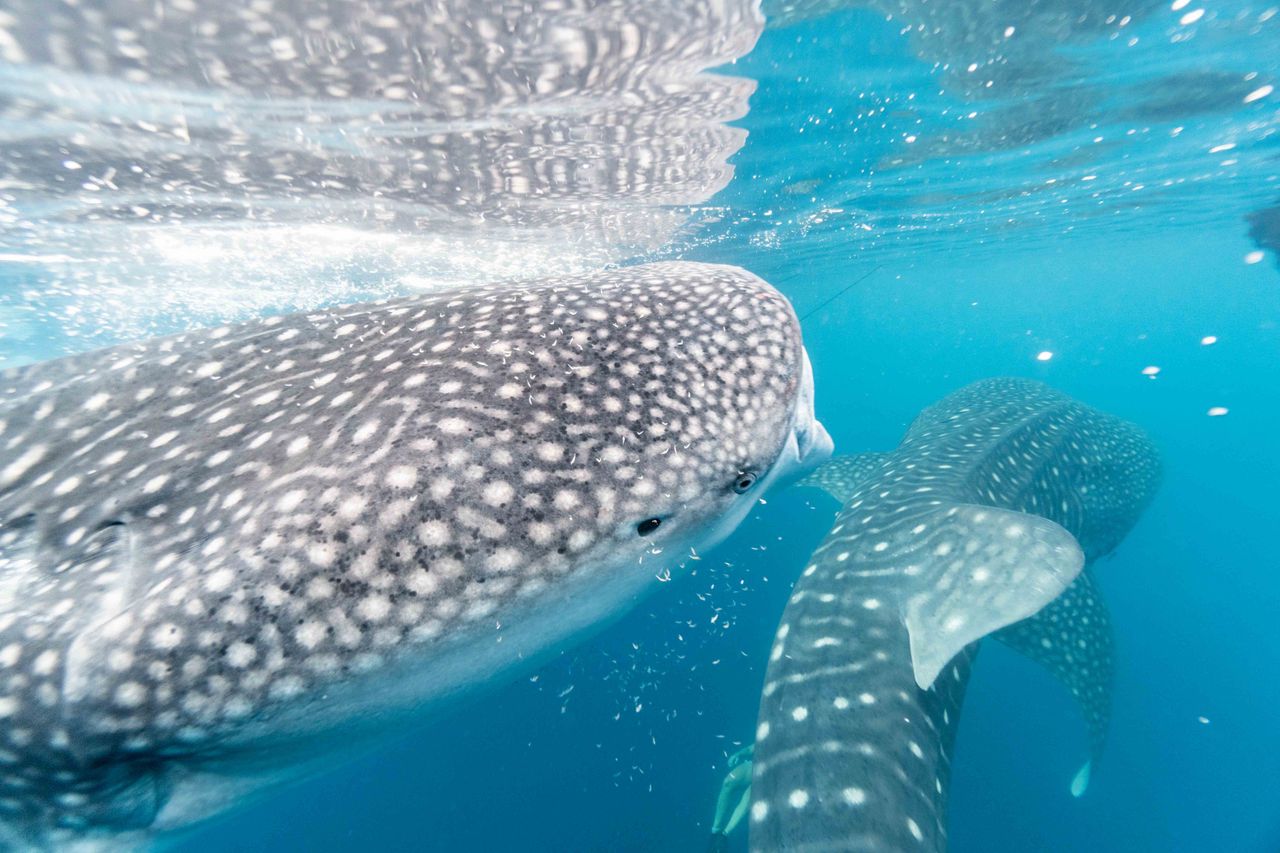
A whale shark swimming near the surface
Summer

Whale shark

Off Holbox from June. The boat ride is long and the swim is three minutes you remember.

Good food

Yucatecan kitchens and the coast's best tables

The Yucatán cooks differently from the rest of Mexico: achiote and sour orange, pork buried in a pit, habanero on everything, lime soup and the marquesita rolled on the street at night. Playa adds a restaurant row that has quietly become one of the most interesting on the coast.

A plate of Mexican food
Eat this

Cochinita pibil and sopa de lima

Pork marinated in achiote and sour orange, wrapped in banana leaf and cooked overnight in a pit, served with pickled red onion in a taco or torta; Sunday morning is the traditional time. Sopa de lima is the lime-and-chicken soup with fried tortilla that every Yucatecan kitchen opens with.

Mexican tacos on a tray
Eat this

Tacos, tostadas and aguachile

Al pastor from the trompo at Don Sirloin and El Fogón after dark; fish tostadas and shrimp aguachile at Los Aguachiles at lunch; panuchos and salbutes, the Yucatán's fried-tortilla snacks, at the Mercado 30 de Abril stalls in the local town.

Cooks working in a Mexican food bar
Eat this

Marquesitas and the night carts

The marquesita is the Yucatán's street dessert: a crisp rolled crêpe filled with Edam cheese and Nutella or cajeta, from carts on Quinta from eight at night. Churros, elotes and fruit with chilli from the same carts.

Fine dining

The top table

Ha'

Hotel Xcaret México · dinner, booking essential

Carlos Gaytán's tasting menu in a dining room over a lagoon, Mexican produce in French technique: Yucatecan sour orange, Oaxacan moles, Caribbean fish. The most ambitious kitchen on the coast.

MX$4,000–6,000 · $$$$
Tasting menu

Cocina de Autor Riviera Maya

Grand Velas, north of Playa · dinner

A long, polished tasting menu in the resort's signature room, built around Mexican ingredients with Nordic and Spanish technique. The Riviera's quietest serious dinner.

MX$3,500–5,500 · $$$$
Puerto Morelos

Le Chique

Azul Beach Resort, 30 minutes north · dinner

Jonatán Gómez Luna's theatrical menu of two dozen small courses that play with Mexican memory: street-food illusions, liquid tacos, desserts that look like something else. A long evening and a famous one.

MX$4,000–6,000 · $$$$
In a cave

Alux

Avenida Juárez, west of the highway · dinner

A restaurant inside a cenote cavern, candlelit between stalactites, serving Mexican and international dishes that take second place to the room. Book a table in the deeper chambers.

MX$1,200–2,200 · $$$
Playacar

Plank

Quinta Avenida at Calle 12, Playacar end · dinner

Wood-plank cooking, dry-aged steaks and seafood in a patio garden with a long cocktail list. The town's grown-up grill.

MX$1,000–2,000 · $$$

Bib Gourmand

Bib Gourmand

Axiote

Calle 34, between Quinta and the beach · lunch and dinner

Regional Mexican cooking with care: cochinita, sikil pak, duck in black mole, tortillas pressed to order. The best plate of Mexico on the strip at a fair price.

MX$500–900 · $$
Bib Gourmand · Tulum

Mestixa

Tulum town · dinner

Yucatecan and Lebanese cooking together, which is the peninsula's own history on a plate: kibbeh beside cochinita, hummus with habanero. An hour south, worth it with the ruins.

MX$500–900 · $$
Bib Gourmand · Tulum

Cetli

Tulum town · dinner

A chef cooking the moles and regional dishes of central Mexico in a small house in Tulum pueblo, far from the beach-club prices. The old Tulum favourite.

MX$450–800 · $$
Bib Gourmand · Puerto Morelos

Punta Corcho

Puerto Morelos · lunch and dinner

Seafood and ceviches by the fishing village's lighthouse, with the day's catch and a short, good drinks list. Half an hour north on the way to Cancún.

MX$450–850 · $$

Taquerías and the locals' places

Institution

El Fogón

Avenida 30, two locations · lunch to late

Al pastor from the trompo, arrachera and quesadillas at plastic tables, packed from noon to midnight. The Playa taquería.

MX$100–250 · $
Seafood

Los Aguachiles

Calle 34 and Avenida 25 · lunch

Fish tostadas, shrimp aguachile, tuna tartare and cold beer in a courtyard. The lunch every local recommends.

MX$250–500 · $$
Al pastor

Don Sirloin

Avenida 10 at Calle 14 · late

The after-midnight al pastor, carved off the spit with pineapple, open until the bars close.

MX$80–200 · $
Fish tacos

La Floresta

Highway at Avenida Juárez · lunch

A roadside palapa doing beer-battered fish and shrimp tacos since the town was a village. Go once, then keep going.

MX$80–200 · $
Garden

La Cueva del Chango

Calle 38, north end of Quinta · breakfast and lunch

Breakfast and Mexican lunches in a jungle garden with a stream, chilaquiles and fresh juices under the trees. The north-end morning.

MX$250–450 · $$
Market

Mercado 30 de Abril and Chez Céline

Local town; Calle 34 · mornings

The market for panuchos, cochinita tortas and fruit at local prices; Chez Céline, the French bakery on Calle 34, for the croissant the whole town queues for.

MX$60–250 · $
Nightlife

Calle 12 and the beach after dark

Playa goes out on foot. Quinta fills from nine, the beach clubs turn into bars at sunset, and the corner of Calle 12 runs its clubs until four. Drink prices rise with the distance from the local town.

The corner

Calle 12

Quinta Avenida at 12th street · 10pm to 4am

The clubs sit on top of each other: Coco Bongo's acrobat-and-cover-band show with an open bar, Mandala's dance floor open to the street, Palazzo for the big-room crowd, and a run of open-air bars between them where the night starts and the touts work hardest.

Beach bars

Fusion, Zenzi and the north-end beach clubs

On the sand · sunset to midnight

Fusion for fire shows and live bands with your feet in the sand; Zenzi by the lighthouse for live music most nights and a mixed local crowd; the beach clubs around Calle 38 for a quieter sundowner.

Bars

Fah, Santino and the Calle 38 bars

Quinta Avenida · evenings

Fah for live rock in a courtyard off the strip; Santino for a small, late, locals' bar; the rooftops and mezcalerías around Calle 38 for a drink without a cover charge. La Bodeguita del Medio, a Havana import, for salsa.

Cozumel and Tulum

The other nights

By ferry; by road

Cozumel's San Miguel waterfront has beer and live music without the strip; Tulum's beach-road clubs and jungle parties are a different, pricier scene an hour south, with the big electronic events in January.

Practical notes

Before you go

Getting there

Cancún airport is 55 minutes north; the ADO bus runs direct to Playa's terminal every half hour for a few hundred pesos, and pre-booked shuttles cost more. Tulum's airport, an hour south, has a growing number of flights. The Maya Train stops at Playa del Carmen station outside town.

Getting around

Walk in town. Colectivo vans run the highway to Tulum and Cancún every few minutes and stop anywhere; the ADO coaches reach Chichén Itzá, Bacalar and Mérida. A hire car is worth it for the cenotes and Cobá. Taxis have no meters; agree the fare first.

Seasons

  • Dec–Apr: dry, warm, bull sharks; busiest at Christmas, spring break and Easter.
  • May–Jun: hot, clearest sea, whale sharks begin, sargassum can arrive.
  • Jul–Oct: hot and humid, hurricane season peaks in September, best prices.
  • Nov: the sweet spot: dry, quiet, sharks returning.

Sargassum

Seaweed washes onto the mainland beaches in quantity some years between April and August; the resorts rake it, the cenotes and Cozumel's west coast are unaffected, and Holbox and Isla Mujeres are usually clear. Check the daily sargassum maps before choosing a beach day.

Money and safety

Pesos, with cards everywhere on Quinta and cash for colectivos, cenotes and taquerías; ATMs inside banks, not on the street. Playa is safe to walk at night on the main streets; keep valuables off the beach and buy nothing from the touts on Calle 12.

Where to stay

The north end around Calle 38 for the beach clubs and quieter nights; the centre for the strip; Playacar for a gated beach and golf; the local town west of the highway for value and the market. Two nights in Tulum, Bacalar or Holbox if there is time.

Photography

Photo credits

Photographs on this page are by independent photographers published on Pexels under the free Pexels licence. Click a title to open the original.

Powered by Webloyt | Report abuse