Sinkholes in the limestone, filled with fresh water so clear it looks like air, and linked by the longest underwater caves on earth.
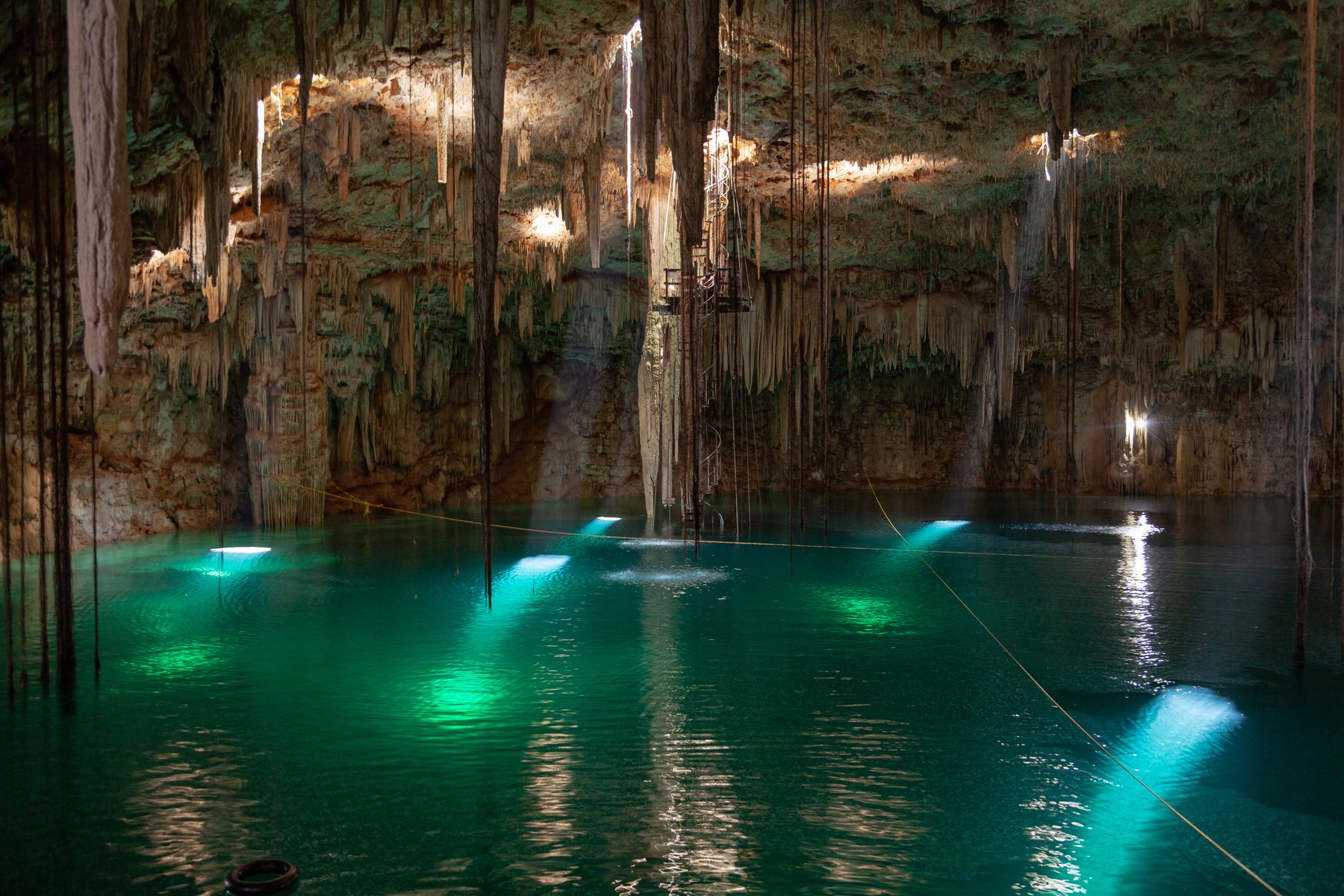
The Yucatán has no rivers on the surface. Rain sinks through the limestone and flows underground, and where a cave roof collapses, a cenote opens: a pool of filtered, startlingly clear fresh water.
South of Playa, along the road to Tulum, are some of the best. Cenote Azul and Cristalino are open pools by the highway, easy for families. Dos Ojos, "two eyes", is a pair of caverns joined underwater, famous with snorkellers and beginner divers. Gran Cenote, near Tulum, has turtles and stalactites around a sunlit pool.
Chaak Tun, just outside Playa, is a cave cenote with shafts of light, usually visited with a guide.
The water is part of the region's drinking supply. Shower before you swim and wear no sunscreen or repellent in the water.
Two or three cenotes in a day is plenty.
Arrive as it opens and snorkel the caverns before the tour groups.
Continue to Gran Cenote near Tulum for the turtles and the light.
Lunch in Tulum before heading back north.
Swim and jump from the ledges at an open cenote by the highway.
About 40 minutes back up the highway.
.jpg?width=1280)
.jpeg?width=960)

.jpg?width=1280)
Colectivo vans run down the highway to Tulum; ask to be dropped at the cenote turn-off.
Each cenote charges its own fee, usually in cash; snorkel gear and lockers are often extra.
Many cenotes close by late afternoon; life jackets may be required.
Playa del Carmen practical notes →Photographs from Wikimedia Commons and Pexels under their licences.