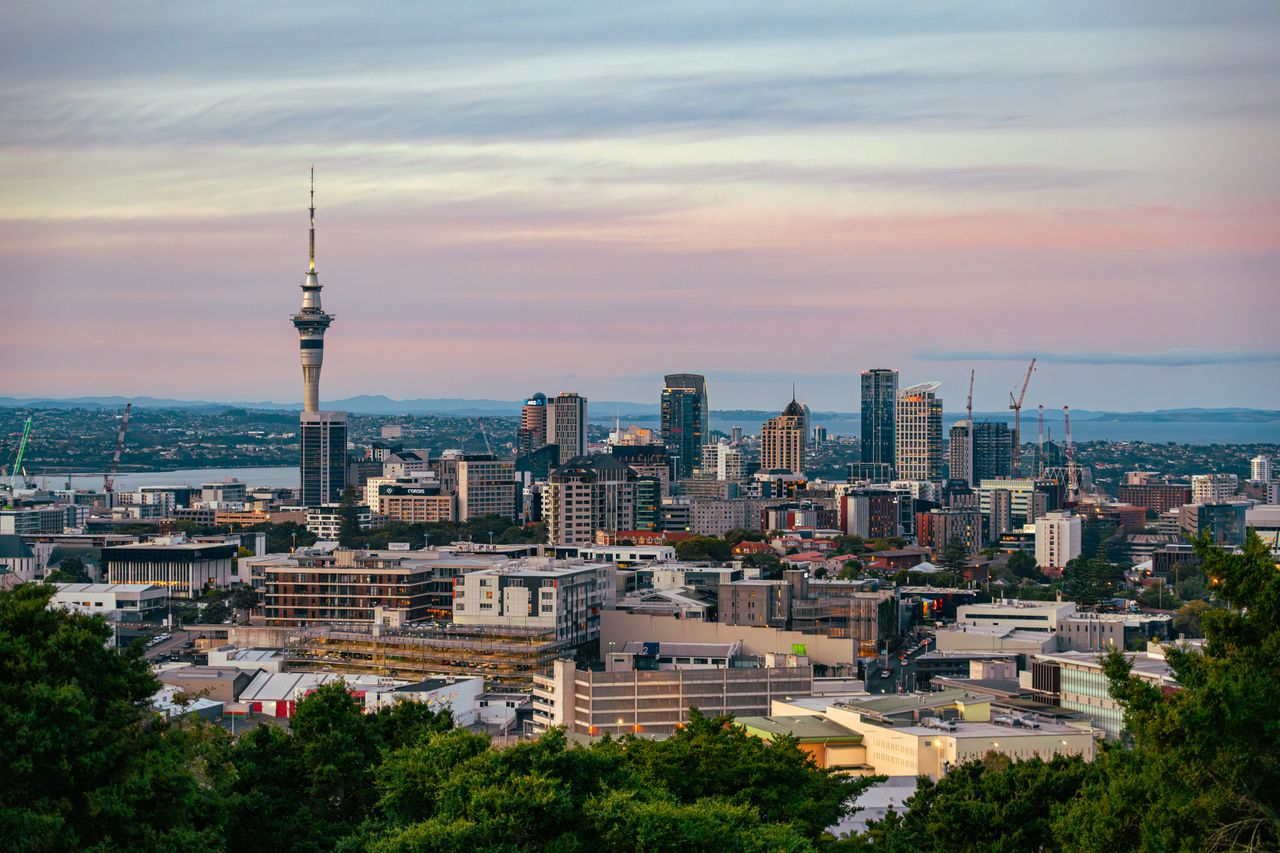
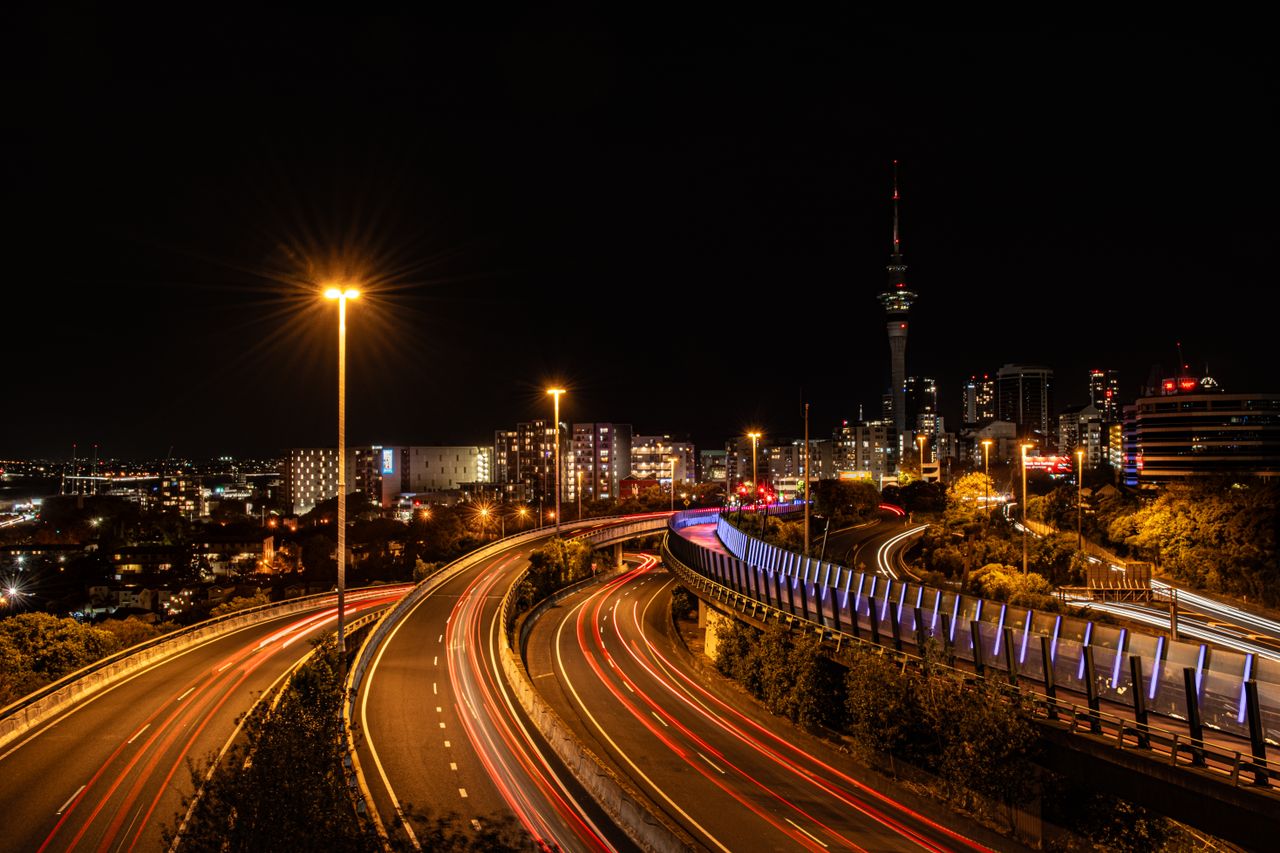
The Auckland skyline and Sky Tower at sunset
New Zealand · Tāmaki Makaurau

Auckland

A city built on fifty volcanoes between two harbours, with a gulf of islands at the end of the main street, a black-sand surf coast forty minutes west, and the best eating in the country.

Photo: Liam Spicer via Pexels
Overview

The city of sails, and of islands

Auckland sits on an isthmus so narrow that the Waitematā Harbour on the Pacific side and the Manukau on the Tasman side are a 16-kilometre walk apart. A third of New Zealand lives here, on and around a field of 53 volcanic cones, the youngest of which, Rangitoto, rose out of the gulf only 600 years ago and sits in the view from every eastern beach.

The centre is small: the waterfront, the Britomart and Viaduct precincts, Queen Street climbing to Karangahape Road. Most of what makes the city good is a ferry or a short drive away: the vineyards of Waiheke, the surf and gannets of the west coast, the pest-free bird islands of the Hauraki Gulf, and a dining scene that holds four of the country's six three-hat restaurants.

Three days covers the centre, Waiheke and a west-coast beach. A week adds Rangitoto, Tiritiri Matangi, a dive trip north and a day in the Coromandel.

A pier looking out to a green island in the Hauraki Gulf
City centreThe Sky Tower, Britomart, the Viaduct and Wynyard Quarter, Queen Street up to K' Road.
Inner suburbsPonsonby and Grey Lynn for restaurants, Parnell and Newmarket for the museum and shops, Mount Eden for the crater.
The gulfWaiheke, Rangitoto, Tiritiri Matangi and Great Barrier by ferry from the downtown terminal.
West coastPiha, Karekare, Muriwai and the Waitākere Ranges, 40 minutes out.
Highlights

What to see first

Nine places. Most are reachable by ferry or bus; the west coast and the Coromandel want a car.

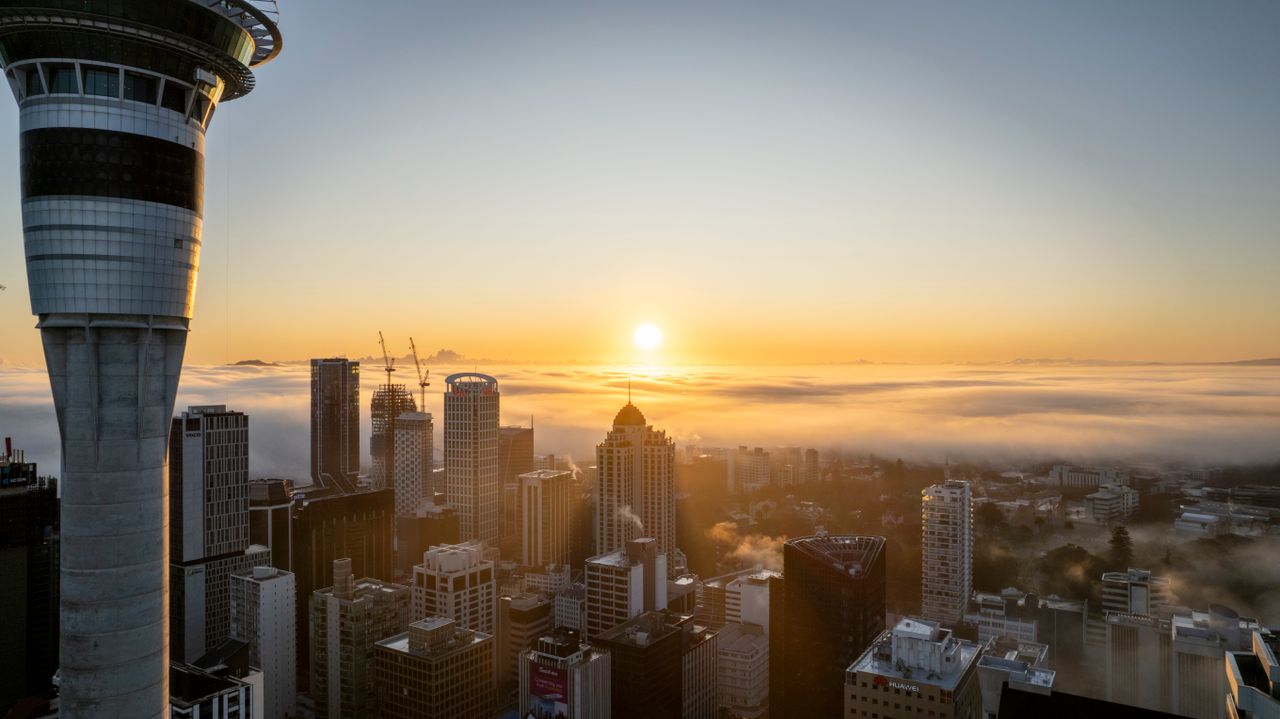
The Sky Tower in Auckland under a blue sky
The landmark

Sky Tower and the waterfront

The 328-metre tower has observation decks at 186 and 220 metres, a glass floor, a revolving restaurant and, for anyone so inclined, a 192-metre controlled jump off the side. Below it, the Viaduct and Wynyard Quarter are the harbourside bars and the America's Cup yachts; Britomart, by the ferry terminal, is the restored warehouse district of restaurants and shops.

Sky Tower & waterfront in detail →
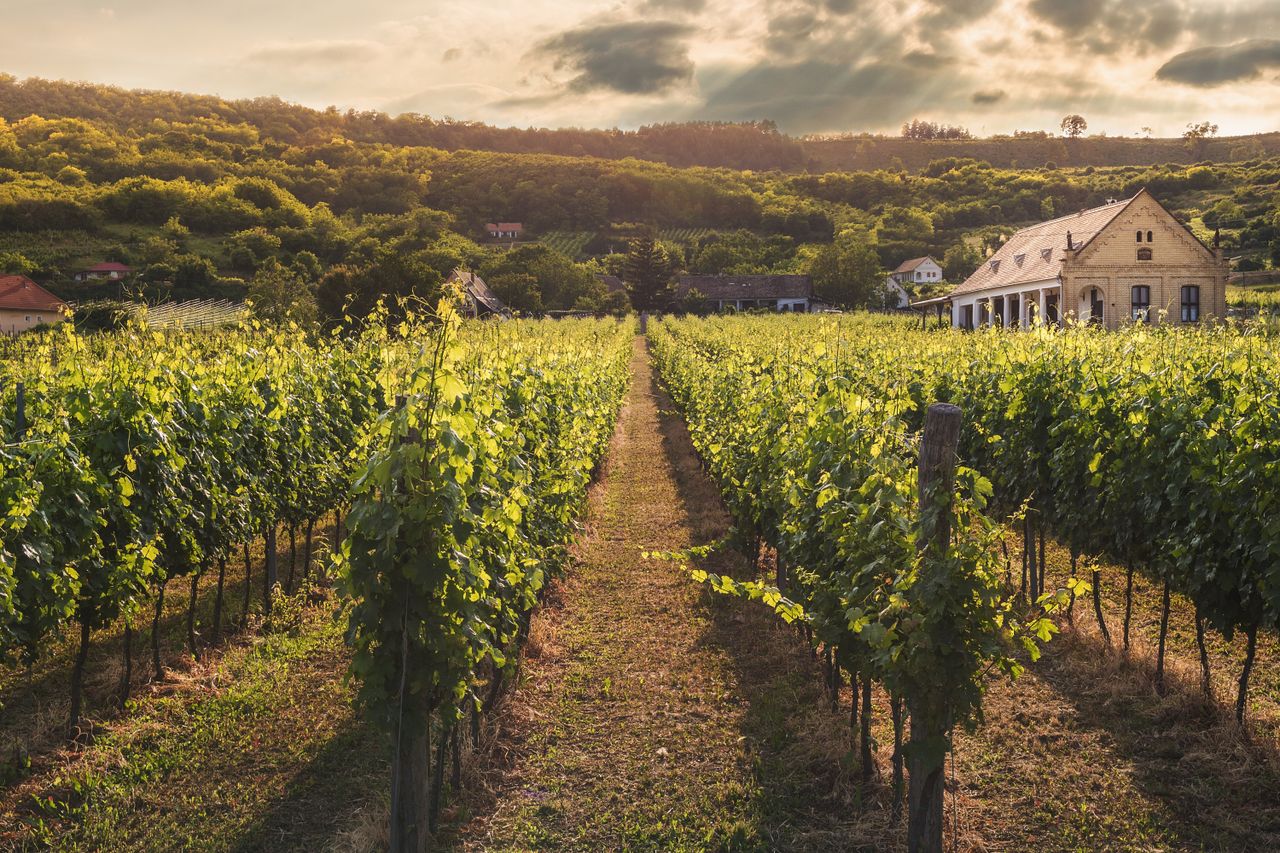
A New Zealand vineyard at sunset
Island · 40 min

Waiheke Island

A 40-minute ferry to an island of beaches, olive groves and 30 wineries, most with a restaurant and a view. Oneroa for the village and Little Oneroa beach, Onetangi for the long sand, the Mudbrick and Cable Bay vineyards above Matiatia for lunch with the city on the horizon. Buses meet every ferry; most people do it as a day and wish they had stayed.

Waiheke in detail →
The Rangitoto lighthouse on the shore of the island
Volcano · 25 min

Rangitoto Island

The youngest and largest of Auckland's volcanoes, a symmetrical 260-metre cone of black lava in the gulf, 25 minutes by ferry. The summit walk climbs through the world's largest pōhutukawa forest to a crater rim with the whole city laid out across the water. No shops, no water and no shade on the lava; take both.

Rangitoto in detail →
Hills meeting the sea on the Auckland west coast
West coast

Piha and Karekare

Forty minutes west, the Waitākere Ranges drop to a coast of black iron sand, heavy Tasman surf and bush-covered headlands. Piha has Lion Rock in the middle of the beach, surf schools and a lifeguard club that is a national institution; Karekare, over the hill, is the emptier, wilder beach from The Piano. Swim only between the flags.

Piha in detail →
A grassy path leading up Mount Eden in Auckland
Volcano · City

Maungawhau / Mount Eden

The highest cone on the isthmus at 196 metres, ten minutes from the centre, with a perfect 50-metre-deep grass crater and a 360-degree view that explains the city's geography. Sacred to Māori; walk around the rim, not into the crater. One Tree Hill, Mount Victoria in Devonport and Mount Victoria's neighbour North Head are the other summits worth the climb.

Mount Eden & the Coast to Coast →
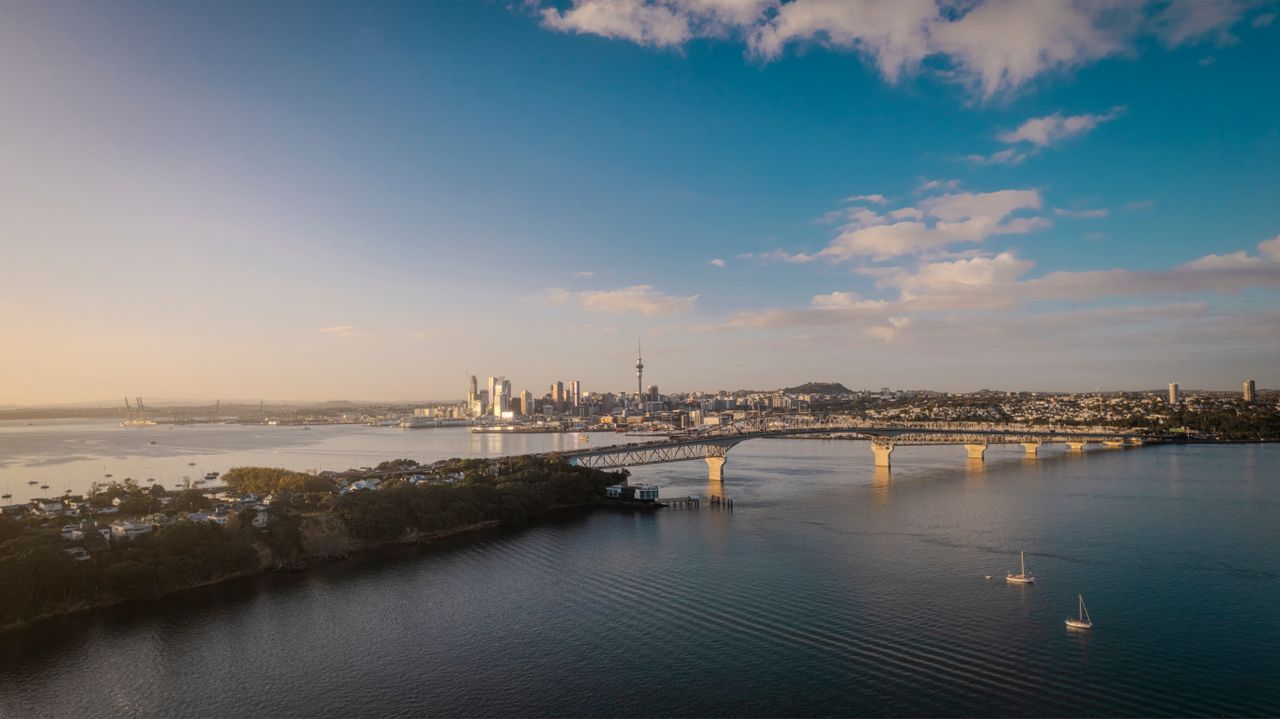
The Auckland Harbour Bridge over calm water
Ferry · 12 min

Devonport and the North Shore

A 12-minute ferry across the harbour to a Victorian village of villas, bookshops and cafés, with two volcanic cones, Mount Victoria and North Head, for the view back at the city and the tunnels of the old coastal guns. Beyond it, the North Shore beaches at Takapuna and Cheltenham face Rangitoto. The Harbour Bridge, which you can climb or bungy from, is the other way home.

Devonport in detail →
The Auckland city skyline with the Sky Tower
Museum · Culture

Auckland Museum and the Domain

The neoclassical war memorial on the hill in the Domain, the city's oldest park, holds the finest collection of Māori and Pacific taonga anywhere: carved meeting houses, a 25-metre war canoe, the Pacific galleries, and the natural-history floors with the moa and the volcano room. Daily cultural performances. Allow half a day; the Wintergardens in the park are the walk afterwards.

Auckland Museum in detail →
A tūī bird in close-up
Birds · 75 min

Tiritiri Matangi

An open sanctuary island in the gulf, cleared of predators and replanted by volunteers, where takahē graze by the lighthouse and kōkako, saddleback, stitchbird and hihi sing from the bush at arm's length. The ferry runs Wednesday to Sunday from downtown; the guided walk on arrival is the way to find the rare ones. Details in the wildlife section.

Tiritiri Matangi in detail →
A green hill meeting the sea on the Coromandel Peninsula
Day trips

Coromandel, Hobbiton and the Waitomo caves

Two and a half hours east, the Coromandel Peninsula has Cathedral Cove's rock arch, reached by boat or kayak from Hahei, and Hot Water Beach, where you dig a spa in the sand at low tide. Two hours south, the Hobbiton film set at Matamata and the glow-worm caves at Waitomo are the two most booked day tours in the country, and each is better than it sounds.

The day trips in detail →
Hikes & nature

Volcanoes, black sand and the bush at the edge of town

Auckland's walking is short and varied: up a cone before breakfast, across a lava island, through the rainforest of the Waitākere Ranges to a waterfall or a surf beach. Nothing here needs more than a day or a daypack.

JFMAMJJASOND

Walking season: teal = warm and settled, green = mild and wet (tracks are open all year; the west-coast bush is muddiest from June to September).

The lighthouse on the shore of Rangitoto Island
Moderate

Rangitoto summit and the lava caves

From the wharf a well-made track climbs through lava fields and pōhutukawa forest to the 260-metre crater rim in about an hour, with a boardwalk around the crater and a lookout over the whole gulf and city. On the way down, a side track leads to a string of lava caves you can walk through with a torch. The whole island is a scientific reserve and pest-free; the birdsong has come back.

5–7 kmreturn with caves
2–3 hwalking
260 msummit

Ferries run two or three times a day; the last one leaves mid-afternoon and the rangers count heads. Black lava in summer is hot underfoot and there is no water on the island.

Full route guide →
A waterfall pouring over mossy rock in New Zealand bush
Easy

Kitekite Falls and the Piha bush

From the Glen Esk Road car park behind Piha, a loop through nīkau palms and tree ferns reaches the three-tiered, 40-metre Kitekite Falls in about 45 minutes, with a swimming pool at the base and another at the top for the sure-footed. The Waitākere Ranges have hundreds of kilometres of track; this is the one to do first, followed by a swim at the beach and the climb up Lion Rock at sunset.

3 kmloop
1–1.5 hwalking
Bootsclean them at the gate

Kauri dieback has closed some Waitākere tracks and put boot-cleaning stations on the rest; use them. The Mercer Bay loop on the cliffs between Piha and Karekare is the other short walk of the coast.

Full route guide →
The grassy summit path on Mount Eden with the city beyond
Moderate

Coast to Coast Walkway

The 16-kilometre marked walk from the Waitematā to the Manukau across the whole isthmus, from the ferry terminal through the Domain and the museum, up Mount Eden, through the sheep of Cornwall Park to One Tree Hill, and down to Onehunga on the other harbour. Four volcanic cones, two harbours and most of the city's history in a day on foot, with cafés along the way.

16 kmone way
4–5 hwalking
Two conesMount Eden and One Tree Hill

Yellow markers all the way; the train from Onehunga brings you back. Do it in either direction, early, with the museum as the mid-morning stop.

Full route guide →
Easy · 1 h

Mount Victoria and North Head

Devonport

Two small volcanoes a ferry ride away, with the tunnels and gun pits of the 1880s coastal defences and the best view of the city skyline there is.

Walk guide →
Half day

Te Henga Walkway

Bethells Beach to Muriwai, west coast

A cliff-top path above the Tasman between two black-sand beaches, through flax and wind-bent bush, with the gannet colony at the Muriwai end. Ten kilometres one way; arrange a lift.

Walk guide →
2–3 days

Aotea / Great Barrier Island

4.5 hours by ferry or 30 minutes by plane

The wild outer island of the gulf: the Aotea Track over Hirakimatā, natural hot springs in the bush, empty surf beaches and a Dark Sky Sanctuary. Off-grid and worth two nights.

Island guide →
Scuba & snorkel

Subtropical water at the top of a temperate country

Auckland's own harbour is green and busy, but the coast north of it has the best diving in New Zealand: a warm current from the Coral Sea, volcanic arches and kelp walls, and a marine reserve where the fish come to you.

The Poor Knights are a two-and-a-half-hour drive north to Tutukaka, which makes them a long day trip or, better, an overnight. Water is 14–16°C in late winter and 21–23°C in March; a 7 mm suit or a drysuit from June to November, 5 mm the rest of the year. Visibility is best from late summer into winter.
JFMAMJJASOND

Dive season: teal = warm water and the subtropical visitors, green = cold and clear, grey = none; it dives all year.

A scuba diver with a guide rope in a kelp forest
The reason to comeOpen Water to Advanced

Poor Knights Islands

Two volcanic islands 23 kilometres off the Tutukaka coast, a no-take marine reserve since 1998 and the place Jacques Cousteau put in his top ten. The East Auckland Current brings subtropical species to kelp-draped walls, arches and caves: schooling blue maomao in the arches, stingrays stacked in the summer, moray eels, Lord Howe coralfish, nudibranchs by the hundred, and Rikoriko, the largest sea cave in the world by volume, which the boats drive into. Visibility runs 15 to 30 metres and more.

5–40 mdepth
OW / Advancedlevel
15–30 mvisibility
Feb–Junbest

Dive boats leave Tutukaka marina around eight and run two dives with a lunch in a sheltered bay; snorkellers go on the same boats. Book ahead in summer and stay a night in Tutukaka or Whangārei.

A diver in a black wetsuit under water
Snorkel · Open Water

Goat Island, Leigh

New Zealand's first marine reserve, an hour and a quarter north of the city, where fishing has been banned since 1975 and the snapper, blue cod and crayfish have grown large and fearless. You wade in from the beach into kelp and sand channels at 2 to 8 metres and the fish arrive; a glass-bottomed boat covers the island for non-swimmers. Shore dives go deeper on the island's seaward side.

2–15 mdepth
Snorkel / OWlevel
5–15 mvisibility
Nov–Maybest

Gear hire and a dive shop on the road down; go early on summer weekends or the car park fills. Matakana's Saturday market and wineries are on the way back.

Wreck · Advanced

Rainbow Warrior

Cavalli Islands, Northland · 3.5 hours north

The Greenpeace ship sunk in Auckland harbour in 1985 was scuttled off Matauri Bay as a reef; it lies at 26 metres wrapped in jewel anemones. A two-day trip from Auckland via Paihia.

Hauraki Gulf

Great Barrier and the Mokohinau Islands

Live-aboard or Great Barrier dive shops

Pinnacles and kelp walls in the outer gulf with kingfish and the occasional bronze whaler. Diving from the island, or on the gulf live-aboards that run from the city in summer.

Learn

Dive courses in the city

Auckland dive schools

Open Water courses are taught in city pools with open-water dives at Goat Island or the Poor Knights. Cheaper than most of the world and the finish is in a marine reserve.

Wildlife

Birds brought back from the edge, and whales in the gulf

New Zealand's wildlife is mostly birds, many of them flightless, odd and nearly lost. Around Auckland they live on islands that have been cleared of rats and stoats, and in a gulf with its own resident whale.

Tiritiri Matangi's rare birds

Ferry Wed–Sun from downtown · all year, best September–January

Takahē, the flightless blue-green rail thought extinct until 1948, graze the lawns by the lighthouse; kōkako, with their blue wattles and organ-pipe song, call from the canopy; saddleback, stitchbird, whitehead and North Island robin feed on the tracks. Little blue penguins nest in boxes along the shore. A guided walk on arrival is cheap and doubles what you see.

JFMAMJJASOND

Muriwai gannets

Muriwai Regional Park, west coast · August to March

Some 1,200 pairs of Australasian gannets nest on the headland and sea stacks at Muriwai, one of the few mainland colonies in the world, and the viewing platforms put you a few metres above them: courtship in spring, chicks from November, fledglings launching for Australia in February and March. Free, ten minutes' walk from the car park, and loud.

JFMAMJJASOND

Bryde's whales and common dolphins

Hauraki Gulf · boats from the Viaduct, all year

The Hauraki Gulf is one of the few places where a baleen whale lives all year within sight of a city: around 135 Bryde's whales feed in the gulf, and the half-day safari boats from the Viaduct find them, with pods of common dolphins in the hundreds, on most trips. Orca pass through the inner harbour a few times a year, hunting rays in the shallows.

JFMAMJJASOND

Tūī, kererū and the city birds

Any park with flowering trees · all year

You do not need an island for the tūī, the iridescent honeyeater with the white throat tuft and the song of clicks and bells, or the kererū, the heavy wood pigeon that crashes into trees. Both are back in the suburbs as the pest trapping spreads. The Domain, Western Springs and the Waitākere bush are the easy places; pōhutukawa in flower in December draws them to the waterfront.

JFMAMJJASOND
Gannets nesting on the headland at Muriwai
Muriwai

Gannets

Nests a wingspan apart across the whole headland.

A tūī perched outdoors in Auckland
Everywhere

Tūī

Listen for the bell notes, then the clicks.

Dolphins leaping out of the sea
The gulf

Common dolphins

Pods of a hundred and more riding the bow.

Good food

The best eating in New Zealand

Auckland is a Pacific city with a third of its people born overseas, and it eats that way: Māori and Pacific earth ovens, Cantonese and Korean on Dominion Road, Indian in Sandringham, and a top end built on green-lipped mussels, Bluff oysters, lamb, kūmara and the fish that come in at the market each morning.

Oysters with lemon on a plate
Eat this

Oysters, mussels and the fish market

Bluff oysters from the far south come up from March to August and are eaten raw with lemon; Te Matuku oysters from Waiheke all year. Green-lipped mussels, steamed in white wine or on the half shell, are the cheap great dish. The Auckland Fish Market in Wynyard Quarter sells snapper, kingfish and tarakihi off the boats and cooks them at the counters.

Mussels served with sauce and lemon on ice
Eat this

Hāngī, boil-up and the Pacific table

Hāngī is meat and kūmara steamed for hours in an earth oven; the modern version comes from a steam-pressure cooker at the Saturday markets. Rewena bread, pāua fritters, raw fish in coconut cream (ika mata), taro and the Samoan oka are at the Ōtara and Avondale markets on Saturday mornings, where South Auckland shops and eats.

An outdoor fish and chips shop with patio tables
Eat this

Fish and chips, pies and the flat white

Fish and chips on the beach at Mission Bay or Piha is the national Friday night; order snapper or tarakihi, not the default. The meat pie, the sausage roll and the cheese scone are the café staples, and the flat white was invented here or in Sydney depending on who you ask. Whittaker's chocolate and hokey-pokey ice cream for the sweet end.

Fine dining

The top table

Ahi

Commercial Bay, waterfront · lunch and dinner, book

Ben Bayly's dining room above the harbour, cooking New Zealand ingredients with intent: wild venison, kina, paua, foraged native herbs and a bread service that people talk about. The clearest statement of what the country's food is.

NZ$150–300 · $$$$
Japanese

Cocoro

Brown Street, Ponsonby · dinner, book

Makoto Tokuyama's kaiseki-style degustations of New Zealand seafood with Japanese technique, in a small, quiet room. One of the country's four three-hat restaurants and the most delicate of them.

NZ$180–280 · $$$$
French roots

Paris Butter

Jervois Road, Herne Bay · dinner

Nick Honeyman's neighbourhood restaurant that outgrew the word: a tasting menu of French classics turned on local produce, dry-aged duck, a cheese trolley, and a wine list that goes deep on both hemispheres.

NZ$160–260 · $$$$
Pacific

Tala

Grey Lynn · dinner, book

Henry Onesemo's Samoan-rooted tasting menu, the first of its kind at this level: taro, coconut, smoked fish, umu-style cooking and island flavours in a modern frame. The most original kitchen in the city.

NZ$150–220 · $$$
The classic

Sid at The French Café

Symonds Street · dinner, book

Sid and Chand Sahrawat's successor to the restaurant that defined Auckland fine dining for thirty years: a long tasting menu, polished service, a serious cellar and the room to propose in.

NZ$180–280 · $$$$

Where locals eat

Institution

Depot

Federal Street, by the Sky Tower · all day, no bookings

Al Brown's eatery: oysters shucked to order, turbot sliders, lamb ribs and skirt steak at a counter with a queue. The city's favourite lunch for over a decade.

NZ$40–90 · $$
Game and charcuterie

Cazador

Dominion Road · dinner and deli

A family restaurant since 1987 doing wild game, house charcuterie and offal with Middle Eastern leanings; the deli next door sells the salami and pâté to take home.

NZ$60–120 · $$
Korean

Gochu

Commercial Bay · lunch and dinner

Modern Korean from Jason Kim: fried chicken, kimchi pancakes, bossam and soju cocktails, in a room that fills with office workers at noon and dates at night.

NZ$50–100 · $$
Dumplings

Dominion Road and Balmoral

Dominion Road · lunch and dinner

Two kilometres of Chinese, Taiwanese and Malaysian restaurants: hand-pulled noodles, Shanghai dumplings, Sichuan hotpot, roti canai. Barilla for dumplings, Eden Noodles for dan dan, and pick the full room.

NZ$20–50 · $
Bakery

Daily Bread and Best Ugly Bagels

Several branches; City Works Depot · mornings

Daily Bread for the sourdough, croissants and cardamom buns the city queues for; Best Ugly for Montreal-style bagels from a wood oven in an old tram shed. Breakfast sorted.

NZ$8–25 · $
Market

Ōtara and Avondale Saturday markets

Saturday mornings, 6am–noon

The biggest Polynesian markets in the world: taro, green bananas, hāngī plates, panikeke doughnuts, chop suey, sapasui and coconut buns. Go hungry and early; the food is cheap and the people-watching is the best in Auckland.

NZ$5–20 · $
Nightlife

Ponsonby, K' Road and the waterfront

Auckland goes out in three places: the Viaduct and Britomart for the harbour bars, Ponsonby Road for the restaurant strip that turns into a bar strip, and Karangahape Road for the late, loud and queer end of town.

Cocktails

Caretaker and the Britomart basements

Customs Street East, Britomart · evenings

Caretaker is a dim basement with no menu: tell the bartender what you like and they build it. Upstairs and around the corner, Britomart's lanes hold a dozen more bars, from the natural-wine room at Annabel's to the rooftop at the Hotel Britomart.

The strip

Ponsonby Road

Ponsonby · evenings to 3am at weekends

Two kilometres of restaurants, wine bars and cocktail rooms, from the courtyard of Ponsonby Central to the small-room DJs at Clipper and the long bar at SPQR, which has been the strip's living room since the 1990s. Walk it and stop where the noise is right.

Late

Karangahape Road

K' Road · 10pm to 4am

The city's bohemian and queer high street: Family and Eagle for the gay bars, Whammy and the Wine Cellar in St Kevin's Arcade for live bands, Neck of the Woods for club nights, Sly for a 20-seat speakeasy and Bar Magda, behind the strip on Cross Street, for the drink that ends the night well.

Harbour

The Viaduct and Wynyard Quarter

Waterfront · sunset onward

The sundowner district: big terraces over the superyachts, Soul Bar for the long lunch that becomes dinner, Dr Rudi's rooftop with its own brewery, and the North Wharf restaurants on the Wynyard side for a quieter glass with the boats.

Wine

Waiheke reds and Kumeu Chardonnay

New Zealand's wine fame is Marlborough Sauvignon Blanc and Central Otago Pinot, but Auckland has two small regions of its own on the doorstep, and the city's lists carry the whole country.

Wine barrels stacked beside a vineyard

What to drink here

Waiheke's warm, dry maritime climate ripens Bordeaux grapes that the rest of the country struggles with: Cabernet, Merlot and Malbec blends with real structure from Stonyridge, Te Motu and Destiny Bay, Syrah from Man O' War and Passage Rock, and Chardonnay and rosé for lunch from Mudbrick and Cable Bay. Kumeu, 30 minutes north-west, makes Chardonnay at Kumeu River that stands with Burgundy's in blind tastings, and Matakana, an hour north, has Pinot Gris and Syrah to go with the Saturday market.

Further afield, the lists lean on Central Otago Pinot Noir, Hawke's Bay Syrah and the Marlborough Sauvignon that pays for everything. Ask for the aromatic whites, Riesling and Gewürztraminer, from Nelson and Waipara; they are the quiet bargains.

Cellar doors

Waiheke by bus or bike

Ferry to Matiatia, then the island bus or an e-bike

Mudbrick and Cable Bay for the view and lunch within walking distance of the ferry; Stonyridge, Te Motu and Tantalus (by booking) in the Onetangi valley for the serious reds; Man O' War at the far end of the island for the Syrah and the beach. Casita Miro for tapas among the vines.

Chardonnay

Kumeu River

State Highway 16, Kumeu · cellar door daily

The Brajkovich family's Chardonnays, from the estate blend to the single vineyards Maté's and Hunting Hill, are the country's best. Soljans and Westbrook are the other Kumeu stops.

In the city

Annabel's, Cave à Vin and the Ponsonby wine bars

Britomart; Ponsonby Road · evenings

Natural and small-producer lists by the glass with snacks, which is how to taste across New Zealand in one evening. Most good restaurants pour Kumeu River and a Waiheke red by the glass as well.

Practical notes

Before you go

Getting there

Auckland Airport is 21 kilometres south of the centre, 40 to 60 minutes by the SkyDrive bus to the city or by taxi and rideshare; the AirportLink bus connects to the train at Puhinui for a cheaper route. Most international flights to New Zealand land here.

Getting around

An AT HOP card covers buses, trains and the inner ferries. Ferries to Waiheke, Rangitoto, Tiritiri Matangi and Devonport leave from the downtown terminal. The west coast, the Coromandel, Goat Island and the Poor Knights need a hire car; traffic on the motorways is heavy from 7 to 9 and 4 to 6.

Seasons

  • Dec–Feb: summer, 24–28°C, beaches and the pōhutukawa in flower; busiest over Christmas and January.
  • Mar–May: warm sea, settled weather, the clearest light; the best months.
  • Jun–Aug: mild and wet, 10–15°C, whales still in the gulf and Bluff oysters in season.
  • Sep–Nov: spring, changeable, gannets and bird breeding on the islands.

The sea

West-coast beaches have strong rips and no lifeguards outside summer patrols; swim between the flags at Piha and Muriwai and never alone at Karekare or Bethells. East-coast and gulf beaches are calm. The sun burns in minutes; the UV here is among the highest in the world.

Money

New Zealand dollars, with cards and contactless everywhere including the markets' bigger stalls. Tipping is not expected. Restaurants add a surcharge on public holidays.

Where to stay

The city centre or Britomart for the ferries and the waterfront; Ponsonby for the restaurants; Devonport or Takapuna for a quieter base across the harbour; a night on Waiheke if the budget stretches.

Photography

Photo credits

Photographs on this page are by independent photographers published on Pexels under the free Pexels licence. Click a title to open the original.

Powered by Webloyt | Report abuse