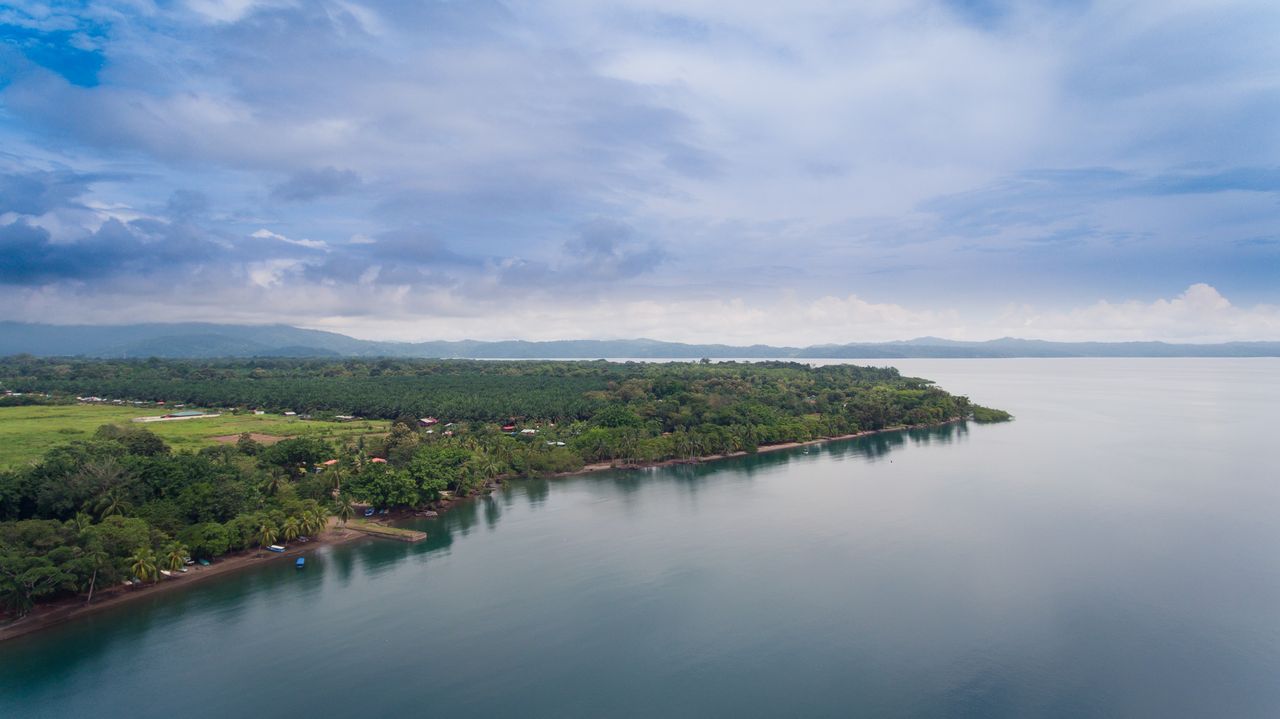
Aerial view of the forested coast and clear water at Manuel Antonio beach
Costa Rica · Central Pacific

Manuel Antonio

The smallest national park in Costa Rica and the one everybody visits: rainforest running straight down to white coves, three kinds of monkey in the trees above the towel, sloths found with a scope, and a hill of sunset bars between the park gate and the fishing town of Quepos.

Photo: Jake Marsee via Pexels
Overview

Seven kilometres of hill between a town and a park

Manuel Antonio is three places on one road. At the bottom, Quepos is a working fishing and banana town with a sportfishing marina, the bus station, the Saturday market and the cheap sodas. At the top, seven kilometres up and over a jungle ridge, the road ends at Playa Espadilla and the gate of the national park, 1,983 hectares of forest, cove and headland protected since 1972, with a daily visitor cap that sells out in high season. In between, strung along the ridge with the Pacific on both sides, are the hotels and restaurants, and the squirrel monkeys that cross the road on rope bridges.

The park is the reason to come and the rules have tightened: tickets are sold only online through the park service's platform, with a time slot, no sales at the gate; the park closes on Tuesdays; food is largely banned because the capuchins and raccoons learned to steal it; and a guide with a scope is the difference between seeing two animals and twenty. Around it, within an hour, are the mangroves of Isla Damas, the hanging bridges of Rainmaker, the twin falls of Nauyaca and, down the coast at Uvita, the whale-tail sandbar where humpbacks come to calve from July to October.

Three days covers the park at opening, a beach afternoon, a sunset on the hill and one excursion. Five adds Nauyaca or Rainmaker, a catamaran or a dive, and a night walk. A week lets you go south to Dominical, Uvita and the restaurants of Ojochal, which is the better coast for a second visit.

Green rainforest trees meeting the blue sea on the Costa Rican coast
The parkPlaya Manuel Antonio and Espadilla Sur, the Punta Catedral loop, the sloth boardwalk and the mirador, 7am to 4pm, closed Tuesdays.
The hillSunset restaurants, the plane bar, monkey bridges, Playa Biesanz's cove and the hotels in the trees between Quepos and the gate.
Quepos and the marinaThe Marina Pez Vela's sportfishing fleet and catamarans, the Friday-Saturday farmers' market, sodas and the bus terminal.
Around and southIsla Damas mangroves, Rainmaker, Nauyaca falls, Dominical's surf, Uvita's whale tail and Isla del Caño, Ojochal's dinner tables.
Highlights

What to see first

Nine places. Book the park ticket online before you arrive; in the dry season the slots go days ahead, and nothing is sold at the gate.

Drone view of the Costa Rican coastline with forest and surf
Online only · US$16 plus tax · Closed Tuesday

Manuel Antonio National Park

Two kilometres of flat gravel and boardwalk lead from the gate through forest full of capuchins, sloths and iguanas to Playa Manuel Antonio, a white cove of calm water and the best swim on the coast, with Espadilla Sur's longer beach over the sandbar behind it and the Punta Catedral loop climbing the headland between them. Tickets, US$16 plus 13 per cent tax for foreigners, are sold only on the park service's online platform for a timed slot; the gate sells nothing, and the touts on the road sell fakes. Open 7am to 4pm, closed Tuesdays, bags searched for food. Be at the gate at seven with a licensed guide.

The park trails in detail →
A quiet Costa Rican beach with driftwood on the sand
Public · Free · Watch the rips

Playa Espadilla and Playa Biesanz

Outside the gate, Espadilla is two kilometres of public grey-gold sand with surf schools, umbrella rentals, beach bars and, at the far north end past the rocks, La Playita, the quieter stretch reached at low tide. The waves that make it good for lessons also make rips, and a swimmer was lost here in April 2026; stay where the lifeguards and the surfers are. Biesanz, a ten-minute scramble down a trail from the hill road, is a small sheltered cove of clear water for snorkelling and paddleboards, with capuchins in the almond trees and raccoons that unzip bags.

The beaches in detail →
Boats docked in a marina beside a resort
Quepos · Fri–Sat market · Fishing

Quepos and the Marina Pez Vela

The town at the bottom of the hill is where the coast actually lives: banks, sodas, the bus terminal and the Feria del Agricultor, which sets up by the waterfront on Friday afternoon and sells fruit, fish, cheese and tamales until Saturday lunchtime. The marina beside it holds about two hundred slips and the sportfishing fleet that made Quepos the sailfish capital of the Pacific, with the season from December to April, catch-and-release for billfish, half-day charters from about US$600 and the catamarans and dive boats leaving from the same docks.

Quepos in detail →
Green trees overhanging a river
25 min north · Kayak or boat · US$60–95

The Isla Damas mangroves

An estuary of red mangrove channels north of Quepos, paddled by kayak or motored by boat on tours timed to the tide: capuchins in the branches, boa constrictors coiled above the water, herons and kingfishers, crabs by the thousand and, with luck, the silky anteater, the smallest and strangest mammal in the country. Three to four hours with pickup for US$70 to US$95 by kayak, a little less by boat; the morning tide has the birds, the dusk tour has the crocodiles' eyes.

Isla Damas in detail →
A man standing beneath a waterfall in the Costa Rican forest
1 h 15 south · Hike, truck or horse

Nauyaca waterfalls

Two tiers of the Barú river, 45 metres then 20, dropping into a swimming pool of green water in the hills above Dominical. From the original Don Lulo's entrance you walk six kilometres of farm track each way for US$10, ride the 4x4 for about US$35 or take the horseback day with breakfast and lunch for about US$85; the newer Nature Park entrance on the other side charges US$27 to US$38 with a shuttle and a shorter walk. Swimming is closed after heavy rain, and September and October are often too high. Details in the trails section.

Nauyaca in detail →
A waterfall in lush jungle greenery
40 min inland · US$20–27

Rainmaker

One of the first hanging-bridge reserves in Costa Rica, 600 hectares of primary forest in the hills behind Quepos: a loop of two and a half kilometres over a chain of suspension bridges in the canopy, past river pools you can swim in when the water is low and poison-dart frogs on the leaves beside the path. Self-guided entry is about US$20 to US$27; guided tours from Manuel Antonio with transport and a meal run US$110 to US$155, and the night frog tour is the reserve at its best. Go in the morning before the rain.

Rainmaker in detail →
Aerial view of the Marino Ballena coast at Uvita
45 min to 1 h south · Whales Jul–Oct and Dec–Mar

Dominical and Uvita

South on the Costanera, Dominical is a surf village with a heavy beach break, a Sunday market and a brewery, and Uvita is the gateway to Marino Ballena National Park, where a sandbar shaped exactly like a whale's tail is walked at low tide and the humpbacks that gave it its name arrive from both hemispheres: the southern whales from July to October, the northern ones from December to March. Park entry is about US$6 plus tax by card, whale boats US$75 to US$110, and the Festival of Whales and Dolphins fills Uvita in September.

Uvita in detail →
Tall green trees in a tropical forest
3 km north of Dominical · US$15–18

Hacienda Barú

A cattle and cacao farm that its owner turned into a 330-hectare wildlife refuge of beach, mangrove and regrown rainforest, with seven kilometres of mostly flat trails, scarlet macaws that have made it their stronghold on this coast, a zip-line called the Flight of the Toucan, tree climbing, night walks and a simple lodge. The best self-guided walking on the coast for birds and the right stop between Manuel Antonio and Uvita.

Hacienda Barú in detail →
Two people riding a zip line through the Costa Rican forest
Half days · US$60–100

Zip-lines, canopy and the Savegre

El Santuario's long canopy course and the smaller Tití Canopy near the hill are the zip-line mornings, US$60 to US$100 with transport; Midworld adds a Superman cable and ATVs. The Savegre, one of the cleanest rivers in the country, is a class II to III raft with class III to IV at high water, US$110 to US$130 for a day with lunch, and the Naranjo is the harder run in the rainy season. The sunset catamarans from the marina, four to five hours with a snorkel stop, dolphins, an open bar and dinner, cost US$80 to US$95 and are the easiest good afternoon here.

Savegre & Naranjo in detail →

Also worth your time

Hill · Book, closed Monday

Kids Saving the Rainforest

Tours at 9, 11 and 1 · about 1.5–2 h

Founded in 1999 by two nine-year-olds from Quepos and now an accredited sanctuary and rewilding centre: sloths, monkeys and kinkajous rescued from roads, power lines and the pet trade, the animals that cannot go back shown on tour, and hundreds of rope bridges over the hill road to its name. The honest way to see a sloth up close.

Espadilla · 2 h lessons

Surf lessons

Group US$50–75, private US$80–100, boards US$15–25 a day

Espadilla's beach break is a teaching wave, and a dozen schools line the sand; Dominical down the coast is for people who already surf, and Uvita's beaches are gentler again. Mornings before the onshore wind.

Day trip · 6–7 h

Isla del Caño

Boats from Uvita, about 1 h each way · US$130–160 snorkel, US$175–260 dives

The marine reserve off the Osa peninsula with the clearest water on this coast: reef sharks, rays, turtles and walls of jacks. The real diving within reach of Manuel Antonio, covered in the sea section.

1 h 15 south · Dinner only

Ojochal

Beyond Uvita · most restaurants closed Monday, book

A hamlet of French, Belgian and Québécois settlers with the best dinner tables on the whole coast, Exotica and Citrus among them, a waterfall for the afternoon and nothing else to do, which is the point.

Trails & nature

Short, hot, flat and full of animals, plus one long walk to a waterfall

Nobody comes here for distance. The park's trails add up to eight kilometres and the challenge is heat and humidity; the longer days are the walk to Nauyaca and the loops at Rainmaker and Hacienda Barú. Start everything at seven, before the animals go quiet and the rain arrives.

JFMAMJJASOND

Walking season: teal = the dry months, hot, busy and sold out at the park; green = the green season, dry mornings and rain from early afternoon, fewer people and more frogs; grey = September and October, the wettest weeks, when the waterfall pools close and trails flood.

Aerial view of the sea and a forested island
Easy · Park ticket · With a guide

The park trails and the Punta Catedral loop

From the gate the Sendero Principal runs two flat kilometres of gravel and boardwalk to Playa Manuel Antonio, with the accessible Sendero Perezoso looping off it through the sloths' favourite trees. From the beach the Punta Catedral trail climbs the headland that was an island until a sandbar tied it to the land, a loop of about 1.3 kilometres of steps and lookouts over the Olocuita islets and Espadilla Sur, where the capuchins work the picnic crowd. The Mirador trail is 1.3 kilometres of steep steps to a view over Puerto Escondido; the short spurs to Playa Gemelas and Puerto Escondido open and close with maintenance and the season.

Full route guide →
5–8 kmin total
3–5 hwith beach time
Flatplus headland steps

A shared guided walk of two to three hours costs US$35 to US$55 a head plus the ticket, a private one US$70 to US$90; licensed guides carry a park-service or tourist-board ID and a spotting scope, and the ones who flag down cars on the hill do not. No packaged food past the gate: whole fruit and water in reusable containers are generally fine, chips and sandwiches are confiscated. Swim at Playa Manuel Antonio, the calm one.

A jungle waterfall surrounded by vibrant green foliage
Moderate · Heat

Nauyaca on foot

The honest way to the falls is the farm track from Don Lulo's gate at Platanillo: six kilometres of rolling gravel through pasture and forest, an hour and a half each way, to the two tiers of the Barú river and the big pool below the lower fall, where you swim with the spray in your face and the cliff-jumpers above you when the rangers allow it. The 4x4 trucks pass you on the way; the horses leave at nine with breakfast. The Nature Park entrance on the far side has a shuttle and a walk of under two kilometres for those who want the falls without the march.

Full route guide →
12 kmreturn from Don Lulo's
4–5 hwith the swim
US$10on foot; US$32–38 by truck

Leave Manuel Antonio by six to walk in the cool and swim before the crowds; the gate opens around seven and closes at five. The pools are closed after heavy rain and often through September and October. Combine with Dominical for lunch and Uvita's whale tail at low tide.

Silhouette of a surfer carrying a board on the seashore
Easy · Bridges, pools and macaws

Rainmaker and Hacienda Barú

Rainmaker's loop is two and a half kilometres with 135 metres of climbing: up through primary forest to the chain of hanging bridges in the canopy, 250 metres of swaying walkway in all, then down beside the river past pools and small falls where you swim when the water is low, with green-and-black poison-dart frogs on the leaves and a night tour for the frogs that sing. Hacienda Barú's seven kilometres of trails near Dominical are flatter and wilder: beach forest, mangrove, regrown rainforest and one ridge lookout, with scarlet macaws overhead, agoutis in the leaf litter and a canopy platform or a zip-line for the afternoon.

Full route guide →
2.5 kmRainmaker; 7 km Barú
2 hand 3–4 h
135 mof climbing at Rainmaker

Rainmaker is 40 minutes inland on a rough road, Barú 45 minutes south on the highway; both have small entrance fees, US$20 to US$27 and US$15 to US$18, and both are best before ten. The community reserve of Los Campesinos, an hour inland above Quepos with a hanging bridge and a waterfall trail, is the off-map alternative.

Low tide · Free with park fee

The whale's tail at Uvita

Marino Ballena, Playa Uvita sector · from 2–3 h before low tide

Walk the kilometre of sand out to the rocky fluke of the Punta Uvita tombolo, which only exists at low water, and back before the tide turns. Check a tide table; the park rangers will tell you the window at the gate.

Full route guide →
Short · South coast

Ventanas caves, Cascada Uvita and El Pavón

Playa Ventanas at low tide; Uvita; Ojochal

Sea caves you walk through at low tide at Playa Ventanas, a short climb to Uvita's own waterfall and pool for a few dollars, and the free falls of El Pavón in Ojochal for the cool-off before an Ojochal dinner.

Full route guide →
Rafting · Class II–IV

The Savegre and the Naranjo

Day trips from Manuel Antonio · US$110–130

The Savegre is the clean, scenic river, class II to III most of the year and livelier from June to December; the Naranjo is the class III to IV run for the rainy season only. Both include lunch and a swim.

Full route guide →
Rain here is a schedule, not a surprise: in the green season the sky opens between one and three most afternoons and is clear again by dusk, so everything worth doing starts at seven. Carry two litres of water, a hat, reef-safe sunscreen and repellent, and give the manchineel trees on the beaches, marked with red bands, a wide berth; their sap and fruit burn.
Sea & whales

Rocky islets, a clear island a boat ride south, and humpbacks from both hemispheres

The diving off Manuel Antonio itself is rocky islets, good fish and five to fifteen metres of visibility. Isla del Caño, an hour by boat from Uvita, is the real thing, and the whales that pass this coast for eight months of the year are the best wildlife on the water.

A whale swimming beneath the surface of the sea
Open Water · 10–25 mBest December to April

The Quepos islets and Isla del Caño

A dozen rocks and islets off the park, Isla Larga, the Olocuita islets, Isla Mogote and Punta Quepos among them, give boat dives over volcanic reef with schools of grunts, jacks and snapper, white-tip reef sharks resting under ledges, eagle rays, morays, octopus and the odd frogfish and seahorse for the sharp-eyed, in water that runs from five metres of visibility after rain to fifteen on a good dry-season morning. Two tanks cost about US$110 to US$115 plus tax from the Quepos shops, a Discover Scuba US$140 to US$160. Isla del Caño, the biological reserve 17 kilometres off the Osa peninsula, is the step up: 15 to 25 metres of visibility, big schools of jacks and barracuda, turtles, rays, reef sharks and, at the Bajo del Diablo, bull sharks; snorkel day trips from Uvita are US$130 to US$160 with lunch and two sessions, dive trips from US$175 out of Quepos to US$260 with transport, and the park limits numbers per site.

10–25 mdepth
Open Waterlevel
5–25 mvisibility, local to Caño
27–29°Cwater

December to April has the clearest water and the sailfish; the green season brings plankton, runoff and the southern whales. Snorkelling in the park cove and at Biesanz is modest and fine; the catamarans' snorkel stops are the same water.

Whales · Two seasons

Humpbacks at Marino Ballena

Boats from Uvita, 3–4 h with snorkel · US$75–110 plus the park fee

Southern-hemisphere humpbacks arrive from Antarctic waters to calve from July to October, the main season and the one the September festival celebrates; the northern population from California comes from December to March. Spotted and bottlenose dolphins all year, and the whale-tail sandbar for the surface interval.

From the marina

Sunset catamarans and sportfishing

Marina Pez Vela · US$80–95 a head; charters from US$600 a boat

The afternoon sails stop to snorkel at Biesanz or Playitas, run alongside dolphins and pour the open bar at sunset. The fishing fleet chases sailfish and marlin from December to April and dorado and tuna the rest of the year, all billfish released.

Further afield

Where the great diving is

Caño from Uvita or Drake; Cocos by liveaboard

For a trip built around the water, base at Uvita or Drake Bay for Caño, or commit to the 36-hour crossing to Cocos Island and its hammerheads.

Wildlife

Three monkeys, two sloths, a thieving raccoon and the rarest primate in Central America

The park's animals lost their fear of people decades ago, which is why you will see more here in a morning than in a week elsewhere. The one to treasure is the mono tití, the Central American squirrel monkey, which lives only on this stretch of coast and the Osa and numbers perhaps two thousand.

The squirrel monkey

The hill road, Isla Damas, Rainmaker and the park edges · dawn and late afternoon, all year

Saimiri oerstedii citrinellus, grey-crowned, orange-backed and the size of a kitten, moves in troops of twenty to seventy through the canopy along the hill, crossing the road on the rope bridges that the conservation groups have strung since the 2000s. Listed critically endangered in the 1990s after the forest was cleared for palm oil, it climbed back to endangered in 2008; the Tití Conservation Alliance, founded by local hotels in 2001, replants the Naranjo river corridor that joins the park to the hills. Watch for the troop moving fast and chattering through the trees above the hotel pool.

JFMAMJJASOND

Capuchins, howlers and the beach thieves

The park beaches and Biesanz · all day, all year

White-faced capuchins are the clever ones, working the beaches in gangs to open bags and steal fruit, and the reason food is banned in the park; mantled howlers are the dawn roar from the ridge, heard from every hotel on the hill. Raccoons patrol Playa Manuel Antonio with intent and can unzip a backpack; white-nosed coatis forage in troops with their tails up. Keep nothing edible in reach, stay two metres from every animal, and never feed them, which is illegal and fined.

JFMAMJJASOND

Sloths, two kinds

The Sendero Perezoso and the main trail · a guide's scope · all year

Brown-throated three-toed sloths, masked and smiling, move by day in the cecropia and almond trees; Hoffmann's two-toed sloths, tan and nocturnal, sleep in a ball. Both are grey-green with algae and nearly invisible without a guide, which is the whole case for hiring one. Kids Saving the Rainforest on the hill shows the rescued ones that cannot be released and runs the release programme for those that can.

JFMAMJJASOND

Birds, reptiles and the night

Park, Hacienda Barú, Rainmaker · dry-season mornings for birds, night walks all year

Chestnut-mandibled toucans and the fiery-billed aracari, a bird of this Pacific slope alone, work the fruiting trees; scarlet macaws are increasingly seen along the coast and are at home at Hacienda Barú. Green iguanas and black ctenosaurs bask on the rocks, basilisks sprint across the streams on their hind legs, and agoutis graze the park lawns. Night walks on the hill and at Rainmaker, US$45 to US$75, turn up red-eyed tree frogs in the green season, eyelash vipers, tarantulas, kinkajous and tent-making bats folded under heliconia leaves.

JFMAMJJASOND
A capuchin monkey among green foliage
Everywhere

Capuchin

Zip your bag. Then zip it again.

A sloth hanging upside down from a tree
Perezoso trail

Sloth

Ask the guide to let you look through the scope.

A red-and-green macaw parrot sharpening its beak
Hacienda Barú

Macaws

Loud, red and back on this coast.

Good food

Casados in Quepos, ceviche at the marina and dinner with the sunset on the hill

Manuel Antonio has a handful of good kitchens with great views, honest sodas in the town, the freshest fish on the Pacific at the marina and, an hour south in Ojochal, the best dinners on the coast. Menus add 13 per cent tax and 10 per cent service.

A bowl of seafood ceviche with corn and scallops
Eat this

Ceviche, whole snapper and arroz con mariscos

The boats land corvina, mahi-mahi, tuna and red snapper at Quepos every day: ceviche of corvina or mixed shellfish in lime, coriander and red onion for US$8 to US$14, a whole fried pargo rojo with patacones for US$18 to US$30, arroz con mariscos, and tuna seared at the marina tables. The Saturday feria's fish stalls are where the cooks buy.

A plate of fried fish with rice, plantains and salad
Eat this

Casado, gallo pinto and patacones

Lunch is the casado, rice, black beans, salad, fried plantain and a piece of fish, chicken or beef for US$8 to US$14 at any soda in Quepos; breakfast is gallo pinto, rice and beans fried together with coriander and Lizano sauce, with eggs. Patacones, twice-fried green plantain with bean dip, come with every beer; chifrijo, beans, rice, chicharrón and pico de gallo in a bowl, is the bar snack. Imperial and Pilsen are the lagers, Cacique the sugar-cane spirit in a guaro sour.

Cooked plantain slices on a plate
Eat this

Batidos, pipa fría and Tarrazú coffee

Fruit shakes in water or milk from the roadside stands, coconuts opened with a machete and drunk cold on Espadilla, and coffee from the Tarrazú hills inland, roasted on the hill at Café Milagro and poured at breakfast everywhere. Fuego Brewing in Dominical makes the coast's craft beer; wine is imported and taxed, so a modest bottle is US$35 to US$60 in a restaurant.

The best tables

Four on the hill and at the marina, and the two in Ojochal that justify the drive. Reserve in the dry season; sunset tables go first.

The top table

La Luna at Gaia

Gaia Hotel & Reserve, the hill · dinner, book · adults only

The polished dinner on the coast: a modern menu of local fish and produce in an adults-only boutique hotel's hillside dining room, sunset tapas on the terrace first and the forest below lit up after dark. The special-occasion address.

US$30–55 mains · $$$$
Marina

Z Gastro Bar

Marina Pez Vela, Quepos · lunch and dinner

Fine dining with a tropical accent on the marina boardwalk: towering seafood platters, ceviches and crudos from the morning's boats, cocktails and the sunset over the slips. The best cooking in Quepos itself.

US$25–50 · $$$
The hill · Views

Agua Azul

Above Byblos on the hill road · lunch and dinner

An open-air terrace over the forest and the Pacific with grilled tuna, big salads and the best lunch view on the hill; simpler than it looks and better for it.

US$20–35 · $$$
Garden room

El Patio de Café Milagro

The hill, near the Sí Como No · breakfast to dinner

The coffee roaster's garden restaurant: Costa Rican-fusion dinners with the house roast after, breakfast under the trees and a bakery counter. The reliable, local-feeling dinner between the resorts.

US$18–35 · $$
Ojochal · Worth the drive

Exotica and Citrus

Ojochal, 1 h 15 south · dinner only, closed Monday, book

The grande dame of the south coast, Exotica, French cooking with tropical fruit in a garden since the 1990s, and Citrus, the eclectic, livelier room up the road; both the reason Ojochal's few hundred residents eat better than anyone between here and Panama.

US$25–45 · $$$

Where locals eat

The hill · Breakfast and lunch

Emilio's Café

Hill road, ocean side · mornings to afternoon

Pacific view, proper coffee, waffles, mezze plates and the best cakes on the coast; the morning after the park and the local favourite for a long lunch.

US$10–20 · $$
Since 1975 · Sunset

Barba Roja

Hill road · happy hour from 5pm

The oldest business on the hill, steaks, fish and a sunset happy hour on the terrace that has been the coast's living room for fifty years. Reliable, not fancy.

US$15–30 · $$
Dirt road · Reserve in season

Ronny's Place

Off the hill road, towards the sea

A family grill at the end of a dirt track with a view over two coves, grilled fish, sangria by the jug and the sunset that the whole hill talks about. Book from December to April.

US$15–30 · $$
The plane

El Avión

Hotel Costa Verde, hill road · from lunch

A 1954 Fairchild C-123 that was meant to fly for the Contras in the 1980s, bought for US$3,000 and hauled up the hill in pieces, with a bar in the fuselage and tables on the wing. The food is average and the view and the story are not; one sunset drink.

US$15–30 · $$
Quepos · Cheap and good

The sodas and the feria

Quepos centre; the waterfront, Friday afternoon to Saturday 1pm

Casados for US$8 at the family sodas round the bus terminal, fresh ceviche at the marisquerías in the backstreets, and the Friday-Saturday farmers' market for tamales, empanadas, fruit and fish. Where the town eats, and half the price of the hill.

US$5–12 · $
Dominical

Tortilla Flats and Fuego Brewing

Dominical beachfront and village

Tortilla Flats on the sand for fish and sunset beers with the surfers, Fuego for the coast's craft ales, pizza and live music under the trees. The lunch stop on the way to Nauyaca or Uvita.

US$10–25 · $$
Nightlife

Sunset is the main event, then one bar, then bed for the seven o'clock gate

Manuel Antonio's night is a sunset. The sun goes down between half past five and six all year, the whole hill is seated by a quarter past five with a drink, and after dinner there is a lounge or two, a dance club in Quepos and the beach bars on Espadilla. Nobody stays out late who is going into the park at dawn.

5.15pm

The sunset bars

El Avión, Barba Roja, Ronny's Place, Salsipuedes, La Luna's terrace and the Sí Como No · seated by 5.15

The hill faces west over the Pacific and every bar on it sells the same show. El Avión's wing, Barba Roja's happy hour, Ronny's two coves, Salsipuedes's tapas and view, and the hotel terraces at Gaia and Sí Como No for a cocktail at resort prices. Ten minutes of colour, then dinner.

The hill · Late

Karma and the Espadilla beach bars

Hill road; the beach · happy hour 8–10pm at Karma

Karma is the LGBTQ+-friendly lounge with DJs and a late happy hour; Manuel Antonio has been Costa Rica's gay-friendliest beach for thirty years, with gay-owned hotels on the hill and La Playita at the north end of Espadilla as its historic beach. The bars along Espadilla do cheap beers and reggaeton until the crowd goes home.

Quepos · Thursday to Saturday

Cuban Republik and the marina

Quepos centre; Marina Pez Vela

The one real dance floor is Cuban Republik in Quepos, a long bar and a big room of salsa and reggaeton from Thursday to Saturday until late; the marina's bars are the quieter drink over the boats. Taxis back up the hill run all night and cost a few dollars.

Dominical

Tortilla Flats and Fuego

45 min south · beach and brewery

Dominical has the loosest nights on this coast: sunset beers and live music on the sand at Tortilla Flats, craft ales and bands at Fuego Brewing, hostel bars and the Sunday market crowd. Stay the night rather than drive the Costanera back in the dark.

Silhouettes of palm trees and people on a tropical beach at sunset
5.40pm

The show

Same time every day of the year.

A woman walking along a beach at sunset
Espadilla

The walk back

Beach bars, then a taxi up the hill.

Palm trees silhouetted against a colourful sunset sky
Dominical

Loosest nights

Stay over; the highway is dark.

Practical notes

Before you go

Getting there

From San José the Tracopa bus runs from its own terminal in the south of the city to Quepos and on to Manuel Antonio in three and a half to four hours for US$10 to US$13, from six in the morning until about half past seven at night, tickets at the terminal. Shared shuttles from the airport or city hotels cost US$55 to US$70 door to door and take three hours; a private transfer US$180 to US$250. Sansa and GetJet fly to Quepos's La Managua strip in 30 minutes for US$100 to US$150 one way with tight baggage limits. Driving is 170 kilometres on the Route 27 toll road to Orotina and the Costanera south past Jacó, two and a half to three and a half hours, with crocodiles under the Tárcoles bridge on the way.

Getting around

The public bus runs the seven kilometres between Quepos terminal and the park gate every half hour or so from early morning to about ten at night for about US$1 to US$2, and is how everyone without a car moves along the hill. Red taxis with meters cost US$6 to US$10 from town to the gate and run all night. There is no official car park at the park: private lots charge US$10 to US$15 a day and paying for parking buys no ticket. A car is useful for Nauyaca, Rainmaker, Dominical and Uvita; take the full insurance, lock nothing of value inside and park where someone is watching.

The park, step by step

  • Tickets: online only on the park service's platform, US$16 plus 13 per cent tax for foreign adults, about US$5.65 for children, a timed entry slot, no re-entry; nothing is sold at the gate.
  • Hours: 7am to 4pm, closed Tuesdays; a daily cap that sells out days ahead from December to April and at Easter.
  • Rules: bags searched; no packaged food, single-use plastic, alcohol, drones or pets; two metres from every animal; no feeding, no touching, no flash.
  • Scams: men in vests waving cars down to say the park is full or closed, roadside "tickets", unlicensed "guides" and a fake ticket website warned about in March 2026. Licensed guides carry an ID; book them through your hotel or a known operator.

Seasons

  • Dec–Apr: dry, hot, busiest and priciest; park slots and hotels booked out at Christmas, New Year and Easter; sailfish and the northern whales.
  • May–Aug: the green season, sunny mornings and rain from early afternoon, lower prices, a short dry spell in July and August; the southern whales from July.
  • Sep–Oct: the wettest weeks, rivers high, waterfall pools closed, some businesses shut; the park at its quietest and the whales at their peak.
  • 27–32°C and 75 to 90 per cent humidity every day of the year; sunset about 5.30 to 5.50pm.

Money and safety

Colones and dollars both work; cards almost everywhere, cash for the bus, the feria and the sodas. Restaurant bills add 13 per cent tax and 10 per cent service, so tip only a round-up. There is no tourist tax, and the US$29 to US$31 departure tax is built into most airfares. Theft is the risk: bags left on Espadilla while you swim, cars broken into at the beach lots, phones on tables. Rip currents on Espadilla are serious and have killed; swim in the park cove or where the surfers are, parallel to the shore if caught. Do not walk the hill road at night; it is narrow, unlit and has no pavement.

Where to stay

The hill between Quepos and the park for the jungle hotels with monkeys at breakfast, the views and the restaurants: Gaia, Arenas del Mar, Sí Como No, Tulemar, Makanda, Parador and Costa Verde with its plane and its Boeing 727 suite. The park end at Espadilla for walking to the beach and the gate on a budget. Quepos town for the cheapest rooms, the market and the buses, with the sodas but no beach. The marina for sportfishing and the boats. Dominical for surfers, Uvita for whales, Ojochal for dinner.

Photography

Photo credits

Photographs on this page are by independent photographers published on Pexels under the free Pexels licence. Click a title to open the original.

Powered by Webloyt | Report abuse