Aerial view of Tokyo's sprawl with Mount Fuji on the horizon
Japan · Kantō

Tokyo

Thirty-seven million people, the most restaurants of any city on earth, trains that leave to the second and a volcano on the horizon on clear winter mornings. Tokyo rewards the visitor who gets up early, walks a lot and eats everything.

Photo: taichi noumi via Pexels
Overview

A hundred villages on a train loop

Tokyo is not one city but a few hundred neighbourhoods strung along the Yamanote line, the loop that takes an hour to circle and passes almost everything a visitor wants. Shinjuku and Shibuya on the west side are the neon, the crossings and the night; Ginza and Marunouchi in the middle are the department stores and the tower restaurants; Asakusa, Ueno and Yanaka in the north-east are the old city of temples, wooden houses and shopping streets that survived the earthquake and the war. Outside the loop lie Nakameguro's cherry-lined river, Shimokitazawa's record shops and, at the end of the Keio line, a mountain.

It has become more expensive and more crowded since the pandemic, and the rules have tightened: timed tickets for the observation decks, a lottery for the tuna auction, a ¥4,000 fee and a daily cap on Mount Fuji. It has also become easier: a Suica card on your phone pays for every train, bus and convenience store, cards work almost everywhere, and the airport taxis have fixed fares. The pandas have gone home to China; everything else is still here.

Four days covers the two sides of the loop, a market morning, a museum day and the bars. Five adds Mount Takao or Kamakura; a week adds Hakone or Nikko, a dive weekend in Izu, or a day among the Koshu vines of Yamanashi.

The Tokyo skyline at night with Tokyo Tower lit orange
West sideShinjuku, Shibuya, Harajuku, Meiji Jingu, Omoide Yokocho, Golden Gai, Shimokitazawa and Nakameguro.
Centre and bayGinza, Marunouchi, Tokyo Station, the Imperial Palace gardens, Tsukiji, Toyosu and teamLab Planets.
The old cityAsakusa and Senso-ji, the Skytree, Ueno's museums, Yanaka, Nezu, Akihabara and Kagurazaka.
Out of townMount Takao, Kamakura, Hakone, Nikko, the Izu peninsula and islands, Katsunuma's wineries.
Highlights

What to see first

Nine places and the 2026 rules for each. Book Shibuya Sky's sunset slot, teamLab and the Ghibli Museum before you fly; the rest is a train ride and an early alarm.

The giant red lantern at the gate of Senso-ji temple
Asakusa · Free, at dawn

Senso-ji

Tokyo's oldest temple, founded in 645, approached through the Thunder Gate's giant red lantern and the Nakamise shopping street. The grounds never close and the main hall opens at six; at seven you share the incense cauldron with a few monks and photographers, by ten with ten thousand people. Draw a fortune, tie the bad ones to the rack, then walk the back streets of Asakusa to Kappabashi, the kitchen-supply street, and the river for the Skytree view.

Senso-ji in detail →
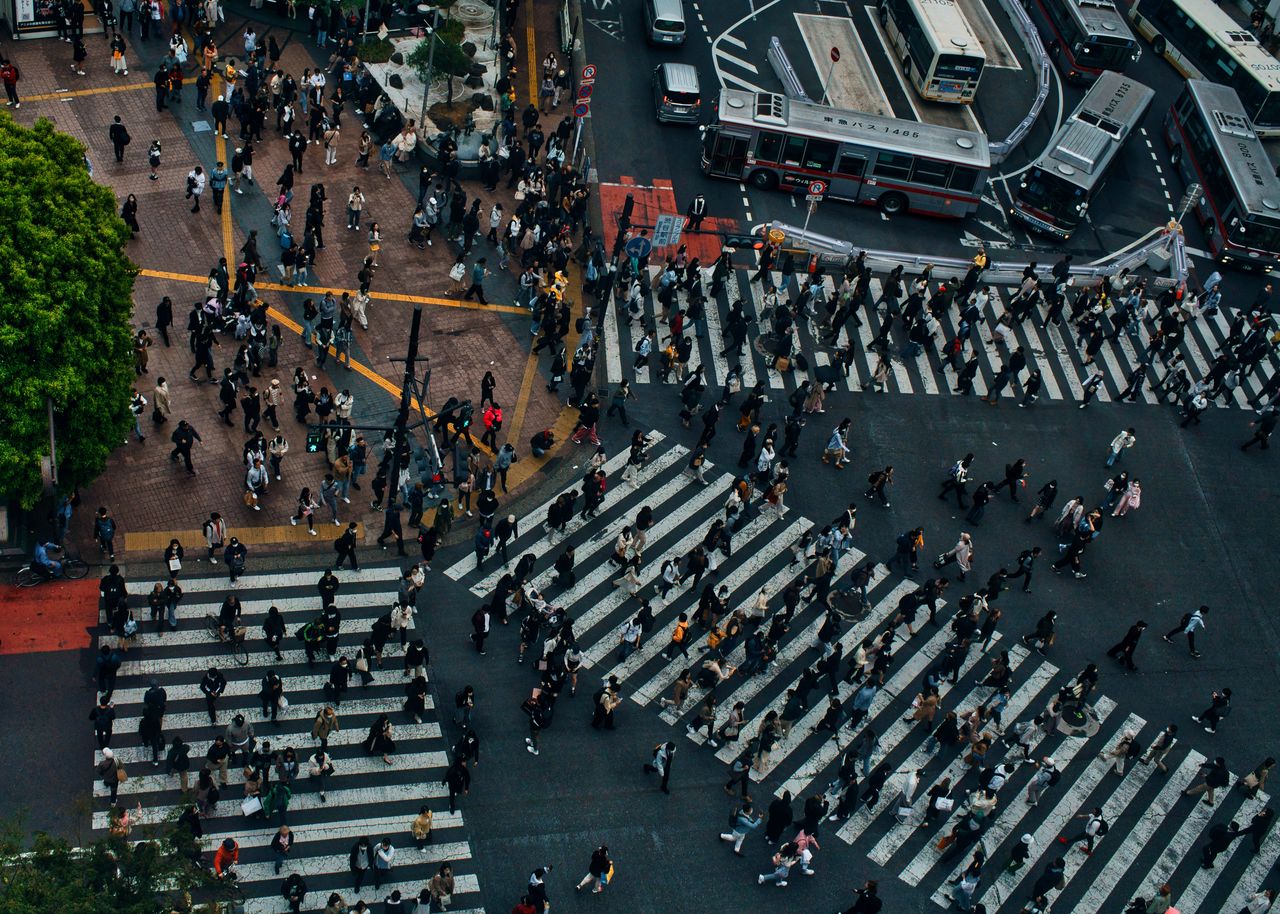
Aerial view of the Shibuya scramble crossing full of pedestrians
Shibuya · Book the sunset slot

Shibuya Crossing and Shibuya Sky

The busiest pedestrian crossing in the world, up to three thousand people a light change, and above it the open rooftop of Shibuya Scramble Square at 229 metres, the best view in the city. Shibuya Sky is around ¥2,700 before three in the afternoon and ¥3,400 for the sunset and night slots, sold online about four weeks ahead; sunset sells out two weeks out. Watch the crossing from the Mag's Park roof or the Starbucks window, drink in Nonbei Yokocho's alley of forty tiny bars by the tracks afterwards.

Shibuya in detail →
Visitors walking the tree-lined path to Meiji Shrine
Harajuku · Free, sunrise to sunset

Meiji Jingu to Omotesando

A forest of 100,000 trees planted in 1920 in the middle of the city, with the Shinto shrine to Emperor Meiji at its heart and a wall of sake barrels on the approach; weddings pass through on Sunday mornings. Leave by the Harajuku gate into Takeshita Street's crêpe stands and teen fashion, then Omotesando's avenue of flagship architecture, and finish in the back lanes of Ura-Harajuku and Cat Street towards Shibuya. The Inner Garden's irises in mid-June cost ¥500.

Meiji Jingu to Omotesando in detail →
A shopper walking through the fish section of a Tokyo market
Tsukiji and Toyosu · Early

The fish markets

The wholesale market moved to Toyosu in 2018, but Tsukiji's outer market stayed and is the breakfast of Tokyo: tamagoyaki on a stick, tuna bowls, grilled scallops and knives, busiest from eight to noon and partly closed on Sundays and Wednesdays. At Toyosu the tuna auction runs from about half past five and can be watched free from the upper corridor; the floor-level deck is a free monthly lottery. The new Senkyaku Banrai complex beside it has an Edo-style food hall, an onsen with water trucked from Hakone and a free rooftop foot bath over the bay.

The fish markets in detail →
Neon lights in a city at night
Toyosu and Azabudai · Timed tickets

teamLab Planets and Borderless

Two digital art museums by the same collective and the hardest tickets in town. Planets at Toyosu is the barefoot one, wading through knee-deep water among projected koi and lying under a garden of orchids, from ¥3,600 and expanded in 2025. Borderless, reopened in 2024 under Azabudai Hills, is the labyrinth where the works wander between rooms, from ¥3,400. Book the first slot of the day weeks ahead; Borderless pairs with Tokyo Tower ten minutes' walk away and the free 33rd-floor sky lobby of Japan's tallest building.

teamLab in detail →
A Shinjuku street at night lit by neon signs
Shinjuku · After dark

Shinjuku after dark

The world's busiest station spills into two cities: the skyscraper side west, with the free observation decks of the Metropolitan Government Building, and Kabukicho east, with the Godzilla head, the new Kabukicho Tower's neon food hall and the pachinko roar. Between them, Omoide Yokocho's sixty smoke-filled yakitori stalls since 1946, and beyond, Golden Gai's six alleys of 280 bars seating six people each. Details in the nightlife section. Shinjuku Gyoen, the imperial garden, is the morning after.

Shinjuku after dark in detail →
Small Japanese cafés on a quiet narrow street in the evening
Yanaka and Ueno · Closed Monday museums

The old city: Ueno, Yanaka and Nezu

Ueno Park holds the Tokyo National Museum, the finest collection of Japanese art anywhere, Le Corbusier's Western Art museum and the zoo, now without its pandas. Walk north into Yanaka, the low-rise quarter of seventy temples, a cemetery under cherry trees and the Yanaka Ginza shopping street with its sunset steps and its cats, to Nezu Shrine's tunnel of small torii and April azaleas, and Kayaba Coffee for the morning set. The one day in Tokyo that feels like a town.

Ueno, Yanaka and Nezu in detail →
A lantern-lit alley in Tokyo with autumn leaves
Mitaka · Tickets on the 10th of the month

The Ghibli Museum and Kichijoji

Hayao Miyazaki's museum in Inokashira Park is small, hand-drawn and sold only in advance: tickets for the following month go on sale at ten in the morning Japan time on the tenth, through Lawson's online shop, named and checked against your passport at the door, closed Tuesdays. Walk there from Kichijoji through the park's swan boats and arrive early for Harmonica Yokocho, the izakaya alley by the station, afterwards. Fifteen minutes from Shinjuku on the Chuo line.

The Ghibli Museum and Kichijoji in detail →
Mount Fuji seen from Hakone
Out of the city · Day trips

Mount Takao, Kamakura and Hakone

Three escapes, each an hour or so away. Takao is the hiking mountain at the end of the Keio line, 599 metres of temple paths and a view of Fuji on winter mornings. Kamakura is the medieval capital by the sea, with the Great Buddha, Zen temples and forest trails between them. Hakone is the hot-spring resort in Fuji's lap, with the lake, the ropeway over the sulphur vents and the red torii in the water. Details below; the mountains are in the hikes section.

Mount Takao in detail →

Also worth your time

Day trip · 1 h

Kamakura and Enoshima

JR Yokosuka line from Tokyo, about ¥950

The 13th-century shogunate's capital: the 11-metre bronze Great Buddha of Kotoku-in (¥300), Hase-dera's hillside of statues, Tsurugaoka Hachimangu at the top of the town, Komachi-dori's food street and the Enoden tram along the beach to Enoshima island. Combine with the Daibutsu trail in the hikes section.

Day or overnight · 2 h

Nikko

Tobu Spacia from Asakusa, about ¥3,500

The Tokugawa shoguns' mausoleum of Toshogu, carved and gilded within an inch of its life, in a cedar forest, with Rinnoji temple, the red Shinkyo bridge and, forty-five minutes further up the switchbacks, Kegon Falls and Lake Chuzenji. Autumn colour from mid-October; a World Heritage site that deserves a night.

Overnight · 85 min

Hakone

Odakyu Romancecar from Shinjuku; Hakone Free Pass about ¥6,100

The onsen loop: mountain railway, cable car, ropeway over the steaming Owakudani vents, pirate ship across Lake Ashi to the torii of Hakone Shrine, bus back. The Open-Air Museum's sculptures and a ryokan with a bath for the night. Fuji shows itself on clear winter mornings.

Half days

Kawagoe, Yokohama and the Imperial Palace gardens

30 min from Ikebukuro; 25 min from Shibuya; Otemachi

Kawagoe is Little Edo, a street of clay warehouses and a sweets alley; Yokohama has Japan's biggest Chinatown and the Cup Noodles Museum; the Imperial Palace's East Gardens, free and closed Mondays and Fridays, are the castle's inner moats and lawns in the middle of the financial district.

Hikes & nature

A temple mountain on the metro, and the big one in July

Tokyo's western edge is mountains, reached by ordinary commuter trains, and Japan's highest peak is a bus ride beyond them. The Kamakura hills and the Hakone cobblestones are the gentler days; Fuji is a serious night climb with new rules.

JFMAMJJASOND

Hiking season for the low mountains: teal = spring blossom and autumn colour, the best and busiest; green = fine, with the June rains, the July and August humidity and the September typhoons to work around. Mount Fuji is open only from 1 July to 10 September.

Snow-capped Mount Fuji at sunrise
Easy to moderate

Mount Takao

Fifty minutes from Shinjuku on the Keio line for about ¥430, a 599-metre mountain with a temple halfway up, monkeys, a beer garden in summer and, from October to February on clear mornings, Mount Fuji filling the western sky from the summit. Trail 1 is the paved pilgrim route past Yakuoin temple, ninety minutes up; Trail 6 follows a stream past Biwa waterfall and climbs on stepping stones, nearly two hours and the prettier way. A cable car and a chairlift take out the first third for ¥490. The onsen at the station is the right way down.

Full route guide →
7–8 kmup one trail, down another
3–4 hwalking
400 mascent from the station

Go on a weekday; the autumn-colour weekends of mid-November are the busiest days on any mountain in Japan. Strong walkers continue along the ridge to Shiroyama or Jinba for a five-hour day. The Keio one-day Takao ticket covers the train and the cable car.

Mount Fuji under a clear sky
Demanding

Mount Fuji

Japan's highest mountain, 3,776 metres, is climbed by around 200,000 people a season on four trails, most of them on the Yoshida trail from the Fuji Subaru Line fifth station at 2,305 metres: six or seven hours up through volcanic scree and a chain of mountain huts, a night in a hut, the summit for sunrise and three or four hours down. In 2026 the season runs from 1 July to 10 September, every trail charges ¥4,000, the Yoshida trail is capped at 4,000 climbers a day with 3,000 permits sold online in advance, and the gate is shut from two in the afternoon until three in the morning to anyone without a hut booking.

14 kmreturn from the fifth station
10–12 hover two days
1,470 mascent to the summit

Book a hut months ahead, from ¥9,000 to ¥15,000 with two meals, and buy the permit on the official site; Shizuoka's trails need a short online safety course too. Highway buses run from Shinjuku to the fifth station in two and a half hours. It is cold, high and crowded, and the sunrise from the crater rim is still one of the great sights of the country.

Full route guide →
A red torii gate beside Lake Ashi in Hakone
Easy

The Old Tokaido and the Kamakura trails

Two historic walks a train ride from the city. In Hakone the Edo-period Tokaido highway survives as moss-covered cobbles between Moto-Hakone on the lake and the hamlet of Hatajuku, with the 400-year-old Amazake-chaya tea house for sweet rice wine halfway, ninety minutes downhill; the cedar avenue of 1618 along the lake adds a flat ten minutes. In Kamakura the Daibutsu course runs three kilometres through forest from Kita-Kamakura's Zen temples past the money-washing shrine to the Great Buddha, and the Tenen course climbs the Kamakura Alps for six kilometres between Kencho-ji and Zuisen-ji.

2.5–6 kmper trail
1–3 hwalking
Muddyafter rain; cobbles slippery

Finish Kamakura at Hase for the temple, the beach and the Enoden tram; finish Hakone with an onsen. Both are year-round walks and best outside the rainy weeks of June.

Full route guide →
Moderate · Day

Mount Mitake and the Rock Garden

JR Ome line to Mitake, bus and cable car · 90 min from Shinjuku

A shrine village on a 929-metre summit and, behind it, a loop of mossy boulders, cedar forest and two waterfalls that takes three hours. Add Mount Odake for a full day, or sleep in a pilgrim lodge. The Sawanoi sake brewery is two stations down the valley.

Full route guide →
Easy · Day

Mount Nokogiri, Chiba

Train to Kurihama, ferry across Tokyo Bay, ropeway

The saw-tooth mountain across the bay: a 31-metre Buddha carved into the cliff, 1,500 stone arhats, old quarry walls and the Hell Peek overhang jutting over the drop. A quirky full day with a 40-minute ferry ride as its best part.

Full route guide →
Nature notes

Flying squirrels, birds and the Tama

Takao at dusk; Kasai Rinkai Park; Futako-Tamagawa

Guided night walks on Takao watch giant flying squirrels glide between the cedars at dusk; Kasai Rinkai Park on the bay has tidal flats and a bird centre for winter ducks and spring waders; the Tama River cycle path west of Futako-Tamagawa has kingfishers, egrets and the occasional seal in the news.

Scuba

Kuroshio water two hours from Shinjuku, hammerheads in summer and the Bonin blue

Tokyo is a diving city if you take the train. The Izu peninsula has shore diving all year in water warmed by the Kuroshio current, the Izu islands have turtles and hammerheads, and 24 hours south by ferry the Ogasawara islands are Japan's Galápagos.

A sea turtle swimming over a coral reef
Open Water · wetsuit Jun–Nov, drysuit Dec–MayAll year

The Izu peninsula: Osezaki, Futo and the Oceanic Park

Two to three hours south-west of Tokyo, Izu is where the city learns to dive. Osezaki, a sheltered cape in Suruga Bay, is shore diving from a beach lined with a dozen dive shops: macro life in the sand, frogfish, seahorses and nudibranchs, with schools of jacks off the point and Fuji across the water on the surface interval. Futo and the Izu Oceanic Park on the Jogasaki coast have boulder reefs, moray eels, turtles and soft coral walls. The water runs from 14°C in February to 25°C in September; visibility and warmth peak from September to November when the Kuroshio pushes in.

5–30 mdepth
Open Waterlevel; drysuit course for winter
10–25 mvisibility
14–25°Cwater

Most shops are Japanese-speaking; Tokyo-based operators run minibus day trips and weekends with bilingual guides, around ¥15,000 to ¥20,000 for two dives plus gear. Reach Ito and the Oceanic Park by the Odoriko express in two hours, Osezaki via Numazu.

Advanced · June to October

Mikomoto hammerheads

Boats from Shimoda, 2 h 40 by Odoriko express

Schools of scalloped hammerheads, sometimes a hundred strong, circle a rock 20 minutes off the tip of the peninsula in the Kuroshio from June to October, peaking in high summer. Strong current, blue-water drifts, 50 logged dives required by the operators. The best big-animal dive within reach of the capital.

All levels · Turtles

Hachijojima

55 min by air from Haneda, or the overnight ferry from Takeshiba

A volcanic island in the Izu chain with green turtles on nearly every dive at Sokodo, a famous drop-off at Nazumado in the current, and 22 to 27°C water in summer. Snorkellers see the turtles from the shore. Dive shops bundle a guesthouse and a day-and-a-half of diving into a weekend.

The trip of a lifetime · 6 days minimum

Ogasawara

Ogasawara Maru from Takeshiba, 24 h each way, about weekly

A thousand kilometres south, a World Heritage archipelago with no airport: resident dolphins to swim with all year, humpback whales from January to April, sperm whales in late summer, sand tiger sharks in the caves and the "Bonin blue" of 30 to 40 metres' visibility. The ferry stays three nights, so the trip takes a week; it is worth it.

Winter Izu is drysuit diving at 14°C with the best visibility of the year; summer is wetsuit water with plankton. Typhoons from August to October can cancel boats at a day's notice. Carry your certification card; Japanese shops check logbooks.
Good food

Twelve three-star tables, and a ¥400 bowl of soba eaten standing up

Tokyo has more starred restaurants than any city on earth and better cheap food than almost all of them. We list only the twelve kitchens holding Michelin's top rating and the Tokyo tables on the world and Asian rankings, then Michelin's Bib Gourmand value picks, then the places the city actually eats.

A Japanese chef preparing sushi in a traditional kitchen
Eat this

Sushi, from the counter to the conveyor

Edomae sushi is a Tokyo invention: fish aged, cured or marinated, pressed onto warm vinegared rice one piece at a time by a chef who watches you eat it. The top counters cost ¥30,000 and take no strangers; a breakfast omakase at Tsukiji or Toyosu is ¥4,000 to ¥6,000 and the queue starts at five; Nemuro Hanamaru's conveyor in Tokyo Midtown serves Hokkaido fish for ¥200 a plate. All three are real sushi.

A bowl of Japanese ramen with egg and spring onions
Eat this

Ramen, soba, tempura and tonkatsu

Ramen is a religion with denominations: Afuri's yuzu-salt broth in Ebisu, Fuunji's dipping noodles in Shinjuku, the Bib Gourmand bowls of Nakiryu and Hayashida, and Ichiran's solo booths at four in the morning. Standing soba at Fuji Soba costs ¥400 and feeds the city on its way to work. Tempura at Tsunahachi since 1924 is a ¥2,000 lunch; tonkatsu at Butagumi or Maisen, a cutlet of named-breed pork with shredded cabbage, is the meal that converts people.

A tempura stall at a busy Tokyo street market
Eat this

Depachika, konbini and the yokocho

The food halls under the department stores, Isetan Shinjuku above all, are the best grocery in the world and sell bento at half price after seven. The convenience store, open 24 hours and on every corner, does an egg sandwich, fried chicken and onigiri that visiting chefs write about. And the yokocho, the alleys of counters under railway arches and behind stations, are where salarymen eat yakitori and drink highballs standing up.

The very top tables

The 2026 Michelin Guide Tokyo, published in September 2025, awards three stars to twelve restaurants, with Myojaku newly promoted. Several of the city's most celebrated kitchens also stand on The World's 50 Best Restaurants and Asia's 50 Best Restaurants lists for 2025. Dinner runs from about ¥30,000 to ¥55,000 a head before drinks; a few counters take only introductions, and we say which.

Michelin ★★★World's 50 Best 2025 · No. 7Asia's 50 Best 2025 · No. 4

Sézanne

Four Seasons Marunouchi · Daniel Calvert · French

The highest-ranked restaurant in Japan on the world list: Calvert's precise, Asian-accented French cooking with Japanese produce in a serene hotel room by Tokyo Station. Bookable online and gone within hours of release.

¥55,000 · $$$$
Michelin ★★★World's 50 Best 2025 · No. 71Asia's 50 Best 2025 · No. 34

Sazenka

Minami-Azabu · Tomoya Kawada · Chinese-Japanese

Chinese technique applied to Japanese seasons in a quiet house in Hiroo; the only three-star Chinese table in the city and one of the hardest tables to get.

¥45,000 · $$$$
Michelin ★★★Asia's 50 Best 2025 · No. 45

Myojaku

Minami-Aoyama · Hidetoshi Nakamura · kaiseki

Promoted to three stars in the 2026 guide: Nakamura's restrained, deeply seasonal kaiseki at a counter that largely serves regulars and their guests.

¥45,000 · $$$$
Michelin ★★★

RyuGin

Midtown Hibiya · Seiji Yamamoto · modern kaiseki

Yamamoto's modern kaiseki, the most internationally known Japanese kitchen in the city, in a seventh-floor room over Hibiya; bookable online months ahead.

¥55,000 · $$$$
Michelin ★★★

Quintessence

Gotenyama, Shinagawa · Shuzo Kishida · French

A no-choice menu that changes daily, built on perfect ingredients and the famous goat's-milk bavarois; reservations open on the first of each month and vanish.

¥40,000 · $$$$
Michelin ★★★

L'Osier

Ginza · Olivier Chaignon · French

Shiseido's grand French dining room since 1973, classical and polished, and the easiest of the twelve to book; the lunch menu is the way in.

¥40,000 · $$$$
Michelin ★★★

Joël Robuchon

Ebisu Garden Place · French

The late master's château in Ebisu, still three stars under his team, with a cellar and a dining room of real theatre. Bookable.

¥50,000 · $$$$
Michelin ★★★

L'Effervescence

Nishi-Azabu · Shinobu Namae · French-Japanese

Namae's gentle, vegetable-forward French cooking with a sustainability ethic ahead of its time; a whole slow-cooked turnip is the signature. Bookable online.

¥38,000 · $$$$
Michelin ★★★

Kanda

Moto-Azabu · Hiroyuki Kanda · Japanese

A nine-seat counter of pure Japanese cooking, three stars since the first Tokyo guide in 2008; phone bookings, regulars first.

¥40,000 · $$$$
Michelin ★★★

Kagurazaka Ishikawa

Kagurazaka · Hideki Ishikawa · kaiseki

Classical kaiseki in a lane of the old geisha quarter; the most approachable of the Japanese three-stars for a first visit, booked through concierge services.

¥35,000 · $$$$
Michelin ★★★

Azabu Kadowaki

Azabu-Juban · Toshiya Kadowaki · Japanese

Kadowaki's truffle rice and charcoal-grilled fish at a counter that is close to unbookable without an introduction.

¥50,000 · $$$$
Michelin ★★★

Harutaka

Ginza · Harutaka Takahashi · sushi

The only sushi counter with three stars in the 2026 guide; introduction only, which is how the great Ginza counters work. Ask your hotel, early.

¥50,000 · $$$$
World's 50 Best 2025 · No. 21Asia's 50 Best 2025 · No. 12

Narisawa

Minami-Aoyama · Yoshihiro Narisawa

"Innovative satoyama" cooking, the forest and the sea of Japan on the plate, the bread baked at the table in moss; the Tokyo restaurant the world's chefs visit first.

¥45,000 · $$$$
World's 50 Best 2025 · No. 36Asia's 50 Best 2025 · No. 17

Florilège

Azabudai Hills · Hiroyasu Kawate

Kawate's plant-led French-Japanese menus around an open kitchen, moved to the new Azabudai Hills in 2023 and better than ever.

¥30,000 · $$$$
World's 50 Best 2025 · No. 53Asia's 50 Best 2025 · No. 22

Den

Jingumae · Zaiyu Hasegawa

Playful kaiseki with a famous fried chicken in a cereal box and the warmest service in the city; a serious restaurant that refuses to be solemn.

¥35,000 · $$$$
Asia's 50 Best 2025 · No. 30

Crony

Nishi-Azabu · Michihiro Haruta

Modern French with Japanese ingredients and a relaxed, wine-literate room; the ranking's quiet climber.

¥30,000 · $$$$
Asia's 50 Best 2025 · No. 33

Sushi Saito

Roppongi · Takashi Saito

The most famous sushi counter in the world, outside the Michelin guide since 2020 because it takes no public bookings. Introduction only; go if invited.

¥50,000 · $$$$
Asia's 50 Best 2025 · No. 43

Maz

Kojimachi · Santiago Fernández

Peruvian altitudes and ecosystems cooked with Japanese produce, the Tokyo outpost of Lima's Central; the most surprising top table in the city.

¥35,000 · $$$$

Bib Gourmand: Michelin's value picks

The 2026 guide lists 114 Bib Gourmands in Tokyo, sixteen of them new. Ten from the new intake and the regulars, all a full meal for a few thousand yen.

Bib Gourmand · New 2026

Yaesu Unagi Hashimoto

Yaesu, by Tokyo Station · eel

Grilled freshwater eel over rice, lacquered and smoky, a stroll from the Shinkansen platforms.

Bib Gourmand · New 2026

Ginza Katsukami II

Ginza · tonkatsu

Thick-cut pork cutlets fried low and slow, in the district where tonkatsu went upmarket.

Bib Gourmand · New 2026

Teuchi Asama and Ginza Haru Chan Ramen

Ramen

Two of the new ramen entries: hand-cut noodles at Asama, a clean, old-school bowl at Haru Chan in Ginza.

Bib Gourmand · New 2026

Sobakiri Suzuki and Teuchisoba Jiyusan

Soba

Hand-cut buckwheat noodles served cold with dipping sauce, the Tokyo lunch at its purest; two new soba masters recognised at once.

Bib Gourmand · New 2026

Shutei Tanaka

Yakitori

Chicken skewers over binchotan charcoal, part by part, with sake; the yakitori-ya as a serious restaurant.

Bib Gourmand · New 2026

Yoshoku Edoya and Shokudo Wata

Yoshoku; izakaya

Edoya for yoshoku, the Japanese take on Western food, omurice and hamburg steak with demi-glace; Wata for a neighbourhood izakaya dinner done with care.

Bib Gourmand · New 2026

Biriyani Osawa and Night Market

Indian; Southeast Asian

Proof that the Bib is not only Japanese food: a biryani specialist and a Southeast Asian street-food kitchen, both new to the guide.

Bib Gourmand

Nakiryu

Otsuka · tantanmen

The sesame-chilli tantanmen that once held a Michelin star and now holds a Bib; a queue of forty at a counter of ten.

Bib Gourmand

Konjiki Hototogisu and Ramen Hayashida

Shinjuku-gyoemmae; Shinjuku · ramen

Clam-broth ramen with truffle oil at Hototogisu, a long-time Bib and one-time star; Hayashida's chicken-and-pork shoyu bowl a few streets away.

Bib Gourmand

Butagumi

Nishi-Azabu · tonkatsu

Forty breeds of pork on the menu in an old wooden house; order the rosu, the fattier loin, and the cabbage refills.

Where locals eat

5am · Queue

Sushi Dai and Daiwa, Toyosu; Sushi Zanmai, Tsukiji

Toyosu market, 5am–2pm; Tsukiji, 24 hours

The market breakfast omakase, two hours in line at Dai and Daiwa for fish that came off the auction floor; Zanmai's main branch at Tsukiji is open all night and a tenth of the wait.

¥4,000–6,000 · $$
Tonkatsu

Maisen and Tonki

Aoyama, in a former bathhouse; Meguro

Maisen's kurobuta loin cutlet in a converted bathhouse off Omotesando; Tonki in Meguro, a theatre of white-coated cooks round a horseshoe counter since 1939, where the order is rosu or hire and nothing else.

¥2,000–3,500 · $$
Under the tracks

Yurakucho gado-shita

Between Yurakucho and Shimbashi · evenings

A kilometre of yakitori counters and standing bars in the brick arches under the Yamanote line, smoke in the air, trains overhead, salarymen three deep. Andy's Shin-Hinomoto is the famous one; the rest are better for being anonymous.

¥2,500–4,000 · $$
Alleys

Omoide Yokocho, Ebisu Yokocho and Tsukishima

Shinjuku west exit; Ebisu east exit; Monja Street

Omoide Yokocho for grilled offal skewers and beer at ¥600 in a sixty-stall warren from 1946; Ebisu Yokocho's covered alley of twenty loud counters; Tsukishima's street of seventy monjayaki restaurants, where you cook the runny Tokyo pancake yourself on the table griddle.

¥2,000–4,000 · $$
Coffee

Café de l'Ambre, Kayaba Coffee and Chatei Hatou

Ginza since 1948; Yanaka; Shibuya

The kissaten, Tokyo's old coffee houses: aged beans and nel-drip at l'Ambre, the morning set and egg sandwich in Kayaba's 1916 house, siphon coffee and a wedge of cake in Hatou's dark Shibuya room. Order the purin.

¥800–1,500 · $
Depachika and konbini

Isetan Shinjuku B1 and any 7-Eleven

Everywhere · all hours

Isetan's basement for the best food hall in Japan, bento, wagashi and a ¥500 tonkatsu sandwich, discounted after seven; and the convenience store, the egg sandwich, the fried chicken, the onigiri, the ATM, the post office and the 24-hour café of the whole country.

¥300–1,500 · $
Nightlife

Six-seat bars, hand-carved ice and the last train at midnight

Tokyo drinks in small rooms: 280 bars in Golden Gai's six alleys, a dozen counters where the bartender is an artisan, clubs in Shibuya basements. The trains stop around midnight and taxis cost a fifth more until five, so the city either goes home at eleven or stays out until the first train.

World's 50 Best Bars 2025 · No. 18, 45, 48, 65, 94

Bar Benfiddich, Virtù, The Bellwood, The SG Club and Bar Trench

Nishi-Shinjuku; Four Seasons Otemachi; Shibuya; Shibuya; Ebisu

The five Tokyo bars on the 2025 world list. Benfiddich, Hiroyasu Kayama's farm-to-glass room where the herbs are grown and the absinthe made in-house, is the best bar in Japan; Virtù is Keith Motsi's French-Japanese counter on the 39th floor; The Bellwood is a Taisho-era café reimagined; Shingo Gokan's SG Club has three floors of styles; Bar Trench is Ebisu's small, perfect classic. Benfiddich and Virtù held places in the 2026 top fifty too.

The classic counters

Gen Yamamoto, Bar High Five, Punch Room and Mixology Salon

Azabu-Juban; Ginza; Edition Ginza; Ginza Six

Gen Yamamoto pours tasting flights of four to six small cocktails built on the season's fruit, no menu, ¥5,500 to ¥8,000; Hidetsugu Ueno at High Five carves the ice by hand; Punch Room, Asia's best bar in Japan for 2026, serves bowls of punch in a hotel salon; Mixology Salon turns Japanese teas into cocktails on the top floor of Ginza Six. Expect a cover charge and silence while the drink is made.

The alleys

Golden Gai, Nonbei Yokocho and Shinjuku Ni-chome

Shinjuku east; Shibuya; Shinjuku · from 8pm

Golden Gai's bars seat six and charge a ¥500 to ¥1,500 cover; look for the signs welcoming visitors, Albatross and Champion among them, and move on after one drink. Nonbei Yokocho is Shibuya's forty-bar version by the tracks. Ni-chome is Japan's largest LGBTQ+ district, three hundred bars and the open terrace of Aiiro Café as its front door.

Clubs and live houses

Womb, Vision, WWW and Shimokitazawa

Shibuya; Shibuya; Shibuya; Shimokitazawa · midnight to 5am

Womb's four floors of techno and house in Maruyamacho since 2000, Sound Museum Vision's warren under Dogenzaka, WWW's gigs in a former cinema; covers run ¥2,000 to ¥5,000 with a drink and passports are checked at the door. Shimokitazawa's basement live houses, Shelter and Basement Bar, are where the bands start. Karaoke boxes fill the hours between the last train and the first.

A narrow Tokyo alley lit by a hanging lantern at night
Yokocho

The alley

Six seats, one owner, one drink, next door.

A bartender preparing cocktails behind a bar
Ginza

The counter

Ice carved by hand, in silence.

Crowds under the neon signs of Shinjuku at night
Kabukicho

The neon

Last train at midnight. Or the first at five.

Sake & wine

Three hundred sakes inside the ticket gates, and Koshu vines ninety minutes west

Tokyo is the best city in the world to drink regional sake, by the glass, standing up, for the price of a coffee. It also has its own brewery on the Tama river and, in the Yamanashi hills, Japan's wine country.

Bottles of sake lined up on a restaurant shelf

What to drink here

Order sake by prefecture or by dryness, karakuchi, and ask for the osusume, the recommendation; junmai means rice and water only, and a 90-millilitre glass should cost ¥700 to ¥1,200, often poured into a wooden masu box until it overflows. Hasegawa Saketen's standing bar inside the ticket gates at Tokyo Station pours 300 labels and its own cloudy doburoku to travellers with a Shinkansen to catch; Orihara Shoten in Monzen-Nakacho has stood people at its counter since 1924. Ozawa Shuzo, brewing Sawanoi since 1702 at Sawai on the Ome line, gives free tours and has a tasting garden on the river, an easy add-on to Mount Mitake.

Japanese wine means Koshu, a pink-skinned native grape that makes a light, citrus, faintly savoury white, and Muscat Bailey A, a soft red, both grown around Katsunuma in Yamanashi, ninety minutes from Shinjuku on the Chuo line. Natural wine has its own Tokyo scene too: Ahiru Store in Tomigaya, bread and bottles and a queue from half past five, and the six-seat Winestand Waltz in Ebisu.

Day trip · Katsunuma

Château Mercian, Grace, Lumière and the Budo-no-Oka cellar

Chuo line limited express to Katsunuma-budokyo or Enzan · book tastings, rent bikes

Mercian's museum and tasting counter in Japan's oldest winery, Grace Wine's Koshu that wins the international awards, Lumière's 1885 cellars and restaurant, and the Budo-no-Oka hill, where a ¥1,500 tasting cup opens a cellar of hundreds of local wines and the onsen upstairs looks over the vines. Harvest is late September and October; many wineries close on Tuesdays and Wednesdays.

Standing sake

Hasegawa Saketen and Orihara Shoten

GranSta, Tokyo Station; Monzen-Nakacho

The two standing sake bars to know: Hasegawa inside the station gates with 300 labels at ¥500 to ¥1,000 a glass, and Orihara's century-old shop by the river in the east, where the regulars will tell you what to drink next.

Tokyo's brewery

Ozawa Shuzo at Sawai

JR Ome line, 1 h 40 from Shinjuku · free tours, book online

A 300-year-old brewery in a gorge of the Tama river, with a 45-minute tour, cups of Sawanoi for a few hundred yen in the riverside garden, and a tofu restaurant for lunch. Two stations from Mitake; make a day of the two.

Practical notes

Before you go

Getting there

Fly to Haneda whenever fares are close: the Keikyu line reaches Shinagawa in 15 minutes for about ¥330, the monorail Hamamatsucho for ¥520, and fixed-fare taxis to Shinjuku or Shibuya cost ¥8,500 to ¥9,000 since the April 2026 rise. From Narita the Skyliner reaches Ueno in 41 minutes for about ¥2,500 and the Narita Express Tokyo and Shinjuku in an hour for ¥3,140; budget buses are ¥1,500. The 7-day Japan Rail Pass is ¥53,000 since October 2026 and no longer makes sense for a Tokyo-based trip.

Getting around

Put a Suica or Pasmo card in your phone's wallet before you land, or buy a Welcome Suica at the airport, and tap it on every train, bus, locker, vending machine and convenience store. The metro starts at ¥180 a ride; the tourist-only subway pass is ¥800 for 24 hours. Trains stop around midnight and start again at about five. Taxis are clean, expensive and summoned through the GO or Uber apps; a 20 per cent surcharge runs from 10pm to 5am.

Bookings and rules

  • Book ahead: Shibuya Sky sunset, teamLab, the Ghibli Museum on the 10th of the month, the Toyosu auction deck lottery, Fuji huts and permits.
  • Closed Mondays: most museums and Shinjuku Gyoen; the Palace gardens close Monday and Friday.
  • Tax-free shopping changed on 1 November 2026: pay the full price, then claim the 10 per cent refund at the airport kiosk before departure.
  • Stand left on escalators, no phone calls on trains, no eating while walking, carry your rubbish, cover tattoos at most onsen.

Seasons

  • Late Mar–early Apr: cherry blossom along the Meguro river, Chidorigafuchi and Ueno; peak crowds and prices.
  • Jun–mid Jul: the rainy season; Jul–Aug: 33–36°C and humid, Sumida fireworks, Fuji season.
  • Sep: typhoons; late Nov–early Dec: autumn colour, Takao at its busiest.
  • Dec–Feb: dry, sunny, cold and the clearest Fuji views of the year. Avoid Golden Week, Obon and New Year.

Money

Cards and contactless work in chains, department stores, taxis and most restaurants, but carry ¥10,000 to ¥20,000 for shrines, ramen ticket machines, yokocho bars and rural buses; 7-Eleven and Japan Post ATMs take foreign cards around the clock. There is no tipping. Izakaya add a small cover charge with a snack; hotels and top restaurants add 10 to 15 per cent service. Hotel prices have risen steeply: ¥15,000 to ¥25,000 for a business hotel, ¥4,000 to ¥7,000 for a capsule.

Where to stay

Shinjuku or Shibuya for a first visit: every line, every hour of the night. Ginza and Marunouchi for shopping, the Shinkansen and quiet evenings; Asakusa and Ueno for the old city, lower prices and the Skyliner from Narita; Ebisu and Nakameguro for restaurants and bars among residents; Roppongi and Azabudai for art museums and nightlife at a price; Shimokitazawa or Kichijoji to live like a local for a week.

Photography

Photo credits

Photographs on this page are by independent photographers published on Pexels under the free Pexels licence. Click a title to open the original.

Powered by Webloyt | Report abuse