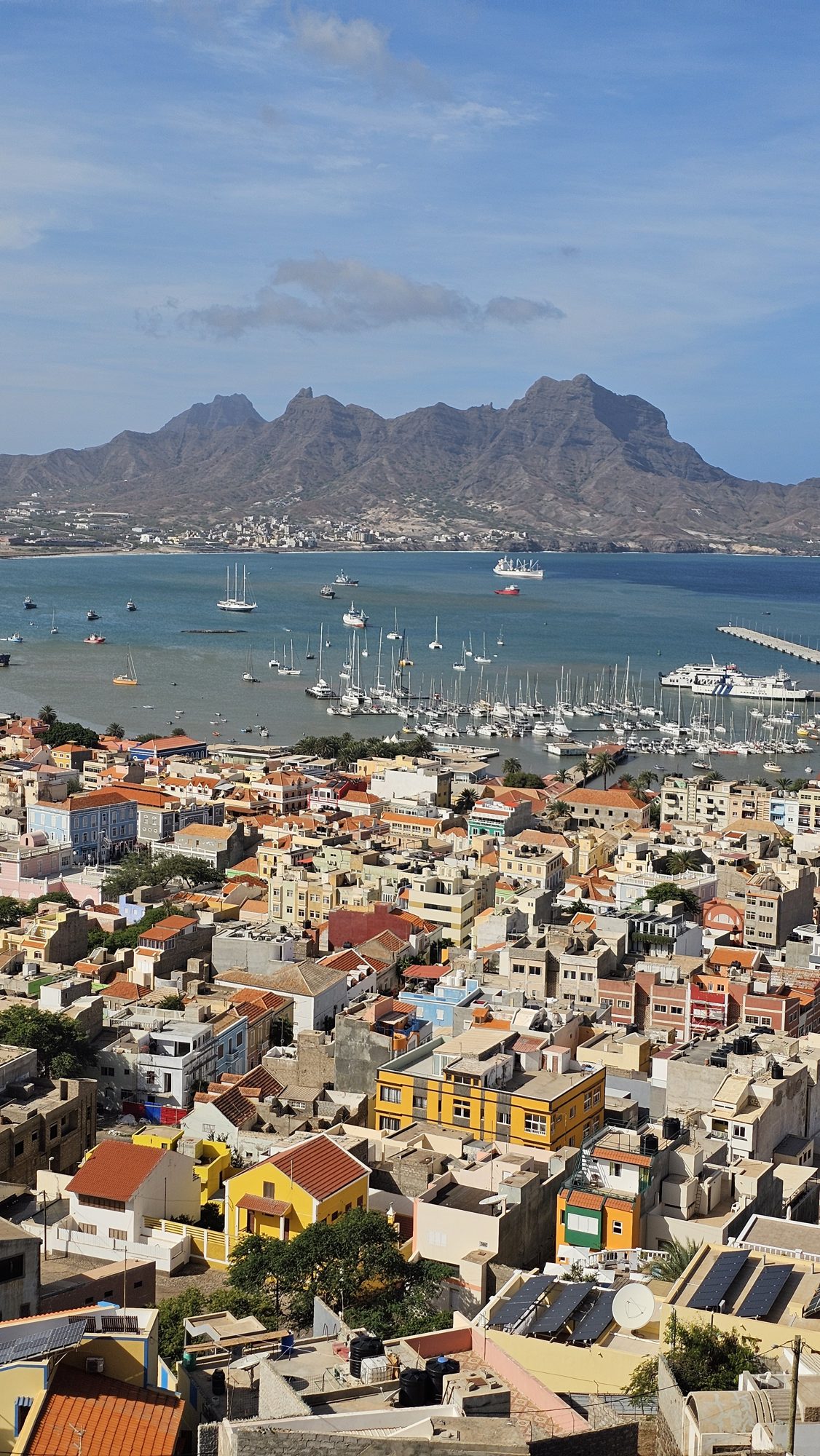
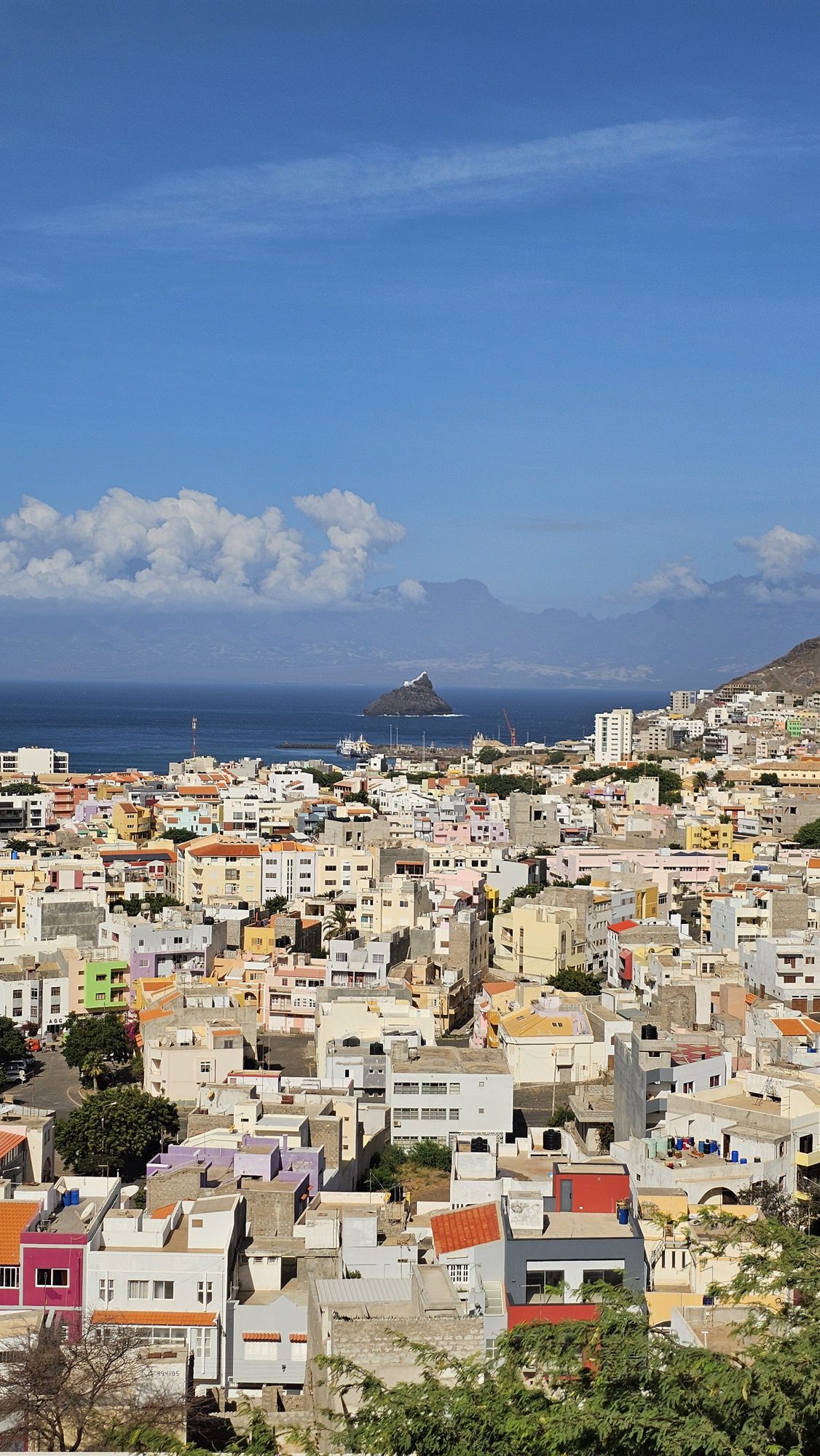
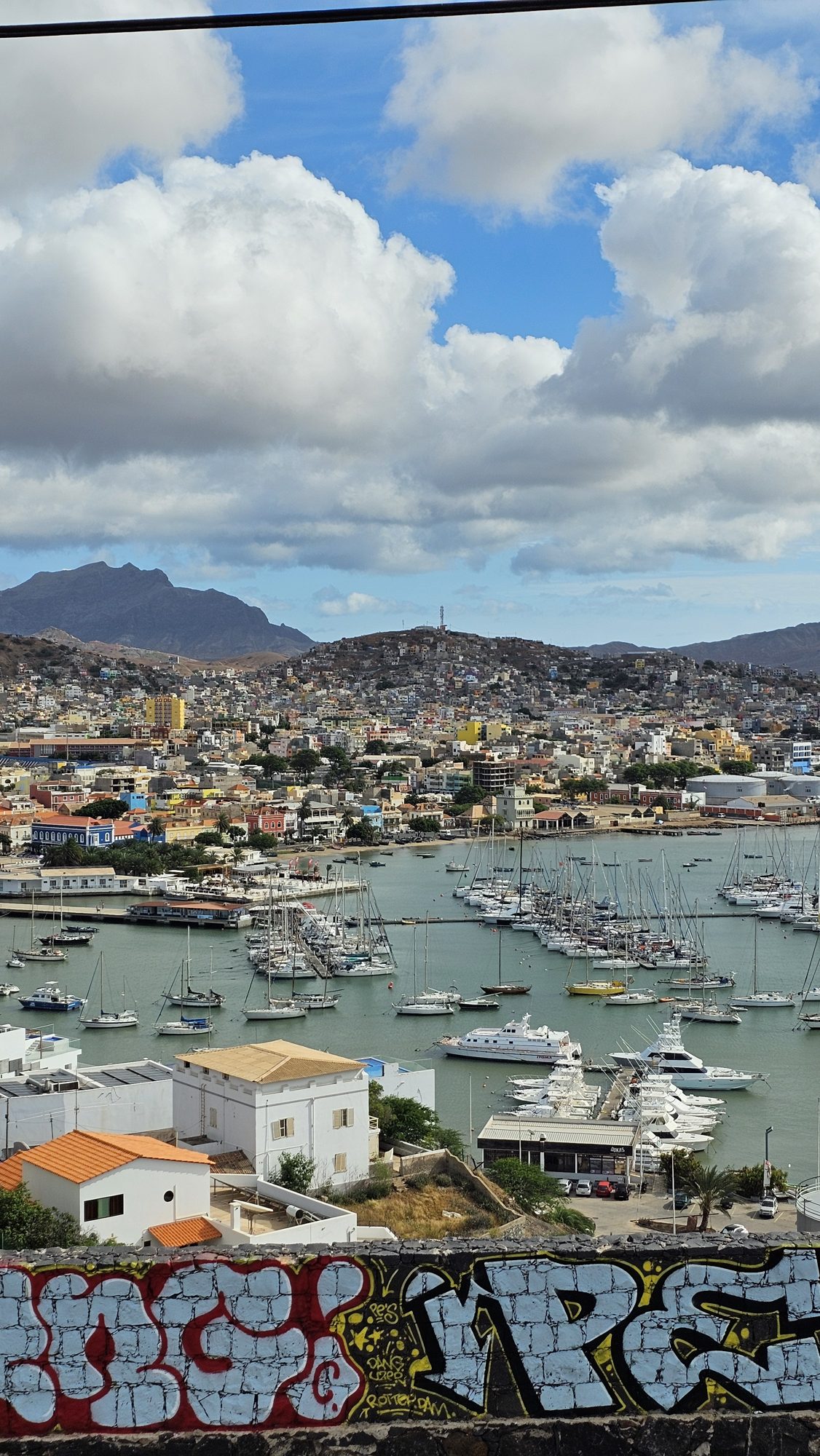
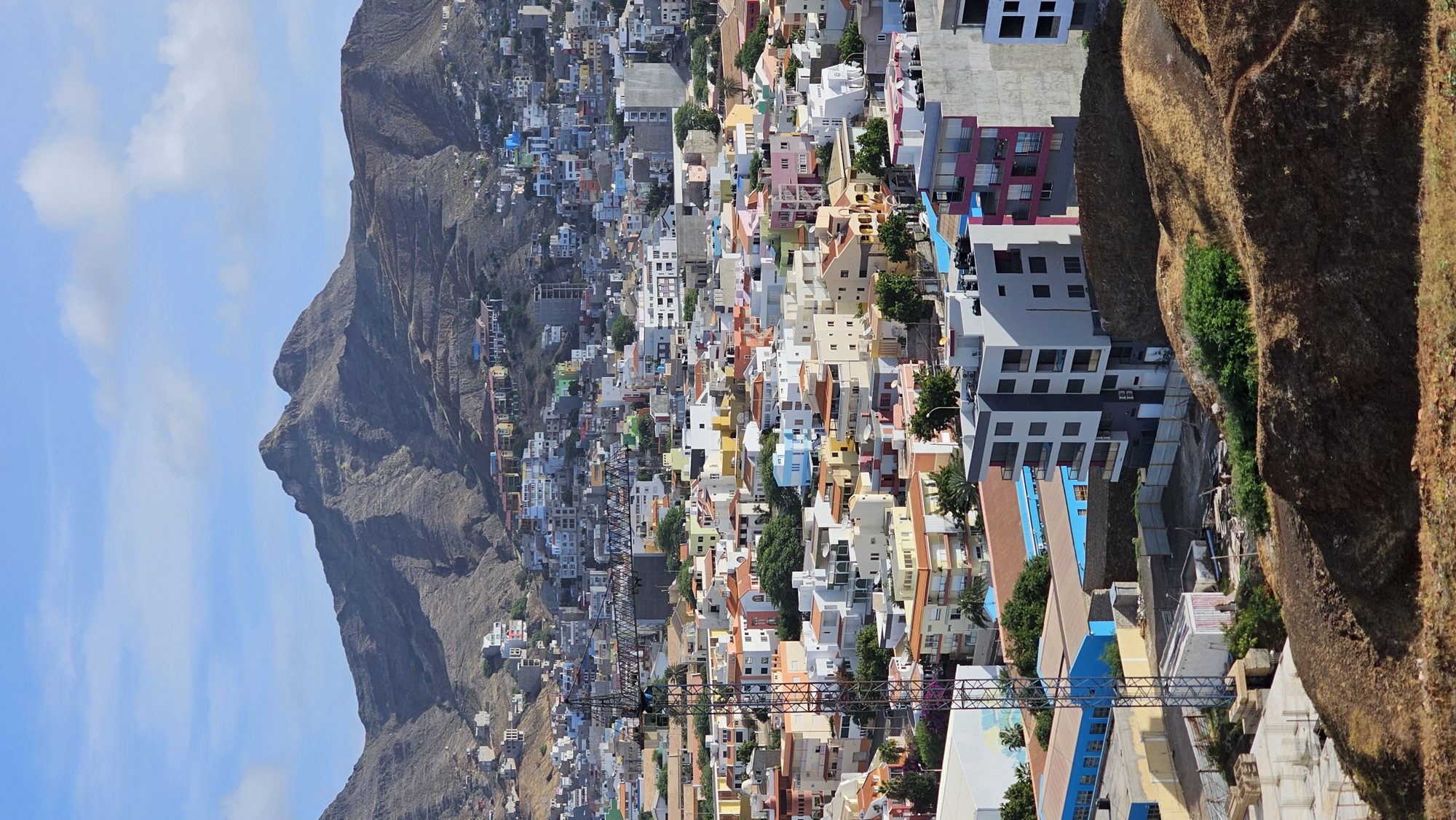
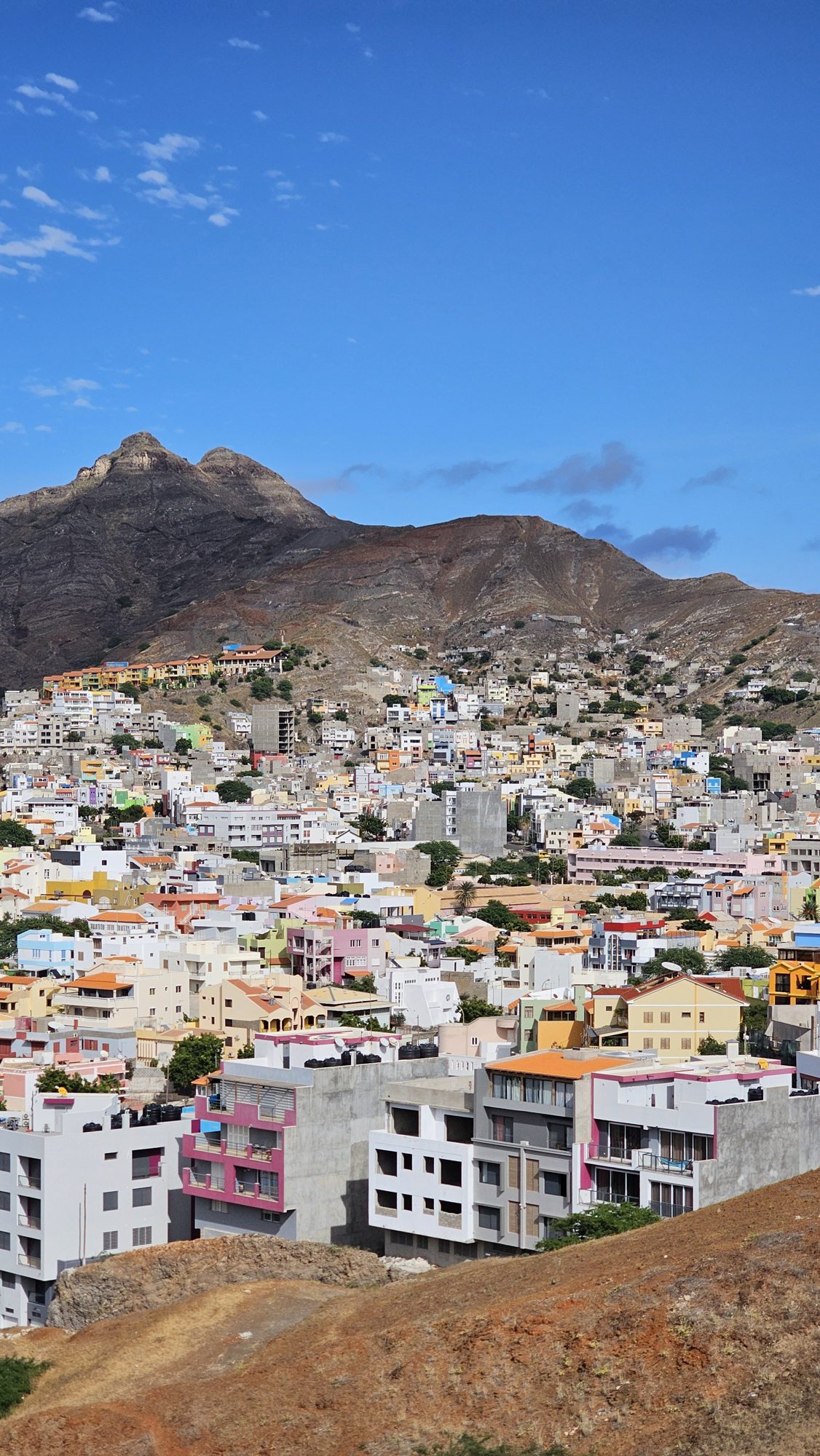
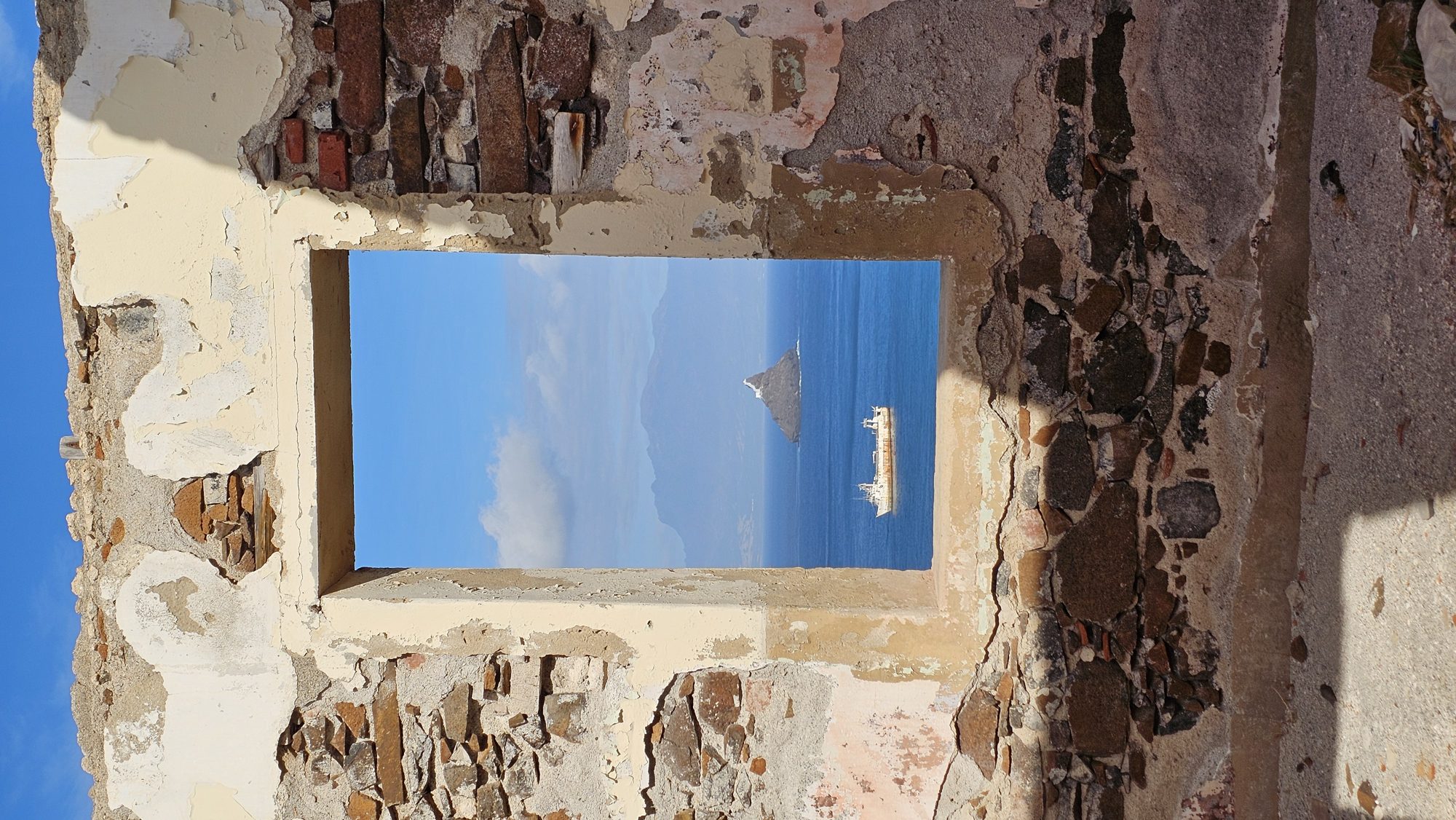
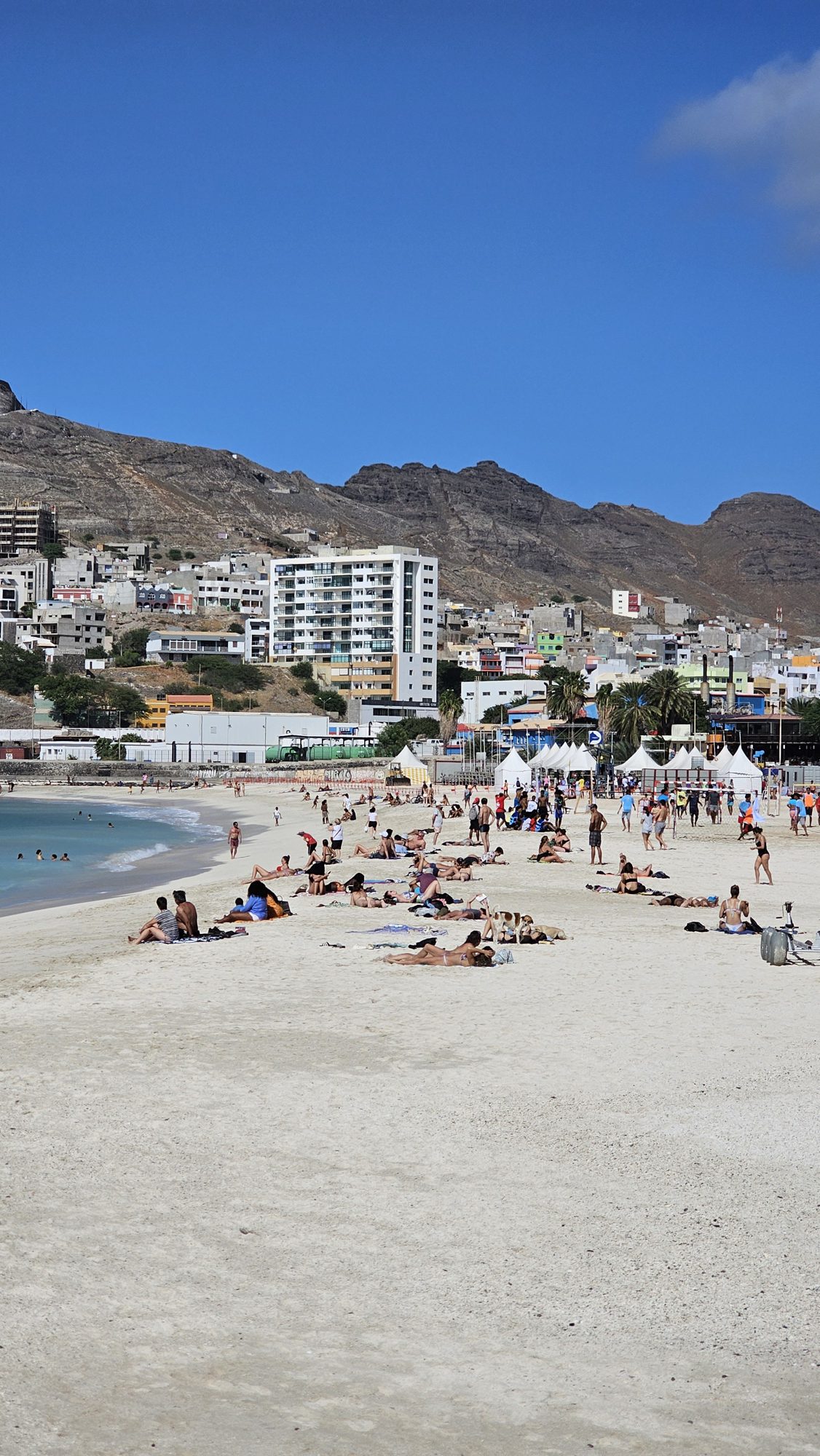
Mindelo's houses and marina on the bay of Porto Grande, with the mountains across the water
Cabo Verde · Barlavento islands

São Vicente

A dry brown island with one great town on it: Mindelo, the port that gave the world Cesária Évora and morna, where the music starts after dinner in a dozen bars, Carnival builds floats for half the year, and the trade wind that empties the hills fills the sails at São Pedro and Baía das Gatas.

Photo: Wanderlines
Overview

A port town with an island attached

São Vicente is 227 square kilometres of volcanic rock and wind in the north-west of the Cabo Verde archipelago, so dry that almost nothing grows on it, and it would be nobody's destination were it not for Mindelo. The British built the town in the nineteenth century as a coaling station for the steamers crossing the Atlantic, on one of the finest natural harbours in West Africa, the drowned crater of Porto Grande; it left a grid of pastel colonial streets, a replica of Lisbon's Belém tower on the waterfront, a cricket ground, a taste for English words in the local Kriolu and about eighty thousand people who consider themselves the cultural capital of the country. They have a case: morna, the slow, aching national song, was shaped here and sung to the world by Cesária Évora, the barefoot diva who lived and died in the town; coladeira, the quicker, sharper cousin, was born here too; and the Carnival in February is the biggest in Africa's Atlantic islands.

The island beyond the town is a day or two of small pleasures rather than a week of exploring: the natural lagoon at Baía das Gatas, the cloud-capped summit of Monte Verde, the black-lava fishing village of Calhau, the town beach at Laginha, and the relentless wind at São Pedro by the airport that makes it one of the strongest windsurfing bays in the Atlantic. The green, vertical island of Santo Antão, an hour away by ferry, is the hiking destination of Cabo Verde and gets its own guide; most people combine the two, sleeping in Mindelo for the music and crossing the channel for the mountains.

Two nights in Mindelo covers the town, a sunset on the Marginal, a morna evening and a swim. Three or four adds Monte Verde, Baía das Gatas and Calhau in a hired car or a shared taxi and a second night of music. Come in February for Carnival or in August for the Baía das Gatas festival and book everything months ahead.

Mindelo's rooftops running down to the bay, with the Ilhéu dos Pássaros offshore
MindeloPraça Nova, Rua de Lisboa, the Marginal, the markets, the Torre de Belém, the music bars and the marina, all within a fifteen-minute walk.
LaginhaThe town beach past the port: white sand, calm water, beach bars and the profile of Monte Cara across the bay at sunset.
The north and eastSalamansa's fishing beach, the wild sand of Praia Grande, the lagoon at Baía das Gatas and the lava coast and craters of Calhau.
South and upSão Pedro's windsurf bay beside the airport, the walk to the Dona Amélia lighthouse, and Monte Verde, the 774-metre summit in the cloud.
Highlights

What to see first

Nine places, most of them in or within half an hour of Mindelo. The town rewards walking and evenings; the island rewards one long day with a driver.

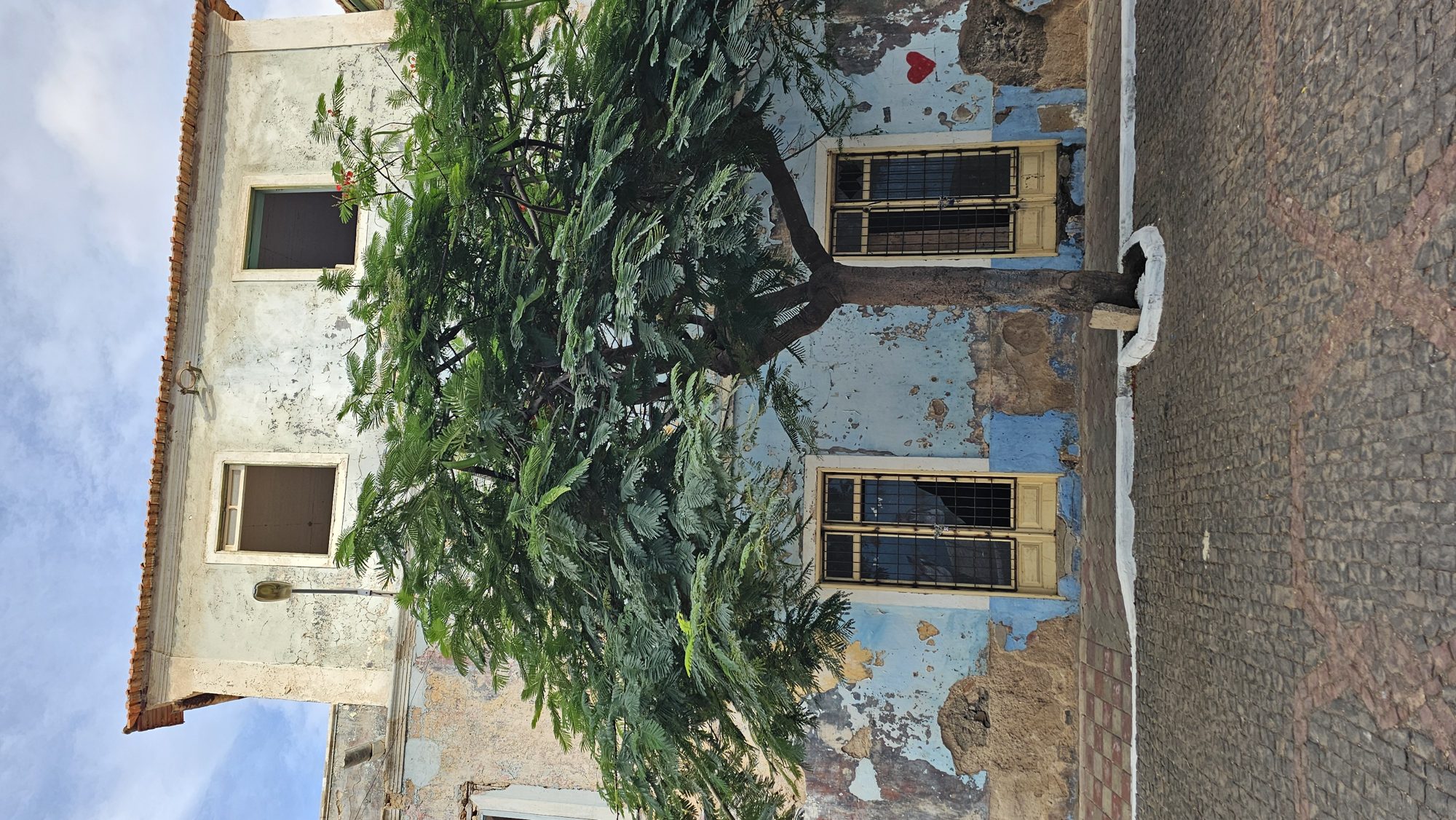
A weathered colonial house with a flame tree on a cobbled Mindelo street
Walk it · Free · Mornings and evenings

Mindelo's colonial centre

Start at Praça Nova, officially Praça Amílcar Cabral, the square with the bandstand where the town still promenades on Sunday evenings, and walk down Rua de Lisboa past the pastelarias and the bars to the Marginal, the waterfront avenue. The pink Palácio do Povo, the old governor's residence, hosts exhibitions; the 1874 Mercado Municipal sells Santo Antão fruit, goat's cheese, grogue and Fogo coffee under a renovated iron roof; the Centro Cultural do Mindelo in the old customs house has shows, concerts and a craft shop. Give it a morning for the markets and an evening for the squares, and look up at the balconies.

Mindelo on foot in detail →
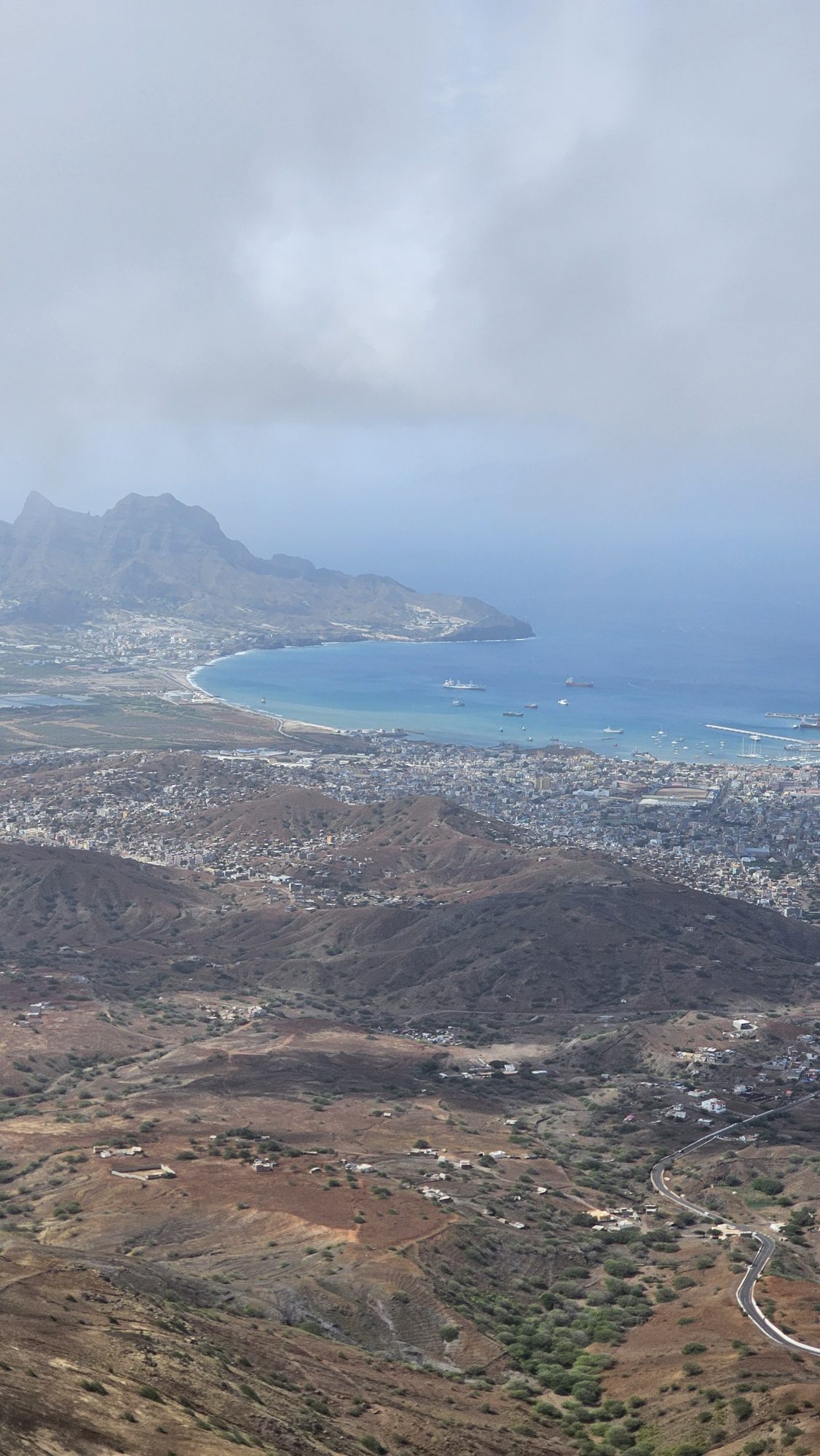
The view from Monte Verde down to Mindelo, the bay and Monte Cara under cloud
774 m · 30 min drive · Often in cloud

Monte Verde

The island's high point and its only green place, a natural park where the trade-wind cloud catches on the summit and feeds terraces, fog-nets and a pocket of endemic plants on an otherwise bare island. A cobbled road of hairpins climbs the last five kilometres from the Baía das Gatas road to the antenna-topped top; on a clear morning the view takes in Mindelo's bay, Baía das Gatas, Calhau and the whole wall of Santo Antão across the channel. Go early before the cloud settles, take a windproof, and either walk the road up from the junction, about two hours return, or taxi up and walk down. Details in the walks section.

Monte Verde in detail →
A tranquil beach with small fishing boats moored on calm water
12 km north-east · Lagoon · Festival in August

Baía das Gatas

A bay on the north-east coast where a barrier of volcanic rock holds back the Atlantic and leaves a natural pool of calm, clear water behind it, the island's one safe family swim and its best easy snorkel, with a village of holiday houses that is empty on weekdays and full of Mindelo on Sundays. Outside the reef the wind-sports people launch; behind it the sand runs west towards Praia Grande. One weekend each August the beach becomes the Festival da Baía das Gatas, the biggest music festival in Cabo Verde; see the nightlife section for dates.

Baía das Gatas in detail →
A carnival performer in an elaborate red feathered headdress at a parade
Main parade Tue 9 Feb 2027 · Book early

Mindelo Carnival

The biggest Carnival in Cabo Verde and the reason the town calls itself a small Brazil: the official groups, Monte Sossego, Vindos do Oriente, Samba Tropical, Cruzeiros do Norte and the rest, spend months on floats and costumes for the Shrove Tuesday parade along the Marginal and up through the centre, and on the Sundays before it the Mandingas of Ribeira Bote, painted black with oil and soot and carrying spears, run through the streets in a tradition entirely their own. In 2027 the main parade falls on Tuesday 9 February, with the Samba Tropical night on the Monday and the Mandinga parades on the surrounding Sundays; the official programme appears in January. Rooms and flights sell out well ahead.

Carnival in detail →
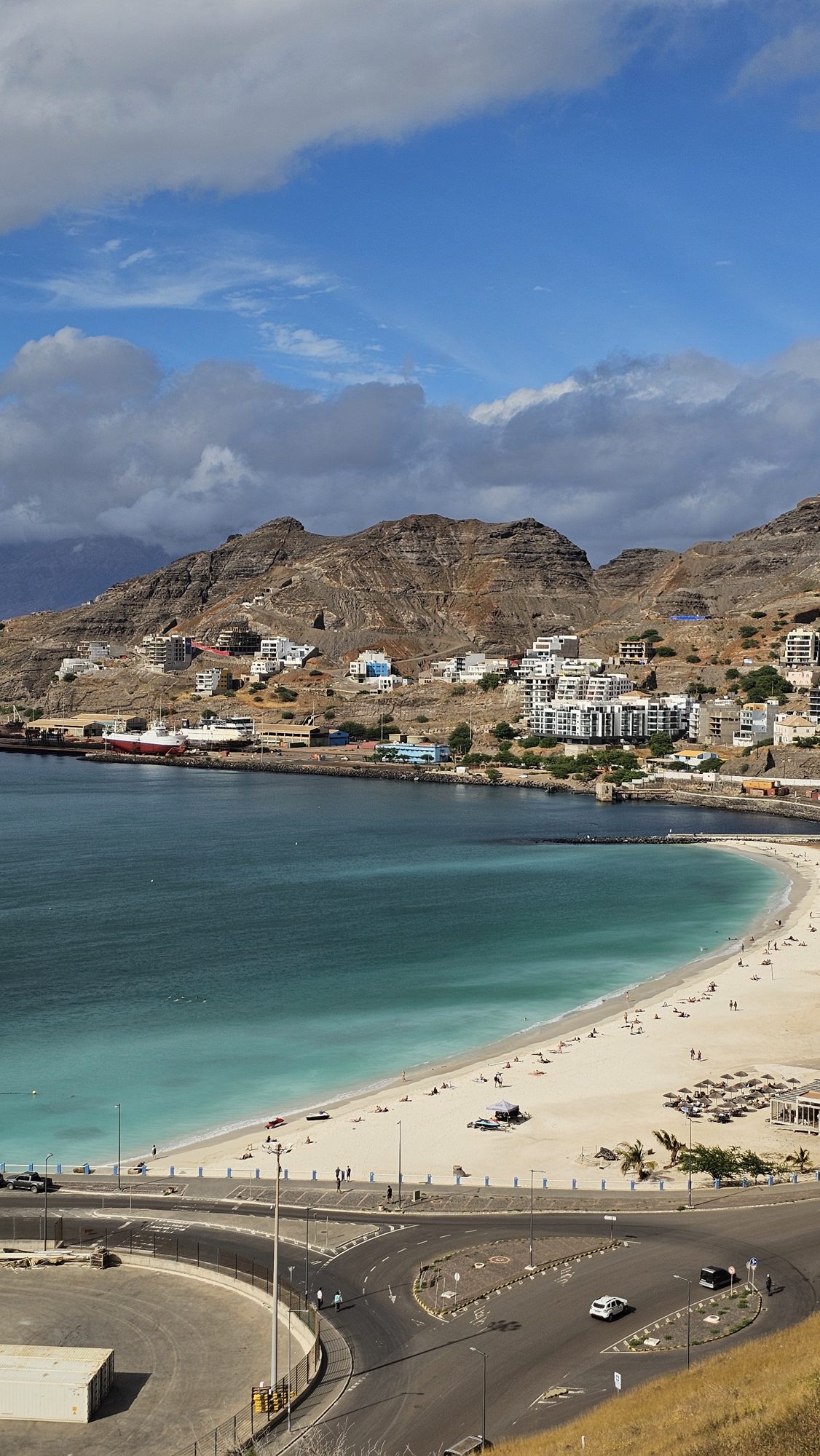
Laginha beach from above, turquoise water against white sand with Mindelo's hills behind
15 min walk · Free · Sunset

Praia da Laginha and the Marginal

Mindelo's town beach is a curve of pale sand just north of the port, with calm water, a line of beach bars and cafés, and the fuel tanks of the harbour behind as a reminder that this is a working town, not a resort. Across the bay rises Monte Cara, the mountain whose ridge makes the profile of a face staring at the sky, and the sunset from Laginha or from the Marginal, with the ferries and the yachts and the fishing boats coming in, is the daily event. The waterfront walk links the Torre de Belém replica, the fish market, the marina and the beach; keep an eye on your bag on the sand.

Laginha and the waterfront in detail →
Rocky volcanic ground with bare hills in the distance
18 km east · Half a day · Lunch

Calhau and the volcanic east

The road east from Mindelo runs through the Ribeira de Calhau, a dry valley of small wells and vegetable plots, past the white sand drifts of the Deserto de Viana, to Calhau, a fishing village of black lava rock, rock pools and a few weekend restaurants where Mindelo drives out for grilled fish on Sundays. The cones around it are the youngest volcanic landscape on the island, a short, loose scramble up to a crater rim for a view over the whole bare east coast and across to the uninhabited islet of Santa Luzia. Combine it with Baía das Gatas on a circuit by hired car or a taxi for the day.

Calhau and the craters in detail →
A windsurfer with a bright sail crossing choppy sea under a cloudy sky
10 km south-west · Wind · Dec–Apr strongest

São Pedro

The fishing village beside the airport sits on a long sand bay where the trade wind, squeezed between the mountains, comes through harder than anywhere else on the island, which makes São Pedro one of the strongest and most feared windsurfing spots in the Atlantic: gusty, side-offshore and for experienced riders only, with a small centre on the beach for boards, sails and wings in season. Everyone else comes for the beach, the fishermen's boats, lunch in the village and the two-hour walk out along the coast to the Farol de Dona Amélia, the lighthouse on the headland. Details in the sea section.

São Pedro in detail →
Yachts moored in Mindelo's marina, seen from above the town
The Marginal · Nov–Jan for the yachts

The harbour, the marina and the fish market

Porto Grande is still the point of Mindelo. The fish market on the waterfront is at its best between seven and eleven in the morning, when the boats land tuna, wahoo and moray and the women sell it from the slabs; the Torre de Belém beside it, a 1920s copy of the Lisbon tower, was the port's old customs office; and the marina along the avenue fills from November to January with yachts pausing before the Atlantic crossing, which gives the waterfront bars a second, international crowd and a floating pontoon bar in the middle of it. The ferry terminal for Santo Antão is a short walk on; the ferry itself is covered in the practical notes.

The harbour and marina in detail →
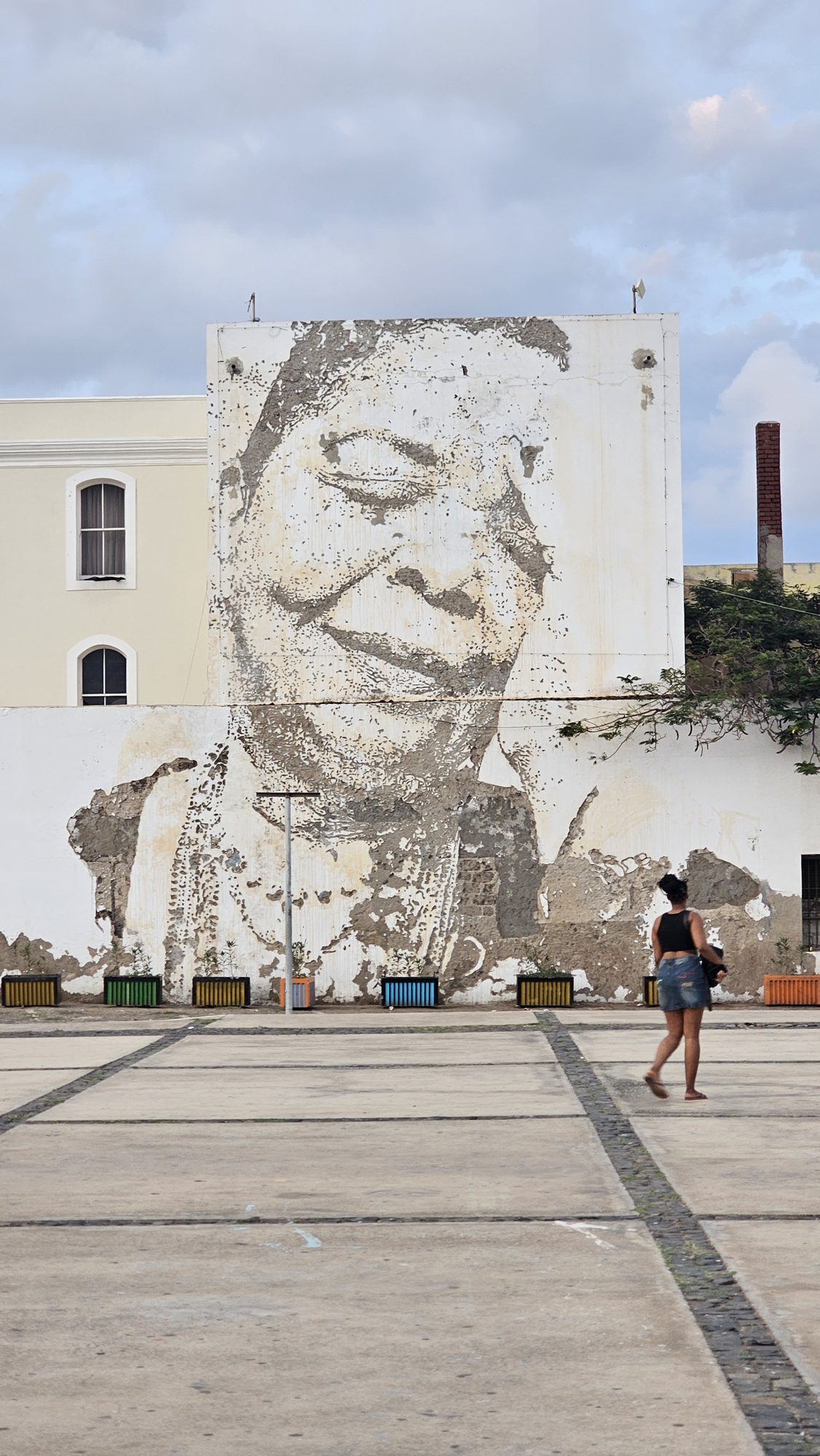
Vhils's carved portrait of Cesária Évora on a wall in Mindelo
Morna · UNESCO since 2019

Cesária Évora's Mindelo

Cesária Évora was born in Mindelo in 1941, sang in its bars for decades for drinks and small change, was discovered in Lisbon in her late forties and won a Grammy at 62; she died here in 2011 and the airport carries her name and her statue. The town's tribute is still unfinished: a small Núcleo Museológico shows her life, her house in the Lombo quarter is a place of pilgrimage rather than a museum, and a proper Cesária Évora museum, financed with World Bank help since 2025, is still on the drawing board, so do not come expecting one. The real monument is the music: morna was added to UNESCO's intangible heritage list in December 2019 and is sung live in Mindelo every week of the year.

Cesária Évora's Mindelo in detail →

Also worth your time

8 km north-east · Fishing village

Salamansa

Shared taxi or hire car · beach, dunes and the kite launch

A fishing village on a sandy bay below dunes, with a few bars, the island's most used kitesurf beach outside the lagoon and a turtle hatchery run by the local conservation group in nesting season. The track continues east along the coast to Praia Grande and Baía das Gatas.

North coast · Walk only

Praia Grande

Between Salamansa and Baía das Gatas · no facilities, no lifeguards

The wildest beach on the island, a long sweep of sand backed by dunes with Atlantic swell breaking on it and currents that make swimming dangerous. For the walk, the surfers in a north swell and the emptiness.

Above the town · Viewpoint

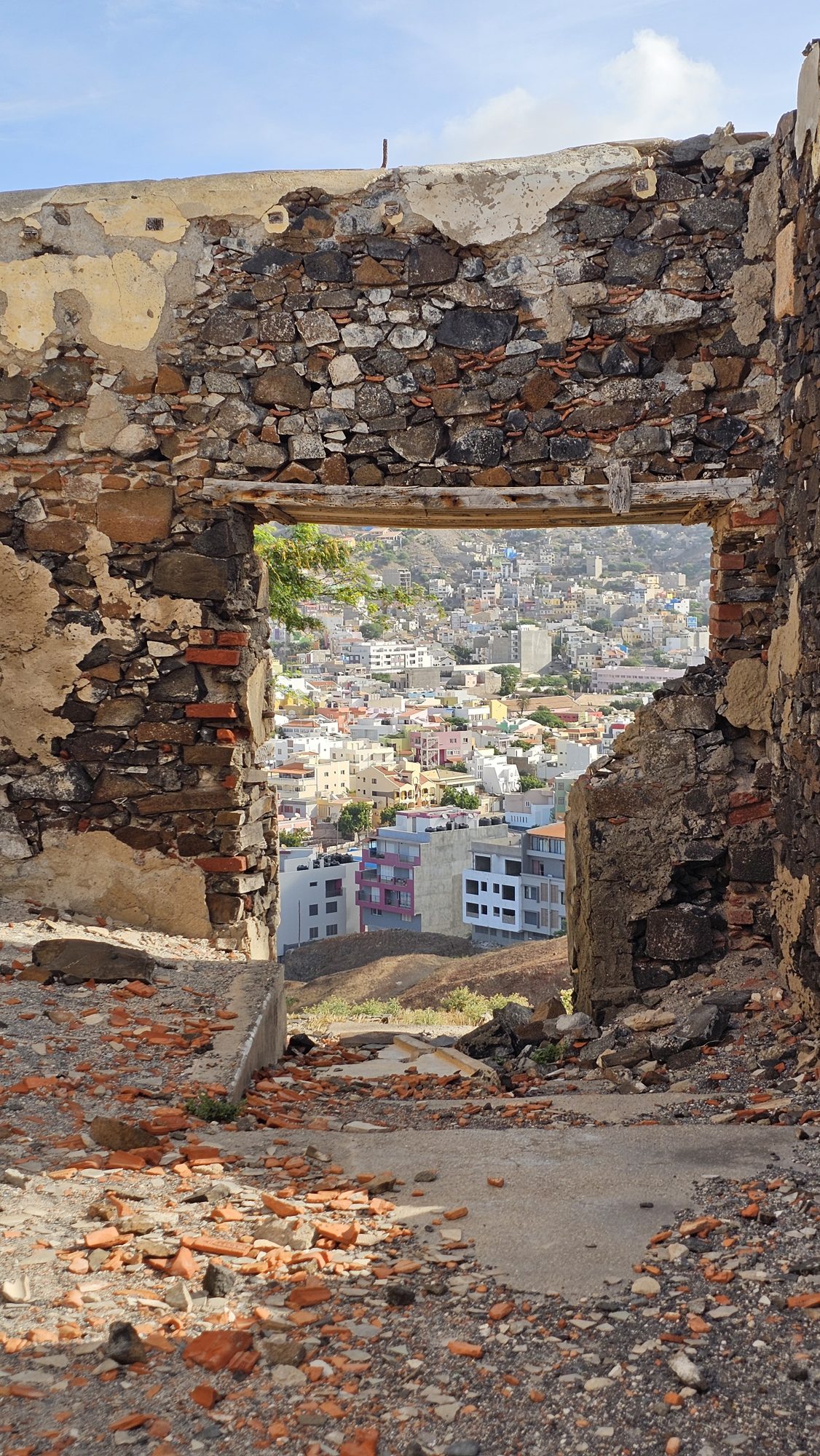
Fortim d'El Rei

Hill above the centre · view the outside; the fort itself is a ruin

The 1852 fort built to defend Porto Grande, later a prison and long derelict, sits on the hill behind the town with the best panorama of Mindelo, the bay and Monte Cara. Restoration has been promised for years; treat it as a viewpoint and go in daylight.

Ferry · Own guide

Santo Antão

Nôs Ferry from Mindelo to Porto Novo · about 1 h · CVE 1,500 each way for visitors

The green, vertical island across the channel is Cabo Verde's great hiking destination and most visitors to Mindelo cross for at least a day. It has its own guide; the ferry basics are in the practical notes below.

Walks & nature

Short, windy and exposed, with one summit and a lot of coast

São Vicente is one of the driest, barest islands in the archipelago, and its walks are short, shadeless and blown by the trade wind: a cloud-topped summit, a few coastal tracks between fishing villages and a lighthouse at the end of a headland. The long mountain days are on Santo Antão across the channel. Carry two litres of water and a windproof, and start early.

JFMAMJJASOND

Walking season: teal = the cool, dry heart of the year, 22 to 26°C with the strongest wind and the odd Saharan dust haze from December to February; green = still dry and fine, warmer and calmer; grey = August to October, hot and humid, the only months with any real chance of rain, and when it comes it comes as a flash flood in the ribeiras.

People hiking up a rocky mountain under a blue sky
Moderate · Road and old paths · Cloud and wind

Monte Verde

The island's summit at 774 metres is a half-day rather than a hike, and the only place on São Vicente where you will see green. From the junction on the Mindelo to Baía das Gatas road, about half an hour from town by taxi, a cobbled road winds up in hairpins through terraces, agave and the fog-nets that harvest the cloud, to the antenna station on top. Walk the road or the shortcuts between its bends, about five kilometres return and two hours, less if you take a taxi to the top and walk down. On a clear morning the view is the whole island, Santa Luzia and the mountains of Santo Antão; by late morning the summit is usually in cloud, cold and wet, and the view is of the inside of it.

Full route guide →
5 kmreturn from the junction
2 hwalking; 3 h as a tour
774 msummit, 300 m of climbing

Guided half-days from Mindelo run about three hours with transfers. The natural park holds the island's pocket of endemic plants; stay on the road and the paths, as the terraces are farmed. There is no water and no shade, and the wind on the ridge can knock you sideways in winter.

A windsurfer sailing along a coast on a windy day
Moderate · Sand and track · No shade

Salamansa to Baía das Gatas along the north coast

Take a shared taxi to Salamansa, the fishing village on the north coast, and walk east: over the dunes behind the village, along the full length of Praia Grande with the Atlantic breaking on your left and nothing else in sight, then on tracks over the low lava headland to the lagoon at Baía das Gatas, where you swim in the natural pool and eat at a weekend bar. Six to eight kilometres and two to three hours with the wind behind you if you walk it this way round. The longer version continues south along the empty east coast from Baía das Gatas to Calhau, ten to twelve kilometres of track and rock with no water and no settlement, for a taxi pickup and a fish lunch at the end.

Full route guide →
6–8 kmSalamansa to Baía das Gatas
2–3 hplus 3–4 h on to Calhau
Flatsand, dunes and lava track

Do not swim at Praia Grande or Salamansa; the currents are strong and there are no lifeguards anywhere on the island. Arrange the return taxi before you set off, as there is no reliable public transport from Baía das Gatas or Calhau in the afternoon. Turtles nest on these beaches from June to October: no torches, no lights, no walking the sand at night.

Easy–moderate · Coast path

São Pedro to the Dona Amélia lighthouse

From the end of São Pedro beach · about 3 km each way, 2 h return

A path along the rocks and the headland from the fishing village by the airport to the lighthouse on the island's south-western tip, with the wind in your face and the whole channel to Santo Antão in front of you. Lunch in São Pedro afterwards.

Full route guide →
Easy · Scramble

The craters at Calhau

Behind the village · about 1 h return

Pick a cone, climb its loose flank and look into the crater and out over the black-lava coast and Santa Luzia. Short, steep and sharp underfoot; wear proper shoes. The Deserto de Viana sand drifts on the road out are the photo stop on the way.

Full route guide →
Evening · Town walk

Mindelo on foot

Praça Nova to Laginha · 3 km, as long as you like

Praça Nova, Rua de Lisboa, the Mercado Municipal, the Marginal with the Torre de Belém and the fish market, the marina and on to Laginha for the sunset over Monte Cara. The best walk on the island is the one through the town.

Full route guide →
In August 2025 a tropical storm dropped a year's rain on São Vicente in a few hours and flash floods through Mindelo's ribeiras killed at least a dozen people. The island has since repaired most of the damage, but it is the reminder that the dry valleys are rivers in waiting: never walk or camp in a ribeira when rain is forecast between August and October.
Sea & wind

Wrecks and turtles in the bay, and some of the strongest wind in the Atlantic

The bay of a port that has been losing ships for two centuries gives São Vicente its diving: wrecks, turtles and nurse sharks on volcanic walls, a quiet snorkel in the lagoon at Baía das Gatas, and a windsurfing bay at São Pedro that experienced sailors travel for.

A sea turtle swimming underwater in blue light
Open Water to Advanced · 10–30 mCalmest July to November

Mindelo bay, the wrecks and the islet of Pássaros

One centre of substance operates from Mindelo, a PADI school based at the hotel on Praça Nova, with Nitrox, freediving courses and two-hour snorkel trips to swim with turtles for about €45. The sites are all a short boat ride out: the São Macário wreck and the old steamship and cargo wrecks in the bay, home to pufferfish, nudibranchs, schooling fish and the occasional ray; the wall at Sucenáqua, no deeper than 16 metres, with nurse sharks resting under its ledges; Ponta Nho Jon for the advanced, with nurse sharks, blacktips and sometimes a manta; and the Ilhéu dos Pássaros, the lighthouse islet at the mouth of the bay, an advanced current dive to 30 metres where mantas, whale sharks and hammerheads are reported in season and not promised. Visibility runs 15 to 30 metres and the water from 21°C in late winter to 27°C in October.

10–30 mdepth
Open Waterfor the bay; Advanced for Pássaros
15–30 mvisibility
21–27°Cwater, thick suit Dec–Jun

Expect to pay around €45 to €60 a dive and €80 to €100 for a first-time dive, in line with the rest of Cabo Verde; book ahead in the European winter, when the centre is small and the channel is rough. Humpback whales pass through the channel from March to May and are seen from boats rather than underwater.

Windsurf and wing · Experts

São Pedro

The bay by the airport · strongest Dec–Apr · side-offshore and gusty

The trade wind accelerates between the mountains and arrives at São Pedro at 25 to 35 knots on a good winter day, over flat-to-choppy water on a long sand beach. Speed sailors and strong intermediates love it; beginners should learn on Sal. A small beach centre rents boards, sails and wings in season.

Kite · Snorkel

Salamansa and Baía das Gatas

North coast · Nov–Apr for wind · lagoon all year

Salamansa's sandy bay takes the north-east trade side-shore and is the island's kite beach; Baía das Gatas has the same wind outside the reef and, inside it, the one calm snorkel on the island, with small fish, the odd turtle and water a child can stand in. Bring your own kit.

Further afield

Sal and Boa Vista

An hour's flight · kite schools, dive centres and warm reef

The archipelago's big kite and dive islands are a short hop away, and a week that pairs them with Mindelo's music and Santo Antão's mountains covers the best of Cabo Verde.

Wildlife

Turtles on the north beaches, whales in the channel and a green summit

A dry island has little on land, and São Vicente's wildlife is at the waterline: loggerhead turtles that come ashore to nest in summer, humpbacks that pass in spring, seabirds on the islet in the bay and a pocket of plants on Monte Verde found nowhere else on earth. Keep it short and respectful.

Loggerhead turtles

Salamansa, Praia Grande, the Baía das Gatas and Calhau beaches · nesting Jun–Oct, hatchlings Aug–Nov

Cabo Verde holds one of the largest loggerhead nesting populations in the world, and São Vicente is a modest but growing part of it: the local conservation group counted over two hundred nesting females and more than a thousand nests in a recent season, runs a hatchery for relocated nests on Salamansa beach and employs beach monitors through the summer. Nesting walks are only with them or an authorised guide, after dark, without torches or flash, at a distance; capture has been illegal since 1987 and feral dogs, lights and plastic are the threats they fight. Juvenile green and hawksbill turtles are in the bay all year and are what the snorkel trips find.

JFMAMJJASOND

Humpbacks, seabirds and the islet

The São Vicente–Santo Antão channel; Ilhéu dos Pássaros · Mar–May for whales

Cabo Verde is a humpback breeding ground, mostly off Boa Vista and Sal, and in March, April and May whales pass through the channel to Santo Antão and are seen from the ferry and the dive boats. The Ilhéu dos Pássaros, the Island of Birds at the mouth of the bay, got its name from the seabirds that roosted on it; brown boobies and the odd frigatebird still do. The great seabird colonies and the Raso lark are on Santa Luzia, Raso and Branco, the protected islets to the south-east, which are closed to visitors.

JFMAMJJASOND

Monte Verde's plants

The summit natural park · greenest Sep–Dec after any rain

The fog that sits on the summit feeds the only real vegetation on the island: a natural park of endemic Cabo Verdean shrubs, lichens and succulents, plus the terraces and the drought-hardy trees planted to hold the slope. It is a botanist's stop rather than a spectacle, but on an island this bare, green itself is the sight.

JFMAMJJASOND

In the water

The bay's wrecks and walls · all year

Nurse sharks on the walls year-round, stingrays and eagle rays over the sand, many kinds of moray in the wrecks, and mantas and whale sharks reported from June to November around the islet, occasionally rather than reliably. Tuna, wahoo and dorado are what the boats land at the fish market, and what you will eat.

JFMAMJJASOND
Food & drink

Cachupa for breakfast, tuna from the morning market, grogue from across the channel and wine from a volcano

Mindelo has a handful of good, honest Cape Verdean kitchens, several of them with live music, the freshest tuna in the Atlantic and a drinks culture of its own. A plate of the day in a local tasca costs 400 to 700 escudos, a main in a good restaurant 900 to 1,800, and a dinner for two with wine rarely passes €40.

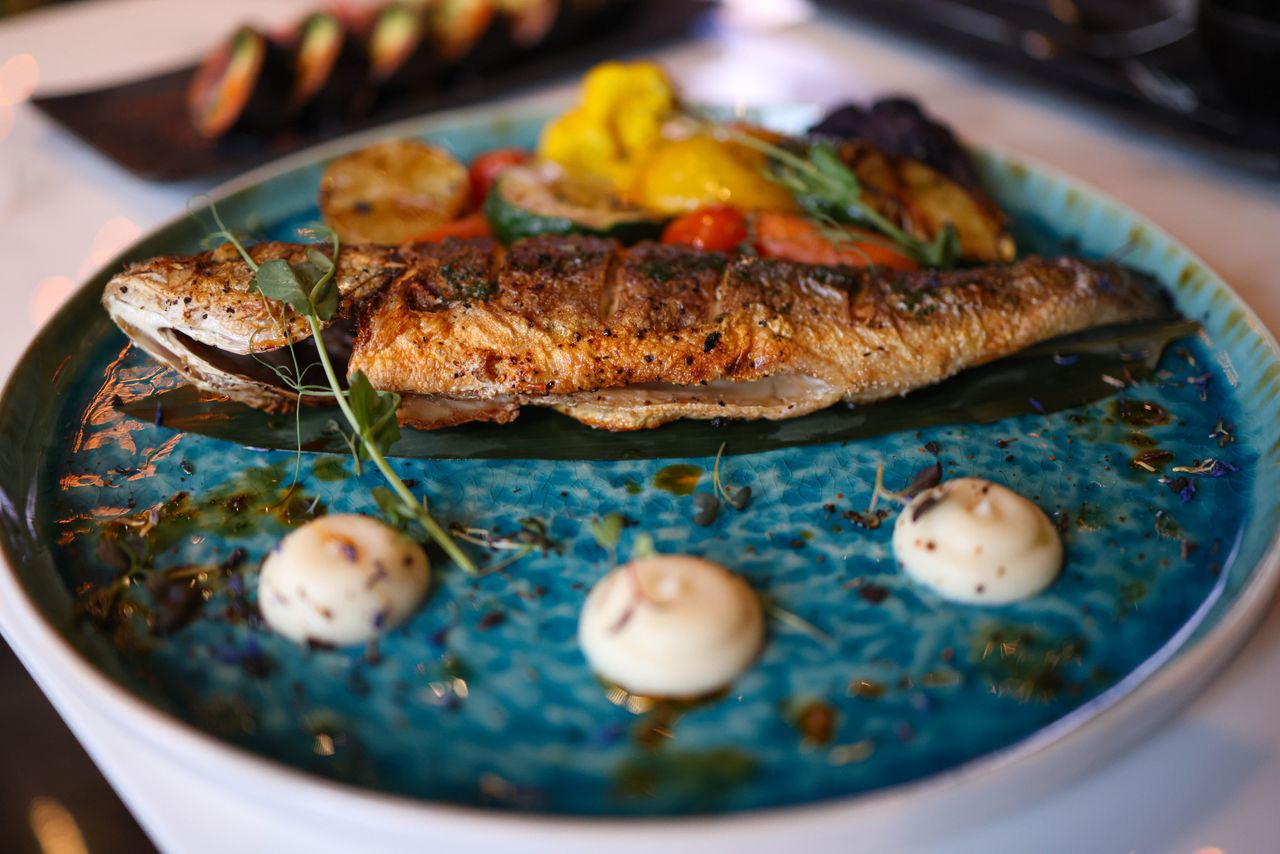
A plate of grilled fish and vegetables served in a restaurant
Eat this

Cachupa, rica and refogada

The national dish is a slow stew of hominy corn and beans, plain as cachupa pobre and loaded with fish or pork, chouriço and vegetables as cachupa rica; the Mindelo way to eat it is the next morning as cachupa refogada or guisada, fried up in a pan with an egg and a piece of linguiça on top, the breakfast of the whole island. Every tasca makes it; the harbour cafés make it well.

A plate of seared tuna with vegetables on a restaurant table
Eat this

Tuna, moray, limpets and the devil inside

The boats land atum and serra, tuna and wahoo, every morning: grilled steaks for 900 to 1,500 escudos, moreia frita, crisp fried moray eel, lapas, limpets grilled with garlic and lime, and búzio, a stew of sea snails. The island's own snack is the pastel com diabo dentro, a fried pastry of sweet potato and corn dough with spiced tuna inside, from the market stalls and the pastelarias on Rua de Lisboa.

A woman selling fruit from a street stall
Drink this

Grogue, ponche, Strela and Fogo wine

Grogue is the sugar-cane spirit distilled on Santo Antão in the valleys across the channel, sold by the bottle in the Mercado Municipal and by the shot in every bar for 100 to 200 escudos; buy the certified kind from a proper shop, as the cheap stuff is cut. Ponche is grogue sweetened with molasses or honey and lime, or made with coconut or peanut; Strela is the national lager. The wine is from Fogo, grown in volcanic ash inside the caldera at 1,700 metres under the Chã label, white, rosé and red, on most menus and worth a bottle for its story. Fresh goat's cheese with papaya jam ends the meal, and the coffee is from Fogo too.

The best tables

Five places, most of them with music after nine. Dinner starts late, around eight or nine; book on Friday and Saturday and during Carnival.

The classic

Chez Loutcha

Rua de Coco, centre · lunch and dinner · music nights

The best-known kitchen on the island for forty years: proper Cape Verdean home cooking in generous portions, with the cachupa rica as its signature, dinners with live music on set nights and a Sunday outing to its country branch at Calhau for a buffet with a band. Ask which nights the music plays when you book.

CVE 1,000–2,000 mains · $$
Morna every night

Casa da Morna

Near the marina on the waterfront · dinner · book

A restaurant built around the music: fish, cachupa and grilled meats served to a soundtrack of live morna and coladeira almost every night, by musicians who played with the greats. Several guides call it the best restaurant on the island; it is certainly the best evening.

€12–25 a head · $$–$$$
Townhouse café

Casa Café Mindelo

Centre, near the Praça · daytime and dinner; check hours

A café-restaurant in an old colonial townhouse with rooms upstairs, art on the walls, a mixed crowd of locals, sailors and travellers, and a short menu of good fish, salads and daily plates. Mindelo's living room; often cash only.

CVE 800–1,500 · $$
Music Fri–Sun

Nautilus

Centre · dinner · live music Friday to Sunday

Traditional dishes, cachupa among them, at honest prices, with a band from Friday to Sunday nights and a dance floor that fills late. Excellent and affordable is the recurring verdict.

CVE 700–1,500 · $–$$
Harbour breakfast

Dokas

By the harbour · breakfast to dinner

The waterfront restaurant for the cachupa guisada breakfast after the fish market, and for grilled fish at a table over the water later; prices on the high side for Mindelo, service on the slow side, view on the right side.

CVE 1,000–2,000 · $$–$$$

Where locals eat and drink

7–11am · Market

The fish market and the Mercado Municipal

The Marginal; the covered market off Rua de Lisboa

Watch the tuna come off the slabs at the fish market, then buy Santo Antão bananas, papaya, goat's cheese, a bottle of certified grogue and a bag of Fogo coffee upstairs in the 1874 market hall. The stalls around Praça Estrela nearby sell the pastéis and the cheap lunches.

$
Rua de Lisboa · All day

Café Lisboa and Pastelaria Morabeza

The main street · coffee, pastries, a beer at the end of the day

The two cafés where the town sits down: a galão and a pastel in the morning, a Strela on the pavement at six. The street between them is where everyone passes.

CVE 100–400 · $
Laginha · Beach

Caravela and the Laginha bars

The town beach · lunch to late

Grilled fish, cold beer and the Monte Cara sunset at the beach bar at the end of Laginha, which turns into one of the places the night begins later on. The simple beach kiosks along the sand do the cheap plates.

CVE 500–1,200 · $–$$
Marina · Sailors

The marina bars and Pont d'Água

The waterfront by the pontoons · evenings

The yacht crews' bar on the pontoon and the glass-and-concrete restaurant complex beside the marina for a sunset drink, a pizza or a concert; the cooking is uneven, the setting and the crowd from November to January are the point.

CVE 600–1,800 · $$
Old school

Chave d'Ouro

Centre · lunch and dinner · rooms upstairs

An old hotel dining room that has not changed in decades: cachupa, búzio casserole, grilled fish and a faded colonial charm. Reviews are mixed on the food and unanimous on the atmosphere.

CVE 700–1,500 · $–$$
Sunday · Calhau

Lunch in Calhau and São Pedro

The fishing villages · weekends

Grilled fish, lapas and a bottle of Fogo wine at the weekend restaurants in the lava village of Calhau or on the beach at São Pedro, with half of Mindelo at the next table. Sunday lunch is the island's family outing.

CVE 800–1,500 · $$
Nightlife

Morna after nine, coladeira after eleven, Carnival in February and a festival on the beach in August

Mindelo is the one town in Cabo Verde where the music is the reason to come. It plays live in restaurants and bars around the centre from Thursday to Sunday and often on other nights, usually free with your dinner or a drink; dinner is at eight or nine, the sets run from half past nine to midnight, and the clubs do not fill before one. The calendar adds two of Africa's great parties.

Every night

Casa da Morna, Jazzy Bird and Chez Loutcha

Centre and waterfront · Casa da Morna nightly; Jazzy Bird from 6pm, closed Sunday

Casa da Morna is the sure thing, morna and coladeira with dinner almost every night of the week. Jazzy Bird is one of the oldest bars in town, with live jazz and Cape Verdean music from early evening, closed on Sundays. Chez Loutcha's music nights are a dinner-and-band institution; ask which nights when you book. Casa Tchicau does morna with traditional food, and Nautilus has its band from Friday to Sunday.

Late · Weekends

The late bars and the beach

Praça Nova and Rua de Lisboa; Laginha; the marina · from 11pm

After the sets the night moves between the café-bars around Praça Nova and Rua de Lisboa, the rooftop bar above the centre, the marina complex for a concert or a DJ, and down to Caravela and the Laginha beach bars, where coladeira and funaná, kizomba and cabo love play until the small hours at weekends. Guided music walks leave from the marina for those who want a local to steer them. Taxis home are a couple of hundred escudos; do not walk the dark back streets or the beach alone late.

February

Carnival

Main parade Tuesday 9 February 2027 · Samba Tropical night Monday 8 · Mandingas on the Sundays around it

The parades, the floats, the samba schools and the Mandingas fill the Marginal and the centre for the days before Ash Wednesday, with street parties every night and the whole town in costume. Book flights and rooms by the autumn, watch your pockets in the crowd and expect nothing to open on time for a week.

August

Festival da Baía das Gatas

The beach at Baía das Gatas · the weekend nearest the August full moon · 2026 edition ran 6–9 August; 2027 dates due in spring

Cabo Verde's biggest music festival, three nights of Cape Verdean, Brazilian and West African acts on a stage on the sand, with the island camping behind the beach and shared taxis shuttling from Mindelo all night. The 2025 edition was cancelled after the August floods; it came back in 2026 with a line-up headed by Léo Santana and Tiken Jah Fakoly. Free to attend; everything else is booked solid.

A street musician playing guitar at night under city lights
9.30pm

First set

Order the fish, wait for the guitar.

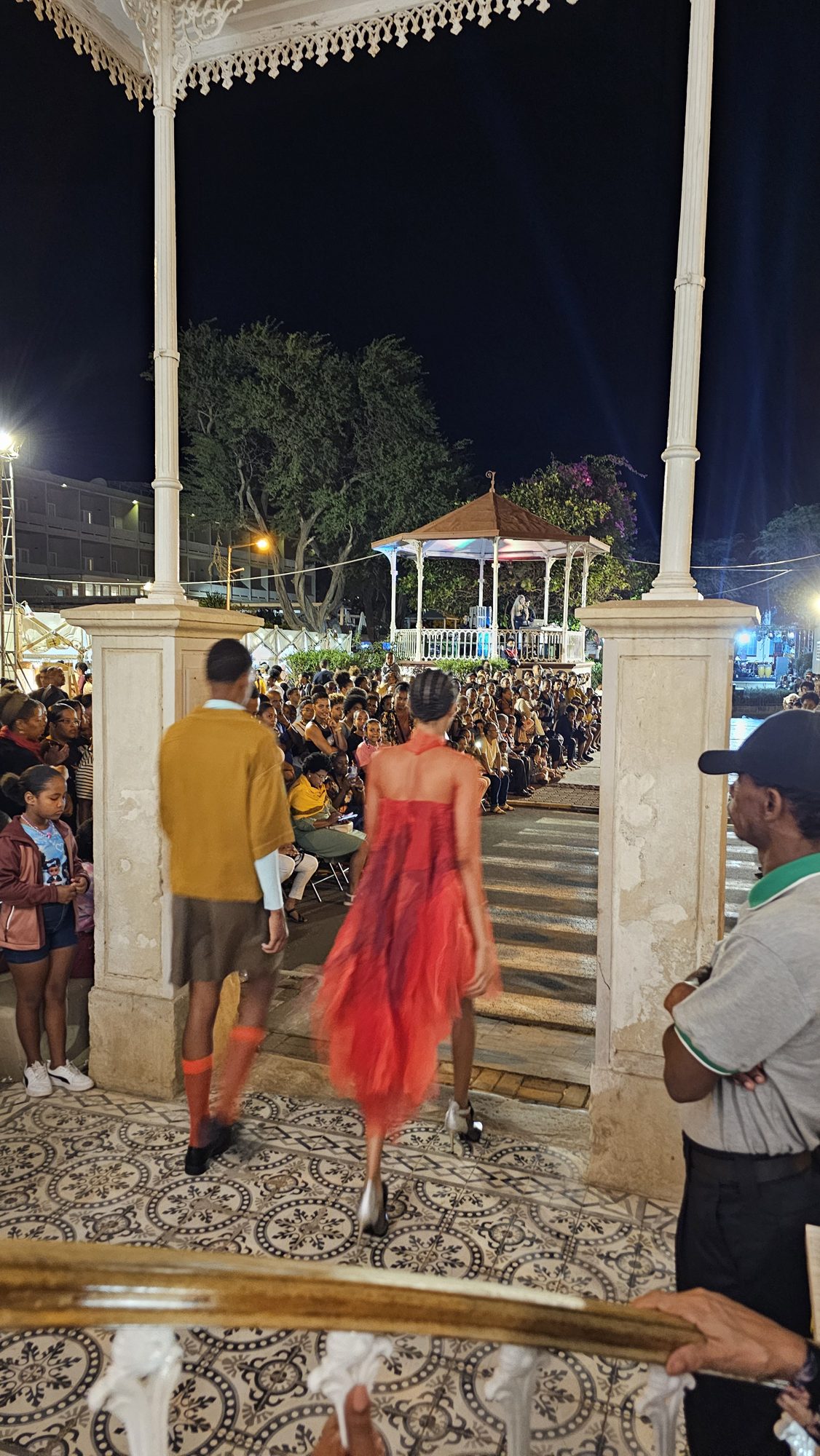
Dancers performing at night beside the bandstand on Praça Nova in Mindelo
Praça Nova

On the square

A night show by the bandstand, the town watching.

A dancer in a carnival costume with blue feathers performing indoors
February

Carnival

Half a year of work for one Tuesday.

Practical notes

Before you go

Getting there

Cesária Évora International Airport is at São Pedro, about ten kilometres and fifteen to twenty minutes south-west of Mindelo. TAP flies daily from Lisbon, around four and a half hours, leaving in the morning and landing early afternoon, with return fares from about €220 to €330; it moved the route to a larger aircraft for the winter 2026–27 season. Most other visitors arrive via Sal or Praia on the new domestic carrier CVsky, which took over the inter-island network in March 2026 from Cabo Verde Airlines; Praia to São Vicente costs from about CVE 12,500, roughly €115, each way. A taxi from the airport to town is about CVE 1,100, agreed before you get in; the shared minibus, the aluguer, runs the same road for about CVE 120 in daylight.

Entry and the airport tax

  • Visas: citizens of the EU, UK, US, Canada and most of Europe enter visa-free for up to 30 days, but visa-free entry is tied to pre-registration.
  • EASE: register every traveller on the government's EASE portal at least five days before departure and pay the Airport Security Tax, CVE 3,400, about €31, per person. Use the official site; third-party sites add fees.
  • Penalty: since July 2026 travellers who arrive without pre-registering are reported to pay the tax twice at the border. Confirm the current rule on the official portal.
  • Visa on arrival ended on 1 January 2026 for about a hundred nationalities; if you need a visa, get it before you fly.

Getting around

Mindelo is walked. For the island, taxis wait on Praça Nova and the Marginal: in-town hops are CVE 200 to 300, Baía das Gatas or Calhau roughly CVE 1,500 to 2,500 each way, and a driver for the day is negotiable and sensible. Alugueres, shared minibuses and pick-ups, leave for Baía das Gatas, Calhau, Salamansa and São Pedro from the stops near the market, mostly in the mornings and at weekends, and are scarce in the late afternoon. Hire cars from the Mindelo agencies cost about €40 to €60 a day; the roads are cobbled and short, the whole island is 24 kilometres across, and nothing needs four-wheel drive in the dry season.

The ferry to Santo Antão

  • Route: Mindelo's Gare Marítima on the Marginal to Porto Novo, about one hour, on Nôs Ferry's Mar d'Canal.
  • Fare: CVE 1,500 each way for non-residents, about €14; tickets online or at the terminal.
  • Times: normally two sailings a day each way, around 7am and 2pm from Mindelo and 9am and 4pm back, with changes on holidays and no boat on 1 January. Check the day before.
  • The channel is often rough from December to April; take the morning boat and something for seasickness.

Seasons

  • Nov–Mar: dry, sunny and windy, 22 to 26°C by day and cool at night; the windsurf season, the yachts in November and December, Carnival in February; Saharan dust haze some days from December to February.
  • Apr–Jul: dry and warmer, the wind easing, the sea still cool until June; humpbacks in the channel to May; quiet and cheap.
  • Aug–Oct: hot and humid at 28 to 30°C, the calmest sea and the warmest water, the festival in August, and the only months with any chance of rain, occasionally torrential.
  • Sea temperature runs from about 21°C in March to 27°C in October.

Money, safety and the rest

The escudo is pegged at CVE 110.265 to the euro; euros are accepted in most tourist places with change in escudos, ATMs in Mindelo work with foreign cards, and cash is needed for alugueres, markets and small bars. Mindelo is relaxed by day; after dark, keep valuables out of sight, take taxis rather than walking the back streets, avoid empty beaches and be alert in Carnival and festival crowds. No lifeguards anywhere; swim at Laginha, Baía das Gatas or São Pedro, never at Praia Grande. Tap water is desalinated and locals drink bottled. Plugs are European two-pin at 220 volts. Portuguese and Kriolu are spoken, with English and French in the tourist trade. Local SIMs from the two operators, Alou and Unitel T+, cost a few euros for a week of data at their shops in town with a passport.

Where to stay

The centre of Mindelo, within a few blocks of Praça Nova and the Marginal, for walking to the music, the markets and the ferry: a historic hotel on the square, guesthouses in colonial townhouses, rooms above the cafés and restaurants. Laginha for a beach at the door, ten to fifteen minutes' walk from the centre. Baía das Gatas for holiday flats by the lagoon, quiet to the point of empty outside August and weekends. São Pedro for windsurfers who want to wake up on the bay, with few options and the airport next door. Book months ahead for Carnival and the festival; otherwise a week is enough notice.

Photography

Photo credits

Photographs of Mindelo on this page are our own. The remaining photographs are by independent photographers published on Pexels under the free Pexels licence; click a title to open the original.

Powered by Webloyt | Report abuse