Aerial view of the karst islands of Raja Ampat
Indonesia · Southwest Papua

Raja Ampat

Fifteen hundred islands at the heart of the Coral Triangle, where a single reef holds more fish species than the whole Caribbean.

Photo via Pexels
Overview

The four kings

Raja Ampat, "the Four Kings", is the archipelago off the western tip of New Guinea: four big islands, Waigeo, Batanta, Salawati and Misool, and some 1,500 smaller ones, most of them jungle-topped limestone rising straight from water that is clear to thirty metres. Marine biologists count more than 1,500 fish species and three-quarters of the world's hard corals here. Nowhere else comes close.

Most independent travellers base themselves on Kri or Gam, small islands in the Dampier Strait an hour by boat from Waisai, where family-run homestays sit over the water and the best dive sites are minutes away. Liveaboards cover the far north (Wayag) and the far south (Misool), which are a day's sailing apart.

A week is the minimum that makes the journey worthwhile. Ten days lets you dive the strait, climb Piaynemo, and sit in the forest at dawn for the birds.

Palm trees leaning over a blue sea
Dampier StraitKri, Gam, Mansuar and Arborek: the homestays, the dive centres, the classic sites. An hour from Waisai.
WaigeoWaisai, the port town, and the villages of Saporkren and Sawinggrai where the birds of paradise display.
Fam & WayagPiaynemo's viewpoint and Melissa's Garden to the west; the Wayag lagoons a long day further north.
MisoolThe southern kingdom: a no-take zone of walls, caves and lagoons reached by liveaboard or its one resort.
Highlights

Above and below the water

Six things to build a trip around.

A viewpoint deck looking over the islands of Raja Ampat
Fam islands · Viewpoint

Piaynemo

Three hundred wooden steps up a limestone knoll to the view on every postcard: a star-shaped lagoon of cone islands in water the colour of jade. Two hours by speedboat from Kri; go in the morning before the day trips arrive.

Piaynemo in detail →
Aerial view of scenic islands in Raja Ampat
North · Liveaboard

Wayag

The far north, a labyrinth of karst towers and hidden lagoons with a scramble to a summit that looks over all of it. Reachable on liveaboards or a very long, expensive day by boat from Waisai. The best of the archipelago, for those who get there.

Wayag in detail →
Villagers on a wooden jetty over clear water
Dampier Strait · Village

Arborek

A village of two hundred people on a sand island, with a jetty whose pilings are wrapped in soft coral and circled by batfish. Snorkel off the pier, be greeted by the children's dance, buy a woven hat from the women's cooperative.

Arborek in detail →
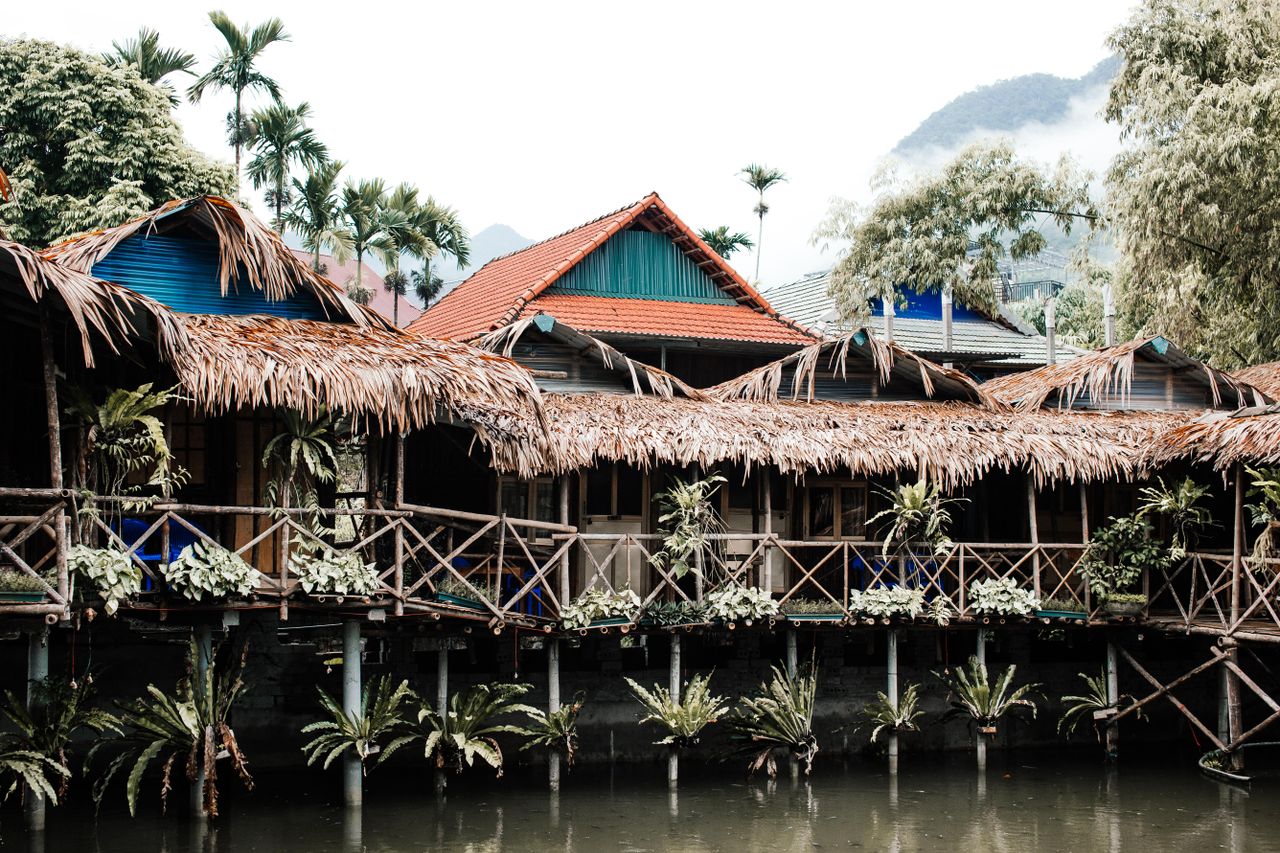
Wooden houses on stilts over the water
Dampier Strait · Base

Kri Island

Twenty homestays on stilts along a beach, a house reef that drops off a few metres from the bungalow steps, and Cape Kri, the most fish-rich dive site ever recorded, at the end of the island. The place to stay.

Kri Island in detail →
Dense forest meeting the coast in Indonesia
Gam · Dawn

Sawinggrai and the birds of paradise

Behind the village of Sawinggrai on Gam, a half-hour forest walk reaches the display trees of the red bird-of-paradise. At first light the males dance; Wilson's, the smaller and stranger cousin, displays on the forest floor nearby.

Birds of paradise in detail →
Aerial view of green islands scattered across the sea
South · Marine reserve

Misool

A day's sailing south, the Misool islands are a community-run no-take zone where shark and manta numbers have climbed for fifteen years. Walls, caves with ancient hand-prints, and jellyfish lakes. Liveaboard country.

Misool in detail →
Scuba & snorkel

The Dampier Strait

The strait between Waigeo and Batanta is where the Pacific pours into the Indonesian seas, and the current it carries is why the reefs are so alive. Most sites are ten to thirty minutes by boat from Kri. The water is 28–30°C all year; the season is October to April, when the seas are calm and visibility reaches 30 metres.

JFMAMJJASOND

Dive season: teal = calm seas and peak mantas, green = good, grey = the southeast monsoon, rougher crossings and fewer boats.

A scuba diver with equipment beside a coral reef
Wanderlines favouriteSSI Instructor Training CenterKri Island

Soul Scuba Divers, Kri

The dive centre on Kri's north shore that most people in the strait end up diving with: a small eco-minded operation with its own homestay bungalows, a house reef off the jetty and boats to every site on this page. Small groups, guides who know the cleaning stations by name, courses from Open Water to instructor level, and nitrox for the deeper drifts.

Book diving and beds together; the homestay fills in high season. soulscubadivers.com

A school of fish near corals under water
World record fish countAdvanced · 50 dives

Cape Kri

The point at the eastern tip of Kri, where in 2012 the ichthyologist Gerald Allen counted 374 fish species on a single dive, the most ever recorded. The current splits around the cape and brings in everything: schooling barracuda and jacks, giant trevally, grey reef and blacktip sharks, wobbegongs on the ledges, and sweetlips stacked in the coral. Strong current; hooks and an experienced guide are standard.

5–40 mdepth
Advancedlevel
Up to 30 mvisibility
Oct–Aprbest

Five minutes by boat from the Kri homestays. Dive it on a slack tide first, then on the current when you know the site.

A school of fish in open blue water
Advanced

Blue Magic

A submerged seamount in open water between Kri and Mioskon, its top at eight metres and its slopes falling past thirty. The current can be fierce, and that is the point: oceanic mantas cruise over the summit, schools of fusiliers wheel in the blue, and barracuda, tuna and reef sharks hunt on the up-current side. The signature big-fish dive of the strait.

8–30 mdepth
Advancedlevel
15–30 mvisibility
Dec–Aprmantas

Negative entry, down the line, reef hook on the plateau. Twenty minutes from Kri.

A manta ray gliding underwater
Open WaterRanger-managed

Manta Sandy

A sand patch at 12–18 metres off Arborek where reef mantas queue to be cleaned by wrasse. Rangers mark a line of rocks; you kneel behind it and wait, and the mantas come in low over your head. Gentle current, easy depth, and the most reliable manta encounter in the archipelago.

12–18 mdepth
Open Waterlevel
10–20 mvisibility
Dec–Aprpeak

Snorkellers can watch from the surface. Numbers of divers are capped; your centre books a slot.

A turtle and fish near a coral reef
Open Water to Advanced

Sardine Reef and Mioskon

Two shallow, fish-dense reefs that show what the strait does when the current is mild. Sardine Reef is a sloping coral garden mobbed by fusiliers, snapper and sweetlips, with turtles and the occasional wobbegong; Mioskon, beside a bat-filled island, is a sheltered slope of hard coral with pygmy seahorses on the sea fans if your guide has the eye.

5–25 mdepth
Open Waterlevel
20–35 mvisibility
Oct–Aprbest

Good second and third dives of the day, and the places to take newer divers.

A dense school of fish in clear water
Open Water

Melissa's Garden and the Passage

Melissa's Garden, off the Fam islands below Piaynemo, is the finest hard-coral garden in Raja Ampat: table corals the size of cars in five to twenty metres of water, usually paired with the viewpoint climb. The Passage, a narrow river-like channel between Gam and Waigeo, is a drift through mangroves and soft coral where archerfish hunt under the trees and the light comes down in shafts.

5–25 mdepth
Open Waterlevel
15–30 mvisibility
Oct–Aprbest

Both are day trips from Kri. The Passage is at its best on a flooding tide.

Hikes & nature

Short, steep and worth it

Raja Ampat's walking is measured in minutes, not hours: limestone staircases to viewpoints, forest paths to the birds, and the length of a beach. Take water and a hat; the sun at the equator does not negotiate.

A wooden viewing deck above the islands of Raja Ampat
Easy

Piaynemo steps

From the boat jetty a wooden staircase of about 300 steps climbs a limestone knoll to two viewing platforms. Thirty minutes up at an easy pace, with the lagoon opening below you: dozens of cone-shaped islets in a bowl of turquoise, the Fam islands beyond. A second, shorter walk nearby reaches the star-shaped Telaga Bintang lagoon.

1 hup and down
300steps
~80 mviewpoint

Two hours by speedboat from Kri; a site fee is paid at the jetty. Pair with a dive or snorkel at Melissa's Garden.

Full guide →
Islands of Raja Ampat seen from above
Demanding

Wayag summit

The climb to Puncak Wayag is a scramble up sharp, pitted limestone with ropes on the steep sections, about forty-five minutes from the beach to a summit barely wide enough to stand on. The reward is the view that defines the archipelago: a maze of green karst towers and turquoise channels running to the horizon. Gloves help; the rock cuts.

1.5–2 hround trip
~150 mascent
Liveaboardor long day boat

Blacktip reef sharks patrol the shallows at the ranger station beach below; snorkel with them after the climb.

Full guide →
Thick forest along the Indonesian coast
Easy

Sawinggrai bird walk

Leave the homestay by boat in the dark to reach Sawinggrai on Gam before five. A village guide leads you thirty minutes up a forest path to the display trees, and you wait in silence as the sky greys. The red birds-of-paradise arrive calling, and the males dance on the bare branches for a quarter of an hour after sunrise. Saporkren, near Waisai, is the alternative site with Wilson's bird-of-paradise on the ground.

2–3 hincluding the wait
30 minwalk each way
Dawnor dusk only

Arranged through any homestay; the village charges a guide and entry fee. Wear dark clothes, bring binoculars, do not use flash.

Full guide →
A wooden cottage above the water
Easy

Kri's beach and jungle

Kri is three kilometres long and has a path along its northern beach linking the homestays, with side trails into the forest where hornbills and cockatoos call and monitor lizards cross the track. Walk end to end at low tide, snorkel back along the house reef, and finish at the western point as the sun goes down behind Gam.

2 hend to end and back
3 kmof beach and path
Low tidefor the beach

Reef shoes for the walk, and watch the tide tables: the beach vanishes at high water.

Full guide →
Wildlife

Mantas, birds of paradise and a shark that walks

Most of the wildlife here is underwater and most of it is guaranteed; the exceptions, the birds and the mantas, keep their own timetables.

Reef and oceanic mantas

Manta Sandy, Manta Ridge, Blue Magic

Reef mantas visit the cleaning stations off Arborek most of the year, with numbers highest from December to April when the plankton blooms. Oceanic mantas, larger and rarer, pass over the Blue Magic seamount in the same months. Rangers limit diver numbers at Manta Sandy; nobody touches, nobody chases.

JFMAMJJASOND

Birds of paradise

Sawinggrai and Saporkren · dawn and dusk

Four species live in the Gam and Waigeo forests, and two are reliably seen: the red bird-of-paradise, whose males display in groups on bare treetops, and Wilson's, a palm-sized bird of blue, red and yellow that clears a patch of forest floor to dance on. Year-round, with a guide, in the first hour of light.

JFMAMJJASOND

Walking sharks

House reefs at night · snorkel

Raja Ampat's epaulette shark walks across the reef on its fins after dark, hunting crabs in a few centimetres of water. A torch and a snorkel off the homestay jetty is all it takes; your hosts know where they feed.

JFMAMJJASOND

Reef sharks, turtles and wobbegongs

Every dive site

Blacktip and grey reef sharks are on most dives, hawksbill and green turtles graze every reef, and the tasselled wobbegong, a carpet shark with a fringe of skin flaps, lies on the ledges at Cape Kri and Sardine Reef. Whale sharks are occasional visitors rather than a season.

JFMAMJJASOND
A giant manta ray in the sea
Dec–Apr

Cleaning station

Kneel behind the rangers' line and let them come.

A large fish in blue water
All year

The big ones

Giant trevally and dogtooth tuna patrol the current points.

A school of fish underwater
All year

The small ones

Pygmy seahorses, nudibranchs and mandarinfish for the macro lens.

Food

What the boat brings in

There are no restaurants on the islands. Homestays cook three meals a day, included in the price, and what arrives depends on what the fishermen caught and what the supply boat brought from Waisai.

A longboat moored off a tropical beach
Every day

Ikan bakar

Grilled fish, usually snapper, trevally or tuna caught that morning, with rice, a chilli sambal, stir-fried greens and sometimes a coconut vegetable curry. Lunch and dinner, most days, and it stays good.

A wooden house in the water at sunset
In the villages

Papeda

The Papuan staple: a translucent sago porridge, stirred with chopsticks into a yellow fish soup soured with lime and turmeric. Ask for it at Arborek or Sawinggrai, where sago is still processed by hand.

A jetty at sunset
Before and after

Waisai and Sorong

Stock up on snacks, fruit and anything you cannot live without in Sorong; the islands sell little. Waisai's night market does grilled fish, fried noodles and iced drinks for the evening before the boat.

Tell your homestay about allergies and vegetarian needs when you book, not when you arrive: the next supply boat may be days away. Bring your own coffee if you are particular; the islands run on sweet instant.
Practical notes

Before you go

Getting there

Fly to Sorong (SOQ), usually via Jakarta or Makassar on an overnight connection. From Sorong harbour the fast ferry to Waisai takes about two hours; there is at least one sailing a day, often around 09:00 and 14:00, and it runs late. Your homestay collects you from Waisai by longboat, roughly an hour to Kri, around IDR 700,000 each way.

Permits

Every visitor needs the Raja Ampat marine park entry card, bought online through SIPARI or at the Waisai office, valid a year. The fee for foreigners has been raised repeatedly and was quoted at IDR 1,000,000 from August 2026; expect to pay around that. Piaynemo, Wayag and village visits charge separate site fees in cash.

Seasons

  • Oct–Apr: calm seas, best visibility, mantas.
  • Dec–Feb: peak season; book months ahead.
  • May–Sep: southeast monsoon, choppier crossings, fewer boats, lower prices.
  • Rain: possible any month, usually brief.

Money and connections

Cash, in rupiah, for everything on the islands; the last ATMs are in Waisai and they run dry. Homestays are paid in cash on departure. Phone signal reaches some of Kri and Gam, wifi almost nowhere. Download everything before Sorong.

Health

Malaria is present: take prophylaxis, sleep under the net, cover up at dusk. Bring reef-safe sunscreen, a first-aid kit and any medication you need; the nearest pharmacy is in Waisai, the nearest hospital in Sorong. The nearest recompression chamber is in Sorong too, so dive conservatively.

Homestay life

Bungalows are simple: a mattress, a net, a bucket shower, electricity in the evening only. Water is precious; shower short. Reef shoes, a dry bag, a torch and a power bank are the four things people wish they had packed.

Photography

Photo credits

Photographs on this page are by independent photographers published on Pexels under the free Pexels licence. Click a title to open the original.

Powered by Webloyt | Report abuse