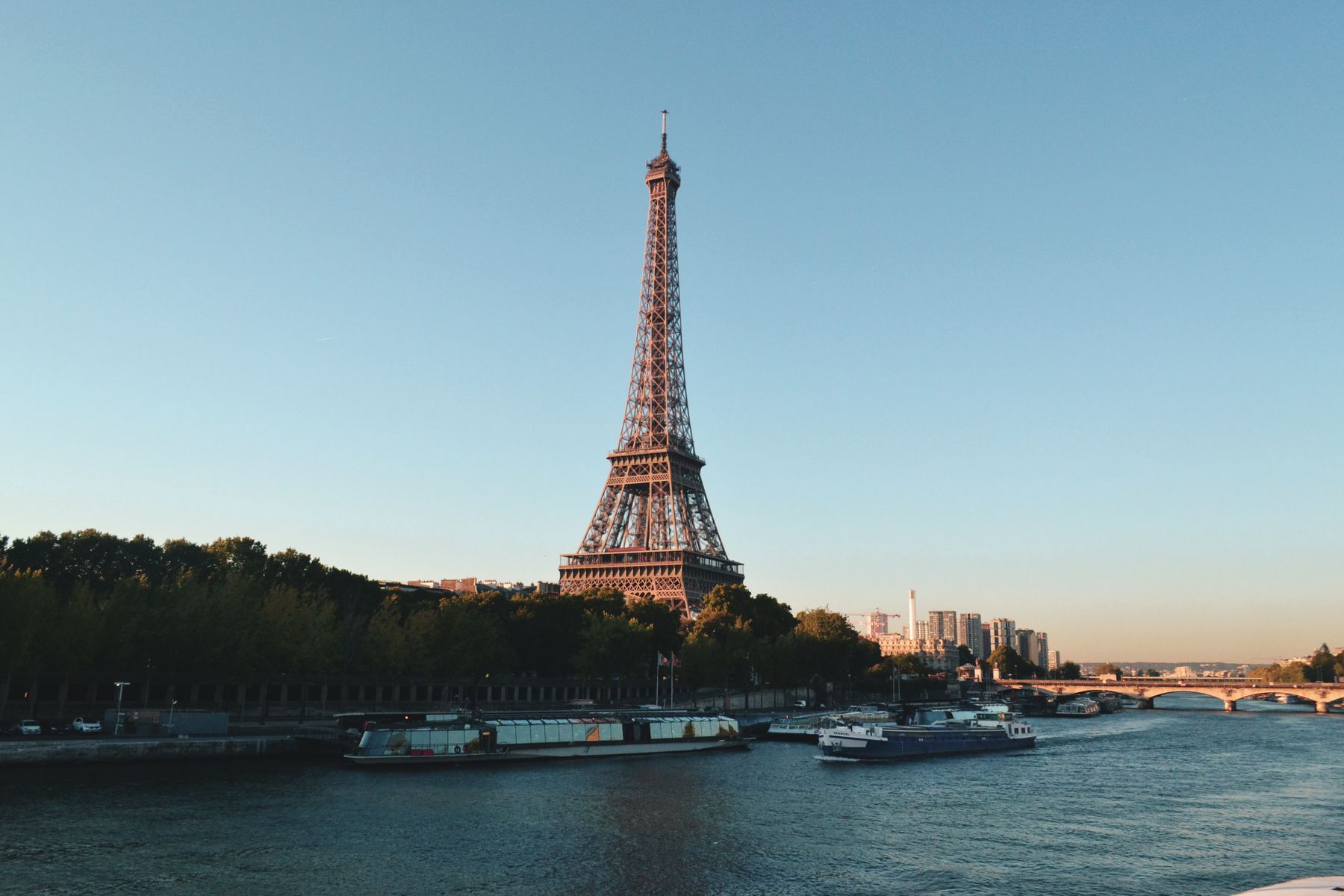
The Eiffel Tower and the Seine at sunset
France · Île-de-France

Paris

The most visited city on earth is still, underneath the queues, a city of neighbourhoods: a bakery on every corner, a bistro with a chalkboard, a river to walk along and a museum you did not plan to enter. This guide is about getting the big things right and leaving time for the small ones.

Photo via Pexels
Overview

Twenty arrondissements, one river, and a few rules

Paris is small for a capital, 105 square kilometres inside the ring road, coiled in twenty arrondissements that spiral out clockwise from the Louvre. The Seine cuts it in two: the Right Bank has the Louvre, the Opéra, the Marais and Montmartre; the Left Bank has the Latin Quarter, Saint-Germain, the Orsay and the Eiffel Tower. Almost everything a first visit wants sits within a 40-minute walk of Notre-Dame, and the Métro covers the rest in minutes.

The city has changed since the Olympics. Notre-Dame is open again and free. The Seine has three public bathing spots each summer. The Louvre now charges non-Europeans more and insists on a timed slot. The Centre Pompidou is shut until 2030, with its collection on show at the restored Grand Palais. Cocktail bars here now outrank London's, and the restaurant scene runs from a €20 three-course bouillon dinner to nine kitchens holding Michelin's top rating.

Four days covers the big museums, two neighbourhoods on foot and a proper dinner. Five adds Versailles or a day in the forest at Fontainebleau. A week lets you take the train to Reims for lunch in a champagne house and be back for a late bar in Pigalle.

Paris rooftops at night with the Eiffel Tower lit in the distance
The centreLouvre, Tuileries, Palais-Royal, Opéra, the Grands Boulevards and the Bourse de Commerce: the 1st, 2nd and 9th.
The islands and the MaraisNotre-Dame, Sainte-Chapelle, Place des Vosges, the Picasso museum, falafel and the oldest market in the city.
The Left BankLatin Quarter, Saint-Germain, Luxembourg gardens, the Orsay, the Eiffel Tower and the 14th's crêperies.
The hills and the eastMontmartre, Pigalle, Canal Saint-Martin, Belleville, Oberkampf and Père Lachaise: where the bars are.
Highlights

What to see first

Nine places and the 2026 rules for each. Book the Louvre, the Eiffel summit, Sainte-Chapelle and the Catacombs before you fly; reserve Notre-Dame on the free official app a day or two ahead.

The Louvre's glass pyramid at sunset
1st · Closed Tuesday

The Louvre

The largest museum in the world, 35,000 works on show and a Mona Lisa you will see over two hundred heads. Since January 2026 the ticket is €22 for European residents and €32 for everyone else, every ticket carries a timed slot, and the new dedicated Mona Lisa room and entrance are years away. Go on a Wednesday or Friday evening when it stays open to nine, enter from the Carrousel or Porte des Lions, pick two wings and leave the rest for another life. Under-18s free.

The Louvre in detail →
Notre-Dame cathedral seen from the Seine
Île de la Cité · Free

Notre-Dame

Reopened in December 2024 after the fire, with its stone scrubbed to a pale gold nobody alive had seen, new bronze furniture and a restored organ. Entry is free; reserve a timed slot on the cathedral's own app, released two or three days ahead with more each morning, and ignore anyone selling "skip-the-line" tickets to a free church. The towers reopened in September 2025: €16, around 420 steps, booked online only. Go for the 8am opening or an evening service.

Notre-Dame in detail →
The Eiffel Tower against a cloudy sky
7th · Book the summit

The Eiffel Tower

Stairs to the second floor cost €14.80 and are the best value in the city: 674 steps, no queue to speak of, and the structure overhead the whole way. The lift to the summit is €36.70 and sells out days or weeks ahead from April to October; stairs-plus-summit-lift is €28. Trocadéro at dawn and the Champ de Mars at the hourly night sparkle are the views; the tower itself is better from the Pont de Bir-Hakeim. Strikes close it a few days a year; check before you go.

The Eiffel Tower in detail →
A Seine bridge and moored boats in the evening
7th and 1st · Closed Mon / Tue

Musée d'Orsay and the Orangerie

The Orsay is the Impressionists in a 1900 railway station, from Manet's Olympia to Van Gogh's bedroom, with the great clock window over the Seine; closed Mondays, open late Thursdays. Across the river the Orangerie holds Monet's eight water-lily panels in two oval rooms built for them, closed Tuesdays. A combined ticket is €20, and a weekday morning at the Orangerie followed by the Orsay after lunch is the best art day in Paris.

Orsay and the Orangerie in detail →
Notre-Dame beside the Seine on the Île de la Cité
Île de la Cité · Timed slot

Sainte-Chapelle and the Conciergerie

Louis IX's 13th-century chapel is fifteen metres of stained glass on every side, 1,100 scenes in blue and red that turn the upper room into a lantern on a sunny morning. Since January 2026 it is €22 for non-Europeans and €16 for residents, with a combined Conciergerie ticket at €30 or €23; slots sell out, so book. The Conciergerie next door is the medieval hall and Marie-Antoinette's cell; the flower market and the Pont Neuf complete the island.

Sainte-Chapelle in detail →
The white façade and domes of Sacré-Cœur
18th · Go early

Montmartre and Sacré-Cœur

The village on the hill: the basilica is free and its dome, €8 cash and about 290 steps, has the widest view in the city. Below it Place du Tertre is a painters' theme park by eleven and a real square at eight, the Clos Montmartre vineyard sits on rue des Saules, and the streets behind, rue de l'Abreuvoir and the Lapin Agile, are the Montmartre of the postcards. Ignore the men with friendship bracelets and the girls with petitions on the steps; both are scams.

Montmartre in detail →
The gilded Bassin de Saturne fountain in the gardens of Versailles
Day trip · Closed Monday

Versailles

Forty minutes on the RER C to the palace of Louis XIV: the Hall of Mirrors, the royal apartments, the chapel and, beyond them, eight square kilometres of Le Nôtre's gardens, the Grand Canal and the two Trianons with Marie-Antoinette's hamlet. The Passport ticket covering everything is €25 in low season and €35 in high; the gardens are free except on fountain-show days. Arrive for the 9am opening or after 2pm, hire a bike or a golf cart for the park, and give it the whole day.

Versailles in detail →
The fountain and arcades of the Place des Vosges
3rd and 4th · Sunday afternoon

Le Marais

The aristocratic quarter the Revolution left behind, now the city's best walking neighbourhood: the Place des Vosges, oldest square in Paris, with Victor Hugo's house on the corner; the Picasso museum in the Hôtel Salé and the free Carnavalet museum of the city's history; the falafel line on rue des Rosiers; the Marché des Enfants Rouges, trading since 1615; and shops that open on Sunday when the rest of Paris does not. The Haut Marais, towards République, has the galleries and the cocktail bars.

Le Marais in detail →
Boats on the Seine with the Pont Alexandre III and the Grand Palais behind
8th and 1st · Art in 2026

The Grand Palais and the Bourse de Commerce

With the Pompidou closed for five years from September 2025, modern art has moved. The Grand Palais, reopened in 2025 after a four-year restoration, shows the Pompidou's big exhibitions under its glass nave, Cézanne through January 2027. The Bourse de Commerce, Tadao Ando's concrete cylinder inside the old grain exchange beside Les Halles, holds the Pinault collection for €15 and is closed Tuesdays. The Fondation Louis Vuitton in the Bois de Boulogne completes the trio.

The Grand Palais and Bourse in detail →

Also worth your time

10th

Canal Saint-Martin

Métro République or Jacques Bonsergent · any evening

Four and a half kilometres of 1825 canal with iron footbridges, nine locks and a quayside the whole east of Paris picnics on in summer. The Hôtel du Nord of the film, Le Verre Volé for a glass of wine, Point Éphémère for music, and the bridge where Amélie skimmed stones.

12th · Tue–Sun mornings

Marché d'Aligre

Place d'Aligre · closed Monday

The city's liveliest food market: a covered hall, a street of fruit stalls shouting prices, a small flea market on the square, and Le Baron Rouge round the corner pouring wine from barrels, with oysters on the pavement on Sunday mornings. The Table restaurant, Paris's recent entry near the top of the world rankings, is next door.

Day trip · April to October

Giverny

Train from Saint-Lazare to Vernon, 50 minutes, then shuttle or bike

Monet's house and the garden he painted for thirty years: the water-lily pond, the Japanese bridge, the flower beds planted by colour. Open from April to the start of November and busiest in May and June; go on the first train.

Day trips · Closed Tuesday

Fontainebleau and Chantilly

40 minutes from Gare de Lyon; 25 to 45 minutes from Gare du Nord

Fontainebleau is the château the kings actually lived in, Napoleon's farewell staircase included, with the forest at the door. Chantilly has the Condé's paintings, the finest collection in France after the Louvre, the Great Stables and the cream.

Walks & green days

Forest boulders, a railway in the sky and seven kilometres of quays

Paris is not hiking country, but it has a forest the size of a small département at the end of a 40-minute train, the park that invented the elevated greenway, and riverbanks you can walk car-free from one end of the centre to the other.

JFMAMJJASOND

Walking season: teal = the best months for the forest and the parks, green = fine but hot in July and August or short days in November, grey = winter, when Fontainebleau's sandstone is wet and slippery and the Seine quays flood.

A starry night sky over a grass field at Fontainebleau
Demanding

The 25 Bosses, Fontainebleau

Fontainebleau forest, 250 square kilometres of oak, pine and sandstone boulders an hour south of the city, is the birthplace of bouldering and the capital's hiking ground. The Circuit des 25 Bosses in the Trois Pignons massif strings together twenty-five rocky summits in a loop marked by the Friends of the Forest: 15 kilometres or so, more than 800 metres of cumulative climbing, scrambling on sandstone, sand underfoot and views over the whole forest from each top. Parisians call it their GR20.

15–17 kmloop
5–7 hwalking
800 m+cumulative ascent

Start from Noisy-sur-École or Le Vaudoué, which need a car or a taxi from Fontainebleau station. Without one, take the Transilien R from Gare de Lyon to Fontainebleau-Avon or Bois-le-Roi, 40 minutes, and walk the colour-coded boulder circuits at Cuvier, Apremont or Franchard instead. The rock is dangerous when wet.

Full route guide →
Gilded statues on the Pont Alexandre III
Easy

The Seine quays and the Coulée Verte

The two banks of the Seine are car-free for about seven kilometres through the centre, the Left Bank from the Orsay to the Pont de l'Alma, the Right Bank from the Bastille to the Tuileries, with floating gardens, bars in summer and every bridge in the city overhead. Join it to the Coulée Verte René-Dumont, the 4.5-kilometre planted railway viaduct from the Bastille to the Bois de Vincennes that New York copied for the High Line, and you have a morning's walk through the best of Paris at tree-top height.

7 kmof quays
4.5 kmCoulée Verte
Flatall the way

Start at the Pont de l'Alma, walk east along the Left Bank to the Orsay, cross to the Tuileries and continue along the Right Bank to the Bastille, then climb the stairs onto the viaduct. The craft workshops under its arches are the Viaduc des Arts.

Full route guide →
Aerial view of the formal gardens of Versailles
Moderate

The Versailles park and the Chevreuse valley

Versailles' park is 800 hectares and free to walk on most days: the Grand Canal, the Trianons and the hamlet, the woods beyond, with bikes for hire at the canal head. For something wilder, the RER B runs 45 minutes to Saint-Rémy-lès-Chevreuse at the edge of the Haute Vallée de Chevreuse regional park, where the GR11 climbs to the ruined Château de la Madeleine above Chevreuse and loops through forest to the abbey of Port-Royal or the château of Dampierre, 12 to 20 kilometres of real countryside within sight of the Paris suburbs.

10–20 kmdepending on the loop
3–5 hwalking
RER B / Cfrom the centre

Chevreuse has cafés at the start; carry water for the forest. On Monday the palace is shut but the park is open, which makes it the quietest day for the walk.

Full route guide →
19th · 1 h

Buttes-Chaumont

Métro Buttes-Chaumont or Botzaris

Haussmann's quarry turned into a romantic park of cliffs, a lake, a suspension bridge and a temple on a crag with Sacré-Cœur in the view. Rosa Bonheur, the guinguette inside, is the city's best open-air Sunday drink.

East and west · Half day

Bois de Vincennes and Bois de Boulogne

Métro Château de Vincennes; Porte Dauphine

The two great woods at either end of the city: Vincennes for the castle keep, the Parc Floral and rowing boats on Lac Daumesnil; Boulogne for the Fondation Louis Vuitton, the lakes and the Longchamp racecourse loop that cyclists use.

RER B · April

Parc de Sceaux

20 minutes from the centre

Le Nôtre's other park, 180 hectares of canals and lawns south of the city, with a cherry grove that turns pink for two weeks in April and fills with picnics. The quiet alternative to Versailles for a green afternoon.

Good food

Nine three-star kitchens, a €20 dinner and the best baguette in town

Paris has more restaurants holding Michelin's highest rating than any other city, and also the bouillon, where three courses cost less than a cocktail. We list only the very top of the first kind and the best of the second, plus the Bib Gourmands, Michelin's own picks for value.

A breakfast of baguette, croissant and cheese
Eat this

Bread, butter and the baguette prize

Every February the city judges its baguette; the 2026 Grand Prix went to Fournil Didot in the 14th, which now supplies the Élysée for a year. Order a "tradition", never a plain baguette, and a croissant au beurre. Jambon-beurre for lunch, a Paris-Brest or a tarte Tatin for the afternoon, and macarons only if someone else is paying.

Steak with French fries and a sauce on a plate
Eat this

The bistro classics

Œufs mayonnaise, soupe à l'oignon, escargots and a steak frites with béarnaise are not clichés in a good bistro; they are the test. Then confit de canard, blanquette de veau, bœuf bourguignon in winter, and the Friday couscous that every neighbourhood café serves. The chalkboard menu of the day is where the kitchen's heart is.

A board of cheese and charcuterie with glasses of wine
Eat this

Cheese, and where to buy it

A Paris fromagerie is a museum you can eat: Laurent Dubois in the 5th and 15th, Quatrehomme and Barthélémy in the 7th, Goncourt in the 11th. Ask for a plateau for the evening, buy a bottle at the caviste next door and eat it on the quays. In restaurants the cheese course comes before dessert and is worth the wait.

The very top tables

Paris holds nine three-star restaurants in the 2026 Michelin guide, and Plénitude, Arpège and Septime also stand in the world's top 100 in the 2026 ranking published this month. Tasting menus run from about €250 to €490 a head before wine; book one to three months ahead, lunch for the same kitchens at half the price.

Michelin ★★★World's 50 Best 2026 · No. 10

Plénitude

Cheval Blanc Paris, La Samaritaine, 1st · Arnaud Donckele

Sauce as the main event: Donckele's menus are built around broths, vinaigrettes and emulsions of absurd precision, served in a dining room above the Pont-Neuf. The only Paris table in this year's world top fifty.

€400–450 · $$$$
Michelin ★★★World's 50 Best 2026 · No. 67

Arpège

Rue de Varenne, 7th · Alain Passard

Passard's vegetable gardens outside Paris feed a kitchen that turned the three-star world towards plants decades before anyone else; the lunch menu is the sane way in.

€175 lunch, €490 dinner · $$$$
Michelin ★★★

Kei

Rue Coq-Héron, 1st · Kei Kobayashi

The first Japanese chef to hold three stars in France: French technique, Japanese restraint, a famous garden salad and a quiet room near Les Halles. Lunch is a comparative bargain.

€150 lunch, €330 dinner · $$$$
Michelin ★★★

Le Cinq

Four Seasons George V, 8th · Christian Le Squer

Grand hotel dining at its most classical, Breton seafood and a cellar of 50,000 bottles under gilded ceilings and a lot of flowers.

€350–450 · $$$$
Michelin ★★★

Épicure

Le Bristol, 8th · Arnaud Faye

The Bristol's garden dining room, now under Arnaud Faye, keeps the macaroni stuffed with truffle and foie gras that Éric Fréchon made famous and adds a lighter hand.

€400 · $$$$
Michelin ★★★

Pierre Gagnaire

Rue Balzac, 8th · Pierre Gagnaire

Forty years of the most inventive plates in France, each course arriving as a constellation of small dishes. Unpredictable by design and still thrilling.

€380–420 · $$$$
Michelin ★★★

Le Gabriel

La Réserve, 8th · Jérôme Banctel

Breton roots and Japanese seasonings in a small, hushed mansion dining room off the Champs-Élysées; the newest of the nine.

€360–420 · $$$$
Michelin ★★★

Alléno Paris au Pavillon Ledoyen

Carré des Champs-Élysées, 8th · Yannick Alléno

Alléno's "modern sauces", extracted and fermented, in a Second Empire pavilion in the gardens off the avenue; the building also holds his two-star sushi counter and a third restaurant.

€430 · $$$$
Michelin ★★★

Le Pré Catelan

Bois de Boulogne, 16th · Frédéric Anton

A Belle Époque pavilion in the woods, a terrace in summer and Anton's exact, generous cooking; the three-star with the most reasonable menu and the prettiest setting.

€250–330 · $$$$
World's 50 Best 2026 · No. 81

Septime

Rue de Charonne, 11th · Bertrand Grébaut

The restaurant that defined the Paris bistronomy generation: a short, seasonal, vegetable-led menu, natural wine, bare wood and a reservation that opens three weeks ahead and vanishes in minutes. Clamato next door, no bookings, is the seafood sibling.

€60 lunch, €135 dinner · $$$

Bib Gourmand: Michelin's value picks

The Bib Gourmand marks restaurants where a full meal costs around €45. These nine joined the Paris list in February 2026.

Bib Gourmand

Kodawari Ramen Yokochō

6th · ramen

A Tokyo alley rebuilt in Saint-Germain, with the city's most serious bowls of ramen and a queue to match.

Bib Gourmand

Adami

9th · fresh pasta

Hand-made pasta and a short Italian menu in SoPi; the agnolotti are the order.

Bib Gourmand

Le Coucou

9th · seasonal

A short menu that changes with the market, a neighbourhood room and a wine list chosen with care.

Bib Gourmand

Le Savarin

9th · bistro classics

The bistro repertoire done properly, terrine to tarte, at prices the 9th still allows.

Bib Gourmand

Épopée

11th · modern bistro

One of three new Bibs in the 11th, the arrondissement where young chefs open; sharp cooking in a plain room.

Bib Gourmand

Jip

11th · contemporary

A small kitchen with big ambitions near Oberkampf; the tasting menu at lunch is the value.

Bib Gourmand

Lissit

11th · seasonal

Market-driven plates and natural wine in the Charonne quarter, a few streets from Septime and a tenth of the wait.

Bib Gourmand

Le Cornichon

14th · bistro

A Montparnasse bistro with a proper menu of the day and the 14th's calm; combine with the crêperies on rue du Montparnasse.

Bib Gourmand

À L'Improviste

17th · bistro

Out in the Batignolles end of the 17th, a cook's bistro that improvises around what came in that morning.

Where locals eat

Institution · No bookings

Bouillon Chartier

Rue du Faubourg-Montmartre, 9th · 11.30am to midnight

A listed 1896 dining hall where waiters write your order on the tablecloth and three courses cost under €20: œuf mayo, steak frites, a crème caramel. Sister halls at Gare de l'Est and Montparnasse; Bouillon Pigalle and Bouillon Julien, in a 1906 Art Nouveau room, are the modern versions.

€15–25 · $
Marais

L'As du Fallafel

Rue des Rosiers, 4th · closed Saturday

The falafel sandwich the whole city queues for, stuffed with aubergine and cabbage and eaten walking; about €9 and a 15-minute line. Mi-Va-Mi opposite is the rival camp.

€9–15 · $
One dish

Le Relais de l'Entrecôte

Saint-Germain, 6th; also 8th and 17th · no bookings

No menu: walnut salad, then sliced entrecôte in the secret green-pepper sauce with frites, then a second helping. Around €30 and a queue at eight.

€30–40 · $$
The crêperie street

Rue du Montparnasse

14th · lunch and dinner

A whole street of Breton crêperies behind Montparnasse station: Crêperie Josselin and Ty Breiz for buckwheat galettes with ham, egg and cheese, a bowl of cider and a butter-sugar crêpe to finish.

€15–25 · $
Market lunch

Marché des Enfants Rouges

Rue de Bretagne, 3rd · Tue–Sun, closed Monday

The oldest covered market in Paris, since 1615, now a lunch hall: Moroccan tagines, Japanese bento, the Alain Miam Miam sandwich queue, oysters and a glass of white at the counter.

€12–25 · $
Classic bistros

Bistrot Paul Bert, Chez Georges and Le Baratin

11th; 2nd; 20th · book

Paul Bert for the thick steak and the Paris-Brest, Chez Georges for the 1960s room and the sole meunière, Le Baratin in Belleville for Raquel Carena's cooking and the best-priced serious wine list in the city.

€45–80 · $$$
Nightlife

The cocktail capital of Europe, and the bars behind the taquerias

In the 2026 world bar rankings Paris placed more bars in the top fifty than London for the first time. The scene lives in the 3rd, 10th and 11th, and in Pigalle, with the clubs out towards the ring road. The Métro stops around one in the week and later at weekends; the Noctilien buses run all night.

World's 50 Best Bars 2026

Cambridge Public House, Bar Nouveau, De Vie and Danico

3rd; 3rd; 11th; Galerie Vivienne, 2nd · evenings, book or arrive early

The four Paris bars in this year's world top thirty. Cambridge Public House, a sustainable pub with a serious drinks list in the Haut Marais; Bar Nouveau for new-wave classics in a tiny room nearby; De Vie, the newcomer in the 11th; and Danico, hidden behind the Daroco restaurant in the Galerie Vivienne arcade. Little Red Door, the bar that started the Paris cocktail boom, stands at 93 and is still worth the visit.

Hidden doors

Candelaria, Moonshiner, Bisou and Le Syndicat

3rd; 11th; 3rd; 10th

Candelaria is through the back of a taqueria, Moonshiner through the cold room of a pizzeria, Bisou has no menu and makes you a drink from three words, and Le Syndicat pours only French spirits behind a façade covered in torn posters. The Paris speakeasy generation, all still open and still good.

The bar streets

Oberkampf, SoPi and the canal

11th; 9th; 10th · until 2am

Rue Oberkampf and rue Jean-Pierre Timbaud for cheap beer, music and students; South Pigalle for the cocktail bars and Bouillon Pigalle; the Canal Saint-Martin quays for a bottle on the water and Point Éphémère's concerts. Belleville and Ménilmontant, with Aux Folies and the Perchoir rooftop, are where the night goes last.

Clubs

Rex Club, Badaboum, La Machine and the péniches

2nd; 11th; 18th; 13th quays · midnight to 6am

The Rex has played techno under the Grands Boulevards since 1988 and is still the serious room; Badaboum is the Bastille club with a concert hall attached; La Machine du Moulin Rouge does big nights under the windmill. On the 13th's quays the Petit Bain and its neighbouring barges run cheaper, looser parties on the water all summer.

The Art Nouveau entrance of the Anvers Métro station at night
Pigalle

Last Métro

Around one; two at weekends.

A lit Métro sign and street lamp at night
Everywhere

The sign

Follow it home or to the next bar.

The exterior of a Paris bistro with its terrace
Any corner

The terrace

Where the evening actually starts.

Wine

Barrels in the 12th, a vineyard in Montmartre and lunch in Reims

Paris grows almost no wine and drinks all of it. Its wine bars pour the whole country by the glass, its cavistes will open anything you buy, and the vineyards of Champagne are 46 minutes away by train.

Cheese, bread and glasses of wine on a wooden board

What to drink here

The Paris wine bar is a natural-wine bar now: Loire Chenin and Cabernet Franc, Beaujolais from the crus, Jura Savagnin, Alsace Riesling and the cheaper ends of Burgundy, poured by the glass with a plate of charcuterie. Le Baron Rouge beside the Aligre market fills jugs from barrels and shucks oysters on the pavement on Sunday mornings; Le Verre Volé on the canal, Septime La Cave and La Buvette in the 11th, Aux Deux Amis on Oberkampf and Frenchie Bar à Vins on rue du Nil are the standing-room classics. For the old school, Willi's Wine Bar near the Palais-Royal since 1980 and Les Caves Legrand in the Galerie Vivienne, trading since 1880.

Montmartre has the city's own vineyard, the Clos Montmartre on rue des Saules, a few hundred vines whose 1,500 bottles are auctioned each year for the arrondissement's charities. The harvest festival, five days of parades and tastings in the second week of October, is the one weekend the hill belongs to its residents.

Day trip · TGV 46 min

Reims and the chalk cellars

Gare de l'Est to Reims; book the houses ahead

The great champagne houses dug their cellars into Roman chalk pits under the city, now UNESCO-listed. Pommery's cathedral-sized crayères and Mumm's cellars take walk-in bookings from about €30 to €70 with tastings; Taittinger, Ruinart and Veuve Clicquot need reserving further ahead. Add the cathedral where the kings were crowned and lunch in a brasserie, and you are back in Paris for dinner.

Épernay · Avenue de Champagne

Moët, Perrier-Jouët and the small growers

Train from Paris-Est about 1 h 15, or 25 min from Reims

Épernay's single avenue holds more champagne under its pavements than anywhere on earth, with Moët & Chandon's tours at the top of it. The villages around, Hautvillers where Dom Pérignon worked, Aÿ and Cramant, have grower-producers who pour in their kitchens for a fraction of the price.

Longer days

Chablis and Burgundy

TGV to Dijon 1 h 35; Beaune 2 h 10

Possible as a long day, better overnight: Beaune for the Hospices and the négociant cellars, the Route des Grands Crus by bike from Dijon, or Chablis via Auxerre for the steely whites. Paris cavistes will sell you the same bottles, but not the view.

Practical notes

Before you go

Getting there

From Charles de Gaulle the RER B reaches Gare du Nord in about 35 minutes on a €14 airport ticket; the Roissybus goes to Opéra. The direct CDG Express to Gare de l'Est opens in March 2027. From Orly, Métro line 14 runs to Châtelet in 25 minutes since 2024. Beauvais, used by the budget airlines, is 75 minutes by shuttle bus. Eurostar arrives at Gare du Nord; the TGV network makes Reims, Lille, Dijon and Lyon day-trip distance.

Getting around

A single Métro or RER ticket is €2.55 in 2026, a bus or tram €2.05, loaded onto a €2 Navigo Easy card or your phone through the Île-de-France Mobilités app; the Navigo Jour day pass is €12.30 and the Monday-to-Sunday weekly pass €32.40 includes the airports and Versailles. Vélib' bikes cost €3 a ride or €5 to €10 a day. Walk whenever the distance is under two kilometres; it almost always is.

Opening days

  • Closed Tuesday: Louvre, Orangerie, Fondation Louis Vuitton, Bourse de Commerce, Fontainebleau château.
  • Closed Monday: Orsay, Versailles, Picasso, Catacombs, Rodin, Carnavalet.
  • Restaurants: many close Sunday and Monday and for two or three weeks in August; bouillons open every day.
  • Book ahead: Louvre slots, Eiffel summit, Sainte-Chapelle, Catacombs (reopened April 2026, €31), Borghese-style timed entries at Orsay in season.

Seasons

  • Apr–Jun: the best months, long light evenings, terraces full, Sceaux cherry blossom in April.
  • Jul–Aug: hot, Parisians away, Paris Plages on the quays and free Seine bathing at Bercy, Grenelle and the Bras Marie from early July to the end of August.
  • Sep–Oct: rentrée energy, the Montmartre harvest festival, fashion weeks and full restaurants.
  • Nov–Mar: short days, empty museums, Christmas windows on the boulevards and the cheapest beds.

Money and scams

Euros, cards everywhere including the bakery. Service is included by law in every bill; round up or leave a euro or two in a bistro, more only for exceptional fine dining. Paris leads the world for pickpocketing complaints: the friendship-bracelet gangs at Sacré-Cœur, the petition clipboards outside the Louvre, the shell game on the Pont des Arts and unmarked taxis at the airports are the classics. Keep phones off café tables on the terrace side and watch line 1 and the RER B.

Where to stay

The Marais for the centre and the nightlife on foot; Saint-Germain for the classic Left Bank at a price; the Latin Quarter for value and students; South Pigalle and the 9th for bars and good hotels at fair rates; the Canal Saint-Martin and the 11th for the restaurant scene; Montmartre for a village with stairs. Avoid the blocks immediately around Gare du Nord and Barbès for a first visit.

Photography

Photo credits

Photographs on this page are by independent photographers published on Pexels under the free Pexels licence. Click a title to open the original.

Powered by Webloyt | Report abuse