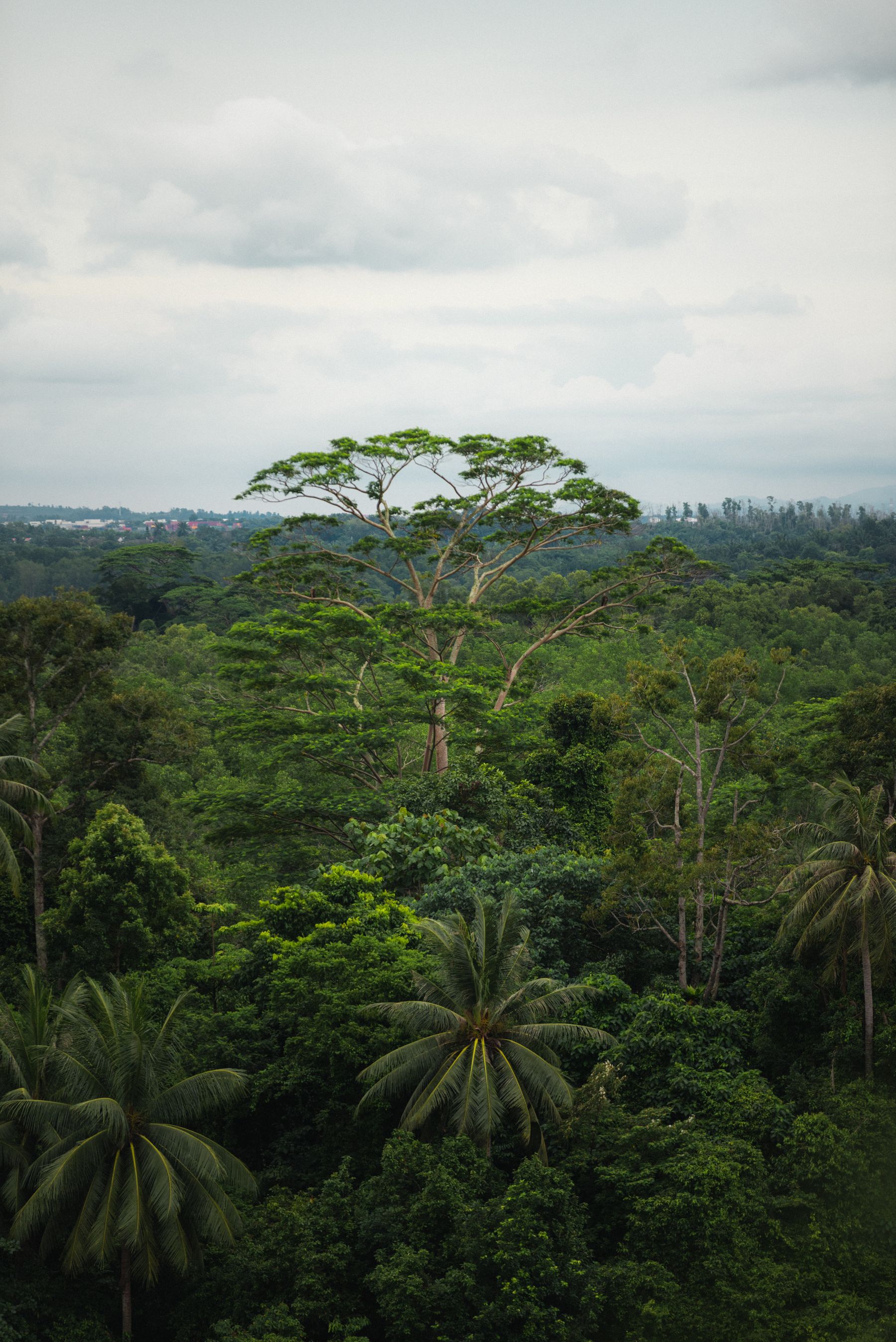
Aerial view of unbroken tropical jungle canopy
Guatemala · Petén

Flores

A pastel island town on a warm lake, the last Maya kingdom to fall to Spain, and the base for Tikal: temples rising out of a forest that roars with howler monkeys at dawn, an hour up the road.

Photo via Pexels
Overview

An island of 3,000 people and a forest of 3,000 temples

Flores is a near-circular island five hundred metres across in Lake Petén Itzá, joined by a causeway to the working town of Santa Elena, where the airport, the bus terminal and the cash machines are. The island is twenty minutes' stroll end to end: cobbled lanes climbing to a white cathedral on the hilltop, red roofs, bougainvillea, tuk-tuks squeezing past, and a lakefront ring road whose pavement is half under water because the lake has been rising for years. It stands on Nojpetén, capital of the Itzá Maya, which the Spanish took only in 1697, a century and a half after the rest of the country.

Nobody comes for the island alone. Sixty-five kilometres north-east, Tikal is the greatest of the Classic Maya cities, 575 square kilometres of national park and World Heritage forest with temples 60 metres tall standing out of the canopy; Yaxhá, quieter and lagoon-side, has the best sunset in Petén; Uaxactún has the first astronomical observatory; and five days' walk through the jungle, El Mirador has the biggest pyramid by volume on earth. Around the lake itself are swimming docks, a rope swing, a wildlife rescue centre, hanging bridges and a cave.

Three days covers the island, Tikal and Yaxhá at sunset. Four adds El Remate's forest reserve and a swim, or the caves and the bridges. The El Mirador trek is a trip of its own, and only from February to April.

Aerial view of a lake with small boats
The islandFlores: the cathedral hill, Calle Sur's sunset bars, Los Amigos, boats from the north shore.
Across the waterSan Miguel and the Tayasal viewpoint, Jorge's rope swing, Chechenal beach, ARCAS and the Petencito peninsula.
North-eastEl Remate and Cerro Cahuí at 30 km, Tikal at 65, Uaxactún 24 km beyond Tikal on a dirt track.
East and northYaxhá at 70 km towards Belize; Carmelita and the El Mirador trail three hours north; Laguna del Tigre's macaws.
Highlights

What to see first

Nine places, from the temples to the rope swing. Buy Tikal's sunrise ticket the day before; everything else can be decided over breakfast.

The Temple of the Great Jaguar at Tikal rising above the jungle
UNESCO · 65 km · Q150

Tikal

The Classic Maya capital at its peak around AD 700, with perhaps 60,000 people and some 3,000 mapped structures. Temple I, the Great Jaguar, faces Temple II across the Gran Plaza; Temple IV, at around 65 metres the tallest standing Maya building, gives the view of three roof-combs above the canopy that stood in for a rebel moon in Star Wars; Mundo Perdido has the oldest pyramid. Open six to six, Q150 for foreigners with passport, sunrise or sunset entry Q100 more; a full loop is ten kilometres and six hours, and the groups of howler monkeys, coatis and ocellated turkeys are part of the ticket. Details in the walks and wildlife sections.

Tikal in detail →
A river flowing through tropical forest
70 km · Sunset · Q80

Yaxhá

Guatemala's third-largest Maya city on a lagoon full of crocodiles, with nine plazas, twin-pyramid complexes, causeways and a few dozen visitors a day. Everyone climbs Temple 216 on the East Acropolis for the sun dropping over Laguna Yaxhá and the forest, allowed on the ordinary Q80 ticket; sunset tours leave Flores around noon, US$15 to US$35 plus entry, and come back by eight. Topoxté, a Postclassic island site in the lagoon, is a boat ride on request. Do not swim.

Yaxhá in detail →
An island with boats and a dock seen from above
The town · Free

Flores island and the malecón

Climb to the Parque Central and the white cathedral of Nuestra Señora de los Remedios on the site of the Itzá temples, then wander: Calle Centroamérica, Calle 30 de Junio, ochre and pink houses, red tiles, boatmen calling from the north shore. At dusk the whole western lakefront becomes a bar, chairs set out on the half-flooded pavement with a Gallo while the sun goes down behind San Miguel and the local kids jump off the piers. The circuit takes twenty minutes; the sunset takes an hour.

Flores island in detail →
A wooden dock reaching into the water at sunset
30 km · Swim and walk

El Remate and Cerro Cahuí

A one-street village at the east end of the lake on the Tikal road, with the clearest water and the best wooden docks for swimming, lodges from a dorm to Coppola's La Lancha, and the Biotopo Cerro Cahuí two kilometres along the north shore: 650 hectares of forest with two loop trails to viewpoints 150 metres above the lake, howler and spider monkeys, ocellated turkeys and toucans at seven in the morning, Q40. Thirty-five minutes to Tikal makes it the better base for a dawn visit.

Cerro Cahuí in detail →
A man with a backpack walking through forest
5 days · February to April

The El Mirador trek

Forty kilometres each way through the Maya Biosphere Reserve from the village of Carmelita to the Preclassic city of El Mirador, where La Danta rises 72 metres from a platform the size of several football fields and is by volume one of the largest pyramids ever built. Five days and four nights with the community cooperative's guides, cooks and mules for about US$370 all in, more through Flores agencies; mud, ticks, heat and purified pond water in exchange for a city a thousand years older than Tikal with almost nobody in it. Helicopter day trips exist for around US$600. Details in the walks section.

The El Mirador trek in detail →
People walking a trail through forest
24 km beyond Tikal · Q50

Uaxactún

An hour north of Tikal on a dirt track through the park, Uaxactún is where the Carnegie archaeologists of the 1920s first recognised the E-Group: three small temples aligned so that, from the pyramid opposite, the sun rises over each at the solstices and equinoxes. The modern village of chicle tappers and palm cutters lives on the old airstrip between the ruin groups, with a couple of comedores and basic posadas. Pay the Q50 at the Tikal gate, tell the checkpoint, and be back through it before dark.

Uaxactún in detail →
Aerial view of a muddy river winding through rainforest
9 km south · Half a day

Ixpanpajul's hanging bridges

A private forest park fifteen minutes from Santa Elena on the Guatemala City road, with a two-hour Skyway loop over six hanging bridges each more than a hundred metres long and a lookout over the whole lake basin, and an eight-platform zip-line through the canopy. US$25 for the bridges and US$30 for the canopy at the gate, far less than the online resellers charge; horse riding and night walks too. The hot-afternoon alternative to another ruin.

A small boat on the shore at sunset
Across the water · Lancha

San Miguel, the Tayasal lookout and Jorge's rope swing

Five minutes by shared boat from the island's north shore, San Miguel village has a signed trail through the unexcavated mounds of Tayasal to the Mirador del Rey Canek, a wooden tower with the best view of Flores sitting in its lake. Round the peninsula, Jorge's rope swing is a family-run deck with a swing off a tall tree into deep clear water, hammocks and cold beer for Q20 to Q25; share a boat at Q30 each way. The Playa El Chechenal public beach is the quieter swim nearby.

The Tayasal walk in detail →
A spider monkey eating fruit among jungle leaves
North shore · By arrangement

ARCAS wildlife rescue centre

The rescue hospital across the water from Flores takes in parrots, macaws, monkeys and kinkajous seized from the pet trade and rehabilitates them for release. The hospital itself is closed to casual visitors, but the education centre and the enclosures of animals that cannot be released can be seen for a small donation, better with a reservation; volunteers stay a week or more. The honest alternative to the old-fashioned Petencito zoo on the same peninsula, which we would skip.

Also worth your time

4 km south · Q25–35

Grutas de Actun Kan

Tuk-tuk from the island · 8am–5pm

A limestone cave with a lit forty-five-minute loop or a two-hour guided route through narrow, muddy passages that exits by a second cave. Bring a head torch; expect to crawl. Filler for a hot afternoon rather than a reason to come to Petén.

2 h by dirt road · 2–3 days

Laguna del Tigre and the Las Guacamayas station

Paso Caballos, then boat on the Río San Pedro

A research station with simple rooms on a river in the biosphere reserve, scarlet macaw nesting platforms at their best in February and March, night crocodile spotting, three hundred bird species and boat trips to the ruins of El Perú-Waka'. Heavy mosquitoes, no crowds.

Lake · Any afternoon

Swimming in Petén Itzá

El Remate docks; Chechenal; the north-shore beaches; the island's north piers

The lake is 26 to 30°C all year, clearest at El Remate and the north shore. Crocodiles live in it and attacks are unheard of; swim by day, away from reeds, and skip the water near the causeway.

Santa Elena

The market and the mesitas

Across the causeway · mornings and evenings

Santa Elena's municipal market for a Q30 almuerzo and the cheapest fruit in Guatemala; at night the mesitas grill stands along the main street. Functional, not pretty, and where Petén actually eats.

Walks & nature

Flat forest, big causeways and one serious jungle trek

Petén is flat and hot, so the walking is through forest rather than up it: Tikal's ten-kilometre loop of causeways, the Cerro Cahuí lookouts, and the five-day walk to El Mirador.

JFMAMJJASOND

Walking season: teal = the dry months with firm trails and cooler mornings; green = hot and hazy in April, or the tail of the rains in November; grey = the wet season, when Tikal is fine with a poncho but the Mirador trail is knee-deep mud.

Temple I at Tikal surrounded by trees
Moderate · Heat

The Tikal loop

From the gate the causeway runs twenty minutes to the Gran Plaza; from there a loop takes in Temple V, the Lost World's pyramid, Temple IV's wooden stairs to the canopy view, the twin pyramids of Complex Q and, for the committed, Temple VI a kilometre out on its own. Shaded, flat and ten kilometres with the detours, six or seven hours with a guide for the first three and the rest at your own pace; bikes hired at the entrance halve it. The groups are fifteen to thirty minutes apart and the forest between them is where the animals are.

10–12 kmfull loop
6–7 hwith stops
Flatplus temple stairs

Start at six, carry two litres of water, and eat at the comedores by the gate. Climbing is allowed on Temples II, IV and V and the Lost World pyramid, not on Temple I. Sunrise from Temple IV is a gamble from December to March, when fog usually hides everything but the howlers' roar; sunset is clearer and emptier.

Full route guide →
A forest stream running between mossy banks
Easy to moderate

Cerro Cahuí and the Tayasal lookout

At El Remate the Biotopo Cerro Cahuí's two loops climb from the ranger hut: Los Escobos, about three kilometres and an hour and a half, and Los Ujuxtes, six kilometres and up to three hours, both reaching lookouts 150 metres above the lake with the whole eastern basin and Flores in the distance. Go at seven for the monkeys and swim at the dock by the entrance afterwards. Across from Flores, the twenty-five-minute climb from San Miguel through the Tayasal mounds to the Rey Canek tower is the island's best portrait.

3–6 kmCahuí loops; 1.5 km Tayasal
1.5–3 hwalking
150 mof ascent

Q40 for the biotopo, free at Tayasal. Mosquito repellent for both, and a hat; the lookouts are in full sun by ten.

Full route guide →
A trekker on a narrow path through thick jungle
Demanding · 5 days

The El Mirador trek

Three hours by road north of Flores the tarmac ends at Carmelita, and the trail to El Mirador begins: 17 kilometres to the camp at El Tintal on the first day, 23 to El Mirador on the second, a full day at the site, and two days back, five to seven hours of walking a day on flat but root-laced, muddy forest paths while mules carry the gear. At the end, La Danta, the El Tigre pyramid and a Preclassic city that peaked three centuries before Christ, revealed by lidar in 2018 to be linked by causeways to dozens more. The community cooperative in Carmelita holds the concession and runs the treks with guide, cook, mules, tents and food for around US$370 a person; Flores agencies resell them for US$400 to US$500.

Full route guide →
80 kmreturn
5 days / 4 nightsstandard
Feb–Aprthe only comfortable months

Ticks, mosquitoes and 35°C; drinking water is purified from the aguadas. A riding mule costs extra and is worth it on the way back. Helicopter seats from Flores, when a charter has spare places, let you walk in and fly out.

Wildlife

Howlers at dawn, coatis in the plaza, crocodiles in the lagoon

Hunting has been banned in Tikal for decades and the animals have lost their fear: coatis cross the Gran Plaza in troops, ocellated turkeys strut by the gate, spider monkeys swing over Temple IV and the howlers roar from two kilometres away at first light. Four hundred bird species have been recorded in the park.

Howler and spider monkeys

Tikal's causeways; Cerro Cahuí · dawn and late afternoon, all year

Yucatán black howlers are heard before they are seen, a roar like a jet engine that carries across the forest at dawn and before rain; look up along the causeways for black shapes in the high branches. Geoffroy's spider monkeys travel in loose troops round the Lost World and Temple IV, swinging by their tails. Midday is silent; six to nine in the morning and four to six in the afternoon are the hours.

JFMAMJJASOND

Coatis, agoutis and ocellated turkeys

Tikal's Gran Plaza, car park and entrance · all year

White-nosed coatis forage in gangs of twenty across the plazas with their tails straight up; agoutis, big rodents on dainty legs, graze the lawns; and the ocellated turkey, an iridescent bronze-and-blue bird found only in the Yucatán and Petén, parades round the entrance as if it owned it. Grey foxes come out at dusk and tarantulas cross the paths on the sunset walks.

JFMAMJJASOND

Toucans, parrots and the orange-breasted falcon

Any temple top at Tikal · best November to April

Keel-billed toucans and collared aracaris cross the canopy below you from the top of Temple IV, red-lored and white-fronted parrots scream past in pairs, Montezuma oropendolas gurgle from their hanging nests and crested guans crash about in the trees. Tikal is one of the best places on earth to see the orange-breasted falcon, which nests on the upper temples. The scarlet macaws are further north, at the Las Guacamayas station from November to April.

JFMAMJJASOND

Crocodiles and the lake's fish

Laguna Yaxhá; Lake Petén Itzá · dusk

Morelet's crocodiles, some over three metres, fill the lagoon at Yaxhá and show their eyes at dusk from the shore and on the night boat trips; a smaller population lives in Petén Itzá and leaves swimmers alone. The lake's endemic pescado blanco, a big white cichlid, is on every menu; snail kites, kingfishers, jacanas and herons work El Remate's shore. Jaguars, pumas and tapirs are present and almost never seen; the camera traps know.

JFMAMJJASOND
Two monkeys sitting together on a branch
Temple IV

Spider monkeys

Hanging by their tails over the Lost World.

A crocodile lying in the sun
Yaxhá

Crocodiles

Eyes on the lagoon at dusk. Stay on the bank.

A toucan on a branch
The canopy

Toucans

Below you, for once, from the temple tops.

Good food

White fish from the lake, bollos in banana leaves and tostadas on the plaza

Petén has Guatemala's cheapest food and its own dishes: the lake's endemic white fish, banana-leaf bollos that owe something to Belize, pit-roasted meat and a plaza full of tostada stalls every evening. Flores has a handful of good terraces and no serious restaurant; that is not what you came for.

A whole steamed fish with chillies and lime
Eat this

Pescado blanco

Petenia splendida, the big white cichlid found only in this lake and the Río La Pasión, grilled or fried whole with lime, chaya greens or a habanero salsa, on the lakefront terraces at sunset. Most menus fry tilapia and dorado under the same name; ask. Caldo de gallina, hen broth, is the market lunch, and the Sunday tamales colorados come wrapped in banana leaf.

A bowl of stew with a tortilla on the side
Eat this

Bollos, pibil and chaya

Bollos are Petén's tamal, corn dough with pork or chicken steamed in banana leaf, with palm-heart versions in the Mopán villages; pib'il b'äk' is meat pit-roasted in the Yucatán way; chaya, the Maya spinach, goes into eggs and green drinks. Honey from the forest, fried plantain with everything, and nance and cashew-fruit preserves for the sweet tooth.

A tray of small tortillas with toppings
Eat this

Tostadas on the plaza

Every evening the stalls on Flores's Parque Central and in Santa Elena's park sell tostadas, crisp tortillas piled with guacamole, beans, salsa and crumbled cheese, for Q5 to Q10 each, and elotes and atol alongside. The mesitas grill tables on Santa Elena's main street are the late version. Dinner for Q30, standing up, with the cathedral lit behind you.

Where to eat

The nice dinner

Raíces Bar & Grill

South-west lakefront, Flores · dinner

Tables on the water, big grills, whole pescado blanco and dorado, steaks and the best sunset seats on the island. The one reservation worth making.

Q100–180 · $$$
Italian terrace

Terrazzo

Calle Unión, upstairs · dinner

Home-made pasta, pizzas and the best wine list in Petén on a first-floor terrace over the rooftops; the second night.

Q70–150 · $$
Lake terrace

Maracuyá

West lakefront, Flores · breakfast to dinner

The prettiest terrace on the island, smoothie bowls and waffles in the morning, pad thai and fish at night, vegetarian-friendly and occasionally inconsistent, forgiven for the view.

Q50–120 · $$
Local lunch

Café Yaxhá and San Telmo

Avenida 15 de Septiembre; the island

Café Yaxhá for comida típica and a Q35 set lunch in a room full of photographs of the sites, run with an archaeology-tour outfit; San Telmo for the most colourful room on the island and mains from Q35.

Q35–80 · $
Breakfast and backpackers

Cool Beans and Los Amigos

Calle 15 de Septiembre; Calle Central

Cool Beans, also called El Café Chilero, for breakfast under Q40 in a garden on the lake with proper coffee; Los Amigos hostel's jungle courtyard for the huge vegetarian-leaning menu that feeds half the island's travellers, open to all.

Q30–70 · $
El Remate

Mon Ami and Las Orquídeas

El Remate lakefront and the Tikal road

Mon Ami's French-Guatemalan kitchen on a lake terrace and Las Orquídeas' Italian-leaning eco-lodge restaurant with the best view in the village; the fried-fish comedores on the main street for Q40 to Q50 plates.

Q40–120 · $$
Evenings

Sunset on the sunken pavement, then an early night for Tikal

Flores does not have nightlife so much as a long sunset. The bars put chairs out on the flooded western lakefront from half past five, the hostel courtyard runs until midnight, and the three o'clock Tikal shuttle makes everyone sensible.

5.30–8pm

Calle Sur at sunset

Western lakefront · beers Q15–20

The west side of the island faces the sunset and San Miguel across the water, and every bar and restaurant along it, Raíces and Maracuyá included, sets out chairs on the half-submerged pavement. A Gallo, the kids jumping off the piers, the sky doing its thing: the evening.

Until midnight

Los Amigos and El Trópico

Calle Central; the south shore

Los Amigos is the backpacker hub, a jungle courtyard with happy hour, acoustic sets and quiz nights, busiest from eight to eleven. El Trópico is the long-running local bar on the south shore, tacos and cheap beer and older Guatemalan regulars who have seen every traveller come and go.

Weekends

The lakefront bars and the Santa Elena discos

Calle Sur; across the causeway

AAdictos and its neighbours on the lakefront do sport on the screens and Q35 to Q50 cocktails and fill at weekends; the discos are in Santa Elena, local and loud on Friday and Saturday. Most of the island is closed by midnight and nothing runs past one.

The alternative

A night in the park

Jungle Lodge, Tikal Inn, Jaguar Inn or the campsite at Tikal

Sleep by the gate and the evening is the forest itself: generator power for a few hours, average food and then the howlers, the fireflies and a walk into the ruins at six with nobody there. Book ahead from December to April.

Assorted cocktails on a bar at sunset
Calle Sur

Sunset hour

Chairs on the flooded pavement.

A row of cocktails lined up on a wooden bar
Los Amigos

Happy hour

Then the quiz, then bed.

Small boats on a still lake
The lake

Last boats

Back from San Miguel before dark.

Practical notes

Before you go

Getting there

Mundo Maya airport in Santa Elena is an hour's flight from Guatemala City with TAG and Avianca, US$80 to US$120 one way and often late, and two kilometres from the island by tuk-tuk. The overnight bus from the capital takes eight to nine hours: Fuente del Norte from about Q260, Línea Dorada's reclining Lujo class Q350 to Q700, both leaving between nine and ten in the evening and arriving at dawn in Santa Elena; bring a sweater for the air-conditioning. Belize is two hours east by colectivo to the Melchor de Mencos border, with tourist shuttles to San Ignacio and Belize City leaving at six.

Getting around

Tuk-tuks cost Q5 to Q10 on the island and to Santa Elena, Q15 to Q25 to the airport. Boatmen on the north and east shores run shared lanchas to San Miguel for a few quetzales and private trips to the rope swing, ARCAS and round the lake at Q100 to Q150 an hour; bargain. Shuttles to Tikal leave hotels at three, half past four, six and eight for Q80 to Q100 return and take an hour; colectivos from the Santa Elena terminal are Q50 and less frequent, last one back around five. El Remate is Q20 to Q25 by colectivo.

Seasons

  • Late Nov–Feb: the sweet spot, 26–30°C days, cool nights, misty dawns at Tikal; Christmas and Easter are peak.
  • Feb–Apr: driest, the only months for El Mirador; March to May the hottest at 35–38°C with smoke from field burning.
  • Jun–Nov: afternoon downpours, lush forest, mud, few visitors; September and October wettest.
  • The lake is 26–30°C all year.

Heat, bugs and tickets

Start Tikal at six, carry two litres of water a person, wear a hat. Mosquitoes bite at the lake at dusk and at Yaxhá's sunset; ticks live on the Mirador trail; dengue circulates in the rains and malaria is a remote-area question only. Tikal tickets are sold online and at Banrural; foreigners need a passport and pay Q150, with Q100 added for the sunrise or sunset windows, bought the day before. Yaxhá is cash only at the gate.

Money and safety

Quetzales; cards at the better hotels and restaurants, cash for everything else, and ATMs on the island are few and empty at weekends, so use the machines in Santa Elena. Tip ten per cent. The island is among the safest places in Guatemala; Santa Elena after dark asks for ordinary care, the causeway at two in the morning for more. In the ruins stay on the marked paths and do not walk out to Temple VI alone at dusk.

Where to stay

The island for atmosphere, restaurants, sunset and tour pick-ups: Los Amigos for dorms, Hotel Isla de Flores for the rooftop pool, Casazul, Casona de la Isla and Santana on the lakefront, smaller B&Bs in the lanes; expect weekend noise and shuttle doors at three. El Remate for swimming, birds and a shorter run to Tikal. Inside the park for dawn in the ruins. Santa Elena only for an early flight.

Photography

Photo credits

Photographs on this page are by independent photographers published on Pexels under the free Pexels licence. Click a title to open the original.

Powered by Webloyt | Report abuse