Aerial view of Queenstown at twilight with Lake Wakatipu and the Remarkables behind
New Zealand · Otago

Queenstown

A small town on a long lake under a range called the Remarkables, where the hikes start at the top of the gondola, the fiords are a day away, and the wine grows at the southern edge of where wine can grow.

Photo: Ken Cheung via Pexels
Overview

The adventure capital, and what is around it

Queenstown sits at 310 metres on a bay of Lake Wakatipu, an 80-kilometre lightning bolt of glacial water with the 2,300-metre wall of the Remarkables rising straight from the far shore. The town itself is a few streets of bars, outfitters and restaurants around a lakefront where the 1912 steamship still runs. It invented commercial bungy jumping in 1988 and has been selling adrenaline ever since: jet boats, canyon swings, paragliders, skydives, four ski fields within an hour.

The quieter case for the place is the country around it. Glenorchy and the head of the lake, where the Routeburn Track begins. Arrowtown's gold-rush cottages and autumn trees. Wanaka over the Crown Range. The vineyards of Gibbston and Bannockburn, the southernmost serious wine region in the world. And Fiordland: Milford Sound is a long day trip, Doubtful Sound a longer one, and both are the reason the South Island is on every list.

Four days covers the town, a big hike, a wine afternoon and Milford. A week adds the Routeburn, Wanaka and a second mountain.

The Queenstown waterfront with mountains behind
Town and lakefrontSteamer Wharf, the gardens, Shotover Street's outfitters, the gondola up Bob's Peak and the bars of Searle Lane.
The Wakatipu basinArrowtown, Lake Hayes, Gibbston's vineyards, the Kawarau bridge and the Shotover canyon, all within 30 minutes.
Glenorchy and the head of the lake45 minutes north: the Routeburn, the Dart valley, Paradise and the film locations.
Further outWanaka and Roys Peak over the Crown Range; Cromwell and Bannockburn for wine; Milford Sound four hours south-west.
Highlights

What to see first

Nine places. Everything in the basin is a short drive or bus ride; Milford and Wanaka want a full day each.

Aerial view of Queenstown on its bay of Lake Wakatipu
The view

Skyline gondola and Bob's Peak

The gondola climbs 450 metres from the edge of town to a terrace with the whole lake, the Remarkables and Cecil and Walter Peaks in one frame. Luge tracks, a restaurant, paragliders launching off the top and, behind it, the Ben Lomond track. Go up in the late afternoon and come down after dark, or walk up the Tiki Trail in an hour and save the ticket.

Bob's Peak & Ben Lomond in detail →
A cruise boat on Milford Sound under the fiord's peaks
Fiordland · Day trip

Milford Sound

Four hours' drive each way through Te Anau and the Homer Tunnel to a fiord of 1,200-metre walls, Mitre Peak and waterfalls that multiply by the hundred when it rains, which it does seven metres a year. The 90-minute cruise runs to the Tasman and back under Stirling Falls; kayaks and the underwater observatory add to it. Coach-cruise-coach is a 13-hour day; a fly-cruise-fly is 4 hours and the flight over the Southern Alps is the best part.

Milford Sound in detail →
A woman in a yellow jacket on a jetty with foggy hills behind
Head of the lake

Glenorchy and Paradise

The 45-minute drive along the western shore to Glenorchy is one of the great roads of the country, ending at a red shed, a jetty and a village of 400 beneath the Humboldt mountains. Beyond it the gravel runs to Paradise, the Dart river and the Routeburn trailhead, through valleys that stood in for Lothlórien and Isengard. Jet boats run up the Dart; the lagoon boardwalk is the easy walk.

Glenorchy in detail →
A snow-covered cottage roof with a dormer window in Arrowtown
Gold rush · 20 min

Arrowtown

A gold-mining town of 1862 that kept its miners' cottages, its tree-lined main street and the partly restored huts of the Chinese settlement on the riverbank. The Lakes District Museum tells the story; the Arrow river still gives up gold flakes to patient panners. In April the poplars and sycamores turn and the town fills for the autumn festival. Two of the region's best restaurants are here.

Arrowtown in detail →
The lone willow tree standing in Lake Wanaka
Over the range · 1 h

Wanaka

Across the Crown Range, the highest sealed road in the country at 1,076 metres, to a smaller, calmer lake town with its own mountains, a willow growing out of the water that has become the most photographed tree in New Zealand, and the trailhead for Roys Peak. Rippon's vineyard above the lake, the Cardrona pub on the way back, and Mount Aspiring National Park beyond.

Wanaka in detail →
Aerial view of the turquoise Kawarau river in its gorge
Adrenaline

The Kawarau bridge and the Shotover

The 1880 Kawarau suspension bridge is where AJ Hackett opened the world's first commercial bungy in 1988; the 43-metre drop to the turquoise river still runs every few minutes, and the Nevis, up the valley, is 134 metres. The Shotover Jet has spun boats through its canyon since 1970. Canyon swings, river surfing, skydives and paragliding fill the rest of Shotover Street's shop windows.

Bungy & jet boats in detail →
A ski field in snow above Queenstown
June to October

The ski fields

Four fields within an hour: Coronet Peak, 25 minutes up the hill with night skiing; the Remarkables, with its three bowls and the kea in the car park; Cardrona and Treble Cone over the range towards Wanaka. Queenstown is the only town of its kind where you ski in the morning and eat at a vineyard in the afternoon. The winter festival in June opens the season.

The ski fields in detail →
Wine barrels stacked beside a vineyard
Wine · 20–45 min

Gibbston and Bannockburn

The Gibbston valley, 20 minutes along the Kawarau gorge, is a string of cellar doors at the foot of the mountains; Bannockburn and Cromwell, 45 minutes on, are where the deepest Pinot Noir grows on old gold diggings. A bike along the Gibbston River Trail links four wineries; a half-day tour does the rest. Details in the wine section.

Gibbston & Bannockburn in detail →
A wooden dock on the Queenstown shore with boats and mountains
On the lake

The TSS Earnslaw and Walter Peak

The coal-fired steamship has crossed the lake since 1912, and still does, several times a day, to the Walter Peak high-country station on the far shore for a farm tour, a sheepdog demonstration and a barbecue lunch or dinner in the homestead. The engine room is open to watch. Kayaks, paddleboards and the lakeside walk to Frankton are the alternatives.

The Earnslaw in detail →

Also worth your time

Fiordland · Overnight

Doubtful Sound

Via Manapouri and the Wilmot Pass · overnight cruises

Three times the size of Milford, ten times the silence and reached only by boat across Lake Manapouri and a bus over a pass. The overnight cruises anchor in an arm of the fiord with kayaks, dolphins and a night of stars and nothing else. The better fiord, for anyone with two days.

Town

Kiwi Park and the lakefront

Brecon Street; Marine Parade · daily

The small wildlife park at the foot of the gondola is the only place around to see a kiwi, in a nocturnal house, plus tuatara and the rarer birds. The Queenstown Gardens on the peninsula have a frisbee-golf course, old trees and the best bench view of the Remarkables at sunset.

Lake Hayes

Lake Hayes loop

Between Queenstown and Arrowtown · 8 km, 2 hours

A flat walking and cycling track round the small lake famous for its reflections of Coronet Peak, with Amisfield's cellar door and restaurant at the northern end as the reward.

Onsen

Hot pools above the Shotover

Arthurs Point · book ahead

Private cedar tubs on a cliff above the Shotover canyon, open to the sky, for an hour after a long hike. Busy in winter; the late slots after dark are the ones to get.

Hikes & nature

Summits from the town, and the Great Walk at the head of the lake

Queenstown's day walks are among the best in the country and start from the gondola, the lakefront or a 20-minute drive. The Department of Conservation marks and grades everything; the weather does not read the signs, so carry layers and check the forecast at the i-SITE.

JFMAMJJASOND

Walking season: teal = summer and autumn, green = shoulder with snow possible on the tops, grey = winter (low tracks open, summits need alpine gear; Roys Peak closed 1 Oct–10 Nov for lambing).

A person standing on wooden planks before snow-capped mountains
Demanding

Ben Lomond

The mountain behind the gondola. From the top station the track climbs through beech and then open tussock to the saddle at 1,326 metres in two hours, with the lake dropping away behind, then a steep, rocky final hour to the 1,748-metre summit and a view that takes in Mount Aspiring, Earnslaw, the Remarkables and the whole length of Wakatipu. Start from town via the Tiki Trail to add 450 metres and skip the ticket.

11 kmreturn from gondola
6–8 hwalking
1,000 mascent from the gondola

Snow and ice on the summit ridge from May to October; the saddle is a worthwhile turnaround on a bad day. Go early, before the paragliders and the afternoon wind.

Full route guide →
A traveller standing on the ridge of Roys Peak above Lake Wanaka
Demanding

Roys Peak, Wanaka

The photograph everyone has seen: a ridge jutting out over Lake Wanaka with Mount Aspiring on the skyline. The track is a farm road zigzagging up tussock from the lakeshore car park, relentless but never technical, to the lookout at about 1,200 metres and the 1,578-metre summit beyond it. Sunrise is the famous hour and the queue for the photo on the spur can be an hour long in summer; mid-afternoon has the same view and nobody in it.

16 kmreturn
5–6 hwalking
1,300 mascent

An hour's drive from Queenstown over the Crown Range. Closed from 1 October to 10 November for lambing; Isthmus Peak, on the road to Lake Hawea, is the same climb with a tenth of the people.

Hikers walking a trail in the South Island mountains
Moderate

The Routeburn Track

One of the ten Great Walks, 33 kilometres from the Routeburn shelter beyond Glenorchy over the Harris Saddle to the Divide on the Milford road, through beech forest, alpine lakes and a day on the tops above the Hollyford with the Darran mountains across the valley. Two to three days in DOC huts booked months ahead, or guided with lodges. As a day walk from the Queenstown end, the track to Routeburn Flats and on to the Falls hut is the valley at its best.

33 kmone way, 2–3 days
15 kmreturn day walk to the Falls hut
1,255 mHarris Saddle

Hut bookings open in May for the October to April season and sell out in hours for January. Shuttles run from Queenstown to the trailhead and back from the Divide. Key Summit, three hours return from the Divide, is the day-walk version of the far end.

Full track guide →
A picnic table on a viewpoint above a bay surrounded by mountains
Easy

Queenstown Hill

The hill behind the town, climbed from the top of Belfast Street through Douglas fir to a basket-shaped steel sculpture and a 907-metre summit with the whole bay, the Remarkables and Coronet Peak laid out. The Time Walk plaques tell the Māori and settler history on the way up. Ninety minutes up, an hour down, and the best effort-to-view ratio in town.

4–6 kmreturn
2–3 hwalking
500 mascent

Walkable from any hotel in town. Go at sunset and carry a torch for the forest on the way down.

Full route guide →
Easy · 2 h

Moke Lake loop

20 minutes north-west, gravel road

A flat 7-kilometre circuit of a mirror-still lake in a bowl of tussock hills, with a DOC campsite and the clearest night sky near town.

Easy · half day

Lake Sylvan and the Routeburn Nature Walk

Beyond Glenorchy

Beech forest, river flats and a quiet lake at the start of the Routeburn, for the day you drive to Paradise and want to walk an hour or two in it.

Moderate · 3 h

Key Summit and Lake Marian

Milford road, near the Divide

Two short Fiordland walks to break the Milford drive: Key Summit for the alpine tarns and the three-valley view, Lake Marian for a hanging valley lake under the Darrans. Three hours each.

Walk guide →
Scuba

Black coral in ten metres of water

Fiordland is one of the strangest dive sites on earth. Seven metres of rain a year pour tannin-stained fresh water over the fiord, and the dark layer it forms makes deep-sea species grow in the shallows. There is one operator and one place to do it.

The calm dark water of a Fiordland fiord at dawn
UniqueOpen Water · cold water

Milford Sound

You descend through a few metres of brown fresh water into clear, cold salt water and a wall of life that normally lives below 100 metres: white and black coral trees, some centuries old, at 10 to 20 metres; sea pens, brachiopods, red coral, nudibranchs; schools of butterfly perch, blue cod, and the occasional sevengill shark or fur seal flying past. The fiord walls drop almost vertically to 300 metres, so buoyancy matters. Visibility under the layer runs 10 to 15 metres and more.

10–25 mdepth
Open Waterlevel
10–15 mvisibility
Oct–Marseason

Descend is the only dive operator in the fiord, running from Milford with pick-ups in Queenstown and Te Anau; two dives with full drysuit gear and a cruise between them, from about mid-October to March. Water is 12°C in spring and 14–16°C by late summer. Book well ahead; the boat is small.

Fiordland's sandflies are the worst in the country and wait at every landing; cover up between dives. Doubtful Sound has the same underwater world with fewer boats, reached by charter from Manapouri.
Wildlife

The alpine parrot and the fiord's animals

The mountains belong to one bird above all, and the fiords to seals, dolphins and a penguin with yellow eyebrows. Most of it is seen on the way to or from somewhere else.

Kea

The Remarkables car park, the Homer Tunnel, Arthur's Point · all year

The world's only alpine parrot: olive-green with a flash of orange under the wing, as intelligent as a primate and interested in everything you own, especially the rubber round your windscreen. They work the Remarkables ski-field car park in winter and the queue at the Homer Tunnel on the Milford road all year. Endangered, with a few thousand left; do not feed them, however persuasive.

JFMAMJJASOND

Fur seals and dolphins of Milford

Milford Sound cruises · all year

New Zealand fur seals haul out on Seal Rock inside the fiord all year and every cruise stops for them. Bottlenose dolphins, a resident pod of around 60, ride the bows most weeks; dusky dolphins visit the entrance. Little blue penguins fish the fiord in the evenings and the kayak trips see them most.

JFMAMJJASOND

Fiordland crested penguin

Milford and Doubtful sounds · July to November

Tawaki, one of the rarest penguins in the world, with sulphur-yellow crests, comes ashore in the fiords to breed from July and leaves in November. They are shy and seen from boats or kayaks at the forest edge; the early-season cruises and the Doubtful overnights have the best odds.

JFMAMJJASOND

Falcons, kiwi and the lake's trout

Gibbston vineyards; Kiwi Park; Lake Wakatipu

The New Zealand falcon, kārearea, hunts over the Gibbston vineyards, where some wineries fly them to keep starlings off the grapes. Kiwi live in Fiordland's forest but you will see one only in the nocturnal house at the Kiwi Park in town. The lake and the Kawarau hold big brown and rainbow trout, fished from the shore or by guided boat from October to April.

JFMAMJJASOND
A brown alpine parrot perched on a rock
Mountains

Kea

Lock the car and hide the wipers.

A seal lying on a rock in front of the sea
Milford

Fur seals

Seal Rock, every cruise, every day.

Dolphins swimming together
The fiords

Bottlenose dolphins

A resident pod that likes a bow wave.

Good food

Lamb, venison, a famous burger and the country's best restaurant

For a town of 16,000, Queenstown eats far above its weight: two of the restaurants named New Zealand's best in consecutive years are here, the vineyards have kitchens, and the queue outside one burger shop has become a landmark in its own right.

A plated dish of lamb chops with herbs and sauce
Eat this

Lamb, venison and the high country

Merino and lamb from the stations around the lake, farmed venison that New Zealand pioneered, wild rabbit and hare, Fiordland crayfish and Bluff oysters from March to August, and the stone fruit of Cromwell in summer. The good kitchens cook all of it over fire and keep the plates simple.

A gourmet burger and fries on a wooden board
Eat this

The Fergburger ritual

A burger shop on Shotover Street with a queue down the pavement at every hour it is open, which is 8am to 5am. The burgers are big, the beef is good, the Little Lamby and the Sweet Bambi venison are the orders, and the queue moves faster than it looks. Fergbaker next door does pies and Mrs Ferg the ice cream; locals order ahead online and walk past the line.

A glass filled with red wine
Eat this

Vineyard lunches and the cheese roll

Lunch at a cellar door, with a Pinot in front of the vines and the mountains behind, is the Central Otago meal. The cheese roll, white bread rolled round a mix of cheese, onion and evaporated milk and toasted, is the Southland snack every café sells and every southerner defends. Whittaker's chocolate and a flat white for the car.

Fine dining

The top table

Amisfield

Lake Hayes, 15 minutes from town · lunch and dinner, book months ahead

Vaughan Mabee's Trust the Chef menu in a stone winery above Lake Hayes: wild game, foraged alpine plants, bluff oysters, a famous dessert built around a beehive, served with the estate's wines. Named New Zealand's restaurant of the year in 2025 and the hardest booking in the South Island.

NZ$300–450 · $$$$
Tasting menu

Essence by Roki

Queenstown · dinner, book

A small dining room with a long, exact menu that draws on Japanese technique and Central Otago produce, named the country's best restaurant in 2026. Quiet, precise and the opposite of the town outside.

NZ$250–400 · $$$$
Hillside

Sherwood

Frankton Road · dinner

A 1980s motel turned eco-hotel on the hill above the lake, with a restaurant that grows much of what it serves in its own gardens and cooks the rest over wood: lamb, venison, vegetables with real intent, and a natural-leaning wine list. The relaxed serious dinner.

NZ$120–200 · $$$
Arrowtown

Aosta

Buckingham Street, Arrowtown · dinner

Ben Bayly's Italian-leaning restaurant in a stone cottage: handmade pasta, a wood-fired grill, Central Otago produce and a Piedmont-meets-Otago wine list. Named the country's best regional restaurant in 2025. Little Aosta next door is the cheaper, louder sibling.

NZ$120–200 · $$$
In town

Rātā

Ballarat Street, Queenstown · lunch and dinner

Josh Emett's restaurant off a lane in the centre, with a wall of living forest and a menu of New Zealand ingredients cooked with classical polish: the lamb, the market fish, the famous bread. The dressed-up dinner that does not need a car.

NZ$120–220 · $$$

Where locals eat

Institution

Fergburger and Fergbaker

Shotover Street · 8am–5am

The queue, the burger, the pie. Order online and skip the line, then eat on the lakefront.

NZ$15–25 · $
Pizza since 1976

The Cow

Cow Lane · dinner

Pizza and spaghetti in a stone stable with a fire, unchanged for half a century and still full every night. No bookings, shared tables.

NZ$25–45 · $$
Fish and chips

Erik's Fish & Chips

Earl Street · lunch and dinner

Blue cod in batter from a caravan in a car park, with the deep-fried kiwifruit for dessert. Eat it by the lake.

NZ$15–25 · $
Breakfast

Bespoke Kitchen, Vudu and Yonder

Isle Street; Rees Street; Church Street · mornings

The three cafés the town argues about: Bespoke for the eggs and the view, Vudu Café and Larder for the cabinet and the lakefront, Yonder for the long brunch that turns into lunch.

NZ$15–30 · $
Tacos and ribs

Taco Medic and Flame

Searle Lane; Steamer Wharf · lunch to late

Taco Medic for the fish and slow-cooked beef tacos from a hatch; Flame Bar and Grill for the South African ribs and the lake view, booked by every tour group for a reason.

NZ$20–60 · $$
Arrowtown

Provisions, Slow Cuts and Akarua Kitchen

Buckingham Street and Arrow Lane · mornings and lunch

Provisions for the sticky buns in a miner's cottage garden, Slow Cuts for the Argentine-style grill, Akarua Wines and Kitchen by Artisan for lunch with the winery's Pinot.

NZ$15–60 · $$
Nightlife

A small town that stays up late

Queenstown has more bars per head than anywhere in New Zealand and a crowd of ski instructors, guides and backpackers who use them. The lanes behind the lakefront run until four; the lakefront itself does the sunset drink.

Lakefront

Little Blackwood, Eichardt's and Bardeaux

Steamer Wharf; Marine Parade; Eureka Arcade · evenings

Little Blackwood for cocktails and the lake through the window; the bar at Eichardt's, the 1860s hotel on the waterfront, for a whisky by the fire; Bardeaux, in a lane, for the deepest wine list in town and the leather armchairs. The grown-up end of the night.

The lanes

Searle Lane, Cow Lane and the Mall

Behind the lakefront · 9pm to 4am

Rhino's Ski Shack for the après-ski cabin feel and a dance floor, Zephyr for the late-night live music and DJs, the World Bar for the teapot cocktails, Ballarat Trading Co and the Searle Lane bars for the start of the night, Vinyl Underground for the end of it.

Beer

Atlas Beer Café, Smiths and Canyon Brewing

Steamer Wharf; Beach Street; Arthurs Point

Atlas for the tiny bar with the big tap list and the steak sandwich, Smiths Craft Beer House for 20 New Zealand craft taps upstairs, Canyon Brewing above the Shotover for its own beers with the gorge below.

Novelty

Below Zero and the ice bar

Searle Lane · evenings

Minus five degrees, glasses carved from ice, parkas provided, 30 minutes you will photograph. Then back out into the warm.

Wine

Pinot Noir at the end of the earth

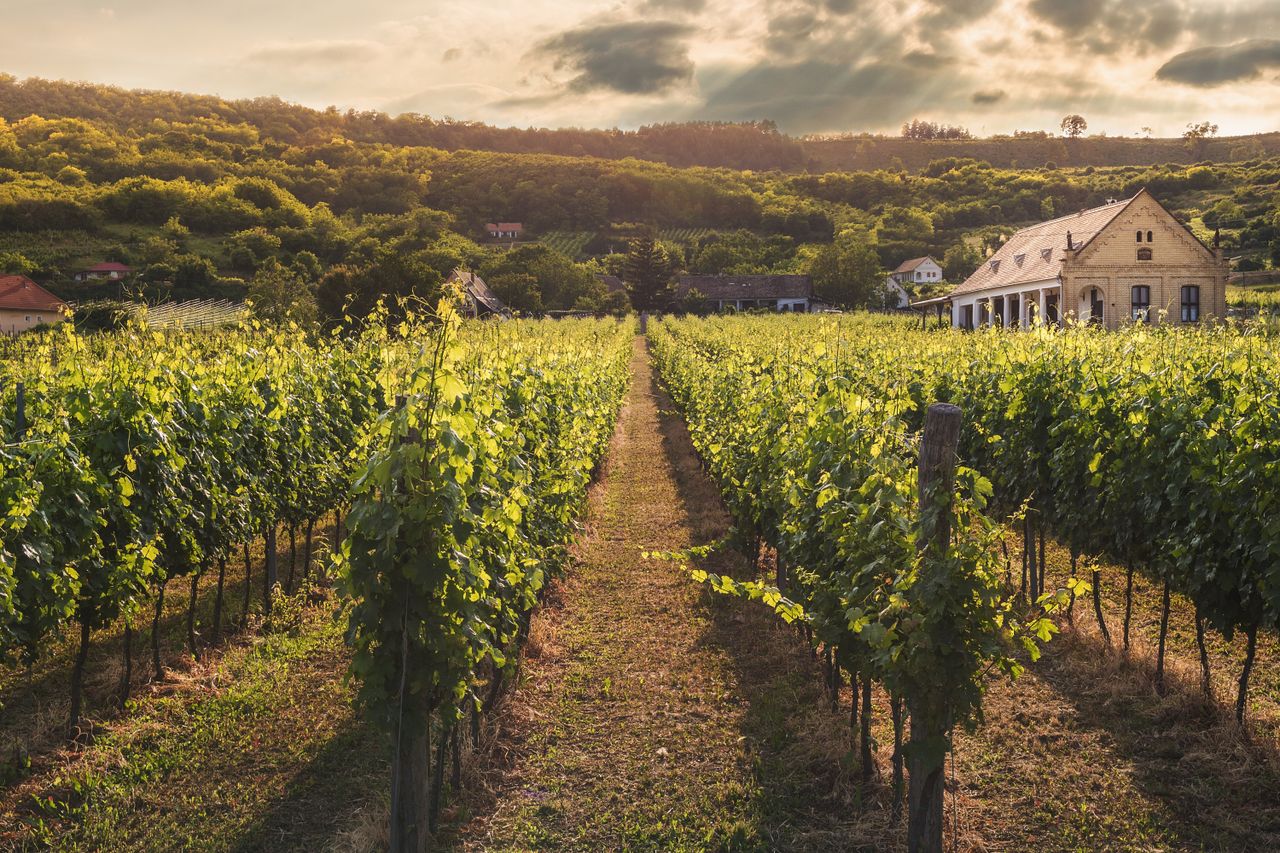
Central Otago sits at 45 degrees south, the southernmost serious wine region in the world, on schist and glacial gravel in a dry, continental climate of hot days and cold nights. Three-quarters of what it grows is Pinot Noir, and the best of it stands with Burgundy's.

Rows of vines at sunset in New Zealand

What to drink here

Central Otago Pinot Noir is dark-fruited, structured and more powerful than most of the grape's homes: Felton Road, Mount Difficulty, Rippon, Burn Cottage, Two Paddocks, Valli and Prophet's Rock are the names to know, with Bannockburn giving the richest wines and Gibbston the most perfumed. The whites are the quiet surprise: dry Riesling and Pinot Gris with real acidity, and Chardonnay that is improving every vintage. Rosé from Pinot for the vineyard lunch.

The region is small and the good wines are not cheap at home; here they pour by the glass. Cellar doors charge a tasting fee, refunded against bottles, and most will ship a case. Harvest is March and April, when the valleys turn gold and the wineries are at their busiest and best.

Gibbston · 20 min

Gibbston Valley, Chard Farm, Peregrine and Kinross

Gibbston Highway · cellar doors daily

Gibbston Valley has the cave cellar, the cheesery and the restaurant; Chard Farm sits at the end of a cliff-edge drive above the Kawarau; Peregrine's winery roof is a falcon's wing; Kinross pours several small Gibbston producers at one bar with a bistro. Link them by bike on the river trail.

Bannockburn · 45 min

Mount Difficulty, Carrick and Felton Road

Bannockburn, near Cromwell

Mount Difficulty's schist cellar door over the Cromwell basin pours single-block Pinots with lunch; Carrick does organic wines and a restaurant among the vines; Felton Road, the region's most celebrated producer, tastes by appointment only. The old gold sluicings next door are a walk.

Lake Hayes and Wanaka

Amisfield and Rippon

Lake Hayes; above Lake Wanaka

Amisfield's cellar door and restaurant beside Lake Hayes are the region's showpiece; Rippon's biodynamic vineyard runs down to Lake Wanaka in the most photographed wine view in the country, with free tastings in the family barn.

Practical notes

Before you go

Getting there

Queenstown Airport is at Frankton, 8 kilometres from town, with direct flights from Auckland, Wellington, Christchurch and eastern Australia, and one of the most scenic approaches in the world. The Orbus bus runs to the centre every 15 minutes; taxis and shuttles are at the door. Christchurch is six hours by road via Mount Cook.

Getting around

The town is walkable and the Orbus network covers Frankton, Arrowtown and the airport cheaply. A car is the way to reach Glenorchy, Wanaka and the wineries; Milford is better by coach or plane, since the drive is eight hours return. Book Milford, the Routeburn huts and Amisfield before you book the flights.

Seasons

  • Dec–Feb: summer, 20–28°C, long days, all trails open; busiest and priciest.
  • Mar–May: autumn colours in Arrowtown and the vineyards, harvest, settled weather; the best months.
  • Jun–Sep: ski season, 0–10°C in town, snow on the summits, the winter festival in June.
  • Oct–Nov: spring, changeable, Roys Peak closed for lambing until 10 November.

Weather and gear

Mountain weather changes in an hour; carry a shell, a warm layer and a hat on every walk above the treeline and turn back when the cloud comes down. Sunburn is fast under the southern ozone. Sandflies at Milford and Glenorchy bite through thin fabric; repellent is not optional.

Money

New Zealand dollars; cards everywhere, including the burger queue. Queenstown is the most expensive town in the country for beds and the activities are priced for the once-in-a-lifetime; book accommodation early and look at Frankton and Arrowtown for better value. Tipping is not expected.

Where to stay

Town centre for the bars and the lakefront; Fernhill or Kelvin Heights for a quieter lake view; Arrowtown for the cottages and the restaurants; Glenorchy or Wanaka for a night at the start of the trails.

Photography

Photo credits

Photographs on this page are by independent photographers published on Pexels under the free Pexels licence. Click a title to open the original.

Powered by Webloyt | Report abuse